
By 1852, California’s annual gold production reached a high of $81 million. By 1853, the total take was $67 million, and although no one wanted to admit it, the hottest story in the Old West had already peaked. In 1854, a 195-pound mass of gold, the largest known to have been discovered in California, was found at Carson Hill in Calaveras County. In 1859, the famous 54-pound Willard nugget was found at Magalia in Butte County. But for the most part, the rich surface placers were largely exhausted by 1855, and river mining accounted for much of the state’s output until the early 1860s. From the first strike of 1848 through 1855, the total amount of gold taken from the mother lode was right around $350 million. As for the first person involved in the discovery, he did not live happily ever after. After his monumental discovery, Marshall claimed a major chunk of Coloma Valley, but the area was quickly overrun by at least 4,000 would-be gold miners. Marshall found work as a prospector, but he was often hounded by gold rush groupies, men who believed if they stayed close to him he might find some more gold. He continued to be an inactive partner at Sutter’s sawmill until legal difficulties closed it in 1850. In 1857, Marshall returned to Coloma and bought 15 acres of land for $15. He planted a vineyard, dug a cellar, and began bottling California wine. He won a few prizes for his port at county fairs, but taxes and competition found him on the prospecting trail again in the late 1860s. He hit the lecture circuit, but ended up broke in Kansas City. The California legislature took pity on him and passed a $200 a month pension for the discovery of gold in 1872, and then cut it in half the following year. Marshall died forgotten in 1885 and was buried on a hill in Coloma overlooking the gold discovery site. Five years later, a statue was commissioned and placed on his gravesite.
Month: March 2013
This Day…
Emigrants West
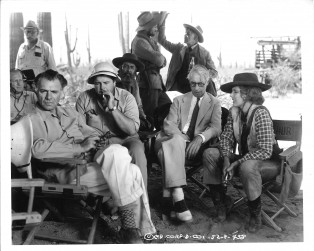 The Gilded Age was embodied in the private railroad car-a baroque equipage of millionaires that today may be found in museums. But there is little trace of the carriages in which the masses were transported, only the memories of those who rode them. To Robert Louis Stevenson, the emigrant train on which he traveled West in 1879 resembled a series of long wooden boxes-a “Noah’s Ark on wheels.” Wooden benches were their only furniture, “far too short for anyone but a child,” and the atmosphere was stagnant with the smells of food and tobacco. Families and single men and women shared these rolling slums, cooking, washing perfunctorily, and at night sleeping on wooden boards stretched across benches. The rate for these “beds,” which included three straw- (and bug-) filled cushions, was $2.50. Except for rare acts of kindness, the poor emigrants met nothing but rudeness from train functionaries, who even refused to answer their anxious inquiries. “Civility is the main comfort you miss,” Stevenson remarked. “Equality, though very largely conceived in America, does not extend so low down as the emigrant.” I prefer the image of the emigrant as portrayed by William Holden in the movie Arizona. The movie centers around Phoebe Titus a tough, swaggering pioneer woman played by Jean Arthur, but her ways become decidedly more feminine when she falls for California bound Peter Muncie played by William Holden. But Peter won’t be distracted from his journey and Phoebe is left alone and plenty busy with villains Jefferson Carteret and Lazarus Ward plotting at every turn to destroy her freighting company. You just know William Holden will be changing his plans to stay and help Jean out of a jam. The bug Holden describes in the film is decidedly different from the ones emigrants had to sleep with on the way West. One of my favorite lines from the movie are as follows-Holden to Arthur: “I figure it sounds crazy to most people… going to California just to see it. But there’s a gallivanted bug in my blood and that’s the way I am.”
This Day…
Eureka, the American Gold Rush
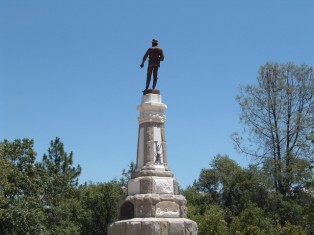
James Marshall's resting place. He's pointing to the area he found gold.
This Day…
The Gold Rush & Wells Fargo
Once upon a time in the West, there flourished, according to one frontier editor, “the nearest thing to a universal service company ever invented.” The biggest business in the Old West was so good at what it did that when people swore, they often did so “by God and Wells Fargo.” Seasoned East Coast express men Henry Wells and William G. Fargo began American Express with John Butterfield in 1850. Two years later, they wanted a link with the California gold fields. On March 18, 1852, paper were drawn up organizing Wells, Fargo & Company with initial capital of $300,000 (The comma between the two names was eventually dropped.) Two company representatives opened the first office on San Francisco’s Montgomery Street that July. From the red brick building, a network of routes connected the company with exotic markets such as Hangtown, Yankee Jim, and Poker Flat. The company kept letters flowing between the gold seekers and the folks back home, and it shipped gold back east safely and cheaply. You could even ship people by Wells Fargo. To accomplish these Herculean tasks, Wells Fargo applied cutting-edge 1850s technology. Some shipments, such as the fire engine ordered by the city of Sacramento from a Baltimore manufacturer, were shipped around Cape Horn. But what made Wells Fargo great was its massive fleet of Concord stagecoaches, hand-crafted in New Hampshire, that crisscrossed the Old West with such regularity that their roads often had to be watered to keep down the dust. Cargo was protected by armed guards riding shotgun.
This Day…
Walking Wounded

My Little Brother and I