The Virginian – Favorite Western Featuring a School Teacher


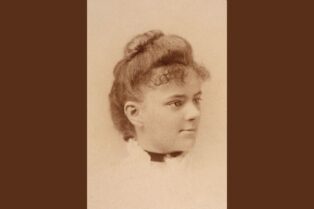
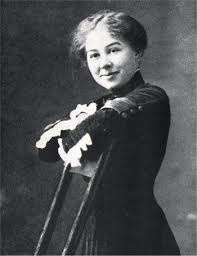
America’s first woman doctor was admitted to New York’s Geneva College in 1847 as a joke, and was expected to flunk out within months. Nevertheless, Blackwell prevailed and triumphed over taunts and bias while at medical school to earn her degree two years later.
While in her last year of medical training, she was cleaning the infected eye of an infant when she accidentally splattered a drop of water into her own eye. Six months later she had the eye taken out and had it replaced with a glass eye. Afterward, American hospitals refused to hire her. She then borrowed a few thousand dollars to open a clinic in New York City, which she called the New York Infirmary for Indigent Women and Children. She charged patients only four dollars a week, if they had it, for full treatment that might cost at least two hundred dollars a day at the going rate.
During the Civil War she set up an organization to train nurses, Women’s Central Association of Relief, which later became the United States Sanitary Commission. In 1910 at age eighty-nine she died after a fall from which she never fully recovered.

I'm looking forward to hearing from you! Please fill out this form and I will get in touch with you if you are the winner.
Join my email news list to enter the giveaway.
"*" indicates required fields


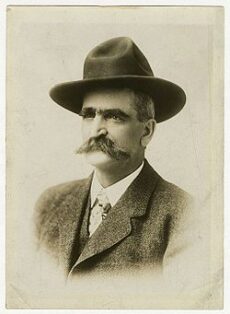
It wasn’t a bullet from an outlaw’s six-shooter or an enemy soldier in the Spanish-American War that claimed the life of one of the fiercest lawmen in the history of the Dakotas. Seth Bullock died of colon cancer. The accomplished businessman, rancher, politician, and lawman suffered with the disease for years and he died in September 1919 at the age of sixty-two. Born in Amhertberg, Ontario, Canada, in August 1876, six decades later he was remembered for his strength of character as well as the influence he had on the wild frontier.
According to the September 28, 1919, edition of the Kansas City Star, before Seth Bullock made his mark on the Black Hills of Dakota, he was a pioneer in Montana. He was the first sheriff in Helena, Montana, and a member of a famous vigilance committee that rid the region of a desperate band of horse thieves.
Upon hearing that gold had been discovered in the Black Hills, Seth and some of his friends decided to go to that area of the country in the summer of 1876. In March 1877, he became Lawrence County, Dakota’s first sheriff. The gold camp contained some of the most notorious, cutthroat criminals in the country. Many were intimidated by the lawman.
Seth dressed like a minister, had the stare of a mad cobra, and was silent as a confidential clerk working for Rockefeller. In the beginning, his ability to effectively do his job in Lawrence County was challenged by an outlaw who intensely disliked the lawman. He gave orders that Seth should leave the camp and never return. The man threatened to shoot Seth if he didn’t go. After being warned by friends, the sheriff borrowed a squirrel gun from an old hunter and proceeded down the street to the saloon where the desperado was waiting. When the man saw Seth unafraid and coming right for him, he backed down and fled the scene.
As a representative of law and order, the Dakota lawman tracked down a number of stage robbers, gamblers, and murderers, and, according to the October 1, 1919, edition of the Fort Wayne Journal Gazette, killed more than twenty-five lawbreakers who refused arrest.
In addition to his career in law enforcement (Seth also served as a United States marshal in Western Dakota Territory) he co-owned and operated a hardware store and warehouse in Deadwood with his business partner Sol Star. It was one of the most prosperous companies in the Black Hills.
Seth met Theodore Roosevelt in 1884. Roosevelt was a deputy sheriff in Medora, North Dakota, and had tracked a criminal to Seth’s jurisdiction. The two lawmen became fast friends. He became one of Roosevelt’s Rough Riders in the Spanish-American War and was named captain of one of the future president’s troops.
Seth was an elected representative to the Senate and introduced the resolution to set aside Yellowstone as a national park. He was the first forest supervisor of the Black Hills and the cofounder of the mining town Belle Fourche.
Seth was serving his third term as United States marshal for the District of South Dakota when he was diagnosed with cancer. Friends and family noted that in spite of his health he refused to be complacent. He continued on with his work regardless of the debilitating illness.
When President Roosevelt died in January 1919, Seth decided to erect a monument in his friend’s honor. He oversaw the building of a stone tower known as Mount Roosevelt on Sheep Mountain located five miles from Deadwood. The tower was completed in June 1919. Seth died on September 23, 1919, at his home surrounded by his loved ones. He was buried at Mount Moriah Cemetery in Deadwood. His grave faces Mount Roosevelt.

“Once again, Enss has unearthed hidden cinema secrets. In Daughters of Daring, she tells the remarkable story of women who, from the dawn of movies, risked their lives—mostly in secret. Finally, their names are shared and their incredible achievements are told. No one does it better.”
—Rob Word, producer and host, A Word on Westerns


DEADWOOD — For more than 30 years, Chris Enss has been writing about the women of the Old West. She’s written more than 50 books on the subject, earning nine Will Rogers Medallion Awards, two Elmer Kelton Book Awards, and the Laura Downing Journalism Award.
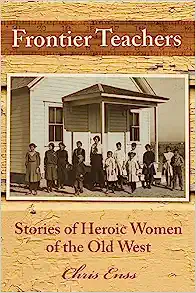
“Usually, when you think about women of the American West, they’re either Miss Kitty from Dodge City, or Laura Ingalls from Little House on the Prairie,” Enss told the Black Hills Pioneer during her last visit to Deadwood. “People don’t think women did much more than that. The truth is, women were just so incredibly well-rounded in a variety of fields.”
Enss plans to return to the Black Hills, beginning Wednesday. That day, she’ll visit the Days of ‘76 Museum for a reading and signing centered on “The Sharpshooter and the Showman.”
Published in March, that title follows Pawnee Bill and May Manning Lillie of Wild West Show fame — exploring their remarkable, true love story.
Thursday, Enss will visit the Adams Museum for a book signing and talk about the cowgirls of the American West.
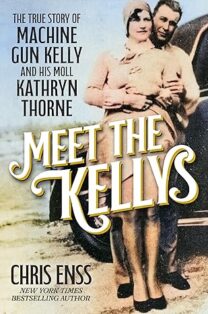
On Sept. 26 and 27, Enss will launch her newest book, “Meet the Kellys: The True Story of Machine Gun Kelly and His Holl Kathryn Thorn” in Deadwood at the Brothel Museum.
The author plans to host half-hour presentations on the Jazz Age mob scene. She’ll also be on hand to sign copies of her newest book.
Released in May, “Meet the Kellys” explores the life and relationship of George “Machine Gun” Kelly, a bootlegger turned notorious gangster, and Kathryn Thorne, a “mobbed-up Lady Macbeth” who pushed her husband to commit greater crimes.

I'm looking forward to hearing from you! Please fill out this form and I will get in touch with you if you are the winner.
Join my email news list to enter the giveaway.
"*" indicates required fields

Among the most notable Deadwood soiled doves in 1876 and 1877 was Jenny Hines. Known by many as Popcorn Jenny, she was apprehended several times for operating a bawdy house. An incident that occurred on February 21, 1877, marked the beginning of the end of Jenny in Deadwood. Police raided her business after a complaint was made by neighbors about the numerous men coming and going from the location at all hours of the day and night.
When the police arrived on the scene, Jenny reluctantly allowed them to enter. Initially they found no one in the home apart from the sporting gal herself. She assured the officers that nothing unseemly ever transpired in her home and that the idea she was exchanging sex for money was offensive. A further inspection of the premises resulted in a unique discovery made in her kitchen. The room was void of the traditional items one would expect to find.
There was no table and chairs, etc. Instead, on the floor was a mattress and on the mattress a man by the name of Joe Hodges. He was under a blanket, curled up in a fetal position hoping no one could see him. He didn’t stir until the police poked him with a cane. Both Joe and Jenny were arrested and taken to jail.
Joe Hodges was brought before the judge not long after the magistrate had dealt with Popcorn Jenny and encouraged her to leave town. Joe was forced to undergo a series of embarrassing questions about why he was doing business with a known prostitute. The only explanation he offered was that he was a “widower and, in obedience to the scriptural injunction, he was seeking a congenial companion.” He claimed when he saw Jenny, he was so charmed by her, he allowed her to lead him astray. He didn’t understand why the city would bother with two lonely people helping one another.
The judge admonished Joe and fined him $10. Jenny was never heard from again in Deadwood.

I'm looking forward to hearing from you! Please fill out this form and I will get in touch with you if you are the winner.
Join my email news list to enter the giveaway.
"*" indicates required fields
Join me at the Brothel Deadwood Museum on September 26 and 27 from 11 A.M. to 6 P.M. for a tour of the brothel and stories of the many raids on the houses of ill repute in the Black Hills.

The National Prohibition Act was passed by Congress on January 16, 1919, and officially went into effect on January 17, 1920. By early 1921, government statisticians reported that prohibition had had a positive impact on the country. It showed that labor was more constant and that absenteeism at jobs had decreased. The same government report showed that prostitution had diminished as a result of the National Prohibition Act. That might have been the case in some cities across the country, but in Deadwood, South Dakota, prostitution continued to be big business.
Listed among bordello owners who competed for business in Deadwood in the 1920s and 1930s was a woman of German descent named Pauline Longland. Born Pauline Wirz on May 22, 1891, in La Salle, Illinois, she came to South Dakota in 1910 and married Burr Longland in 1914. Her bordellos were located at 616 and 618 Main Street. When she was arrested for running a disorderly house in August 1920 and paid a sixty dollar fine for the crime, the court warned her against further offenses. Pauline’s line of work was so lucrative she wasn’t inclined to leave the profession for any reason.
On May 16, 1921, authorities raided her business, along with the businesses of several other bordello owners. She was taken into custody and charged with “keeping a house of ill fame.” Between 1922 and 1930, she was arrested four more times for the same violation and three times for possessing and selling alcohol. In 1930, Pauline was sentenced to ninety days in jail on various liquor offenses and ninety days for maintaining a public nuisance.
Pauline passed away on February 22, 1931, after suffering several months with a serious illness. “Her services, conducted by Rev. Alban Reed of St. Ambrose Catholic Church, were attended by a concourse of friends and relatives, and the casket was buried beneath a profusion of flowers in loving remembrance of the many friends of the deceased,” the February 26, 1931, edition of the Weekly Pioneer Times read.

Join me at the Brothel Deadwood Museum on September 26 & 27, 2025, for a lively talk on the police raids of the bordellos and the various madams who were arrested as a result.
I'm looking forward to hearing from you! Please fill out this form and I will get in touch with you if you are the winner.
Join my email news list to enter the giveaway.
"*" indicates required fields


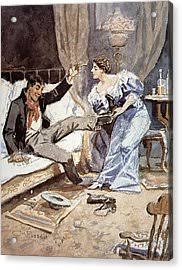
Rosa May sat beside the bed of a dying miner and wiped the sweat off his feverish brow. She looked around his rustic, one-room cabin, past the sparse furnishings, and fixed her eyes on a tattered photograph of an elderly man and woman. “Those are my folks,” the man weakly told her. “They’re in Marshall County, Illinois. Where are your folks?”
The question stunned Rosa. No one ever asked about such things. No one ever asked her much at all. Conversation wasn’t what men were looking for when they did business with her. Rosa glanced out the window at a couple of respectable, well-dressed women. They watched her through the clouded glass, pointed, and whispered. She knew what they were saying without hearing it.
Rosa was just one of a handful of “sporting women” living in Bodie, California, in 1900 and she knew what people thought of her. It used to bother her years ago, but not now. It was an occupational hazard she’d learned to live with.
“Don’t you have people anywhere?” the miner asked. Rosa dabbed the man’s head with a cloth and smiled. “I don’t know anymore,” she answered. “If I did have, they’d be back in Pennsylvania.”
Rosa’s parents were Irish – hard, strict people. Rosa had dreamed of the day she would be out of their puritanical household. She had left home in 1871, at the age of sixteen and soon found there weren’t many opportunities for a poor, petite, uneducated girl with brown eyes and dark, curly hair. She ended up in New York, hungry, homeless, and eager to take any job offered. The job offered was prostitution and five years later she came west with other women of her trade, hoping to make a fortune off the gold and silver miners.
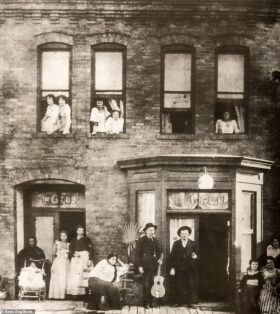
Prostitution was the single largest occupation for women in the West. Rosa hoped to secure a position at a posh brothel with crystal chandeliers, velvet curtains, and flowing champagne. The madams who ran such places were good to their girls. They paid them a regular salary, taught them about makeup, manners, and how to dress, and they only had to entertain a few men a night. If a high-class brothel wasn’t available, Rosa could take a job in a second-class house and work for a percentage of the profits, turning as many tricks as she could each night. If all failed, she could be a street walker or rent a “crib” at a boardinghouse. Cribs, tiny, windowless chambers, had oilcloths draped across the foot of the bed for customers in too big of a hurry to take off their boots.
Rosa May arrived in Virginia City, Nevada in 1875 and went to work for a madam known as Cad Thompson. Cad was a widow who ran several parlor houses in town, including a three-story, brick structure called the “Brick House.” Cad and Rosa became fast friends, confiding in one another and talking about meeting their Prince Charming. “Whores dream of falling in love, too,” Cad frequently told Rosa.

I'm looking forward to hearing from you! Please fill out this form and I will get in touch with you if you are the winner.
Join my email news list to enter the giveaway.
"*" indicates required fields