Virginia City’s Wicked Woman

Enter for a chance to win a copy of

Wicked Women:

Notorious, Mischievous, and Wayward Ladies from the Old West.


The cold, grey January sky above Virginia City, Nevada, in 1867 unleashed a torrent of sleet on a slow moving funeral procession traveling along the main thoroughfare of town. Several members of the volunteer fire department, Virginia Engine Company Number One, was first in a long line of mourners following after a horse drawn carriage transporting the body of soiled dove Julia Bulette. The Nevada militia band shuffled behind the hearse playing “The Girl I Left Behind Me.” Black wreaths and streamers hung from the balconies of the buildings along the route which the remains of the beloved thirty-five-year-old woman was escorted. Miners who knew Julia wept openly. Out of respect for the deceased woman all the saloons were closed. Plummeting temperatures and icy winds eventually drove the majority of funeral-goers inside their homes and businesses before Julia was lowered into the ground.

Julia Bulette was murdered on January 19, 1867 at 11:30 in the evening in her home on North D Street in Virginia City. The fair but frail prostitute told her neighbor and best friend Gertrude Holmes she was expecting company, but did not specify who the company might be. Twelve hours later Gertrude discovered Julia’s lifeless body in bed. She had been beaten and strangled. Gertrude told authorities that Julia was lying in the center of the bed with the blankets pulled over her head and that the sheets under her frame were smooth. She told police that it appeared as though no one had ever been in the bed with Julia.

The authorities believed the scene had been staged. Marks on Julia’s body and tears on the pillow used to smother her indicated she struggled with her attacker. The murderer then set the room to look as though nothing was out of the ordinary. He covered Julia’s body in such a way that at a passing glance she would merely appear to be asleep. It had fooled the handyman she had employed to come in and build a fire for her each day. When the gentleman entered Julia’s home at eleven in the morning he believed she was sleeping. He explained to law enforcement officers that he was quiet as he went about his work and left when the job was done. A search of the modest home Julia rented revealed that many of her possessions were missing. The citizens of Virginia City were outraged by the crime.


To learn more about the wild ladies on the rugged frontier read

Wicked Women:

Notorious, Mischievous, and Wayward Ladies from the Old West.


The Dead Files

Tune in to the Dead Files on Saturday, August 12, and watch the episode

The Devil Inside. I provided the on-camera historical interview. 

Check local listings for the time when the episode will air. 


Don’t forget to register for a chance to win a copy of the book Wicked Women. 

Wicked Rosa

Enter for a chance to win a copy of
Wicked Women:
Notorious, Mischievous, and Wayward Ladies from the Old West


Rosa May sat beside the bed of a dying miner and wiped the sweat off his feverish brow. She looked around his rustic, one-room cabin, past the sparse furnishings, and fixed her eyes on a tattered photograph of an elderly man and woman. “Those are my folks,” the man weakly told her. “They’re in Marshall County, Illinois. Where are your folks?”

The question stunned Rosa. No one ever asked about such things. No one ever asked her much at all. Conversation wasn’t what men were looking for when they did business with her. Rosa glanced out the window at a couple of respectable, well-dressed women. They watched her through the clouded glass, pointed, and whispered. She knew what they were saying without hearing it.
Rosa was just one of a handful of “sporting women” living in Bodie, California, in 1900 and she knew what people thought of her. It used to bother her years ago, but not now. It was an occupational hazard she’d learned to live with.

“Don’t you have people anywhere?” the miner asked. Rosa dabbed the man’s head with a cloth and smiled. “I don’t know anymore,” she answered. “If I did have they’d be back in Pennsylvania.”
Rosa’s parents were Irish – hard, strict people. Rosa had dreamed of the day she would be out of their puritanical household. She had left home in 1871, at the age of sixteen and soon found there weren’t many opportunities for a poor, petite, uneducated girl with brown eyes and dark, curly hair. She ended up in New York, hungry, homeless, and eager to take any job offered. The job offered was prostitution and five years later she came west with other women of her trade, hoping to make a fortune off the gold and silver miners.

Prostitution was the single largest occupation for women in the West. Rosa hoped to secure a position at a posh brothel with crystal chandeliers, velvet curtains, and flowing champagne. The madams who ran such places were good to their girls. They paid them a regular salary, taught them about makeup, manners, and how to dress, and they only had to entertain a few men a night. If a high-class brothel wasn’t available, Rosa could take a job in a second-class house and work for a percentage of the profits, turning as many tricks as she could each night. If all failed, she could be a street walker or rent a “crib” at a boardinghouse. Cribs, tiny, windowless chambers, had oilcloths draped across the foot of the bed for customers in too big of a hurry to take off their boots.

Rosa May arrived in Virginia City, Nevada in 1875 and went to work for a madam known as Cad Thompson. Cad was a widow who ran several parlor houses in town, including a three-story, brick structure called the “Brick House.” Cad and Rosa became fast friends, confiding in one another and talking about meeting their Prince Charming. “Whores dream of falling in love, too,” Cad frequently told Rosa.


To learn more about the wild ladies on the rugged frontier read
Wicked Women:
Notorious, Mischievous, and Wayward Ladies from the Old West

Wayward Ladies

Enter for a chance to win a copy of

Wicked Women:

Notorious, Mischievous, and Wayward Ladies from the Old West


The effect of vice upon the destiny of the expanding western frontier was considered by some religious and political leaders in the mid-1850s to be a sign of a rotten and decaying civilization. In 1856, Methodist pastor John M. Chivington told a congregation in Nebraska that “the extravagant development of immorality, particularly the development of immoral women given to gambling, whiskey drinking and prostitution, marked the decadence of a potentially great nation.” Ernest A. Bell, the secretary of the Illinois Vigilance Association maintained that “from the day the serpent lured the first woman in the garden there have been few days and nights when some daughter of Eve’s has not been deceived into a wicked life by some serpent or other. It has not changed and will not change.”

In 1849, women of easy virtue found wicked lives west of the Mississippi when they followed fortune hunters seeking gold and land in an unsettled territory. Prostitutes and female gamblers hoped to capitalize on the vices of the intrepid pioneers.

According to records at the California State Historical Library, more than half of the working women in the West during the 1870s were prostitutes. At that time, madams – those women who owned, managed, and maintained brothels – were generally the only women out west who appeared to be in control of their own destinies. For that reason alone, the prospect of a career in the “oldest profession” – at least at the outset – must have seemed promising.

Often referred to as “sporting women” and “soiled doves,” prostitutes mostly ranged in age from seventeen to twenty-five, although girls as young as fourteen were sometimes hired. Women over twenty-eight years of age were generally considered too old to be prostitutes.

Rarely, if ever, did working women use their real names. In order to avoid trouble with the law as they traveled from town to town and to protect their true identities, many of these women adopted colorful new handles like Contrary Mary, Little Gold Dollar, Lazy Kate, and Honolulu Nell. The vicinities where their businesses were located were also given distinctive names. Bordellos and parlor houses typically thrived in that part of the city known as “the half world,” “the badlands,” “the tenderloin,” “the twilight zone,” or the red-light district.”

The term “red-light district” originated in Kansas. As a way of discouraging would-be intruders brazen railroad workers around Dodge City began hanging their red brakemen’s lanterns outside their doors as signal that they were in the company of a lady of the evening. The colorful custom was quickly adopted by many ladies and their madams.


To learn more about the wild ladies on the rugged frontier read

Wicked Women:

Notorious, Mischievous, and Wayward Ladies from the Old West


Squirrel Tooth Alice

Enter for a chance to win a copy of

Wicked Women:

Notorious, Mischievous, and Wayward Ladies from the Old West


Libby Thompson twirled gracefully around the dance floor of the Sweetwater Saloon in Sweetwater, Texas. A banjo and piano player performed a clumsy rendition of the house favorite, “Sweet Betsy From Pike.” Libby made a valiant effort to match her talent with the musician’s limited skills. The rough crowd around her was not interested in the out of tune playing; their eyes were fixed on the billowing folds of her flaming red costume. The rowdy men hoped to catch a peek at Libby’s shapely, bare legs underneath the yards of fabric on her skirt. Libby was careful to only let them see enough to keep them interested.

Many of the cowboy customers were spattered with alkali dust, grease, or plain dirt. They stretched their eager unkempt hands out to touch Libby as she pranced by, but she managed to avoid all contact. At the end of the performance, she was showered with applause, cheers, and requests to see more. Libby was not in an obliging mood. She smiled, bowed, and hurried past the enthusiastic audience as she made her way to the bar for a drink.

A surly bartender served her a glass of apple whiskey, and she headed off to the back of the room with her beverage. When she wasn’t entertaining patrons, Libby could be found at her usual corner spot by the stairs. A large, purple, velvet chair waited for her there along with her pets, a pair of prairie dogs. As Libby walked through the mass of people to her spot, she saw three grimy, bearded men surrounding her seat. One of the inebriated cowhands was poking at her animals with a long stick.

“Boys, I’d thank you kindly to stop that,” she warned the unruly trio. The men turned to see who was speaking then broke into a hearty laugh once they saw her. Ignoring the dancer they resumed their harassment of the small dogs. The animals batted the stick back as it neared them, and each time the men would erupt with laughter.

Libby watched the three for a few moments then slowly reached into her drawstring purse and removed a pistol. Pointing the gun at the men she said, “Don’t make me ask you again.” The drunken cowhands turned to face Libby, and she aimed her pistol at the head of the man with the stick. Laughing, the man told her to “go to hell.” “I’m on my way,” she responded, pulling the hammer back on the gun. “But I don’t mind sending you there first so you can warn them,” she added. The cowboy dropped the stick, and he and his friends backed away from Libby’s chair. One by one they staggered out the saloon. Libby put the gun back into her purse, scooped up her frightened pets, scratched their heads, and kissed them repeatedly.


To learn more about the wild ladies on the rugged frontier read

Wicked Women:

Notorious, Mischievous, and Wayward Ladies from the Old West


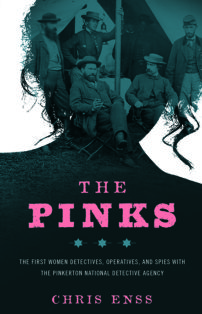
The Pinks Giveaway

Enter for a chance to win a copy of

The Pinks:  The First Women Detectives, Operatives,  and Spies with the

Pinkerton National Detective Agency.


Jack Zahran, President of the Pinkerton National Detective Agency

Enter for a chance to win a copy of

The Pinks:

The First Women Detectives, Operatives, and Spies with the Pinkerton National Detective Agency


Jack Zahran, president of the Pinkerton National Detective Agency, wrote the foreword for The Pinks. I’m honored he contributed to the book.

When Allan Pinkerton founded the Pinkerton Detective Agency in 1850, he not only became the world’s first “private eye,” he also established an organization that would set the global standard for investigative and security excellence for generations to come.

But the agency had only just begun the process of setting that standard when Kate Warne walked into Allan Pinkerton’s office six years later and asked for a job. Her request was well timed. Pinkerton was keenly focused on new opportunities and was consciously looking to make bold choices that reinforced his vision of Pinkerton as an innovator and a disruptor.

Warne’s confidence and persuasive skills were impressive, and Pinkerton’s flexibility and willingness to “defy convention” perhaps equally so. It is to his credit, and to the enduring credit of the Pinkerton Detective Agency, that it took Pinkerton less than twenty-four hours to inform Warne that he would hire her—a decision that made her the nation’s first female detective. It was a remarkable turn of events at a time when only 15 percent of women held jobs outside of the home, and contemporary ideas about what constituted “women’s work” severely limited employment opportunities for women.

Kate Warne, and the accomplished women who played such an important role in building the Pinkerton Detective Agency into an iconic global security and law enforcement institution, made it abundantly clear that the prevailing definition of “women’s work” was not just inadequate, but wholly obsolete.

Kate’s story, and the stories of all of these remarkable female operatives—presented so beautifully and in such rich detail here in this fascinating and important book—are not just a moving reminder of the achievements of a handful of bold pioneers, they are also a remarkable testament to the exemplary tradition of innovation that has distinguished the Pinkerton name over the course of more than a century and a half of dedicated service.

Allan Pinkerton was very clear about the fact that he wanted his company to be fearless and to have a “reputation for using innovative methods to achieve its goals.” What is remarkable is not just the aspiration, but the execution: This founding vision would grow into a long-standing tradition of innovation and a commitment to inspired service that became intricately woven into Pinkerton’s organizational DNA.

Pinkerton’s enduring legacy of bold moves, brave choices, and the relentless pursuit of excellence is much more than just an aging résumé—it is the foundation for an organization that remains on the cutting edge. Today, the company that predates the Civil War not only remains relevant, but has continued to establish itself as a dynamic and innovative presence on the world stage. Pinkerton is a recognized industry leader in developing forward-looking security and risk management solutions for national and international corporations. Remarkably, an organization that once protected Midwestern railways and pursued famous outlaws like Jesse James and Butch Cassidy is now providing sophisticated corporate risk management strategies and high-level security services for clients across the globe, setting a twenty-first-century standard for corporate risk management.

Now, as then, Pinkerton understands that combating new and emerging threats and serving its clients requires a willingness to challenge conventional wisdom, and embrace new assets and new ideas—whether they are the world’s first female detectives or new cybersecurity protocols. From investigative and private detective work to security and corporate risk consulting, Pinkerton prides itself on doing whatever it takes to keep its clients safe and to protect their assets and their interests. That resolve is one of the biggest reasons why an agency that was protecting Abraham Lincoln was also on the ground in the aftermath of Hurricane Katrina, and why the principles and practices that were in place almost eighty years before the discovery of penicillin still apply to an organization that provides risk management services to some of the world’s most innovative enterprises in 2016.

As you read and enjoy these fascinating profiles of gifted Pinkerton operatives, you will readily see how their work and their character exemplified the agency’s values of Integrity, Vigilance, and Excellence. Ultimately, those attributes are at the heart of these tales, and at the heart of the larger Pinkerton story. It’s a history that spans three centuries, with compelling new chapters still being written each and every day.

To learn more about Kate Warne, the cases she worked,

and the other women Pinkerton agents read

The Pinks:

The First Women Detectives, Operatives, and Spies with the Pinkerton National Detective Agency


Saving Lincoln

Enter for a chance to win a copy of

The Pinks:

The First Women Detectives, Operatives, and Spies with the Pinkerton National Detective Agency


President-elect Abraham Lincoln showed no sign of being nervous or apprehensive about the late night ride Pinkerton operatives arranged for him to take on February 23, 1861. Kate Warne noted in her records of the events surrounding Mr. Lincoln leaving Pennsylvania that he was cooperative and congenial.

When the politician arrived at the depot in Baltimore with his colleagues and confidants, Ward Hill Lamon and Allan Pinkerton, he was focused and quiet. He was stooped over and leaning on Pinkerton’s arm. The posture helped disguise his height, and when Kate greeted with a slight hug and called him “brother,” no one outside the small group thought anything of the exchange. For all anyone knew, Kate and Mr. Lincoln were siblings embarking on a trip together. Neither the porter nor the train’s brakeman noticed Mr. Lincoln as the president-elect. Kate made it clear to the limited, railroad staff on board that her brother was not well and in need of solitude.

It took a mere two minutes from the time the distinguished orator reached the depot until he and his companions were comfortably on board the special train. The conductor was instructed to leave the station only after he was handed a package Pinkerton had told him to expect. The conductor was informed the package contained important government documents that needed to be kept secret and delivered to Washington with “great haste.” In truth the documents were a bundle of newspapers wrapped and sealed.

The bell on the engine clanged, and the train lurched forward. The gas lamps in the sleeping berths in Mr. Lincoln’s car were not lit, and the shades were pulled. Kate and Pinkerton agreed it would be best to prevent curious passengers waiting at various stops from seeing in and possibly recognizing the president-elect. No one spoke as the train slowly pulled away from the station. All hoped the journey would be uneventful and were hesitant to make a sound for fear any conversation might jeopardize what had been done to get Mr. Lincoln to this point. It was Mr. Lincoln who broke the silence with an amusing story he had shared with Pennsylvania governor Andrew Curtain the previous evening.

“I used to know an old farmer out in Illinois,” Mr. Lincoln told the three around him. “He took it into his head to venture into raising hogs. So he sent out to Europe and imported the finest breed of hogs that he could buy. The prize hog was put in a pen and the farmer’s two mischievous boys, James and John, were told to be sure not to let it out. But James let the brute out the very next day. The hog went straight for the boys and drove John up a tree. Then it went for the seat of James’ trousers and the only way the boy could save himself was by holding onto the porker’s tail. The hog would not give up his hunt or the boy his hold. After they had made a good many circles around the tree, the boy’s courage began to give out, and he shouted to his brother: ‘I say, John, come down quick and help me let go of this hog.’

Mr. Lincoln’s traveling companions smiled politely and stifled a chuckle. Had the circumstances been different, perhaps they would have laughed aloud. Undaunted by the trio’s subdued response, the president-elect continued to regale them with amusing tales of the people he’d met and experiences they shared. The train gained speed and soon Philadelphia was disappearing behind them.


To learn more about Kate Warne, the cases she worked,

and the other women Pinkerton agents read

The Pinks:

The First Women Detectives, Operatives, and Spies with the Pinkerton National Detective Agency