Annie Oakley said…

Enter now for a chance to win a copy of

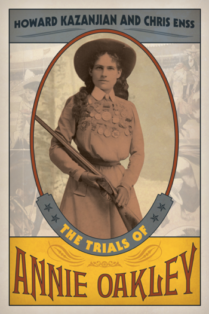
The Trials of Annie Oakley


Today, a few quotes from Annie Oakley.


“God intended women to be outside as well as men, and they do not know what they are missing when they stay cooped up in the house.”

“I am, indeed, very grateful for your many kind words in my obituary. How such a report started I do not know. I am thankful to say I am in the best of health.”


“After traveling through fourteen foreign countries and appearing before all the royalty and nobility I have only one wish today. That is that when my eyes are closed in death that they will bury me back in that quiet little farm land where I was born.”


“Aim at a high mark and you will hit it. No, not the first time, not the second time and maybe not the third. But keep on aiming and keep on shooting for only practice will make you perfect.

Finally you’ll hit the bull’s-eye of success.”

“My mother and sisters thought my prowess with the gun was just a little tomboyish”

“I would like to see every woman know how to handle [firearms] as naturally as they know how to handle babies.”

“My mother…was perfectly horrified when I began shooting and tried to keep me in school, but I would run away and go quail shooting in the woods or trim my dresses with wreaths of wildflowers.”


To learn more about the famous sure shot read

The Trials of Annie Oakley


Annie Oakley vs. William Randolph Hearst

Enter now for a chance to win a copy of

The Trials of Annie Oakley


On August 8, 1903, a drifter named Charles Curtis made his way to the Harrison Street Police Station in Chicago and filed a complaint to Justice of the Peace John R. Caverly about a woman named Little Cody. Curtis had befriended the woman he supposed was down on her luck and provided her a place to stay for a few days. During her visit with Charles, she stole a pair of pants and generally made herself a nuisance. The complaint charged her with having “made an improper noise, riot, and disturbance.” A warrant for the woman’s arrest was issued, and “Little Cody” was arrested and escorted to jail. The fee she was to pay was $100. She didn’t have the money to give the court and was to be held until she came up with the funds.

The prisoner did not give the clerks or the jail matrons a difficult time. She was chatty during the intake process, but polite. Her appearance was slovenly, clothes were torn and unwashed, and she was obviously under the influence of drugs. She told officials at the facility about her work as a crack rifle shot and of the days she spent with Buffalo Bill Cody’s Wild West show. The curious matron couldn’t help but pursue the matter further. “You are the noted Annie Oakley, I guess.” The woman proudly announced that she was indeed the famed sure shot.

Charles Curtis came to visit the woman once she was behind bars and seeing her distressed state decided not to press charges.

When arraigned before the justice on Monday morning August 10, the police officer who had booked her into jail stated she was the famous Annie Oakley who had exhibited with Buffalo Bill Cody. The officer informed the court that if she was allowed to go free she would only spread disease and implored the judge to send her to a women’s asylum where she could be taken care of. The judge agreed and instructed the court to send the woman to Bridewell Prison Farm. Her fine was reduced to $25.

After her day in court, she was taken downstairs to the lock up again. A number of people were waiting for her to arrive so they could talk with her. One of those individuals was George W. Pratt, a reporter for the Chicago American. Pratt had visited Buffalo Bill’s Wild West show many times and was acquainted with several acts associated with the program. He wanted to get the woman’s full story and spent hours with her asking questions about what brought her to such a lowly state. Her answers contained specific information about who performed in Cody’s shows with her, when, and the exhilarating experience she had at the Chicago World’s Fair in 1893. Pratt and other reporters were convinced this woman was the real Annie Oakley. Pratt wrote a story about his first-hand experience with the accused. As many reporters did at that time, he elaborated and sensationalized the account.

To learn more about the famous sure shot read

The Trials of Annie Oakley


Queen of the Rifle

Enter now for a chance to win a copy of

The Trials of Annie Oakley


It was three o’clock in the morning when Southern Railway Engine 75 collided with western legend and showman Buffalo Bill Cody’s train outside Lexington, North Carolina, on October 29, 1901. The rumble of the trains hurrying toward one another sounded like the gathering of a cyclone. Whistles blew and brakes scrapped hard against the rails in a desperate attempt to prevent the crash, but the impact was unavoidable.

The force of the engines smacking into one another caused the derailment of the cars in tow, and all at once the air was filled with flying missiles of iron and wood. Smoke poured in great black streaks from the steam funnels, and the popping of steam rose high in the air. A veritable hell of fire erupted. Members of the cast and crew of Buffalo Bill’s Wild West show fought madly in their attempt to crawl out the doors and windows of the overturned cars. Horses trapped in the twisted, mangled debris whinnied and brayed frantically.

People rushed to the scene from nearby farmhouses and stood helplessly around the wreckage holding their hands to their ears in order to shut out the frightful screams of the injured passengers and animals. Gathering their composure, they fought to rescue the hurt from the coaches scattered about the landscape. Slowly the suffering were lifted from the destruction and carried to a grassy field. Many cried and groaned in pain, their heads and hands cut and blood streaming from their wounds.

Annie Oakley, world famous exhibition sharpshooter was one of the unfortunate victims of the train wreck. She was lying unconscious somewhere among the rubble. The car where Annie and her husband Frank had been sleeping was turned upside down. When the engines slammed into one another and their car tumbled over, the petite entertainer was thrown from her berth onto a trunk. Before hitting the trunk with her back, she tried to break the fall by putting her hand out. Both her hand and back were injured. Frank suffered only minor cuts and bruises. He carried his wife out of the wreckage to the spot where the other hurt passengers had been taken. Annie’s eyes fluttered open long enough to see the severely damaged vehicle. What once had been a speeding marvel was now a broken scrap heap.


To learn more about the famous sure shot read

The Trials of Annie Oakley


Tweet A Western

Tweet us a Western


Western Writers of America is sponsoring a micro-western contest. Micro-westerns are original Western fiction, nonfiction, or poetry stories 280 characters in length (the equivalent of two tweets). Participants have the opportunity to win $500 in cash prizes and have their work recognized and electronically published by WWA. First prize is $300, second is $125, and third prize is $75.

Interested writers with the gift of brevity can post their Westerns on the Western Writers of America’s Twitter account (@Western_Writers) as a private message between September 1, 2017 and November 30, 2017. Winners will be announced on December 15, 2017.

For more information about the micro-western contest including the contest rules visit Western Writers of America’s Facebook page, the WWA website www.westernwriters.org, and of course on Twitter @Western_Writers.


The Trials of Annie Oakley Giveaway

Enter now for a chance to win a copy of

The Trials of Annie Oakley


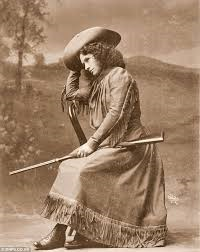
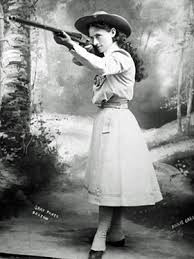
Say the name Annie Oakley and the image of a young woman who could shoot targets out of the sky without a miss and rode across the frontier with Wild West showman Buffalo Bill Cody comes to mind. Annie Oakley was a champion rifle shot and did perform alongside well-known riders, ropers, and Indian chiefs in Colonel Cody’s vaudevillian tour, but there was more to Annie Oakley’s fame than her skill with a gun. The diminutive weapons wonder was a strong proponent of the right to bear arms, a noted philanthropist, and warrior against libel who fought the most powerful man in publishing and won.

The native Ohioan astonished the world with her almost unbelievable feats of rifle marksmanship. She could pepper a playing card sailing through the air, puncture dimes tossed into the sky, and break flying balls with her rifle held high above her head. She once shot steadily for nine hours, using three sixteen-gauge hammer shotguns which she loaded herself, breaking 4,772 out of 5,000 balls.

Annie Oakley fell in love with and married the first man she defeated in a rifle match. Frank E. Butler was one of the most noted marksmen in the West and he and Annie were married for more than fifty years. The couple never had any children of their own. The reasons they were childless are varied and speculative at best. What is not without question is how Annie helped fund the care and education of orphaned children from coast to coast.

Annie Oakley was a combination of dainty, feminine charm and lead bullets, adorned in fringed handmade fineries and topped with a halo of powder blue smoke. She had a reputation for being humble, true, and law abiding and was careful with her character at all times. When powerful, newspaper magnate William Randolph Hearst challenged her honor and questioned her respectability in his publication in 1903, Annie filed a lawsuit against him that’s still discussed at universities today.


To learn more about the famous sure shot read

The Trials of Annie Oakley


Trials of Annie Oakley Book Launch


You’re invited to attend the launch of two new books:

The Trials of Annie Oakley and

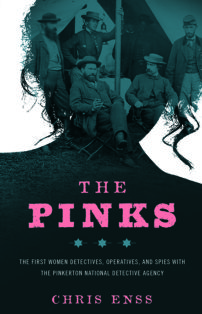
The Pinks: The First Women Detectives, Operatives, and Spies with the Pinkerton National Detective Agency.


The event will be held at the Nevada County Narrow Gauge Railroad Museum in Nevada City, California, on Sunday, September 17, from 12:00 to 2:00 P.M.

Hope to see you there.


Tweet A Western

Tweet us a Western

Western Writers of America is sponsoring a micro-western contest. Micro-westerns are original Western fiction, nonfiction, or poetry stories 280 characters in length (the equivalent of two tweets). Participants have the opportunity to win $500 in cash prizes and have their work recognized and electronically published by WWA. First prize is $300, second is $125, and third prize is $75.

Interested writers with the gift of brevity can post their Westerns on the Western Writers of America’s Twitter account (@Western_Writers) as a private message between September 1, 2017 and November 30, 2017. Winners will be announced on December 15, 2017.

For more information about the micro-western contest including the contest rules visit Western Writers of America’s Facebook page, the WWA website www.westernwriters.org, and of course on Twitter @Western_Writers.


The Forsaken Gambler

Enter for a chance to win a copy of

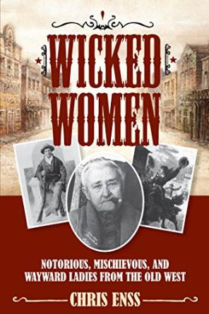
Wicked Women:

Notorious, Mischievous, and Wayward Ladies from the Old West.


Blood spattered across the front of the dark-eyed, brunette gambler Belle Siddons, as she peered into the open wound of a bandit stretched in front of her. Biting down hard on a rag, the man winched in pain as she gently probed his abdomen with a wire loop. She mopped up a stream of blood inching its way to the crude wooden table where he was lying.

Two men on either side of the injured patient struggled to keep his arms and legs still as the stern-faced Belle plunged the loop further into his entrails. “How do you know about gunshots,” one of the rough looking assistants asked? “My late husband was a doctor and I worked with him,” Belle replied. “Is he going to die,” the other man inquired? “Not if I can help it,” Belle said as she removed the wire loop. She shifted through the tissue and blood attached to the instrument until she uncovered a bullet. She smiled to herself as she tossed it into a pan sitting next to her and then set about stitching the man‘s wound closed.

When Belled decided to go west in 1862, she envisioned a comfortable frontier home, a life-long husband and several children. But fate had other plans for the head-strong woman many cowhands admitted was a “startling beauty.”

Belle’s story began in Jefferson City, Missouri where she was born sometime in the late 1830s. Her parents were wealthy land owners who made sure their daughter was well educated. She attended and graduated from the Missouri Female Seminary at Lexingtion, Missouri. Belle’s uncle was the state’s Governor, Claibourne Fox Jackson. She spent a great deal of time with him traveling in elite circles that elevated the charming teenage to the toast of society.

When the war between the states erupted, Missouri residents were divided between support for North and South. Belle and her family were Southern sympathizers, actively seeking ways to crush the Union’s agenda. The attractive, young Ms. Siddons, fraternized with troops training in the area, hoping to glean valuable information from them. They were enamored with her and in their zeal to impress her, shared too much about military plans and the position of soldiers. Belle passed those secrets along to rebel intelligence.

Her deceptive actions were found out by General Newton M. Curtis of the Union Brigade from New York. A warrant was issued for Belle’s arrest in 1862 and she was apprehended 50 miles south of St. Genevieve on the Mississippi. When Belle was captured she was found with proof of her duplicitous behavior in her possession. She had detailed plans of the stops of the Memphis and Mobile Railroad. The rail line was being used by the Union Army to transport supplies and weapons. When questioned about the crime Belle proudly admitted being a spy. She was tried, found guilty and sentenced to a year in prison. She was released after having only served 4 months.


To learn more about the wild ladies on the rugged frontier read

Wicked Women:

Notorious, Mischievous, and Wayward Ladies from the Old West.

 

The Gambling Outlaw

Enter now for a chance to win a copy of

Wicked Women:

Notorious, Mischievous, and Wayward Ladies from the Old West.


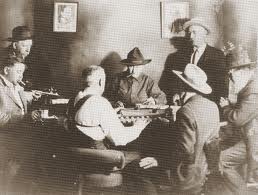
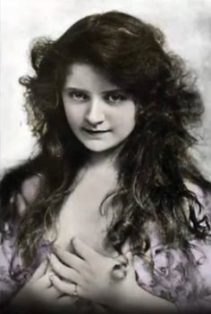
The faces around the poker table in “Poker Alice’s” gambling house in Deadwood, South Dakota, were nonchalant but their nonchalance only veiled excitement. Only the face of “Poker Alice” showed absolutely no flicker of tautness.  She shifted her cigar to the other corner of her mouth and narrowly watched the face of the man holding the only hand, besides hers.  All the others had tossed their cards in the center of the table.  At last: “Well, I’ll see yah,” the man breathed and added another bag of gold dust to the small mountain of bags already in the center of the table.  “What yah got, Alice?”  “Then you ain’t going to raise me again?”  Alice asked and lifted an eyebrow, shifting the cigar once more.  “No?  Well, it’s pretty full,” she said with a sweeping gesture displaying her cards.  “Three aces and a pair of ladies.  Beat that and the dust is yours.”  “Take the pot,” her opponent ordered, and rose.  He stomped disgustedly to the exit of the business and disappeared into the night.

Alice removed a gun from the folds of her skirt and placed it on the table in front of her.  She considered the fact that the disgruntled gambler might walk back into the gaming hall and accuse her of cheating, and she wanted to be ready.  It wouldn’t have been the first time Alice Ivers, more famously known as “Poker Alice,” shot a combative card sharp.   While working at a gambling parlor in Deadwood in 1890, she successfully fended off a drunken miner who had pulled a knife on a fellow dealer.

A steady stream of prospectors, ranchers, and cowhands filtered in and out of a Deadwood saloon owned by a man named Bedrock Tom where Alice worked then.  An inexperienced musician playing an out of tune accordion squeezed out a familiar melody ushering the pleasure seekers walking by the establishment inside.  Burlap curtains were pulled over the dusty windows, and fans hung down from the ceiling and turned lazily.  A distressed mahogany bar stood along one wall of the business, and behind it was a bartender splashing amber liquid into glasses as fast as he could.  A row of table and chairs occupied the area opposite the bar.  Every seat was filled with a card player.  Poker Alice sat among a sea of male gamblers.  She was alarmingly beautiful, fair-skinned, well-dressed, and slim.  She had one eye on the cards she was dealing and another on the men at the game two tables down.

Warren G. Tubbs was studying the cards in his hands so intently he didn’t notice the hulk of a man next to him get up and walk around behind him.  The huge man with massive shoulders and ham-like hands that hung low at his side peered over Warren’s shoulder and eyeballed the mountain of chips before him.  Alice’s intensely blue eyes carefully watched the brute’s actions.  She watched as he casually reached for his belt and produced a sharp knife from a leather sheath hanging off his waist.  Just as he was about to plunge the weapon into Warren’s back, a gunshot rang out.

The frivolity in the saloon came to a sudden halt.  A sick look filled the man’s face, and he slowly dropped the knife.  Before dropping to his knees, he turned to see from which direction the bullet came.  Alice stared back at him, her .38 pistol pointed at his head.  The man collapsed face first onto the floor.  His dead body was quickly removed to make way for another player.  In a matter of minutes the action inside the tavern returned to normal.  Warren caught Alice’s gaze and grinned.  He nodded to her and waggled his fingers in a kind of salute.  She smiled slightly and wholly turned her attention back to the poker game in front of her.


To learn more about the wild ladies on the frontier read

Wicked Women:

Notorious, Mischievous, and Wayward Ladies from the Old West.


Barbary Coast Madam

Enter for a chance to win a copy of

Wicked Women:

Notorious, Mischievous, and Wayward Ladies from the Old West.
 

A parade of horse drawn carriages deposited fashionably dressed San Francisco citizens at the entrance of the Tivoli Theatre. A handsome couple holding hands and cooing as young lovers do, emerged from one of the vehicles. A figure across the street, hidden in the shadows of an alleyway, eyed the pair intently. Once the couple entered the building Tessie Wall stepped out of the darkness into the subdued light of a row of gas lamps lining the busy thoroughfare. Tears streamed down the svelte, blonde’s face. The pain of seeing the man she loved with another woman was unbearable.

Several hours before, Tessie and her ex-husband, Frank Daroux entertained passersby with a robust argument over the other woman in his life. After accusing the man of being a liar and a thief, Tessie begged him for another chance and promised to make him forget anyone else he was involved with. Frank angrily warned Tessie that if she started anything he would put her “so far away that no one would find her.”

The words he had said to her played over and over again in her head. “You’ve got my husband,” she mumbled to herself. “And you’ll get yours someday. It’s not right.” She chocked back a torrent of tears, reached into her handbag and removed a silver-plated revolver. Hiding the weapon in the folds of her dress, she stepped back into the dark alleyway and waited.

It wasn’t long until Frank walked out of the theatre, alone. Standing on the steps of the building, he lit up a cigar and cast a glance into the night sky. Preoccupied with view of the stars, Frank did not see Tessie hurry across the street and race over to him. Before he realized what was happening, Tessie pointed the gun at his chest and fired. As Frank fell backwards he grabbed hold of the rim of a nearby stage. Tessie unloaded two more shots into his upper body. Frank collapsed in a bloody heap.

Tessie stood over his near lifeless frame, sobbing. When the police arrived she was kneeling beside Frank, the gun still clutched in her hand. When asked why she opened fire on him she wailed, “I shot him, cause I love him, God-damn him!”

Tessie Wall was one of the Barbary Coast’s most popular madams. Since entering the business in 1898 her life had been mired in controversy. Born on May 26, 1869, she was one of ten children. Her mother, who died when she was forty-four, named her chubby, ash-blond daughter Teresa Susan Donahue. Her father, Eugene was a dock worker and spent a considerable amount of time away from home. Teresa and her brothers and sisters took care of themselves.

By the time she turned thirteen, Teresa, or Tessie as she was referred to by friends and family, had developed into a beautiful, curvaceous young woman. She turned heads everywhere she went in the Mission District where she lived.


To learn more about the wild ladies on the rugged frontier read

Wicked Women:

Notorious, Mischievous, and Wayward Ladies from the Old West.