Frontier Teachers

Last Chance to Enter to Win a copy of the book Frontier Teachers: Stories of Heroic Women of the Old West.

FrontierTeacherCover

Between 1847 and 1858, more than six hundred female teachers traveled across the frontier to provide youngsters with an education, and the numbers grew rapidly in the decades to come. Enduring hardship, the dozen women included in Frontier Teachers demonstrated untold dedication and sacrifice to bring formal education to the Wild West. These women introduced their students to a world of possibilities – and changed America forever. Women like:

Olive Mann Isbell and Hannah Clapp, who came to class armed with guns to keep students safe from hostile natives.

Eliza Mott, who, lacking schoolbooks and supplies, taught the alphabet using the inscriptions on tombstones.

Lucia Darling and Mary Graves McLench, who trekked hundreds of miles through treacherous country to teach children in the most remote regions.


To learn more read Frontier Teachers: Stories of Heroic Women of the Old West.


The Student Teacher

Enter to win a copy of the book

Frontier Teachers: Stories of Heroic Women of the Old West.


BetheniaOwensAdair

Throughout history teachers have been at the forefront of all civilizations, educating and inspiring the next generation and keeping societies moving forward. Frontier Teachers captures that pioneering, resilient, and enduring spirit of teachers that lives on today.

Tears streamed down twelve-year-old Bethenia Owens’s face as she watched her teacher pack his belongings into a faded, leather saddlebag and slip his coat on over his shoulder. She was heartbroken that the gracious man who introduced her to the alphabet and arithmetic would be leaving to teach school at a far off location. Bethenia’s brothers and sister gathered around him, hugging his legs and hanging onto his hands. Mr. Beaufort had boarded with the Owens family during the three-month summer school term in 1852, and everyone had grown quite attached to him, especially Bethenia.

Mr. Beaufort smiled sweetly at Bethenia as she wiped her face dry with the back of her dirty hand. Streaks of grim lined her thin features and continued on into her hairline. Her long, brown locks protruded haphazardly out of the pigtails behind each ear. The dainty ribbons that once held her hair in place were untied and dangling down the back of her soiled, well-worn gingham dress.

Bethenia would remember this day for the rest of her life and her first teacher Mr. Beaufort. It was his kindness and dedication to education that inspired her to want to be a teacher.


To learn more about Bethenia Owens Adair, the schools teachers like her established, and about the other brave educators in an untamed new country read Frontier Teachers: Stories of Heroic Women of the Old West.


The Sorrowful Teacher

Enter to win a copy of the book

Frontier Teachers: Stories of Heroic Women of the Old West.


MaryGraves


Throughout history teachers have been at the forefront of all civilizations, educating and inspiring the next generation and keeping societies moving forward. Frontier Teachers captures that pioneering, resilient, and enduring spirit of teachers that lives on today.

Mary Graves Clarke, a dark-haired woman with a pale face and deep age lines marking her high cheekbones and small mouth, sat behind a wooden desk staring out a window that was slightly tinged around the edges with frost. The view of the distant snow-covered mountains that loomed over Huntington Lake in Tulare County held her attention for a long while.

The eleven students in the one-room schoolhouse where Mary taught pored over the books in their laps, quietly waiting for their teacher to address them. The pupils ranged in age from six to fifteen years. The majority of the class was girls, a few of whom couldn’t help themselves from whispering while casting worried glances at their distracted teacher. Finally, one of the children asked, “Mrs. Clarke, are you all right?”

Mary slowly turned to the pupils and nodded. “I’m fine,” she assured them. “I was just remembering.”

According to the journal kept by one of Mary’s students, her “expression was one of sadness.” In spite of her melancholy spirit she led the students through a series of lessons then dismissed them for recess. She followed them outside and for a moment was content simply to watch them play. A cold breeze drew her attention back to the mountains and drove her thoughts back to a time when she was a teenager, hopeful and happy; traveling west with her family and other members of the Donner Party.

To learn more about Mary Clarke Graves, the schools teachers like her established, and about the other brave educators in an untamed new country read

Frontier Teachers: Stories of Heroic Women of the Old West.


The University Teacher

Enter to win a copy of the book

Frontier Teachers: Stories of Heroic Women of the Old West.


HannahClapp


Throughout history teachers have been at the forefront of all civilizations, educating and inspiring the next generation and keeping societies moving forward. Frontier Teachers captures that pioneering, resilient, and enduring spirit of teachers that lives on today.

On a bright, sunshiny day in mid July 1859, a dusty, travel-worn, weary schoolteacher named Hannah Clapp trudged into Salt Lake City, Utah. Dressed in a calico blouse and bloomers made of thick, canvas-type material and carrying a pistol, the thirty-five-year-old woman drew stares from the settlers, prospectors, and trappers milling about the main thoroughfare. Hannah made the trip from Michigan with her brother, Nathan, his wife and children, and a handful of other pioneers. The trip across the rough continent had been fraught with peril. The small wagon train had endured disease, starvation, inclement weather, and towering mountains, and had more of the same to look forward to before they would reach California.

Many emigrants were coaxed west by their desire for gold. Hannah was driven by a desire to bring formal education to frontier towns. An unattached female making the journey over the plains was an unconventional as Hannah’s manner of dress. She was not affected by the attention her nonconformist behavior attracted. She was armed and ready to take on anyone who might physically challenge her style or dream of going to California to teach.


To learn more about Hannah Clapp, the schools teachers like her established, and about the other brave educators in an untamed new country read

Frontier Teachers: Stories of Heroic Women of the Old West.


The Orphans’ Teacher

Enter to win a copy of the book

Frontier Teachers: Stories of Heroic Women of the Old West.


SisterMaryRussell


Throughout history teachers have been at the forefront of all civilizations, educating and inspiring the next generation and keeping societies moving forward. Frontier Teachers captures that pioneering, resilient, and enduring spirit of teachers that lives on today.

Sister Mary Baptist Russell and four other nuns from the Sisters of Mercy Convent weaved their way around a parade of scruffy miners, traveling salesmen, and saloon girls crowded on a sturdy dock that was hugging a shore in San Francisco. Wearing black habits complete with scapulars, veils, and coifs, the women stepped aboard the steamer that was splattered with mud and dirt. The deck of the vessel was aswarm with prospectors en route to their diggings down river. Some were sleeping, others were playing cards or discussing their mining claims. The sisters inched their way to a clear spot near the bow and grabbed hold of the railing as the small craft moved slowly away from the landing.

The scene around the bay in August 1863 was chaotic. News of the discovery of gold north of the city had prompted people of every kind and description to pour into the place to gather supplies before rushing to the hills. Men, women, and children were living in shacks, or sleeping on the ground under blankets draped over poles. The noise and pandemonium lessened considerably as the boat continued on past abandoned ships, old square-riggers, and new vessels anchored and waiting patiently for more eager passengers to come aboard.


To learn more about Sister Mary Russell, the Sisters of Mercy, and the school they founded in 1863, and about the other brave educators in an untamed new country read Frontier Teachers: Stories of Heroic Women of the Old West.


The Oregon Teacher – Mary Gray McLench

Enter to win a copy of the book

Frontier Teachers: Stories of Heroic Women of the Old West.


FrontierSchool2


Throughout history teachers have been at the forefront of all civilizations, educating and inspiring the next generation and keeping societies moving forward. Frontier Teachers captures that pioneering, resilient, and enduring spirit of teachers that lives on today.

On March 22, 1851, the steamship the Empire City arrived at the Isthmus of Panama. The sun was hanging low behind a bank of clouds, and the busy seaport lay in purplish twilight. Five ambitious school teachers stood on the deck of the vessel watching the crewmen weigh anchor. Elizabeth Miller, Sarah Smith, Elizabeth Lincoln, Margaret Woods, and Mary Gray were wide-eyed by the feverish activity. A crowd of hundreds blackened the pier in the middle distance. The curious bystanders were like ants on a jelly sandwich. Cannons, firing from the ship’s bows to alert the harbor master that the Empire City was safely moored, rattled Mary, but a word from a deck-mate assuring her that it was routine procedure helped calm her down.

Like the other educators on board, Mary had never encountered anything quite as grand and foreign. Having been born and raised in the Green Mountains of southern Vermont, her experiences were limited to the family farm and a nearby town. At the age of twenty-five she consented to the journey to the Wild West to develop schools and teach in remote areas of the frontier. Mary Almira Gray had already been teaching students to read and write at a one-room schoolhouse in the village of Grafton, not far from her home. As the oldest of four children, she naturally took to helping her siblings to learn, and when she was old enough, she decided to parlay her talent into a profession.


To learn more about Mary Gray McLench and the school she founded in 1863, and about the other brave educators in an untamed new country read

Frontier Teachers: Stories of Heroic Women of the Old West.


The Philosopher’s Teacher

Take a chance and enter to win a copy of the book

Frontier Teachers: Stories of Heroic Women of the Old West.

FrontierTeacherCover


Throughout history teachers have been at the forefront of all civilizations, educating and inspiring the next generation and keeping societies moving forward. Frontier Teachers captures that pioneering, resilient, and enduring spirit of teachers that lives on today.

The long shadows of a beleaguered wagon train stretched across the Carson River Route, a parched trail through Nevada. Pioneers traveling west used this unavoidable route to get to California. The long, dry crossing was one of the most dreaded ordeals of the entire emigrant experience. The sources of fresh, drinkable water were forty miles apart from one another. Thirty-year-old Sarah Royce had read about the desolate section of land in the fragments of a guide book she’d found while on the journey to the Gold Country in 1849. By the time many of the sojourners had reached this part of the trek their wagons and livestock weren’t fit to continue.

Sarah, her husband, and their two-year-old daughter, Mary, stared in amazement at the abandoned vehicles and carcasses of ox and mule teams lying about. It seemed to the weary couple that they could walk over the remains of the animals for the duration of the trip and never touch the ground. The grim markers were nothing Sarah envisioned she would see when she embarked on the six-month venture. Having left her home in Iowa to follow the hordes of other pilgrims hoping to find gold, she set her sights on a serene and profitable life in a country depicted as a utopia. The expedition had proved to be more difficult than she had expected.


To learn more about Eliza Mott and the school she founded in 1863, and about the other brave educators in an untamed new country read

Frontier Teachers: Stories of Heroic Women of the Old West.


The Carson Valley Teacher

It’s time to enter to win a copy of the book

Frontier Teachers: Stories of Heroic Women of the Old West.


School

Throughout history teachers have been at the forefront of all civilizations, educating and inspiring the next generation and keeping societies moving forward. Frontier Teachers captures that pioneering, resilient, and enduring spirit of teachers that lives on today.

A precious, wide-eyed seven-year-old boy studied a sample of the alphabet in front of him and tried to copy the material onto a small slate with a broken piece of chalk. His teacher, Mrs. Eliza Mott, stood over his shoulder, kindly guiding him through the work and praising him for his effort. A handful of other youngsters reviewed the letters and practiced writing them out with pencil stubs on scraps of paper. Eliza’s kitchen served as a classroom, and students sat on bare logs around a crude, wooden table – some enjoying the learning process; others cursing the day school was created.

The Carson Valley area where Eliza and her husband, Israel settled in 1851 needed a place where children could learn the three R’s. In early 1852, the Motts offered their home as a temporary school; and, armed with a pair of McGuffey Readers, Eliza began teaching. Monday through Friday she welcomed boys and girls dressed in plaid, gingham dresses, home-knit stockings, tan trousers and over-shirts, who were either barefoot or wearing rough shoes with hard leather soles. The class ranged in age from five to eleven years. It toiled over a variety of subjects, sharing the limited books on spelling and arithmetic. On a few occasions, Eliza escorted the children to the small cemetery to read the epitaphs on the tombstones. It served not only to aid the students in learning to read but instilled a sense of reverence for those who had passed away helping to tame the wild territory.


To learn more about Eliza Mott and the school she founded in 1863, and about the other brave educators in an untamed new country read

Frontier Teachers: Stories of Heroic Women of the Old West.


The Prairie Teacher

Time to enter to win a copy of the book

Frontier Teachers: Stories of Heroic Women of the Old West.

PrairieTeacher


Throughout history teachers have been at the forefront of all civilizations, educating and inspiring the next generation and keeping societies moving forward. Frontier Teachers captures that pioneering, resilient, and enduring spirit of teachers that lives on today.

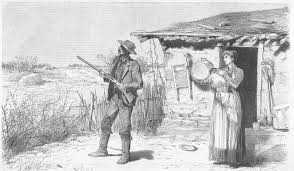
Twenty-one-year-old Anna Webber rubbed her eyes and leaned against the rough wall of the sod schoolhouse where she taught. The view from the window of the small building framed the tall grass and wheat field around Blue Hill, Kansas, perfectly. A slight breeze in the middle distance brushed across the tops of cottonwood trees lining the banks of the Solomon Rivers, richly adding to the peaceful scene.

Anna squinted into the sunlight filtering into the tiny classroom and stretched her arms over her head. The one-room schoolhouse was empty of students, and the young teacher was sitting on the floor grading papers. The room was only big enough for a half dozen pupils but served more than sixteen children on most days.

Inside the roughly constructed building, made from strips cut from the prairie earth found in abundance around the small settlement, the furnishings consisted of a chair for the teacher and several boards balanced on rocks for the students to sit. There was no blackboard and no writing desks. The primitive conditions made Anna’s job more difficult than she had anticipated and robbed her of the job she initially felt when she entered the profession.


To learn more about Anna Webber and the school she founded in 1863, and about the other brave educators in an untamed new country read

Frontier Teachers: Stories of Heroic Women of the Old West.


The Montana Teacher

Time to enter to win a copy of the book

Frontier Teachers: Stories of Heroic Women of the Old West.


LuciaDarling


Throughout history teachers have been at the forefront of all civilizations, educating and inspiring the next generation and keeping societies moving forward. Frontier Teachers captures that pioneering, resilient, and enduring spirit of teachers that lives on today.

The sprawling mining community of Bannack, Montana, was awash in the far-reaching rays of the morning sun. The rolling hills and fields around the crowded burg were thick with brush. Saffron and gold plants dotted the landscape, their vibrant colors electric against a backdrop of browns and greens. Twenty-seven-year-old Lucia Darling barely noticed the spectacular scenery as she paraded down the main thoroughfare of town. The hopeful schoolmarm was preoccupied with the idea of finding a suitable place to teach. Escorted by her uncle, Chief Justice Sidney Edgerton, Lucia made her way to a depressed section of the booming hamlet searching for the home a man rumored to have a building to rent.

Referring to a set of directions drawn out on a slip of paper, Lucia marched confidently to the door of a rustic, rundown log cabin and knocked. When no one answered right away, Chief Justice Edgerton took a turn pounding on the door. Finally, a tired voice called out from the other side for the pair to “come in.”

To learn more about Lucia Darling and the school she founded in 1863, and about the other brave educators in an untamed new country read

Frontier Teachers: Stories of Heroic Women of the Old West.