Entertaining Women at the Autry Museum of the American West

EntertainWomen


You’re cordially invited to attend the Cowboy Lunch Series at the Autry Museum of the American West in Los Angeles on May 18, 2016 for a special tribute to actor/director John Wayne.

The Cowboy Lunch Series brings together western filmmakers and stars with Autry Museum members and other fans of the genre. Order lunch at Autry’s Crossroads Café and join actors, producers, stunt coordinators, makeup artists, writers, and other surprise guests. Hollywood producer, Rob Word hosts “A Word on Westerns” a group discussion based on the particular theme or film of the month.

The theme for the May Cowboy Lunch Series is a Salute to Wayne. John Wayne’s son actor Patrick Wayne will be in attendance to discuss his father’s work. New York Times Bestselling author Chris Enss will also be on hand to talk about her book Entertaining Women: Actresses, Singers, and Dancers of the Old West. She’ll share stories about women entertainers on the wild frontier and how they inspired some of the actresses who starred opposite John Wayne.

The event is free to the public. Cost of lunch is not included.

For more information visit http://theautry.org or call 323.667.2000.


High Country Women: Pioneers of Yosemite National Park

Celebrate the 126th anniversary of Yosemite!

Enter now for a chance to win the book

High Country Women: Pioneers of Yosemite National Park

HighCountry


The United States was preoccupied with a Civil War when Congress approved the measure signed by President Abraham Lincoln that made Yosemite a National Park. In spite of the terrible strife the country was experiencing politicians and conservationists believed action needed to be taken to preserve the wilderness nestled in the Sierra Nevada Mountains.1

The seven-hundred and sixty-one thousand acres that featured giant sequoia groves with trees thousands of years old and many unique geological formations was the destination of choice for many fur trappers and adventurers. In the mid-1820s beaver, bear, and mountain lion hides were in great demand, and expanding the western boundaries beyond the Mississippi river was encouraged by entrepreneurs and officeholders. Fearful that Yosemite’s natural beauty would be eroded away by the progress of civilization, concerned individuals pressed lawmakers to make the area off limits to Argonauts, hunters, and land developers. On June 30, 1864, Yosemite became the first scenic reservation by a central government.2

Frontiersman Joseph Reddeford Walker is credited with discovering Yosemite Valley in 1833 when he led an expedition of fifty men into the mountainous California territory. By 1849 a sea of humanity was migrating west. Driven by the Gold Rush and a desire to settle in a new land, prospectors, farmers, businessmen, ranchers, innkeepers, cooks, laundresses, teachers, and entertainers hurried to the West Coast. Men and women miners and their families pushed their way passed the Native Americans living in the Yosemite Valley with the intention of stripping the region of its gold. Indians who resisted the incursion of small gold mining operations on the Merced River were moved to a reservation near Fresno.3

White men such as naturalist John Muir and women such as author and political activist Jessie Fremont opposed the idea of mining in the scenic locale. Both believed the natural beauty of the area and wildlife would be threatened if exposed to toxic chemicals used to separate gold ore from rock. John spent years studying Yosemite Valley’s geology and botany and had determined its mountain ranges were formed by glacial erosion. The Maidu, Miwok, and Paiute Indians disagreed with his research. Indian legend passed down from father to son and mother to daughter insists that the mountain Half Dome, her husband, Washington Tower, and their infant son did it all.4

As the story goes, Half Dome lived with her husband, Washington Tower on the bank of the Merced River at a point on the edge of the San Joaquin Valley. Owing to some quarrel with her husband, Half Dome ran away toward the east. As she proceeded up through the mountains she created the upper course of the Merced River and the Yosemite Valley itself. She carried a burden basket, a finely feathered basket and her baby in its cradle. In the finely feathered basket she carried a smaller basket containing seeds of various kinds which she planted all along the way. Hence, there are many different kinds of these trees and foods now.5

Finding that his wife had left him, Washington Tower cut a white oak club and started after her. He overtook her near the point where this great peak now stands. She had taken her baby out of its cradle basket and placed it on the top of the load in the burden basket, carrying the cradle meanwhile under her arm.

Washington Tower whipped Half Dome severely. The burden basket was broken and fell with its contents into Mirror Lake. It has never since been seen. The basket containing the seeds was thrown to the north side of the canyon. It landed bottom up and became North Dome.

Half Dome threw the baby cradle against the north wall of the canyon where it now appears in the Royal Arches.

As Half Dome received her punishment she wept bitterly and was transformed into the great peak. The dark colored streaks on the vertical wall on the north of Half Dome are the tear stains on her face. She wore, at the time, a buckskin dress but nothing now remains to indicate it.

The club Washington Tower used was finally thrown aside. It landed upright in the center of Mirror Lake and remained there for some time as a large, black snag. When Washington Tower had spent his wrath he went over to the north side of the valley where he has since remained a great shaft of granite.6

Maria Lebrado, a member of the original Yosemite Indian tribe, shared this tale about the origin of the region with the pioneers who moved into the valley, the majority of which were men. Only ten percent of the white population that invaded Yosemite in the early 1850s were women. Though their numbers were few, the impact they had on the areas was as lasting as the exploits of Half Dome. For example, Elvira Hutchings came to Yosemite with her husband in 1855 and began her career as one of the original innkeepers in the valley. She was more than twenty years younger than her husband, James Mason Hutchings, the man who led the first tour party into Yosemite. Their marriage didn’t last but the inn she helped establish did.7

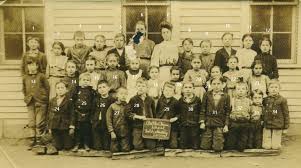
Ida Tinsley Howard was the valley’s first schoolmarm in 1876. She came west with her father who operated a resort on Mirror Lake at the east end of Yosemite. Ida made sure her students were proficient in math, especially algebra.8

Carefree maid and waitress Kitty Tatch was a pioneer in the field of photography in Yosemite, in front of the camera, however, not behind. She was unafraid of heights and posed precariously on ledges and cliffs around the park. Pictures of her were sold as postcards to visitor at valley restaurants and stage stops.9

In 1905, Agnes Wikenson, Ann Taurer, Ethel and Ann Fullerton were the first women in Yosemite to be held up by a highwayman. The stagecoach the ladies were traveling in was stopped by an armed, masked bandit who took all the money the women had. The stage passengers continued on to their destination, a campsite near Indian Village, and were in the valley when the fugitive was arrested by authorities in Sacramento two days after the incident.10


To learn more about the women who helped make

Yosemite a National Park read

High Country Women: Pioneers of Yosemite National Park


Elizabeth Custer – Champion of the Seventh

The difference between winning and losing is most often…not quitting.

Enter for a chance to win a copy of the new book

Soldier, Sister, Scout, Spy:

Women Soldiers and Patriots of the Western Frontier.

 ElizabethCuster

It was almost two in the morning, and Elizabeth Custer, the young wife of the famed “boy general” George, couldn’t sleep. The heat kept her awake—a sweltering intense heat that had overtaken Fort Lincoln in the Dakota Territory earlier that day. Even if the conditions had been more congenial, however, sleep would have eluded Elizabeth. The rumor that had swept through the army post around lunchtime disturbed her greatly, and, until this rumor was confirmed, she doubted that she’d be able to get a moment’s rest.

Elizabeth, or Libbie as her husband and friends called her, carried her petite, slender frame over to the window and gazed out at the night sky. It had been more than two weeks since she had said good-bye to her husband. She left him and his battalion a few miles outside the fort. George had orders from his superior officers in Washington, DC, to “round up the hostile Indians in the territory and bring about stability in the hills of Montana.” Elizabeth knew he would do everything in his power to fulfill his duty.

George and Elizabeth said their good-byes, and she headed back to the fort. As she rode away, she turned around for one last glance at General Custer’s column departing in the opposite direction. It was a splendid picture. The flags and pennons were flying, the men were waving, and even the horses seemed to be arching themselves to show how fine and fit they were. George rode to the top of the promontory and turned around, stood up in his stirrups, and waved his hat. They all started forward again and in a few seconds disappeared—horses, flags, men, and ammunition all on their way to the Little Bighorn River. That was the last time Elizabeth saw her husband alive.

Over and over again, she played out the events of the hot day that had made her restless. She and several other wives had been sitting on the porch of her quarters singing, reluctant for some inexplicable reason to go inside. All at once they noticed a group of soldiers congregating and talking excitedly. One of the Native scouts, a man named Horn Toad, ran to them and announced, “Custer killed. Whole command killed.” The women stared at Horn Toad in stunned silence. Finally, one of the wives asked the man how he knew that Custer was killed. He replied, “Speckled Cock, Indian scout, just come. Rode pony many miles. Pony tired. Indian tired. Say Custer shot himself at end. Say all dead.”

Elizabeth remembered George’s warning about trusting in rumors. She believed that there might have been a skirmish but felt it unlikely that an entire command could be wiped out. At that moment, she refused to believe George would ever dare die. She would wait for confirmation before she did anything else. Now, in her bedroom, listening to the chirping of the crickets and the howls of the coyotes, she sat up, wide awake, waiting.

The loud sound of boots tromping across the path toward her front door gave her a start. She hurried to the door and threw it open. Captain William S. McCaskey entered her home, holding his hat in his hands. He didn’t want to be there. Elizabeth looked at him with eyes pleading. “None wounded, none missing, all dead,” he sadly reported. Elizabeth stood frozen for a moment, unable to move, the color drained from her face.

“I’m sorry, Mrs. Custer,” the captain sighed. “Do you need to sit down?”

Elizabeth blinked away the tears. “No,” she replied. “What about the other wives?”

“We’ll let them know of their husbands’ fates,” he assured her.

Despite the intense heat, Elizabeth was now shivering. She picked up a nearby wrap and draped it around her shoulders. Her hands were shaking. “I’m coming with you,” she said, choking back the tears. “As the wife of the post commander it’s my duty to go along with you when you tell the other . . . widows.” The captain didn’t argue with the bereaved woman. He knew there would be no point. Elizabeth Custer was as stubborn as her general husband—if not more so.


 To learn more about Elizabeth Custer

and the lives of many other courageous women read

Soldier, Sister, Scout, Spy:

Women Patriots and Soldiers on the Western Frontier.


Posse Makes Way to Nebraska, History Riding With Them


Posse1


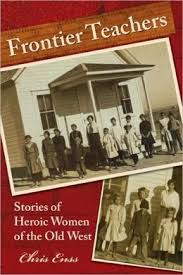
Take a literary ride with the Most Intrepid Western Author’s Posse as they travel through the sand hills and Great Plains of Nebraska. The Most Intrepid Western Author’s Posse is comprised of five published, award-winning western authors; Monty McCord author of Mundy’s Law: The Legend of Joe Mundy and Hastings: The Queen of the Plains; Sherry Monahan author of Mrs. Earp: The Wives and Lovers of the Earp Brothers, The Cowboy Cookbook, and Frontier Fare; Bill Markley author of Deadwood Dead Men and Dakota Epic: Experiences of a Reenactor During the Filming of Dances with Wolves, Kellen Cutsforth author of Buffalo Bill, Boozers, Brothels, and Bare-Knuckle Brawlers: An Englishman’s Journal of Adventure in America, and Chris Enss author of Frontier Teachers: Stories of Heroic Women of the Old West, Hearts West: Mail Order Brides of the Old West, and Object Matrimony: The Risky Business of Mail-Order Matchmaking on the Western Frontier will tell exciting tales of the Old West.

Stories told by the posse promise to transport readers back to the days of the wild frontier when times were rowdy and justice was swift.

The Most Intrepid Western Author’s Posse’s first stop will be in Beatrice at the Homestead National Monument of America on Saturday, June 11 from 2 p.m. – 4 p.m.  On Sunday, June 12 the Posse will be at the Stuhr Museum in Grand Island from 3 p.m. – 5 p.m. The Posse will be discussing their books and the legendary characters that helped shape the American West.

For more information visit www.chrisenss.com.

Soldier, Sister, Spy, Scout

Winning isn‘t everything, but wanting to win is.

Enter to win a copy of the new book

Soldier, Sister, Scout, Spy:

Women Soldiers and Patriots of the Western Frontier.

 SisterSoldierSpy

From the earliest days of storytelling, the courageous man has been celebrated in myth and legend. Every culture develops stories about dauntless adventurers, valiant patriots, fearless warriors, and heroic leaders. These stories teach as well as entertain and set up positive role models to inspire future generations. Sometimes, these dauntless, valiant, fearless, and heroic individuals are women.

The true stories you’ll find in this book about women in the American West illustrate the depth of courage, the physical bravery, and the commitment to a cause that impelled them to throw off the constraints of nineteenth-century conventions and plunge into situations that many men of their era would not, and did not, face.

In the latter half of the nineteenth century, the US Army battled western Native American tribes over territorial rights, resources, and culture. Each side had its motives, its victories, its defeats, its victims, and its heroes. Among those heroes, on both sides, were women—wives, mothers, interpreters, laundresses, soldiers, and shamans—who willingly headed into the unknown, into a land fraught with danger and hardship. Courageous defines the character of the thousands of women who left the towns and cities of the East for the unknown dangers of the western territories. Setting up housekeeping in wild, unsettled lands, risking their lives on the journey, and bearing children under primitive conditions tested their courage daily. The stories selected for this book describe some who went two or three steps beyond the ordinary, everyday courage of women in the West.

 To learn more about these courageous women read

Soldier, Sister, Scout, Spy:

Women Patriots and Soldiers on the Western Frontier.


Calamity Jane – Mysterious Marvel

Be a winner. Enter to win a copy of the new book

Soldier, Sister, Scout, Spy:

Women Soldiers and Patriots of the Western Frontier.

 CalamWGun

Cold rain lashed the huddle of tents staked just outside the rough encampment at Rapid City. Wind howled across the Dakota Territory as though driven by the devil himself, rattling the dripping canvas and blowing crude shakes from the leaky roofs of the buildings. Struggling through the mud, a young woman leaned into the gale and cursed. The stupidity of setting up a camp for sick soldiers on the lowest ground near General Crook’s encampment was enough to make a deacon swear, thought Martha Jane Canary.

The wind tore the tent flap from her grasp. Cursing again, she grabbed the wet canvas and yanked it into place. A lantern swaying from a hook on the tent pole cast meager light on the three men huddled in damp bedrolls. Martha Jane bent down to examine their scruffy faces, looking for the flush of fever, the outbreak of pustules, or the gray stillness of death.

Martha Jane knew the risk of close contact with these particular sick men. Settlers and soldiers moving onto the northern plains in 1876 still talked about the terrible smallpox epidemic of 1837. At the first sign of fevers or red lesions, victims were isolated because the contagion spread so quickly—and so fatally. It had literally wiped out whole tribes of Native Americans and killed thousands of fur traders, prospectors, and settlers.

The Indians called it “Rotting Face” because that’s exactly what it looked like. Fevers as high as 106 degrees, terrible back pain, a vicious headache that hammered with each heartbeat, chills, nausea, and convulsions marked the onset of the disease. Four days into the illness, the flat, red lesions appeared; then they puffed up and became clear blisters filled with pus that sometimes merged into one gigantic, painful mass.

Smallpox victims were unable to care for themselves and were often dumped into “pest houses” to prevent the spread of the sickness. Twenty-four-year-old Martha Jane Canary knew the symptoms and the fate of those who came into contact with the disease. Yet, she’d volunteered to nurse those in the leaky tents set up outside the town.

She breathed a sigh of relief after studying her patients. None of the men she examined in the cold, damp tent showed those terrifying symptoms. “Hell and Hallelujah,” she muttered. One by one, faces turned toward her voice, and crusted, red-rimmed eyes opened. “You boys look worse than grizzly bears with the mange,” she cracked. Gesturing toward the covered bucket she’d lugged down from town, Jane announced, “I got venison stew in the bucket.”

“You cook it?” asked one man as he struggled up on an elbow. He cast a doubtful glance at the pail.

“Hell, no. But I shot the damn deer just so you don’t have to eat no more of that mush you was whinin’ about.” The fierce frown gave way to a grin. “You boys need to build up your strength. I haven’t had a drink or a game since the fever hit, and I’m getting mighty restless.”

The men grinned in sympathy. They knew their nurse quite well.


To learn more about Calamity Jane and other such patriots read

Soldier, Sister, Scout, Spy:

Women Patriots and Soldiers on the Western Frontier.


Juliet Fish Nichols – Lighthouse Keeper

Winning is easy.  Enter to win a copy of the new book

Soldier, Sister, Scout, Spy:

Women Soldiers and Patriots of the Western Frontier.

JulietFishNichols

Thick, damp, and cold fog pressed against the windows of the small house at Point Knox, condensed in a muted bronze gleam on the huge bell, slipped clammy fingers inside the cloak of the woman shivering on the small platform. Waves splashed and foamed against the rocks far below the wet planks where Juliet Fish Nichols listened tensely for the creak of rigging or the dull thunder of a steamship’s engine. She hoped she heard something before she saw it because any ship close enough to see was doomed.

Automatically, her throbbing arm lifted, and she rapped the small hammer twice against the side of the three-thousand-pound bell. Fifteen seconds later, she struck the bell again. Then, after counting off another fifteen seconds, she elevated the hammer and banged twice more on the great bell. Again and again, eight times each minute, Juliet lifted her aching arm and rang the bell, warning ships away from Angel Island in fogbound San Francisco Bay.

At least four ships were due in port that first week of July 1906: the Capac, City of Topeka, and Sea Foam, all of which plied the California coast, as well as the transpacific steamer Mongolia loaded with passengers from the Far East. Unfortunately, the crystal-clear atmosphere of July 1 had deteriorated rapidly in the following few days. Visibility was often no more than a few yards. Impenetrable fog concealed every landmark.

Juliet had seen the annual summer phenomenon many times, but this year the job of warning approaching ships away was doubly important. Rebuilding was in full swing following the great 1906 earthquake. The already hectic harbor was a mad scramble of activity with hundreds of ships attempting to navigate the bay’s treacherous currents, escape ship-eating rocks, and find their way through heavy fog. The lighthouses, fog sirens, and bells were critically important.

Juliet stood on the small platform with a hammer in hand because, once again, the Gamewell Fire Alarm Number 3 clockworks, which powered the mechanism that rang the Angel Island bell, had quit working. During a brief lifting of the fog, Juliet had sent a telegram to the lighthouse engineer and then serviced the small, stationary red light on the southwest corner of the station. Because the light was intended for fair nights and not thick fog, it would be virtually useless as a warning.

To learn more about Juliet Fish Nichols and other such patriots read

Soldier, Sister, Scout, Spy:

Women Patriots and Soldiers on the Western Frontier.


Winema – Woman Chief

Winning made easy.  Enter to win a copy of the new book

Soldier, Sister, Scout, Spy:

Women Soldiers and Patriots of the Western Frontier.

 Winema1

A lone Native American woman cautiously led her chestnut mare through the bluffs around Klamath Lake, an inland sea twenty miles north of the line dividing California and Oregon. The rider was Mrs. Frank “Tobey” Riddle. She belonged to the Modoc tribe that settled in the area; they called her Winema. She was known among her family and friends as one who possessed great courage and could not be intimidated by danger. She pressed past the jagged rocks lining the transparent water, praying to the great god Ka-moo-kum-chux to give her abundant courage in the face of the certain danger that she was about to encounter.

Winema was a mediator between the Modoc people, other Indian tribes in the area, and the US Army. With her skills, she was able to negotiate treaties that kept the land of her ancestors in peace. Whenever that peace was threatened, her job was to set things straight. She was on her way now to do just that—riding into hostile Modoc territory to persuade the chief to surrender to the cavalry.

Chief Keintpoos, or Captain Jack (a name given to him by the settlers because of his liking for brass buttons and military medals on his coat), was Winema’s cousin. In 1864, the US government forced his people from their land onto a reservation in Oregon. Conditions on the reservation were intolerable for the Modoc people. They were forced to share the land with Klamath Indians of the region. The Modoc and the Klamath tribes did not get along. The latter particularly hated the Modoc people because they had long been defeated by them in battle. Now suddenly their old enemies were moved into their midst. The Modoc Indians struggled to live in this hostile environment for three years. Modoc leaders appealed to the US government to separate the tribes, but officials refused to correct the problem. In 1869, Captain Jack defied the laws of the white man and led his tribe off the reservation and back into the area where their forefathers had first lived.

The cavalry and frustrated members of the Indian Peace Council wanted to use force to bring Captain Jack and his followers back to the reservation. Winema persuaded them instead to give her a chance to talk with the chief. “No peace can be made as long as soldiers are near,” she told them. “Let me speak with my cousin and see what can be done without war.”

As Winema made her way around the jagged sides of the mountains, she thought of her son. Before she’d left on her journey, she’d held the infant in her arms and kissed his lips. Although she was traveling under a flag of truce, she considered the possibility of being seen as a traitor by her people and being struck down before she could plead her case. She shuddered a moment at the thought, then, with a set face, spurred her horse forward. I will see my little boy again, she promised herself.

When Winema reached the Modoc camp, Captain Jack’s men gathered around her. A dozen pistols were drawn upon her as she dismounted. She eyed the angry tribesmen as they slowly approached her. Then, walking backward until she stood upon a rock above the mob, she clasped her right hand upon her own pistol, and with the other on her heart she shouted aloud, “I am a Modoc myself. I am here to talk peace. Shoot me if you dare, but I will never betray you.” Her bravery in the face of such difficulty won the admiration of her people, and, instantly, a dozen pistols were drawn in her defense.


 To learn more about Winema and other such patriots read

Soldier, Sister, Scout, Spy:

Women Patriots and Soldiers on the Western Frontier.


Frances Boyd – The Lieutenant’s Wife

Enter to win a copy of the new book

Soldier, Sister, Scout, Spy:

Women Soldiers and Patriots of the Western Frontier.

 FrancesBoyd

Frances eyed the horizon before them then disappeared into the wagon. She picked up two sabers lying next to a trunk, unsheathed them, and thrust them out either side of the back of the wagon. From a distance she hoped it would look like they were armed with more travelers who were ready to do battle with the Apaches. Unless they come very close, she thought, the dim light will favor our deception.

She returned to her husband’s side, cradling a pistol in her lap. The strap on Orsemus’ gun in his holster had been undone, and he was ready to fire his weapon as well. The riders in front of them had pulled their bayonets from their sheaths, the blades gleaming in the low-hanging sun. Frances believed the small band looked as warlike as possible. Members of the Eighth Cavalry had passed this same way a few days before and had been assaulted with bullets from some of Apache leader Geronimo’s warriors. Frances and the others were relying on an appearance of strength they in nowise possessed. They knew the Natives would not attack unless they were confident of victory.

The train proceeded into the canyon. The mountain walls on either side were jagged and high. They were a treacherous color against which an Indian could hide himself and almost seem to be a part of them. Frances later wrote that their “hearts quivered with excitement and fear at the probability of an attack.”

The going was slow, and, as time progressed without any hint of an ambush, the party started to relax. Then, suddenly, they heard the fearful cry of an Indian. His cry was answered by another.

Frances stared down at her baby lying at her feet. The child was bundled up in many blankets and sleeping soundly. Orsemus urged on the mule team pulling the wagon through the imposing gorge. Everyone with the party believed death was moments away. “At last, and it seemed ages,” Frances later recalled, “we were out of the canyon and on open ground.” The Boyds eventually met up with a large party of freighters and made their way to the northern part of the state, frazzled but unharmed. Thus was the life of a military wife on the wild frontier.

Women like Frances Boyd chose to endure the hardships of army living in order to make life for their husbands less burdensome and to help settle an untamed land. “I cast my lot with a soldier,” Frances wrote in her memoirs, “where he was, was home to me.”

Frances Anne was born into a well-to-do family in New York City on February 14, 1848. Her father owned a bakery; her mother was a housewife who died when Frances was quite young. Historians record that she was a bright girl with an agile mind. She met Orsemus Boyd when she was a high school senior and he was a cadet at West Point. They were married a year later, on October 9, 1867. Orsemus had a desire to go west, and Frances had a desire to be with Orsemus.

 To learn more about Frances Boyd and other such patriots read

Soldier, Sister, Scout, Spy:

Women Patriots and Soldiers on the Western Frontier.


Juana Navarro Alsbury – Alamo Survivor

Enter to win a copy of the new book

Soldier, Sister, Scout, Spy:

Women Soldiers and Patriots of the Western Frontier.

Alamo

The distant cadence of drums from the nearly deserted town of San Antonio de Bexar sent a shiver of fear through Juana Navarro Alsbury. She clutched her baby son closer and strained to hear. Mexican president and General Antonio Lopez de Santa Anna, enemy of her uncle and her husband, had come when least expected, bringing thousands of men and artillery as well as a thirst for vengeance. The baby wailed at the nearby roar of exploding powder from the cannon mounted at one corner of the Alamo.

That shot signaled defiance by the Texians (Texans from the United States) and Tejanos (Texans of Mexican descent) holed up in the old mission. Juana soothed the baby and waited, holding her breath for Santa Anna’s response.

It was said he had 1,500 to 6,000 troops, cavalry, and cannon at his command. Inside the crumbling fortress were several dozen women and children protected by fewer than 200 defenders. Juana’s new husband, Dr. Horatio A. Alsbury, had galloped off to find volunteers to join the fight, leaving Juana and the baby behind.

Dr. Alsbury had warned that Santa Anna would come down with a heavy hand on the Tejanos and Texians who had settled in the area. Her husband’s activities were known to the Mexican dictator, as were those of her father, who opposed Santa Anna’s overthrow of the constitution of 1824. Her father’s brother, Jose Antonio, had put his name on the Texas Declaration of Independence. If the Alamo fell under the general’s onslaught, the respected name of her Spanish forebears would not protect her little family.

Juana recognized the futility of attempting to hold off the overwhelming force of hardened troops surrounding the old mission-turned-fortress. Those inside the Alamo’s walls were also ill-prepared to fight Santa Anna, in part because too many people had discounted the Mexican dictator’s determination. He had already killed all prisoners taken in a battle the year before and been granted by the Mexican government permission to treat as pirates all Tejanos as well as Texians found armed for battle, meaning they would be executed immediately.

The Tejanos and Texians had dismissed reports that the Mexican dictator was nearby. After all, they argued, two blue northers had recently swept through the area, their freezing winds covering the barren landscape to the south with snow. What commander would move his troops, many of them barefoot, in such conditions?

Enter to win here:

To learn more about Juana Navarro Alsbury and other such patriots read

Soldier, Sister, Scout, Spy:

Women Patriots and Soldiers on the Western Frontier.