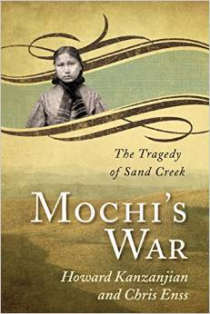
Mochi’s War: The Tragedy of the Sand Creek Massacre is a finalist for a
Will Rogers Medallion Award in the Category of Western Non-Fiction


In the early days of westward travel, when men and women left behind their homes and acquaintances in search of wealth and happiness, there was a recognized need for some method of honorable introduction between the sexes. The need was readily fulfilled by the formation of a periodical devoted entirely to the advancement of marriage. Throughout the 1870s, 80s and 90s, that periodical, to which many unattached men and women subscribed, was a newspaper called Matrimonial News. Here’s a sample of one of the advertisements that appeared in the publication:
No. 206 Dear Old Men, here is your chance to get a true loving companion. I am a widow by death; age 69 years, but don’t look or feel or act over 40; always in good humor, very loving and kind; a good housekeeper, weight 104, height 5 feet 2 inches, blue eyes, brown hair: would like to meet some congenial gentleman near my own age, with means enough to make a good home.
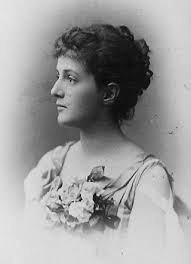
In the early days of westward travel, when men and women left behind their homes and acquaintances in search of wealth and happiness, there was a recognized need for some method of honorable introduction between the sexes. The need was readily fulfilled by the formation of a periodical devoted entirely to the advancement of marriage. Throughout the 1870s, 80s and 90s, that periodical, to which many unattached men and women subscribed, was a newspaper called Matrimonial News. Here’s a sample of one of the advertisements that appeared in the publication:
No, 228 – If there is a gentlemen of honor and intelligence between the age of 35 and 50 who wants a genuine housekeeper, let him write to this number. I am a widow, 34 years old, weight 110 pounds, 4 feet and 5 inches in height: am brunette and have very fine black hair.
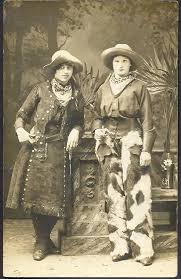
In the early days of westward travel, when men and women left behind their homes and acquaintances in search of wealth and happiness, there was a recognized need for some method of honorable introduction between the sexes. The need was readily fulfilled by the formation of a periodical devoted entirely to the advancement of marriage. Throughout the 1870s, 80s and 90s, that periodical, to which many unattached men and women subscribed, was a newspaper called Matrimonial News. Here’s a sample of one of the advertisements that appeared in the publication:
No. 245 – I am fat, fair and plan on losing no weight. I am 48, 5 feet high. Am a No. 1 lady, well fixed with no encumbrance: am in business in city, but want a partner who lives in the West. Want an energetic man that has some means, not under 40 years of age and weight not less than 180; of good habits. A Christian gentlemen preferred.
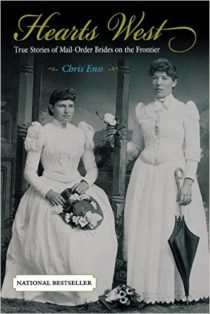
A Husband Wanted
By a lady who can wash, cook, scour, sew, milk, spin, weave, hoe, (can’t plow), cut wood, make fires, feed the pigs, raise the chickens, rock the cradle, (gold-rocker, I thank you sir!), saw a plank, drive nails, etc. These are a few solid branches; now for the ornamental. “Long time ago” she was good at syntax. She can read Murray’s Geography and through the rules in Pike’s Grammar. Could find six states on the Atlas. Could read, and you can see she can write. Can – no, could paint roses, butterflies, ships, etc. Could once dance, can ride a horse, donkey or oxen, besides a great many things too numerous to be named.
Now for her terms. Her age is none of our business. She is neither handsome nor a fright, yet an old man need not apply, nor any who have not a little more education than she has, and a great deal more goods, for there must be $20,000 settled on her before she will bind herself to perform all the above.
Advertisement placed in the Marysville, California newspaper in April 1849 by Dorothy Scaraggs.
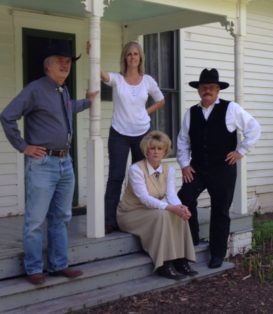
Take a literary ride with the Most Intrepid Western Author’s Posse as they travel through the sand hills and Great Plains of Nebraska. The Most Intrepid Western Author’s Posse is comprised of five published, award-winning western authors; Monty McCord author of Mundy’s Law: The Legend of Joe Mundy and Hastings: The Queen of the Plains; Sherry Monahan author of Mrs. Earp: The Wives and Lovers of the Earp Brothers, The Cowboy Cookbook, and Frontier Fare; Bill Markley, author of Deadwood Dead Men and Dakota Epic: Experiences of a Reenactor During the Filming of Dances with Wolves, Kellen Cutsforth, author of Buffalo Bill, Boozers, Brothels, & Bare-Knuckle Brawlers: An Englishman’s Journal of Adventure in America, and Chris Enss, author of Frontier Teachers: Stories of Heroic Women of the Old West, Hearts West: Mail Order Brides of the Old West, and Object Matrimony: The Risky Business of Mail-Order Matchmaking on the Western Frontier will tell exciting tales of the Old West.
Stories told by the posse promise to transport readers back to the days of the wild frontier when times were rowdy and justice was swift.
The Most Intrepid Western Author’s Posse’s first stop will be the Sturh Museum in Grand Island on Friday, June 10 from 3 p.m. to 5 p.m. On Saturday, June 11, the Posse will be in Beatrice at the Homestead National Monument of America from 2 p.m. to 4 p.m. The Posse will be discussing their books and the taming of the Wild West.
For more information visit www.chrisenss.com.
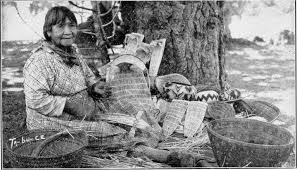
The dark clouds that hovered over a crude trail in Yosemite Valley in May 1899 broke loose with a torrent of rain that nearly knocked Paiute Indian Maggie “Ta-bu-ce” Howard and her fourteen-year-old niece, May Tom, off the rocky path where they walked. Mighty claps of thunder echoed around the majestic granite walls of Yosemite Falls, and huge boulders shook from the sound. A powerful wind charged down the mountain and tossed leaves, twigs, and brush into the air. Maggie and May Tom hurried to an outcropping of craggy rocks and huddled underneath them. Lightning flashed violently, and the wind raged on without ceasing. It was as if the sky just beyond their crude shelter was in an angry pursuit to destroy them.1
As soon as the rain eased a bit, the pair raced toward a grove of trees, and it was there they made camp. The following morning they had planned to travel to their home in Indian Village along the Merced River. In spite of the wind and continual rain, Maggie and May Tom eventually managed to fall asleep. Their uneasy slumber was interrupted sometime in the night by a massive pine tree that blew over on them. May Tom was killed instantly. Maggie’s collar bone was broken; the bones in her right leg were fractured, and her ankles and feet were severely injured.2
When the two didn’t arrive home the evening of the storm worried relatives had gone in search of Maggie and her niece. They were heartbroken by what they saw. May Tom’s mother and brothers took her body back to the valley where they lived, and Maggie was transported to a doctor. He set her bones in casts that extended over most of her frame. She was unable to move until the bones mended in late August. Maggie couldn’t recall anything after the tree hit her, but the lifetime limp she acquired as a result of her injury served as a reminder of the events leading up to the tragedy.3
Naturalist and explorer John Muir referred to the storms that occurred at Yosemite as “not easily borne.” Maggie was in complete agreement. According to the June 3, 1910, edition of the Hayward, California, newspaper the Hayward Daily Review, it is estimated that Maggie “Ta-bu-ce” Howard was born in 1867 at Mono Lake thirteen miles east of Yosemite Valley. She was a Paiute Indian and her name Ta-bu-ce meant “grass nut” or “sweet-root.” Her father, Joaquin Sam or Kosana as his tribe called him, was a medicine man who made frequent trips to Yosemite to gather acorns and pinon nuts. He would bring them home to Maggie’s mother who would grind them into meat to use to make bread. Kosana passed away at the age of eighty while en route home from Yosemite Valley. A snowstorm overtook the group of Indians he was traveling with, and they were unable to make it over the Sierra Mountains before Kosana died from exposure. He was buried near what is now the Yosemite Museum.4