Holiday Giveaway

Biggest Giveaway EVER

chris enss holiday book giveaway

I’m cleaning out the office and getting ready for a library of new books—AND I want you to subscribe to this blog so you never miss an update, a giveaway or an appearance in your area! And speaking of appearances, I’m adding two more to the 2016 calendar:

The weekend of June 11 at the Buffalo Bill State Historic Park in North Platte, Nebraska and August 18-19 at the Adams Museum in Deadwood, South Dakota. Details I’ll be coming soon, and if you’re interested in hearing more about future appearances register to receive a copy of the monthly newsletter.

Now, back to the big giveaway!!!

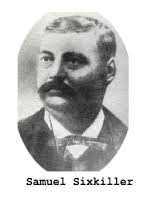
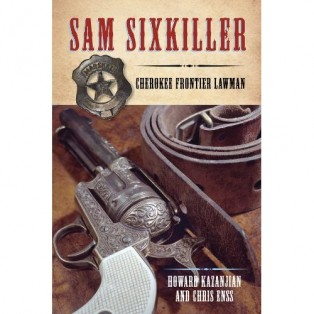
GRAND PRIZE: Win a copy of ALL of my books in print including: Entertaining Women: Actresses, Singers, and Dancers of the Old West, Hearts West: Mail Order Brides of the Frontier, The Young Duke: The Story of John Wayne’s Early Life, The Cowboy and the Senorita: The Life and Times of Roy Rogers and Dale Evans, Happy Trails: A Pictorial of Roy Rogers, Dale Evans, and Trigger, Sam Sixkiller: Cherokee Frontier Lawman, and fifteen other titles about women of the Old West. For a total of 20 books!! PLUS a western book bag and $50 Amazon gift card! Now is that a prize or what??

Second prize: You choose TEN of my books and a $25 gift Amazon gift card.

Third prize: You choose FIVE of my books and a $15 gift Amazon gift card.

All you have to do to enter is using form below. You must be a subscriber of the blog (signed up to the email newsletter) to win.

Easy enough, right? If you want to comment and tell me where you’d put that big collection of books in your home, I’d love to hear about it!

Winners will be chosen on Thursday, December 31 and will be posted in the comments of THIS blog, so watch for news on that day! Ready, set, GO!

Support the Sand Creek Massacre National Historic Site

Last chance to enter to win a copy of the book Mochi’s War: The Tragedy of Sand Creek. Purchase a copy and help support the Sand Creek Massacre National Historic Site.

SandCreekBattleGround

A portion of the book’s proceeds will go to the Sand Creek Massacre National Historic Site.

One hundred fifty-one years ago today the full impact of the tragedy at Sand Creek was just being realized. Colonel John Chivington and his Colorado volunteers massacre a peaceful village of Cheyenne camped near Sand Creek in Colorado Territory, setting off a long series of bloody retaliatory attacks by Indians.

Chivington, a former Methodist preacher with ambitions to become a territorial delegate to Congress, saw in the Indian wars an opportunity to gain the esteem he would need to win a government office. Disappointed that the spring of 1864 failed to produce any major battles, Chivington apparently determined to burn villages and kill Cheyenne whenever and wherever he could, making little distinction between peaceful or aggressive bands. Angered by frequent Indian attacks on settlers and the theft of their horses and cattle, many Colorado settlers supported Chivington’s methods, and a number of men volunteered to join his forces on hundred-day enlistments, forming the 3rd Colorado Volunteers.

Fearing that U.S. troops might mistakenly identify his band of peaceful Cheyenne as having participated in the attacks on settlers, Chief Black Kettle traveled to Denver under escort of U.S. Army Major Edward Wynkoop to affirm his non-hostile intentions. Chivington and the territorial governor of Colorado clearly did not want peace, yet they could not openly reject the overtures of Black Kettle. Believing that he had a promise of safety if he brought his people into Fort Lyon, Black Kettle lead the band of Cheyenne to a spot designated by Major Wynkoop near the fort along a small stream known as Sand Creek. The tribe flew an American flag and a white flag at the camp to indicate their alliance with the U.S. and alert all to their generally peaceful intentions.

Determined to have his glorious battle, Chivington refused to recognize that Black Kettle’s settlement was peaceful. At daybreak, Chivington and his 700 volunteers, many of them drunk, attacked the sleeping village at Sand Creek. Most of the Cheyenne men were away hunting, so the women, children, and elders were largely defenseless. In the frenzied slaughter that followed, Chivington and his men killed more than 100 women and children and 28 men. Black Kettle escaped the attack. The soldiers scalped and mutilated the corpses, hacking off body parts that included male and female genitals, and then returned to Denver where they displayed the scalps to approving crowds during intermission at a downtown theatre.

Because of Chivington’s depraved slaughter, the central plains exploded with retaliatory attacks from Cheyenne, Sioux, and Arapaho Indians. Fortunately, not everyone applauded Chivington’s behavior–many Americans, particularly in the east, strongly condemned Chivington’s attack and the barbaric mutilations. Subsequent congressional and military investigations denounced Chivington, but claimed they could not punish him because he had resigned from the army and was no longer under military jurisdiction. Nonetheless, Chivington spent the rest of his life trying to escape the stigma of his deplorable behavior at Sand Creek.

Mochi, a Cheyenne woman who survived the massacre, went on to avenge the death of her husband and parents who were slaughtered by Chivington’s men.

To learn more about Mochi read Mochi’s War: The Tragedy of Sand Creek.

A portion of the book’s proceeds will go to the Sand Creek Massacre National Historic Site.


Mochi & the Battle of Washita River

Enter now for a chance to win a copy of Mochi’s War: The Tragedy of Sand Creek

Washita


On the morning of November 27, 1868, the stillness in the camp along the Washita River was broken by rifle shots and cavalrymen that descended upon the lodges from all directions, and the unfamiliar strains of “Garry Owen” blasted through the early dawn.

When the sun made its full appearance Cheyenne leader Black Kettle got his first look at the chaos in and around the camp. Riding at the lead of the main column was General George Custer. Confused tribesmen scurried in every direction; each sought refuge from the stinging, death-dealing fire of the soldiers’ guns. High-pitched screams of tiny children mingled with the dying groans of old men. Brave Indian youths sacrificed their lives so others might have a few minutes longer on earth.

Grief-stricken mothers clutched the limps bodies of children as they, too, turned the white snow scarlet with their blood. Cheyenne history notes that Mochi fought valiantly during the Battle at Washita, but, while defending her home and children from the soldiers, she was separated from her daughter, Tahnea. The five-year-old girl panicked when she saw the people in the village running for cover. Tahnea fell in with the other racing about and became disoriented by the screams and gunfire. She ran toward the river behind several women and children who plunged themselves in to the icy water.

To learn more about Mochi read Mochi’s War: The Tragedy of Sand Creek.

A portion of the sales of each book will go to the

Sand Creek Massacre National Historic Site.


Massacre at Sand Creek

Enter now for a chance to win a copy of Mochi’s War: The Tragedy of Sand Creek

Sand_Creek_massacre

At daybreak on November 29, 1864, the sound of the drumming of hooves on the sand flats interrupted the hushed routine of the Indian women and children. Some of the women believed it was only buffalo running hard in the near distance, but it was Col. John Chivington and his men and they had come to attack and kill the Cheyenne in the camp.

Mochi was among the numerous Indians frantic to escape the slaughter. She watched her mother get shot in the head and heard the cries of her father and husband as they fought for their lives. Mesmerized by the carnage erupting around her, she paused briefly to consider what was happening. In that moment of reflection one of Chivington’s soldiers rode toward her. She stared at him as he quickly approached, her face mirrored shock and dismay. She heard a slug sing viciously past her head. The soldier jumped off his ride and attacked her. Mochi fought back hard and eventually broke free from the soldier’s grip. Before the man could start after her again she grabbed a gun lying on the ground near her, fired, and killed him.

To learn more about Mochi read Mochi’s War: The Tragedy of Sand Creek.

A portion of the book’s proceeds will go to the

Sand Creek Massacre National Historic Site.


Standing at Sand Creek

Enter now for a chance to win a copy of Mochi’s War: The Tragedy of Sand Creek


KansasPrairie

Sunflowers were in full bloom at the site of the Sand Creek Massacre last June when I was there. I stood alone at the top of a bluff looking down on the dry creek bed Cheyenne women, children, elderly, and the infirmed raced along as they tried to flee from Col. John Chivington and his troops hell-bent on massacring them more than 150 years ago. I convinced myself I heard the voices of the survivors in the wind through the tall grass. For a moment I occupied the same ground Mochi had and I’ll never forget the emotion that washed over me.

The following are remembrances past down from one generation of Cheyenne to another about the events at Sand Creek in 1864.

“They never really forgot what happened. They would cry whenever they told about Sand Creek… When everyone started running the young ones would get lost. Those that hid watched the soldiers from their hiding place. During that time when it was almost over, soldiers came out and cut open the bellies of women who were going to have a child. When they cut the child out they cut his throat.” Emma Red Hat and William Red Hat, Jr.

“The battle scattered people… At Sand Creek, you can go there at any time of the day or night and if you close your mind to everything else you can feel the children, when they’re congregating and laughing and having fun. The old ladies mostly congregating and laughing and having fun. The old ladies mostly congregate in the shade. The young warriors congregate in the rocks.” Robert Toahty

To learn more about Mochi read Mochi’s War: The Tragedy of Sand Creek.

A portion of the book’s proceeds will go to the

Sand Creek Massacre National Historic Site.


The Tragedy of Sand Creek

Enter now for a chance to win a copy of Mochi’s War: The Tragedy of Sand Creek


Sand_Creek_massacre (1)


Colorado Territory in 1864 wasn’t merely the wild west, it was a land in limbo while the Civil War raged in the east and politics swirled around its potential admission to the union. The territorial governor, John Evans, had ambitions on the national stage should statehood occur–and he was joined in those ambitions by a local pastor and erstwhile Colonel in the Colorado militia, John Chivington. The decision was made to take a hard line stance against any Native Americans who refused to settle on reservations–and in the fall of 1864, Chivington set his sights on a small band of Cheyenne under the chief Black Eagle, camped and preparing for the winter at Sand Creek.

When the order to fire on the camp came on November 28, one officer refused, other soldiers in Chivington’s force, however, immediately attacked the village, disregarding the American flag, and a white flag of surrender that was run up shortly after the soldiers commenced firing.

In the ensuing “battle” fifteen members of the assembled militias were killed and more than 50 wounded Between 150 and 200 of Black Kettle’s Cheyenne were estimated killed, nearly all elderly men, women and children.

As with many incidents in American history, the victors wrote the first version of history–turning the massacre into a heroic feat by the troops. Soon thereafter, however, Congress began an investigation into Chivington’s actions and he was roundly condemned. His name still rings with infamy in Colorado and American history. Mochi’s War explores this story and its repercussions into the last part of the nineteenth Century from the perspective of a Cheyenne woman whose determination swept her into some of the most dramatic and heartbreaking moments in the conflicts that grew through the West in the aftermath of Sand Creek.

To learn more about Mochi read Mochi’s War: The Tragedy of Sand Creek.

A portion of the book’s proceeds will go to the Sand Creek Massacre National Historic Site.


The Cheyenne Woman Warrior

Enter now for a chance to win a copy of Mochi’s War: The Tragedy of Sand Creek

EntertoWinMedicineWater&Mochi#1

This book captivates a ruthless woman warrior who was born out of the pits of the Sand Creek Massacre. The word ‘warrior’ sends a tingle of fear down the spine and conjures up an imaginary fierce, merciless fighter seemingly invulnerable to fear or intimidation.

There are many reasons that a Native Indian woman would fight and become one of the women warriors. Most nineteenth century women warriors who fought in battles and conflicts did not pursue the life of a warrior on a permanent basis.

Most women fought because there was an urgent need for them to do so, which the reader will find out quickly that was the case for the young 24 year-old Cheyenne warrior.

The authors of this book writes of the malice in the young woman’s heart and the revenge that sat heavily on the edge of her tomahawk. The woman warrior fought to the death using bloodthirsty tactics to achieve victory. Not the usual image that we would associate with women, but there were many Native American warriors.

When asked to name some famous Indian women, most people have difficulty in recalling anyone other than Pocahontas or Sacagawea, the reader will have no difficulty with remembering Mochi, the Cheyenne Warrior after engaging themselves in this title, Mochi’s War.

Rebecka Lyman

Cheyenne and Arapaho Tribal Tribune

To learn more about Mochi read Mochi’s War: The Tragedy of Sand Creek.

A portion of the book’s proceeds will go to the

Sand Creek Massacre National Historic Site.


Mochi’s War

EntertoWin

Enter now for a chance to win a copy of Mochi’s War: The Tragedy of Sand Creek

MochisWar

Praise for Mochi’s War:

“The authors have again collaborated to write Western history in an accurate yet accessible manner for mainstream readers…this biographical account provides a counterpoint to the many works that have mythologized such women as Pocahontas and Sacajawea.” – Library Journal ***starred review***

After the Sand Creek Massacre of 1864, one woman survived physically unharmed, but emotionally devastated by the destruction of her tribe and determined to avenge her dead relatives. Her story has rarely been told, and Mochi’s War is the first book to tell it in full.

On November 28, 1864, Colonel John Chivington and his militia attacked a Cheyenne Indian village in southeastern Colorado. Between 150 and 200 Cheyenne Indians were estimated killed, nearly all elderly men, women, and children. The events at Sand Creek motivated Mochi to embark a decade long reign of terror. With each raid she remembered the horror of the massacre, and it goaded her on to terrible violence against those encroaching on Indian soil. The war between the Indians and the government lasted ten years after the Sand Creek Massacre occurred. Mochi’s war ended with her arrest and imprisonment in 1874 – the only woman ever to be incarcerated by the United States as a prisoner of War.

Mochi’s War: The Tragedy of Sand Creek explores the story and its repercussions into the last part of the nineteenth century from the perspective of a Cheyenne woman whose determination swept her into some of the most dramatic and heartbreaking moments in the conflicts that grew through the west in the aftermath of Sand Creek.

To learn more about Mochi read Mochi’s War: The Tragedy of Sand Creek.

Purchase a copy for a local school.

A portion of the book’s proceeds will go to the

Sand Creek Massacre National Historic Site.


Eureka! The Discovery of Gold in California – Part Three

Eureka! The Discovery of Gold in California Part Three

 GoldRushPanning

Many elementary schools across the country are now studying the California Gold Rush. This short, continuing story is intended to aid teachers in their efforts to share with their classes the significance of this historical events. Teacher who use the story in this week’s lessons can register to win a copy of the book Frontier Teachers.

Marshall could not seem to saddle his horse fast enough. Down through the beautiful California country he rode to Sutter’s Fort. As he came closer he glances at the herds of cattle browsing on the lush grass. He nodded when Sutter’s Mexican cowhands, the vaqueros, called cheerful greetings, waving their high sombreros.

The Fort was the only American strong hold in the territory. John Sutter had obtained land from Mexico. He had been loyal to the country until California was practically taken over by the Unites States toward the end of the Mexican war. But now he was in sympathy with America. His Fort was at the California end of the only wagon trail from the States, and he gave aid and work to any Americans who came that way.

Now as Marshall rode through the gateway in the adobe walls surrounding Sutter’s Fort, he seemed to enter a city in itself. Here were shops and sheds and houses. He heard the clang-clang of a blacksmith’s hammer on anvil, and the soft Spanish song of a Mexican woman as she slapped tortillas on a flat stone.

Marshall strode at once to Sutter’s house, and startled his boss with his air of excitement.

“What is this, Mr. Marshall?” asked John Sutter in his quiet way.

Marshall carefully opened his small bag and emptied its contents on a desk. Sutter leaped over to it, his eyes lighting up. “Looks like that is gold, Mr. Marshall. Where did it come from?”

“From the tail race of the mill. There’s more there. Lots more.”

The ranch owner put his plump finger against his nose thoughtfully. “Now, how can we find out – ah, I know.” He went to a bookcase and took out a small encyclopedia. “Here we have it. Yes, I can try it out.”

He pored over the book for some time, reading the rules given for testing gold to find out if it was pure or mixed with other metals. Then he sent Marshall out to get silver coins from anybody who had them in the Fort. With about three and a half dollars in silver balanced on a small scale they figured it out. This was pure gold, unmixed with silver or copper!

John Sutter sat in his big chair for a long time, and stared across at his silent millwright. Gold! The word was like magic. How much would the river, and perhaps all his land, contain? Down under those waving fields of grain, those pastures where his horses and cattle and sheep grazed by the thousand – was there pure gold? What would this do to his little kingdom, where he ruled like a lord? He frowned, and chewed his under lip. Somehow this news brought a fear of losing what he had struggled so long to gain.

“Mr. Marshall,” he said quietly, “perhaps we had better not talk about this yet. Perhaps we had better think first of what to do? Let us preserve silence, for a while.”

Marshall nodded slowly. Here was a fortune. He had found it. It would be well to keep it secret from those who would perhaps steal it from him. He went to saddle his horse. As he rode into the foothills, the sun spread across the wind-blown fields of grasses and turned them all to shining, gleaming gold. A golden earth! Golden streams! A golden land!

 Register now to win a copy of the book Frontier Teachers.


Eureka! The Discovery of Gold in California – Part Two

Many elementary schools across the country are now studying the California Gold Rush. This short, continuing story is intended to aid teachers in their efforts to share with their classes the significance of this historical events. Teacher who use the story in this week’s lessons can register to win a copy of the book Frontier Teachers.

GoldRushPartII

James Marshall stood up and saw his laborers sitting around their fire drinking coffee and eating flapjacks. Beyond them the Indian workers moved quietly, preparing their breakfast of dried deer meat. Marshall walked slowly to the fire where his sober Mormon workers ate silently, and opened his hand.

“I found it in the tail race.”

The men stopped chewing and one exclaimed, “Fool’s gold,” and laughed. Another spit carefully into a bush several yards away. “Tain’t nothing by iron pyrite,” he said. “Fool’s gold, that’s all.”

The first man took a closer look, reached for another flapjack, and said, “That’s right. That stuff fools lots of people.” They all grinned knowingly at each other.

James Marshall scowled and clenched his fist over the little pebble. They thought him a fool. He turned on his heel, and strode up the slope to a small log cabin where smoke was lazily rising from an adobe chimney. As he approached he saw Elizabeth Wimmer, wife of his foreman, standing with a long stick in hand over a big, black soap kettle. Elizabeth Wimmer was one of the few American women in this land so lately taken from Mexico. She had refused to be left at Sutter’s Fort when Peter, her husband, went to take charge of the Indian laborers building the sawmill.

As Marshall came up to her he growled, “Look here, Mrs. Wimmer! This looks like gold. The men say it’s iron pyrite.” He unclenched his fist.

Mrs. Wimmer leaned forward curiously. Then, before he could stop her, she picked up the little piece and dropped it into the bubbling soap kettle. “We’ll soon find out, Mr. Marshall. If it isn’t gold the lye in this kettle will eat it up quick.”

James Marshall said nothing, but turned and went back to the breakfast he had not yet eaten.

That night as he went to the cabin where he lived with the Wimmers he felt confident again. The mill would work well with the tail race deepened. He was thinking of the lumber they would soon be sawing and of the money they could get for it in the sleepy village of San Francisco. As he sat and smoked his pipe he was startled by Mrs. Wimmer. Through the door she marched, and up to the scrubbed pine table.

“There!” she cried triumphantly. “It’s gold, all right, Mr. Marshall!”

She flung on the table the heavy little stone. In the light of the candle it glowed and gleamed. Marshall picked it up, then put it on the floor, grasped a rock lying by the hearth, and hammered it. It didn’t break. Gold!

Next morning at dawn he went back to the tail race. From cracks between the boulders he picked up more of the tiny gold pieces. Carefully he stowed them away in a small buckskin bag and went back to his job of getting the mill going. Later in the day he announced to Peter Wimmer:

“Supplies are getting low. I’m going to the Fort for grub. Wimmer, you take over while I’m gone.”

Peter Wimmer glanced at his wife, but said nothing.

 Register now to win a copy of the book Frontier Teachers.