The Talented Divorcee

Enter to win a copy of the book

Entertaining Women: Actresses, Dancers, and Singers in the Old West.

CatherineSinclair

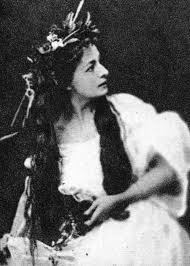
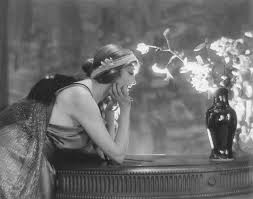
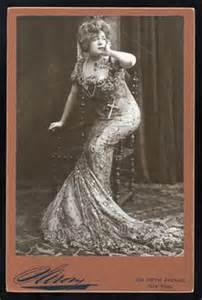
Shakespearean actor Edwin Forrest rifled through the desk drawer in the sitting room of the New York home he shared with this wife, socialite turned actress and theatre manager Catherine Norton Sinclair. The contents of the drawer belonged to Catherine, but Edwin wasn’t interested in maintaining her privacy. In his frantic search, he uncovered a worn and rumpled letter written to his bride from fellow thespian, George Jamieson. “And now, sweetest, our brief dream is over; and such a dream!” the correspondence began. “Have we not known real bliss? Have we not realized what poets have to set up as an ideal state, giving full license to their imagination, scarcely believing in its reality? Have we not experienced the truth that ecstasy is not fiction? And oh, what an additional delight to think, no, to know, that I have made some happy hours with you… With these considerations, dearest, our separation, though painful will not be unendurable; I am happy, and with you to remember and the blissful anticipation of seeing you again, shall remain so…” Jamieson’s declaration of his feelings for Catherine ended with a promise to do “my utmost to be worthy of your love.”

Edwin reread the letter with poised dignity and on its completion sank into the nearest chair, cursing the day he had met the woman he had married. After a few moments, he arose and frantically paced about the room. He denounced Catherine for her infidelity and fell to the floor weeping uncontrollably. According to Edwin’s biographer William Rounseville Alger, Edwin was “struck to the heart with surprise, grief, and rage.” Catherine’s take on Edwin’s reaction and the circumstances surrounding her husband reading the letter are vastly different from Alger’s account. Almost from the moment the pair met, Edwin was jealous of everyone Catherine knew in her social standing and did not shy away from making a scene.

Catherine was born near London in 1818 to Scottish parents who had four children in all. Her father, John Sinclair, was a well-known vocalist who had toured America in 1831 and 1833. Historical records note that Catherine was endowed with natural beauty, and, whatever the quality and quantity of her formal and social education, she had in her teens acquired a sparkle and vivacity that attracted men. She was popular and well-liked and attended formal soirees, theatre openings, and art exhibits with a myriad of friends from all walks of life.

To learn more about how Catherine Norton Sinclair’s acting career began and about the other talented performers of the Old West read Entertaining Women: Actresses, Dancers, and Singers in the Old West.
Attend the national launch of the book Entertaining Women on Saturday, October 17, 2015 at the Nevada County Narrow Gauge Railroad Museum in Nevada City, California from Noon-2 p.m. For more information call 530-477-8859.


The President’s Actress

Enter to win a copy of the book

Entertaining Women: Actresses, Dancers, and Singers in the Old West.

LauraKeenePortrait

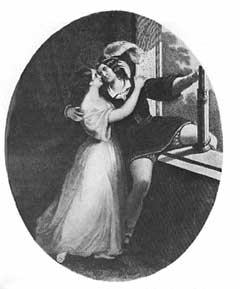
Mary Todd Lincoln screamed. Clara Harris, seated in the balcony adjacent to President Abraham Lincoln’s wife, jumped out of her seat and rushed to the hysterical woman’s side. “He needs water!” Harris cried out to the audience at Ford’s Theatre staring up at her in stunned silence. “The President’s been murdered!” The full, ghastly truth of the announcement washed over the congregation, and the scene that ensued was as tumultuous and as terrible as one of Dante’s pictures of hell. Some women fainted, others uttered piercing shrieks and cries for vengeance, and unmeaning shouts for help burst from the mouth of men. Beautiful, dark-haired actress, Laura Keene hurried out from the wings dressed in a striking, maroon colored gown under which was a hoop skirt and number of petticoats that made the garment sway as she raced to a spot center stage. She paused for a moment before the footlights to entreat the audience to be calm. “For God’s sake, have presence of mind, and keep your places, and all will be well.” Laura’s voice was a brief voice of reason in a chaotic scene. Few could bring their panic under control. Mary Lincoln was in shock and sat on her knees beside her mortally wounded husband rocking back and forth. She cradled her arms in her hands and sobbed uncontrollably.

Laura ordered the gas lights around the theatre turned up. Patrons bolted toward the building’s exits. As they poured out into the streets, they told passersby what had occurred. Crowds began to gather, and there were just as many people coming back into the theatre as were trying to leave. Laura stepped down off the stage and began fighting against the current of people pressing all around her. Word began to pass through the frantic group that John Wilkes Booth was responsible for shooting the President. Sharp words were exchanged between the individuals coming in and going out the building. Insane grief began to course through the theatre, and ugly suppositions started to form. “An actor did this!” Laura wrote in her memoirs about what people were saying at the event. “The management must have been in on the plot! Burn the damn theatre! Burn it now!” Laura disregarded the remarks and somehow worked her way to the rear box where Mr. Lincoln was and stepped inside.

To learn more about Laura Keene and the other talented performers of the Old West read Entertaining Women: Actresses, Dancers, and Singers in the Old West.
Attend the national launch of the book Entertaining Women on Saturday, October 17, 2015 at the Nevada County Narrow Gauge Railroad Museum in Nevada City, California from Noon-2 p.m. For more information call 530-477-8859.


Inventing Maude

Enter to win a copy of the book

Entertaining Women: Actresses, Dancers, and Singers in the Old West.

MaudeAdams

“I wish you could have seen Maudie that night. She was simply wriggling with excitement. It was all I could do to keep her in her dressing-room until the cue came for her to go on…. Just before the curtain went up I made her repeat her first-act lines to me. She had learned them like a parrot, to be sure, but she spoke them like a true little actress.”

Annie Adams’s comments about her daughter Maude’s first full performance at the age of 5 in November, 1877 at the Metropolitan Theatre in San Francisco.

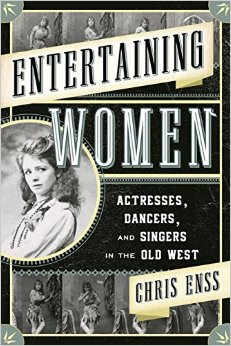
The Palmer Theatre House in New York was jammed to the doors by a curious clientele all there to see the new actress working opposite the most celebrated actor of the day, John Drew. It was October 3, 1892 when the stunning, elfin-like Maude Adams took to the stage in the play “The Masked Ball.” At the end of the evening Drew would be congratulated on his admirable acting job, but Maude would score a hit that would be greater than his entire career. Her performance was so successful the applause lasted for a full two minutes after she made her exit. She was on her way to becoming a star and local newspapers predicted her talent would be talked about for years to come.

“Her performance (in the Masked Ball) was a revelation. There is one scene in the second act where in order to punish her husband for some ante nuptial remarks of his she has to pretend that she is drunk. It was just touch and go whether the scene ruined the play or not. It would have been hard to devise a more crucial test for an actress of even the wildest experience and the greatest skill. In order to carry off this scene successfully it was necessary for the wife to appear to be drunk and yet be a gentlewoman at the same time. Miss Adams achieved this feat. If Miss Adams had done nothing else throughout the entire play than that one scene it would have stamped her as a comedienne of the first order forever.The New York Daily News – October 4, 1892

Maude Adams’s stage career began at the tender age of nine months. The play was called “The Lost Child” and the baby that was playing the lead became fussy and could not continue in the show after the first act. Maude’s mother, Annie, who was the female lead in the production, suggested her daughter take the child’s place. Maude was so good that the other baby received her two weeks notice immediately after the play ended. For the remainder of that season all the infant roles were played by little Miss Maude.

To learn more about Maude Adams and the other talented performers of the Old West read Entertaining Women: Actresses, Dancers, and Singers in the Old West.
National launch of the book will take place at the Nevada County Narrow Gauge Railroad Museum in Nevada City, CA. on Saturday, October 17 from Noon until 2 p.m.  A special showing of the mockumentary An Ounce Short will be shown at the event. 


The End of Elizabeth

Last chance to enter to win a copy of the book

None Wounded, None Missing, All Dead: The Story of Elizabeth Bacon Custer.

Custer

Elizabeth Bacon Custer left an estate valued at $113,581.00. The Appomattox table went to the Smithsonian Institution, along with Armstrong’s sword and scabbard. Her executor’s stored most of her mementoes at West Point, awaiting the building of a museum at the Little Bighorn Battlefield or their dispersal elsewhere. Almost $5,000 in a trust fund became the basis for George A. Custer and Elizabeth B. Custer Scholarship Fund for Daughters of Army Officers at Vassar College. Today it still provides scholarships.

In 1934, one year after Elizabeth’s death, Bobbs-Merrill published Frederic Van de Water’s Glory-Hunter: A Life of General George Custer. In the first iconoclastic biography of the boy general, the author portrayed the major figure as a perpetual adolescent, addicted to fame and responsible for defeat at the Little Bighorn. Unable to reconcile his subject’s contradictions, Van de Water incorporated them into his story. Custer, a man either loved or hated by his contemporaries, “seems in his brief time to have been many men.” He was “paradox; the word made flesh.”

Regarding Custer’s family life and marriage, Van de Water softened his judgment. Elizabeth’s books and her fifty-seven years of loyalty convinced him: “The love his wife bore him and he bore her may be George Armstrong Custer’s most intrinsically sound fame.”

To learn more about Elizabeth Bacon Custer and her marriage to George Armstrong Custer read

None Wounded, None Missing, All Dead: The Story of Elizabeth Bacon Custer.


Yours Forever, Elizabeth

The time is now.  Only two more days left to enter to win a copy of the book

None Wounded, None Missing, All Dead: The Story of Elizabeth Bacon Custer.

Elizabeth Custer from the silent film The Pottery Maker.

Elizabeth Custer from the silent film The Pottery Maker.

It was rare for women in the 19th century to accompany their husbands on adventures that were so exciting they seemed almost fictitious. It was rarer still for women to write about those adventures in books designed to bring glory to their husband’s name. Such was the life and career of Elizabeth Custer who lived primarily in reflected wonder of her gallant husband, George Armstrong Custer, one of the most charming and controversial soldiers the country ever produced.

When young George Custer visited his sister in Monroe, Michigan, he was introduced to, and quickly swept off his feet by Elizabeth Bacon. Judge Bacon, Elizabeth’s father, was not initially impressed with the young army captain with yellow curls. So young George rode away and came back two years later as a Brigadier-General, the youngest in the army, and he and Elizabeth were married in 1864. Their honeymoon was spent in a war zone since it was the last year of the Civil War. This gave Elizabeth Custer her first taste of what would become her life – the uncertainty and discomfort of army life.

In the 12 years the Custers were together, Elizabeth lived history. She saw the surrender of Lee to Grant at Appomattox, and later was given the table at which the terms of surrender were signed. After the war, George was sent to Texas and the Plains States to fight the Indians, and so began for Elizabeth the most thrilling events of her life.

The Custers were devoted to one another and valued the time they spent together. Not only did Elizabeth follow George across the frontier, but she also went with him into the field. Though, at times, she lived in tents alongside members of the 7th Cavalry, the army didn’t allow Elizabeth to go with George everywhere. General Custer and the military considered some assignments too hazardous for women. During the time they had to be separated, George and Elizabeth wrote each other constantly.

The Custers were very much in love, but there were periods when they antagonized each other. Occasionally, George or Elizabeth would use the rumor mill or drop hints to make the other one jealous. Sometimes, Elizabeth would write her husband just to tell him how annoyed he made her. Fearing her letters might be read by someone other than George, she wrote all such correspondences in shorthand. He wasn’t always as discreet. One time when he was particularly irritated with Elizabeth, he cut and pasted a note together that strongly expressed his feelings. The message he sent her is shown below.

The duo inevitably arrived on the other side of each difficulty closer than they were before and more committed to their marriage.

Elizabeth’s thrilling life adventure with George lasted until that unfortunate day when Custer and his troops made their immortal last stand against the Sioux Indians at the battle of the Little Bighorn on June 25, 1876. During the battle, Elizabeth was only a few hundred miles away, waiting bravely for news of the outcome. From that day forward, she lived to glorify her husband’s memory and keep his heroism forever green in the annals of brave fighters.

Elizabeth lived out the majority of her life after George’s death in New York City. She made it a point to correspond with the veterans who campaigned with George. At times she would handwrite more than 300 such letters in a year. Every tie to her husband was sacred to her. She wrote about her time with him with pride, and spoke of the Indians without bitterness or resentment.

To perpetuate the memory of George, Elizabeth wrote three books that graphically related their adventures in Kansas, Texas, and other places where George fought the Indians. She also wrote countless articles and lectured all over the country both to honor her husband, and to refute any disparaging stories that rose around the legend of General Custer.

To learn more about Elizabeth Bacon Custer and her marriage to

George Armstrong Custer read

None Wounded, None Missing, All Dead: The Story of Elizabeth Bacon Custer.


Suddenly Alone

Enter now to win a copy of the book

None Wounded, None Missing, All Dead: The Story of Elizabeth Bacon Custer.

ElizabethC

“Few men had more enemies than Custer, and no man deserved them less.”

Author Frederick Whittaker – 1877

Persistent raindrops tapped against the windows of Elizabeth Custer’s Park Avenue apartment in New York. The prim, 74 year-old women, dressed head to toe in black, Victorian clothing, stared out at the dreary, foggy weather. She wore a pensive expression. Her graying hair was pulled back neatly into a tight bun, a few loose tendrils had escaped and gently framed her small face. Her throat was modestly covered with lace.

The room around Elizabeth was grand in size and filled with items she had collected from her days on the western plains. Framed drawings of the Kansas prairie, a trunk with George’s initials across the top, photographs of friends and family at various outposts, and an assortment of books on subjects ranging from travel beyond the Mississippi to the types of wild flowers that lined the Oregon trail were among her treasures. The sparse furnishings in the apartment were covered with newspapers and journals. A small desk was littered with hundreds of letters.

Elizabeth glanced at the clock on a nearby table then clicked on a radio housed in a gigantic cabinet beside her. As she tuned the dial through static and tones, a bright, maroon light sifted into the hollow of the dark room. At the same time the fog outside the window lifted a bit and the vague, misty outlines of palatial apartment buildings, museums, and churches came into view.

Elizabeth found the radio station she was looking for and leaned back in a plush chair as a voice described upcoming programming. She pulled a shawl around her shoulders and sat patiently waiting. After a few moments an announcer broke in with pertinent information about the broadcast. The program Elizabeth was tuned in to was Frontier Fighters and the episode was entitled Custer’s Last Stand. The airdate was June 26, 1926, 50 years after the Battle at Little Bighorn.

As the reenactment unfolded, Elizabeth’s eyes settled on a photograph of George hanging on the wall above the radio and she remembered that awful moment. The devastated look on the faces of the 20 wives who lost their husbands the same day she lost hers would never be forgotten. “From that time the life went out of the hearts of the women who wept,” Elizabeth wrote in her memoirs, “and God asked them to walk on alone in the shadows.”

To learn more about Elizabeth Bacon Custer and her marriage to George Armstrong Custer read

None Wounded, None Missing, All Dead: The Story of Elizabeth Bacon Custer.


Losing George

Enter now to win a copy of the book

None Wounded, None Missing, All Dead: The Story of Elizabeth Bacon Custer.

LosingGeorge

“Indescribable yearning for the absent, and untold terror for their safety, engrossed each heart.”

Elizabeth Custer on waiting to hear news about the fate of George and the members of his command – 1885

It was almost two in the morning. Elizabeth couldn’t sleep. It was the heat that kept her awake, the sweltering, intense heat that had overtaken Fort Lincoln earlier that day and now made even sleeping an uncomfortable prospect. Even if the conditions for slumber were more congenial, sleep would have eluded Elizabeth. The rumor that had swept through the army post around lunchtime disturbed her greatly and until this rumor was confirmed she doubted that she’d ever be able to get a moment’s rest.

Elizabeth walked her anxious frame over to the window and gazed out at the night sky. It had been more than two weeks since she had said goodbye to her husband. She left him and his troops a few miles outside of Fort Lincoln. His orders were to intercept the Sioux and Cheyenne Indians in the territory, force them back to the reservation, and bring about stability in the hills of Montana.

Just before riding out she turned around for one last glance at General George Custer’s column departing in the opposite direction. It was a splendid picture. The flags and pennons were flying, the men were waving and even the horses seemed to be arching themselves to show how fine and fit they were. George rode to the top of the promontory and turned around, stood up in his stirrups and waved his hat. Then they all started forward again and in a few seconds they had disappeared, horses, flags, men, and ammunition – all on their way to the Little Bighorn River. That was the last Elizabeth saw of her husband alive.

Over and over again she played out the events of the hot day that made her restless. Elizabeth and several other wives had been sitting inside her quarters singing hymns. They desperately hoped the lyrics would give comfort to their longing hearts. All at once they noticed a group of soldiers congregating and talking excitedly. One of the Indian scouts, Horn Toad, ran to them and announced, “Custer killed. Whole command killed.” The woman stared back at Horn Toad in stunned silence. Catherine Benteen asked the Indian how he knew that Custer was killed? He replied: “Speckled Cock, Indian Scout, just come. Rode pony many miles. Pony tired. Indian tired. Say Custer shoot himself at end. Say all dead.”

To learn more about Elizabeth Bacon Custer and her marriage to

George Armstrong Custer read

None Wounded, None Missing, All Dead: The Story of Elizabeth Bacon Custer.


Plains Living

 Enter now to win a copy of the book

None Wounded, None Missing, All Dead: The Story of Elizabeth Bacon Custer

CusteronPlains

“My husband used to tell me that he believed he was the happiest man on earth, and I cannot help but thinking he was.”

Elizabeth Custer – 1882

A group of some 40 officers and their wives congregated in the parlor of George and Elizabeth Custer’s home at Fort Abraham Lincoln in North Dakota. A fiddler entertained several men and women at one end of the tastefully decorated room. More guests paraded past a table filled with a variety of food and drinks at the other. Elizabeth manned the door, kindly welcoming latecomers to the party in progress. She touched her finger to her lips indicating that the attendees should enter quietly.

The music stopped. A hush fell over the guests. Elizabeth’s brother-in-law, Tom, sister-in-law, Maggie, and family friend, Agnes, marched into the setting and crossed to the musicians. All three wore costumes. Maggie was dressed as a Sioux Indian Maiden. Agnes and Tom were dressed as Quakers. George and the others in attendance stifled a chuckle as the trio struck a dignified pose for the captive audience. They were acting out a scene from a current event in the region. Known as a tablie ux, the object of the entertaining charade was to guess the event and whom the players represented.

Partygoers enthusiastically shouted out their best guesses. Others issued comical remarks that made everyone erupt in laughter. When the right guess was announced the actors broke character and took a bow. The happy audience applauded their efforts and the music started up again.

To learn more about Elizabeth Bacon Custer and her marriage to George Armstrong Custer read

None Wounded, None Missing, All Dead: The Story of Elizabeth Bacon Custer.


Trouble Apart

Giveaway! Enter now to win a copy of the book

None Wounded, None Missing, All Dead: The Story of Elizabeth Bacon Custer.

 G&EatHome

“I would be willing, yes glad, to see a battle everyday during my life.”

George Custer – October 1862

Spirited music and laughter burst through the doors of Chicago’s Opera House. The velveteen drapes subdued the whir of roulette wheels that lined the theatre lobby and muffled the voices of the Faro dealers. Patrons poured into the establishment seeking entertainment and shelter from the freezing cold. Chicago was a city of handsome dwellings whose elegance and refinements were reflected in the brilliant social life. A throb beat through its every artery. One of the many acts that could hold the attention of the bustling area was Lydia Thompson’s British Blondes. The troupe of celebrated actresses with overwhelming proportions who specialized in dancing and pantomime, performed for packed houses nightly. Among some of the most famous audience members were Grand Duke Alexis Romonoff, Wild Bill Hickock, and George Custer.

Over the Thanksgiving holiday in 1869, George had visited the show a couple of times, partaking not only in the burlesque styling of the irresistible sirens, but the popular games of chance that greeted people when they entered the building. George had been in Michigan taking care of family business when he decided to travel to Illinois to visit Phil Sheridan, his former army commander and respected mentor who was ill. News that he was in the Windy City spread quickly and George was inundated with invitations to attend dinners and theatrical openings. His reputation as soldier and military leader, along with the numerous published articles he had written about his combat experience, preceded him. Everyone wanted to be in George’s company and he delighted in the attention. Local newspapers reported on his outings, giving special concentration to the fact that Elizabeth was not at his side. “George Custer,” the article began, “has been seen about without his wife, chasing blondes instead of Indian maidens.” He made light of the report in a letter he wrote to Elizabeth and let her know that in addition to the Blonde Beauties Show he also took in a play featuring the best known comedian of he day, Joseph Jefferson. “I never had so nice a time in all my life – expect when I am with you,” George assured his wife.

Elizabeth read over her husband’s letters from their quarters at Fort Leavenworth, Kansas. She usually accompanied George in his travels, but for this trip she decided to remain behind. Her cousin, Anne Bingham, was coming to visit and she didn’t want to miss spending time with her. After receiving George’s letter Elizabeth wished she had gone with him. Along with the list of entertaining activities, his correspondences contained some worrisome information about playing cards with friends. George was a gambler who found it difficult to resist a game.

To learn more about Elizabeth Bacon Custer and her marriage to

George Armstrong Custer read

None Wounded, None Missing, All Dead: The Story of Elizabeth Bacon Custer.


Custer’s Maiden

Take a chance.  Enter to win a copy of the book

None Wounded, None Missing, All Dead: The Story of Elizabeth Bacon Custer.

CustersMaiden

    “…Girls needn’t try to get her dear Bo away from her, because he loves only her, and her always.”

    George Custer to Elizabeth Custer – 1871

The day was gray, and a raw, cold wind swirled outside the windows of the late Judge Albert Bacon’s home in Monroe, Michigan. It was early fall 1868. The Judge’s daughter, Elizabeth, and son-in-law, George, sat inside the parlor of the stately home. Each was quietly involved in their individual tasks. George was hunched over a writing table working on a book about his days at West Point. Elizabeth set aside some sewing she was doing and drifted over to a piano in the corner of the room. Her husband glanced up from his writing long enough to see that Elizabeth wasn’t going far. After weeks of being apart he wanted her near him at all times.

The genteel army wife made herself comfortable at the polished keyboard then reached for a stack of music bound in a faded leather pouch. She untied the ribbon holding the music together and sifted through the pages. Inside one of the pieces of sheet music was a daguerreotype of George. It had been taken in April 1865 and he was dressed in his major general uniform; the two stars on his collar clearly displayed. Some of the music had left its imprint on the picture, the notes like a melody over his face.

Elizabeth sat her husband’s picture on the stand next to the song she selected and began to play. The ebullient sound filled the air. Although he was tapping his foot in time with the beat, George’s attention was trained on the assignment before him.

For a moment Elizabeth wondered if he might only be pretending to be engrossed in writing. She worried that he longed to be doing something else. Nearly a year had passed since a nine member military jury found George guilty of “leaving his post without permission, excessive cruelty, and illegal conduct in putting down mutiny in the 7th Cavalry by shooting deserters.” The punishment he received as a result of the court-martial was a year suspension from rank, duty, and pay. George’s yearly pay was $95 a month.

George and Elizabeth were affected by the verdict. Courts-martial were commonplace. More than half the army servicemen were tried and court-martial in 1867 alone. Far from feeling disgraced by the ordeal, the Custers planned to spend the time away from the job and the frontier enjoying one another’s company, entertaining family, and traveling abroad.

After a short respite from frontline service Elizabeth began to doubt how long George would remain content away from active duty. She knew how much her husband loved the soldier’s life. He had once admitted, “I would be willing, yes glad, to see a battle every day during my life.”

To learn more about Elizabeth Bacon Custer and her marriage to George Armstrong Custer read

None Wounded, None Missing, All Dead: The Story of Elizabeth Bacon Custer.