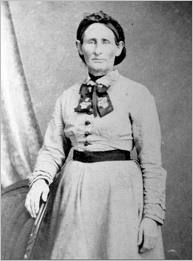
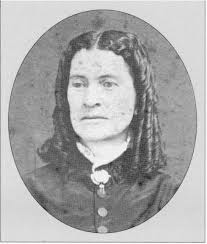
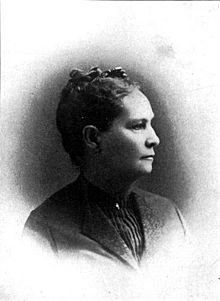
Mother & Daughter Grifter Team

Last chance to enter to win a copy of the Bedside Book of Bad Girls:

Outlaw Women of the Midwest.

MotherGrifter

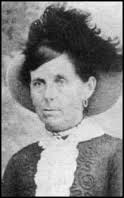
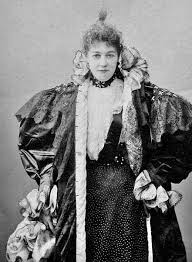
Nineteen-year-old Jennie Freeman stared pensively out the partially opened window of the tenement building where she lived in Chicago, Illinois.  A cold, gentle breeze blew across the bed she was lying on, and she pulled the dingy blankets that were draped across her legs around her waist.  Jennie was a petite, bespeckled girl with mousey-brown hair and green eyes.  She was a fierce reader, proven by the many books stacked around the bed.  A stern-faced doctor stood over her fiddling with a stethoscope.  When he finally placed one end of the stethoscope on Jennie’s chest, she turned her attention from the busyness on the street outside the window to him.  After the doctor listened to his patient’s heartbeat, he scratched his head, perplexed.  He eyed the wheelchair next to the bed and sighed a heavy sigh. Jennie’s mother, Fannie entered the room from the kitchen carrying a tray of food.  She was a large woman of dark complexion who wore diamond eardrops and a large marquise ring.  She looked worried and carefully studied the doctor’s face, waiting for a verdict.

The doctor lifted the covers off Jennie’s legs and studied her feet.  He removed a straight pin from his medical bag and touched it to Jennie’s foot and calves.  No matter what he did, he could not get her limbs to even twitch.  After a few moments he stopped the examination, pulled the blanket back over Jennie’s legs, and began packing his medical instruments into his bag.  Fannie sat the tray she was carrying on a nightstand next to the bed and took her daughter’s hand in hers.  The doctor confirmed what the troubled mother had suspected – Jennie was paralyzed.  As the doctor put his coat on and exited the cramp, poorly-lit home, Jennie was crying and Fannie was comforting her.

Jennie incurred her injury when she got caught between two cable cars.  The intricate system of street railways in downtown Chicago had malfunctioned on January 9, 1893, and the cars collided.  Jennie was found on the ground writhing in pain near the accident.  After a short stay in the hospital to treat her cracked ribs, bruises, and cuts, she was released into the care of her mother.  Two days later she claimed she couldn’t move her legs from the thighs down.  A railway company physician verified the report.  Believing it would be cheaper to settle than it would be to go to court the company paid Jennie five hundred dollars.

To learn more about the Freemans read the Bedside Book of Bad Girls:

Outlaw Women of the Midwest.

A Woman Most Blood Thirsty

Enter to win a copy of the Bedside Book of Bad Girls:

Outlaw Women of the Midwest

KateBender


A fierce wind filled with alkali dust blew past Silas Toles, a Labette County, Kansas farmer, as he made his way to his neighbor’s seemingly vacant home.  Three other farmers followed tentatively behind him.  An endless prairie stretched out on either side of the weather-beaten building.  A hungry calf languished in a nearby fenced enclosure bawled pitilessly for something to eat.  A handful of dead chickens lay scattered about the parched earth leading to the house.  The front door was ajar and creaked back and forth.  Silas cautiously walked to the main entrance of the building and glanced inside.  Light from the late afternoon sun filtered through partially drawn curtains onto the sparse, shabby and torn furnishings in the center of the one room home.

Silas pushed the door open and stood in the dirt entryway.  The home was in complete disarray; clothing, books, paper, and dishes were on the floor; bugs covered bits of food on a broken table, chairs were overturned and a pungent smell of death hung in the air.  The three men with Silas held back waiting for him to motion them forward.  The sound of fast approaching horses distracted the quartet and they watched with rapt attention as several riders hurried to the spot and quickly dismounted.  Colonel A. M. York, a distinguished, bearded man dressed in the uniform of an army officer, led a team of Civil War veterans and lawmen to the entrance of the home.  They pushed past Silas and the others and boldly entered.

Colonel York surveyed the room and kicked away the debris at his feet as he walked around.  He wore a determined, yet forlorn expression.  The group with the Colonel examined the area along with him and inspected the items underfoot carefully.  One of the men noticed a collection of Pagan artifacts including a pentagram and Tarot cards in the corner of the room.  Some of the articles were covered with dried blood.  Colonel York followed a trail of blood from the artifacts to a mound of fresh earth under a pile of soiled sheets.  Kneeling down in the dirt he scooped the earth out until he reached a crude door.  The men around stared wide-eyed at the oddity waiting for the Colonel to make the next move.  One of the lawmen brushed dirt away from a round handle attached to the door.  Before giving it a pull he glanced over at the Colonel to see if he wanted to continue the search.  The Colonel was quietly transfixed by the scene.  The lawman interpreted his silence as an affirmative answer and quickly pulled the door open.  The foul stench that wafted out of the dark hole hit the men like a punch in the face.  There was no question the source of the odor that had offended their senses from the moment they entered the home was coming from this location.

To learn more about Kate Bender read the Bedside Book of Bad Girls:

Outlaw Women of the Old West

Queen of the Paste Board Flippers

Enter to win a copy of the Bedside Book of Bad Girls:

Outlaw Women of the Midwest

ladygambler

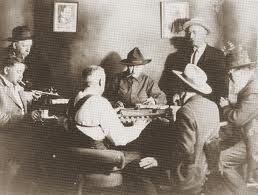
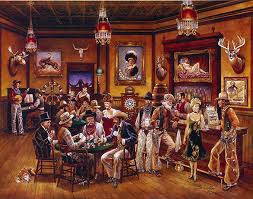
A crowd of customers at the Bee Hive Saloon in Fort Griffith, Texas slowly made their way over to the table where Lottie Deno and Doc Holliday had squared off.  They cheered the card sharps on and bought them drinks.  Lottie won most of the hands.  The talented poker players continued on until dawn.  When the chips were added up, the lady gambler had acquired more than thirty thousand dollars of Holliday’s money.

“If one must gamble they should settle on three things at the start…,” Doc said before drinking down another shot.  “And they are,” Lottie inquired?  “Decide the rules of the game, the stakes and the quitting time.”  Holliday smoothed down his shirt and coat, adjusted his hat and nodded politely to the onlookers.  “Good evening to you all,” he said as he made his way to the exit.  Lottie smiled to herself as she sorted her chips.  Holliday sauntered out of the saloon and into the bright morning light.

Historians maintain that it was only natural that Lottie Deno would have grown up to be an expert poker player –  her father was a part-time gambler and who had taught his daughter everything he knew about cards.  She is recognized by many gaming historians as being the most talented woman to play five card draw in the west.


For more of Lottie Deno’s story read the Bedside Book of Bad Girls:

Outlaw Women of the Old West.

Lincoln County Outlaw

Enter to win a copy of the Bedside Book of Bad Girls:

Outlaw Women of the Midwest.

gunmoll

Anyone who knew Anne Cook thought she was cruel, unfeeling and motivated by money.  The brothel she operated in North Platte, Nebraska, inthe late 1920s was a profitable enterprise, but she wanted to amass a fortune and one house of ill repute would not be enough.  No legitimate business alone could make her rich either.  Anne hoped to fulfill her dream with a combination of both.  According to those who knew the Cook family well, Anne’s teenage daughter brought in a substantial amount of income working for her at the brothel.  Clients requested the thirteen year old on a regular basis.

By the time Clara was in her 30s she had fully adopted her mother’s quest for wealth and was equally ambitious.  In addition to entertaining callers, Clara had become a bookkeeper for Anne’s various illegal enterprises.  Among Anne’s nefarious business ventures was bootlegging, gambling, and extortion.  Clara used what she knew about her mother’s criminal behavior to extort money from Anne and grow her own bank account.  The pair often fought over the misappropriation of funds.  Clara misjudged how far Anne would go to maintain the property, money, and power she had acquired.

On May 29, 1934, Clara challenged her mother for the last time.  Family members at the sprawling farm where they lived in Lincoln County, Nebraska, told authorities that the pair had been arguing most of the day.  No one was certain of the nature of the quarrel only that Anne had settled the heated discussion by killing her daughter.

 For more information about Anne Cook read the Bedside Book of Bad Girls:  Outlaw Women of the Old West.

Women of Easy Virtue

Enter to win a copy of The Bedside Book of Bad Girls:

Women Outlaws of the Midwest

BedsideBook

Among the notorious bad guys who robbed, swindled, and murdered Midwesterners from 1824 to 1936 were a number of bad girls who could be just as dishonest and violent.  On September 23, 1895, a  woman with a handkerchief over her face and a revolver in her hand stepped into the Mountaineers Club in Independence, Missouri and robbed the faro game of $525 and made her escape.  She leveled her gun at the men and told them to keep still, and then helped herself to the winnings.  The men in the room were too dazed to give the alarm until the woman had escaped.  On that same date at 10:30 in the evening an attempt was by a woman to blow up a west bound Union Pacific train by placing a stick of dynamite in the tracks at a junction half a mile east of the city.  Nearly the whole train passed over the dynamite before it exploded.  The last coach, filled with passengers, was badly shattered, but no one was injured.  Authorities claim the crimes were committed by “women of easy virtue.”

 To learn more about these female criminals read

The Bedside Book of Bad Girls: Women Outlaws of the Midwest

Public Enemy No. 1

Enter to win a copy of The Bedside Book of Bad Girls: 

Women Outlaws of the Midwest

MaBarker

She began with a hymn book in her hand; she died clutching a gun.  That was “Ma” Barker, mother of four outlaw sons whom J. Edgar Hoover, chief of the Federal Bureau of Investigation, Department of Justice described as the real “public enemy No. 1.”

Kate Barker – “Ma” as she was known to her criminal associates was the “brains” of the Barker-Karpis gang – kidnappers, bank robbers, and murderers.  And she died as most criminals wanted by the federal government do.  Ma Barker began her public career in Kansas City, Missouri.  In either an attitude or assumed or real piety she was the leader of a small band of religious zealots who used to hold meetings in the street near city hall.  Whenever one of her followers was arrested for picking pockets, vagrancy, or street walking or casual misdemeanor, she would go before the police judge, shed tears and claim that she alone was left in the world to befriend the poor defendant.  In most cases the defendant went back to more and bigger crimes and “Ma” Barker’s friendliness and a slight ability as a defense witness soon became a racket.

“Ma” and her boys were responsible for kidnapping two of the country’s wealthiest men and holding them ransom.  The Barker-Karpis gang murdered police officers and federal agents and any outlaw who double-crossed them.  Ma Barker’s life ended at a home she was renting in Florida on January 16, 1935.  To learn more about the life and violent death of Ma Barker and her sons read The Bedside Book of Bad Girls: Women Outlaws of the Midwest. 

The winner of a free copy of the book will be announced on April 30.

Good luck!

The Gambling Outlaw

Enter to win a copy of The Bedside Book of Bad Girls:

Outlaw Women of the Midwest

PokerAlice

Death, dealing from “a cold deck,” flipped the ace of spades for ‘ Poker Alice” Tubbs on February 27, 1930, it was her admission card to the big game that is eternity.  She was one of the last of a bizarre coterie of hard living, straight-shooting men and women who added the color—sometimes it was blood-red—to the old West. “Deadwood Dick,” “Wild Bill” Hickok end “Calamity Jane” were others.  Poker Alice wore a gun, smoked cigars and could swear like a trooper.  During a life as adventurous as any man’s, she gambled for high stakes without a single betraying quiver of the-hand as she dealt; without the twitch of a face muscle.  Old age and complications, following an operation for gall stones, were given by doctors as the cause of her death.  Poker Alice was English born but American bred, and always the gambler. She started as a faro dealer.  A woman at the box was a novelty that drew the black beards of the wild West, with their bags of gold, to the gambling table. So successful was she, that soon she was known, not just, as a woman gambler, but as a winning gambler, man or woman.  Colorado, Nevada, Montana, the Dakotas—wherever there was pay dirt and hombres with guts enough to lay it against the turn of a card—Poker Alice was. She took $6,000 in one night’s play in Silver City, N. M.  It seems rather strange, in retrospect, that Poker Alice, self-reliant, courageous and able to take care of herself anywhere—should have had time for love, yet she was three times married. Her first husband was a mining engineer, P. Duffield.  Then came W. G. Tubbs, a gambler who, despite a wide reputation of his own, never could equal Poker Alice at the card table. Her third husband was George Huckert, but when he died Poker Alice resumed the name of he- second husband.  She was in the rush of the ‘free lands’ of Oklahoma, and later skipped from place to place as the federal government warred on the gamblers. One by one commanding figures of the old, the lawless West, dropped away—many by bullets.  Poker Alice grew old. Times changed. Railroads brought civilization to the raw, elemental West.  Eventually there came prohibition.  Poker Alice retired to a little cabin in the Black Hills.  She was convicted for violating the prohibition law but never served the sentence.  Governor W. J. Bulow pardoned her, saying: “I can’t send a white-haired old woman to jail on a liquor charge.”  The days of big games, hard liquor and strong language are gone now. Only the wild glory of the Black Hills remains. Civilization could not take them away; and there today she lies dead—Poker Alice was seventy-seven when she died.

To learn more about Poker Alice read The Bedside Book of Bad Girls:

Women Outlaws of the Midwest

A Lady Horse Thief

Enter to win a copy of the Bedside Book of Bad Girls:

Women Outlaws of the Midwest

Chris3-0059

On August 21, 1894, Governor Lowe of Oklahoma issued requisition papers to the Governor of Kansas for Mrs. Flora Mundis, alias ‘Tom King’ the notorious horse thief who has been captured at Fredonia, Kansas.  There were scores of charges against her, and she had broken out of jail in the Territory more than a half a dozen times.  ‘Tom King’ was a handsome and fascinating young woman of about twenty-two years.  She was a quarter-blood Cherokee Indian and many of her relatives and her people lived near Springfield, Missouri from where her ancestors emigrated to the Cherokee country.  Her operations in the Territory had been extensive and notorious and her captures frequent, but she had never yet been brought to trial.  About a year and a half prior to the requisition being ordered she was arrested for complicity in the Wharton train robberies, and, after being held in the Guthrie jail for some time, escaped.  A while later she was held in the Oklahoma City jail and escaped in the same explicable way.  For the last three months of last year she had been in the new jail of Canadian county and her trial was to have taken place in the district court in December.  A few nights before her trial, however, she walked out the open doors of the jail dressed in a full suit of men’s clothing.

To learn more about Flora Mundis read The Bedside Book of Bad Girls: Women Outlaws of the Midwest.

Best Sellers List

Hearts West on the Publisher’s Weekly, Wall Street Journal and USA Today Best Sellers List

hearts_west_lg

TwoDot, an imprint of Globe Pequot Press, is proud to announce that the book Hearts West: True Stories of Mail Order Brides on the Frontier has been listed as a best seller for Publisher’s Weekly and USA Today. Hearts West brings to life true stories of mail-order brides of the Gold Rush era. Some found soul mates; others found themselves in desperate situations. Complete with the actual hearts-and-hands personal advertisements that began some of the long-distance courtships, this book provides an up-close look at the leap of faith these men and women were willing to take.

Enss has written more than two dozen books on the subject of women of the Old West. Some of the books Chris Enss has written are Frontier Teachers: Stories of Heroic Women of the Old West, Object Matrimony: The Risky Business of Mail Order Matchmaking on the Frontier, and Gilded Girls: Women Entertainers of the Old West. Her latest title is Love Lessons from the Old West: Wisdom from Wild Women. You can visit the author online at: www.chrisenss.com.

Publishers Weekly Best-Sellers

Best-Selling Books Week Ended March 22nd.
Nonfiction E Books

1. “Twelve Years a Slave” by Solomon Northup (HarperCollins)

2. “The Nazi Officer’s Wife” by Edith Hahn Beer (Harper Collins)

3. “Unbroken” by Lauren Hillenbrand (Random House)

4. “Jesus Feminist” by Sarah Bessey (Howard Books)

5.  “Hearts West” by Chris Enss (TwoDot)

6. “Not Cool” by Greg Gutfield (Crown Forum)

7. “10% Happier” by Dan Harris (It Books)

8. “Uganda Be Kidding Me” by Chelsea Handler (Grand Central Publishing)

9. “Killing Jesus: A History” by Bill O’Reilly & Martin Dugard (Macmillan)

10. “Call the Midwife” by Jennifer Worth (Ecco Press)


USA Today Best-Sellers

March 28, 2014 (AP)
By The Associated Press
NONFICTION E BOOKS

1. “Twelve Years a Slave” by Solomon Northup (HarperCollins)

2. “The Nazi Officer’s Wife” by Edith Hahn Beer (Harper Collins)

3. “Unbroken” by Lauren Hillenbrand (Random House)

4. “Jesus Feminist” by Sarah Bessey (Howard Books)

5. “Hearts West” by Chris Enss (TwoDot)

6. “Not Cool” by Greg Gutfield (Crown Forum)

7. “10% Happier” by Dan Harris (It Books)

8. “Uganda Be Kidding Me” by Chelsea Handler (Grand Central Publishing)

9. “Killing Jesus: A History” by Bill O’Reilly & Martin Dugard (Macmillan)

10. “Call the Midwife” by Jennifer Worth (Ecco Press)