Actor Martin Sheen said of James Dean, “There were only two people in the fifties: Elvis Presley, who changed music, and James Dean, who changed our lives.” It’s an amazing assessment, considering that Dean died midway through the decade. In fact, he was in Hollywood less than two years and made only three movies, two of which – Rebel Without a Cause and Giant – had yet to be released when he died. The car crash that killed him rated only four short paragraphs on an inside page of The New York Times. But the West Coast newspapers knew better. Their front-page banner headlines above a picture of his crumpled Porsche was more attention that Dean had ever gotten when he was alive. But it was merely a hint of the legend that would follow, unfettered by the bounds of living human subject. “You Haven’t Heard the Half About James Dean, by Natalie Wood” and “Here is the Real Story of My Life – by James Dean As I Might Have Told It to Joe Archer” were two of the early postmortems in the movie magazines. The 24-year-old achieved immortality a few days after he completed filming Giant, a sweeping epic that, rising state that he was, matched him with Elizabeth Taylor and Rock Hudson. Dean had taken an interest in race-car driving, but Warner Brothers had forbidden him to race during the filming. On a Friday, the day after a party celebrating completion of the movie, Dean and one of the film’s stunt men headed for a weekend racing event. Dean was driving his new gray Porsche that he had bought for $7,000 a few days before. The car was capable of doing 150 miles per hour, and Dean named it “The Little Bastard. About 3:30 that afternoon Dean got a speeding ticket outside of Bakersfield, California. A little over two hours later, as he was driving west on a rural two-lane highway. Dean saw an east bound car slowing at an intersection, apparently to turn left across the highway. “That guy’s got to stop,” Dean told his companion. “He’ll see us.” But Dean’s gray Porsche blended into the late afternoon twilight. The impact tore open the hood and trunk on the little sports car and crushed the driver’s side of the car. Dean died almost immediately; his passenger was thrown from the convertible and seriously injured. The driver of the other car, a 23-year-old college student, received minor injuries. In one of those classic ironies, Dean had filmed a commercial for safe driving while on the set of Giant. “People say that racing is dangerous, but I’ll take my chances on the track any day than on the highway.” Dean, slouched in a chair and toying with a small lariat, had mumbled in his style. “Take it easy drivin’, uh, the life you might save might be mine, you know?” 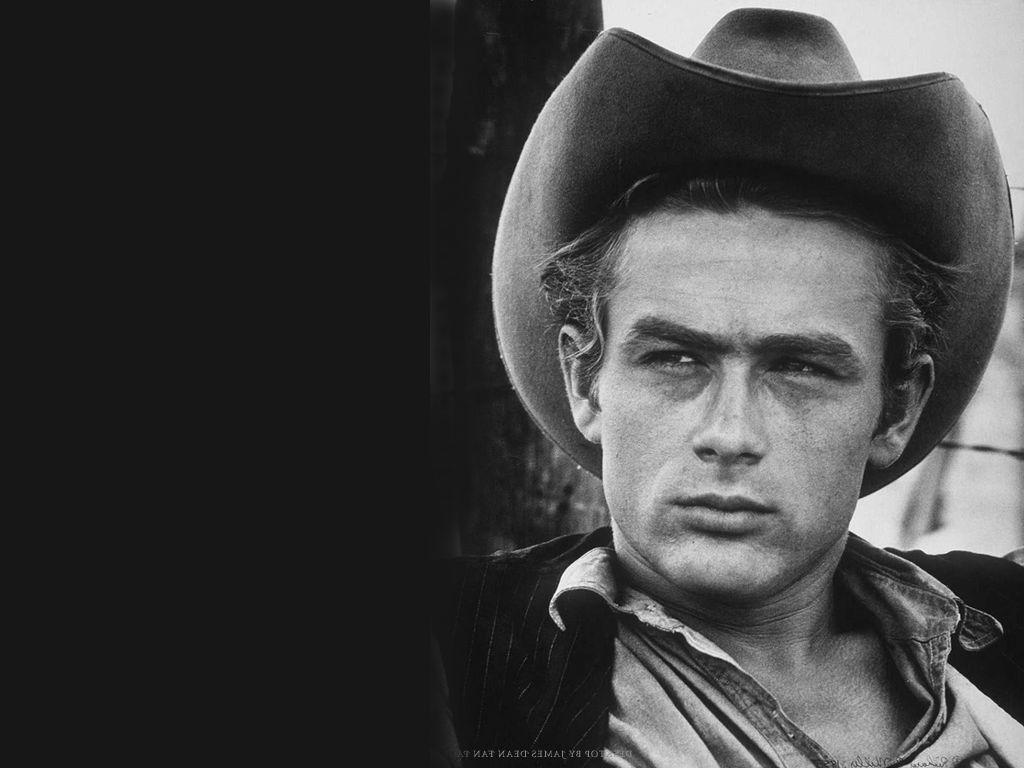
Journal Notes
Lady Lawyer
Mary Ann Shadd Cary was an educator and abolitionist. She was the first black woman to graduate from Howard University Law School and the first black woman to vote in a federal election. She helped President Lincoln enlist black men to fight for the Union and her house was frequently a safe haven in the Underground Railroad for slaves fleeing the South. After the war she became a school principal, and then a lawyer in Washington, D.C., at the age of sixty. She died in 1893 at age seventy from heart failure, with an estate valued at $150. 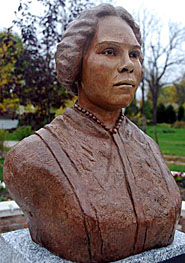
Howard Kazanjian and the Wild Bunch
For a number of years I’ve been working with Executive Producer Howard Kazanjian. Today I thought I’d share a little of the life and career of Kazanjian. He’s a gifted film executive and his stories of Hollywood are fascinating. Movies affect large masses of people – as art, as entertainment, as a method of wide-scale dissemination of fact and opinion. Making movies offers a means of involving the mind and body in creating something that will have a direct and powerful effect on those who see and hear it. Creating such a powerful effect was the motivating factor behind Howard Kazanjian’s entry into film making. Over the course of his thirty-five years in the motion picture industry, Kazanjian has worked with some of Hollywood’s most influential actors and directors. Whether he was acting as an assistant director on such cinematic classics as The Wild Bunch, or producing movie masterpieces like The Bridge of San Luis Rey, Kazanjian has been dedicated to moving audiences through film. A graduate of the University of California Film School, Kazanjian was hired to work for a major studio as he completed the school’s assistant director training program. His exceptional talent and natural flare for directing caught the attention of his instructors and the film executives at Warner Brothers Pictures. One of the first projects Warner Brothers signed him to work on was The Wild Bunch with cantankerous director, Sam Peckinpah. Kazanjian’s first learned he had the job working with Peckinpah after he was summoned to the man’s office. “I was on time for our meeting,” Kazanjian said, “but Peckinpah wasn’t there. I waited in the outer office next to a bank desks where three secretaries were seated. I had a direct view into the opened door of Peckinpah’s massive office. I stepped into the room after getting the nod from one of a secretary’s to do so and was met by a doctor and a nurse who told me to ’drop my pants.’” The physicians gave Kazanjian a series of shots, typically administered to people set to travel out the country. It wasn’t until that moment that Kazanjian knew that Peckinpah had agreed to let him work for him. Kazanjian journeyed to Mexico to help scout locations for the film shoot, barely having enough time to buy a pair of wrangler jeans and a pair of boots before he left. The mood among the crew already on the sight was tense. Peckinpah had fired a number of staff members associated with the production and many of those that remained weren’t sure how long they would be keeping their jobs. Peckinpah was tough on the crew. “He liked making people feel uncomfortable,” Kazanjian said. Often the crew would learn they had been fired when Peckinpah’s production manager passed them on the set and told them that ‘their replacement’ had arrived. Eventually, 75% of the crew would be fired. Peckinpah tolerated Kazanjian until he felt he the young talent had proved himself. He carefully followed Peckinpah’s instruction and held his tongue when the volatile director made outrageous demands. “Sam liked to sit for two or three hours and studying a location until he figured out how hw wanted to shoot the scene,” Kazanjian recalled. “One of the scenes in the movie was to be filmed on a high bluff over looking a great expanse of desert. When Sam reached the area he was immediately upset. Through gritted teeth he shouted for me and I hurried over to him. The crew knew something was wrong and moved in a bit to hear. ‘Didn’t I tell you I wanted this valley to be greened in before we filmed here?’ Sam asked Kazanjian. “I knew he hadn’t said anything about this previously, but I didn’t argue. I had learned by now to just say, “Coming, Sam.” We had a water truck with us all the time, and I asked special effects to mix the water in the vehicle’s tanks with green die, which fortunately we had, and sprayed the area. I just got busy fixing the problem.” In a matter of a few hours the desert floor was slightly green closest to the camera. Kazanjian’s time working on The Wild Bunch was a true educational experience for him. Not only was he able to glean valuable filmmaking techniques from Peckinpah, but he learned life and work lessons from the cast as well. “William Holden and Ernest Borgnine were gifted actors who knew their craft. Sam yelled at them as much as anyone else on the set though. The only person he never yelled at or tore apart was Ben Johnson. Ben was like a father to me. He was kind and gave great advice. Advice he lived too. He told me that a person should have a second job they can fall back on in case the first job as an actor didn’t pan out or if there were dry spells.” Still photographers, grips, electricians, crew members, assistant directors, extras and key personnel came and went during the filming of The Wild Bunch, but Kazanjian stayed. Peckinpah believed the assistant director was capable and dependable, but any real respect he had for him came towards the end of shooting the movie. “We were getting ready to film a pivotal scene in the movie where a bridge is dynamited and the bounty hunters on horse back fall twenty feet down into a raging river,” Kazanjian explained. “Sam was on a barge with a film crew in the middle of the racing waters filing the last shot in the scene, the last shot of the day, the last day of shooting the picture. Sam’s barge was tethered with a cable to each bank of the river. I was on the bank with another camera filming the scene. After the shot, as the barge was being pulled towards shore, I called out to the crew near me to cut the cable! Sam immediately yelled, “Who said that?” When told, Peckinpah got off the barge laughing. He patted his assistant on the back and applauded Kazanjian for his spunk. After the film was finished and Sam returned to the studio, whenever the two met, Peckinpah would greet Kazanjian with a hug and a reflective smile. The end result of the film they had made together was an Academy Award winning, western classic. Kazanjian’s experiences working with celebrated directors like Alfred Hitchcock, George Roy Hill, and Billy Wilder provide keen insight into the filmmaking process and are as enjoyable as they are informative. Kazanjian association with such greats and his longevity in an industry that changes executives nearly every day has made him a legend in his own right. 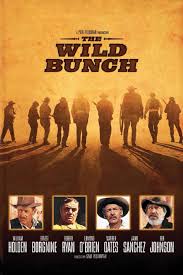
Bad Enough for a Good Hanging
My new website will be launched in November. Visitors will feel more like they’ve stepped in time to the Old West when the site is up and running. Until then…A row of sturdy boxes was placed under the improvised gallows. The condemned men were made to step up on them and nooses were adjusted on their necks. Each man faced death in his own fashion. Plummer Gang member Jack Gallagher alternately cursed, grinned and cried. He asked for a slug of Valley Tan, Virginia City’s most popular whiskey. The fiery drink down he showed his usual bravado with a flip query, “How do I look in a necktie, boys?” Another gang member Boone Helm was at first silent but just before the end he shouted, “Every man for his own principles! Hurrah for Jeff Davis! Let her rip!” Then someone called out, “Boys, do your duty!” The boxes were yanked out from under the hapless men one by one, and each dropped to his death. Virginia City, Montana, may well hold the record for mining camp lawlessness and vigilante violence in attempts to control it. With the hanging of the Plummer gang at Bannack, the similar fates of George Ives at Nevada City and several more criminals and road agents, most of those selected by vigilantes for quick exit were disposed of. But there were six bad ones left and on January 13, 1864 they were marked for capture. One, Bill Hunter, played a hunch and departed via a drainage ditch. The escape was futile however as he was later tracked down and hanged in Gallatin Valley. Vigilante Thomas Dimsdale later wrote of the others. “Frank Parrish was brought in first. He was arrested without trouble in a store and seemed to expect death…Club-Foot George was arrested at Dance and Stuart’s…Boone Helm was brought in next. He had been arrested in front of the Virginia Hotel…He quietly sat down on a bench and being made acquainted with his doom, he declared his entire innocence…Helm was the most hardened, cool and deliberate scoundrel of the whole band…murder was a mere pastime with him. He called repeatedly for whisky and had to be reprimanded for his unseemly conduct several times. Jack Gallagher was found in a gambling room, rolled up in bedding with his shotgun and revolver beside him…Lyons had come back to miner’s cabin on the west side of the gulch above town…The leader threw open the door and bringing down his revolver said, “Throw up your hands.” Lyons had a piece of hot slapjack on his fork but dropped it instantly and obeyed the order. Although Lyons was graciously given permission to finish his breakfast, he declined, saying, “I lost my appetite.” At the “trial” all five strongly protested their innocence but the evidence of crimes committed was overwhelming. Helm’s offenses even including cannibalism. All were condemned to death by hanging, a foregone conclusion. Justice was carried out promptly for fear some or all of the prisoners might escape with help from sympathizers. There being no time for the erection of a suitable scaffold, ropes were strung from a handy beam in an unfinished building on Wallace Street and Van Buren, the hangings performed as given above. When all ceased jerking they were cut down and laid in a row in the street. 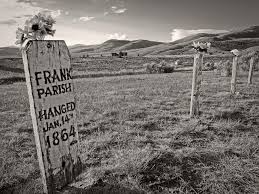
Murderers in Missouri
Before they took my brother’s life they said he had a criminal background. They lied and they took his life anyway. Clinched tightly in my fists are bitterness and resentment over the injustice that was done. I hold onto those emotion so tightly in hopes that the hatred will drown my sorrow. This is how it feels when the sacred is torn from your life and you survive. 
Lottie & Bernice
Countess Montez
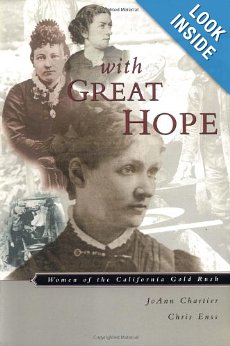
Lola Montez was one of the more flamboyant figures of the gold rush days. She came to California by way of Ireland (where she was born), the music halls of London and Paris (where she danced), and the castle of Louis I Bavaria, which she had to vacate in ‘48 when the revolution drove Louis off the throne. The dark-haired beauty set herself up in royal style in Grass Valley, but the more conservative elements in the mining center rebelled against the soirees the ex-royal mistress ran. Lola, who was also a princess, courtesy of Louis, threatened to horsewhip an overcritical editor and then packed up and decided to try Australia. She spent her last days in New York saving the souls of lost women. It was a field she knew well. For more information about Lola Montez and other women of the California’s Gold Country read With Great Hope: Women of the California Gold Rush. Visit www.chrisenss.com.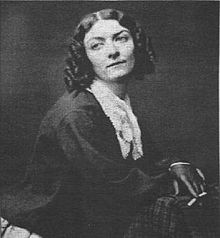
Mr. Ferris
The second edition of Tales Behind the Tombstones isn’t scheduled to be released for a year, but I couldn’t resist sharing one of the tales now. The symbol of the Chicago World’s Fair of 1893 was a giant 250-foot steel wheel, designed and erected under the supervision of George W. G. Ferris, Jr. It had 36 wooden seats that allowed 1,440 to ride at a time, taking them 25 stories above the fair at a then-exorbitant price of fifty cents apiece. The wheel was considered a wonder of technology and made Ferris, a former bridge inspector, a famous and a wealthy man during its heyday. But in 1896 he was worried about where future money would come from and, some believed because of his stress contracted typhoid fever. He died five days after its onset at age thirty-seven. Reports suggested that it was suicide, since his wife had left him three months before and he was apparently heartbroken and depressed. The wheel was moved and reassembled in New Orleans for the 1904 fair. However, two years later, what many felt was the American Eiffel Tower was dynamited, its rusted spokes buried in a landfill. Ferris’s name still stands on thousands of rides as a legacy-ironic that, since no one ever came to claim his cremated ashes. 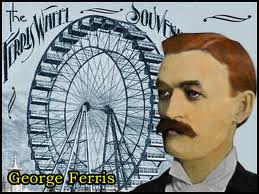
The Amazing Nellie Bly
Nellie Bly was one of the most rousing characters of the late nineteenth and early twentieth centuries. In the 1880s, she pioneered the development of “detective” or “stunt” journalism, the acknowledged forerunner of full-scale investigative reporting. While she was still in her early twenties, the example of her fearless success helped open the profession to coming generations of women journalist clamoring to write hard news. Bly performed feats for the record books. She feigned insanity and engineered her own commitment to a mental asylum, then exposed its horrid conditions. She circled the globe faster than any living or fictional soul. She designed, manufactured, and marketed the first successful steel barrel produced in the United States. She owned and operated factories as a model of social welfare for her 1,500 employees. She was the first woman to report from the Eastern Front in World War I. She journeyed to Paris to argue the case of a defeated nation. She wrote a widely read advice column while devoting herself to the plight of the unfortunate, most notably unwed and indigent mothers and their offspring. Bly’s life – 1864 to 1922 – spanned Reconstruction, the Victorian and Progressive eras, the Great War and its aftermath. She grew up without privilege or higher education, knowing that her greatest asset was the force of her own will. Bly executed the extraordinary as a matter of routine. Even well into middle age, she saw herself as Miss Push-and-Get-There, the living example of what, in her time, was “That New American Girl.” To admirers, she was Will Indomitable, the Best Reporter in America, the Personification of Pluck. Amazing was the adjective that always came to mind. As the most famous woman journalist of her day, as an early woman industrialist, as a humanitarian, even as a beleaguered litigant, Bly kept the same formula for success: Determine Right. Decide Fast. Apply Energy Act with Conviction. Fight to the Finish. Accept the Consequences. Move on. Nelllie Bly is an example of possibility. She viewed every situation as an opportunity to make a significant difference in other people’s lives as well as her own. Not wealth or connections or position or beauty or outstanding intellect eased her way to greatness. She never dwelled on inadequacy or defeat. Bly just harnessed her pluck, her power to decide, and then did as she saw fit, to both impressive and disastrous ends.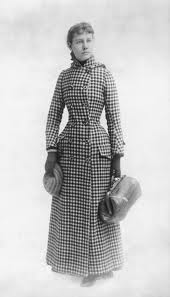
Camping in Yosemite
It would be hard to find nicer people than those I met in Mariposa this past weekend. I was at the Chamber of Commerce/Visitor Center doing a book signing for the title High Country Women: Women Pioneers of Yosemite and I made the acquaintance of many Mariposa residents as well as Yosemite travelers. I had a chance to talk with a couple of park visitors and tell them all about the history of Yosemite. The two smiled and nodded pleasantly. It wasn’t until I’d been talking for seven or eight minutes that one of the smiling tourists informed me that they didn’t speak English. A number of campers came in to buy a book. Some let me know they were “rouging it just like the pioneers.” I can’t help but think that if pioneers knew people were sleeping outside in tents instead of in air conditioned hotels where Snickers candy bars and chocolate milk were down the hall in a vending machine, they would be scratching their heads in bewilderment. Camping was a necessity for pioneers. I’ve got to believe if a Hilton was anywhere near the Sierra foothills in 1846 the Donner Party would have checked in immediately. There’s a tremendous amount of pressure to love camp where I live in the Gold Country. I try to convince myself it might be fun, but ultimately I don’t like bugs and bugs seem to be a major component of camping. I guess camping and hiking just wasn’t coded into my DNA. Oh, I got out to enjoy the beautiful national park this weekend. I took some lovely photos of Yosemite from my vehicle. I drove to various scenic spots and marveled at the magnificence of God’s creation. Then I got back into my truck and drove to a hotel where I spent the night next door to the room where the couple who didn’t speak English were staying. I guess I just have to follow Oscar Wilde’s advice: Be yourself, because everyone else is taken.