
As he lay hiding in the pine thicket along the Potomac River, seven days after assassinating President Lincoln, John Wilkes Booth began to think his act had been in vain. “I am here in despair,” he wrote. “And why? For doing what Brutus was honored for-what made Tell a hero. My action was purer than theirs…I have too great a soul to die like a criminal. O, may He spare me that, and let me die bravely.!” Booth, a strikingly handsome, successful actor and strong supporter of the Confederacy, had planned for months to abduct Lincoln to force the release of Southern prisoners. But after Lee surrendered on April 9, 1865, Booth’s plots were rendered useless. He spent the next few days glumly drinking muck brandy at John Deery’s billiard hall in Washington, D.C.. When he shot the President on April 14 the act apparently was unplanned until that day, when Booth happened to hear that Lincoln was to see Our American Cousin at Ford’s Theatre that night. It was during the second scene of the third act, after 10 p.m., that the 26-year-old Booth entered Lincoln’s box and shot him in the back of the head. He stabbed an officer who tried to grab him, then leaped to the stage 12 feet below, yelling, “Sic semper tyrannis! The South is avenged!” As he jumped his boot spur got caught in the folds of an American flag draped along the President’s box, causing him to fall and break his left leg as he hit the stage, where he stabbed the orchestra conductor, who tried to stop him, then struggled down the rear stairs to an awaiting horse that was being held by a stagehand. As Booth fled the city-his fractured leg tearing deeper and deeper into his flesh-he was joined by 19-year-old David Herold, who as one of eight in Booth’s gang had shot and wounded Secretary of State William Seward. Two men who were to kill Vice President Andrew Johnson backed out. Booth and Herold rode through the night southward in to Maryland. They turned eight miles out of their way to arrive at the home of Dr. Samuel Mudd, who set Booth’s leg at 4:30 a.m.. From there the two men rode on to the Potomac, where they hid along the banks for a week, surrounded by Army troops but supplied food and newspapers by a Confederate sympathizer. The troops finally caught up with the two men in the early morning hours of April 26, after they crossed the river and reached the home of Richard Garrett in Virginia. After the soldiers surrounded the barn where Booth and Herold were sleeping, one of Garrett’s sons was ordered to go in and convince them to surrender. Booth told the boy, “Damn you. You have betrayed me. Get out of here or I will shoot you.” Herold surrendered, but Booth stayed inside the barn, intent on a hero’s final blaze of glory. He yelled, “Captain, this is a hard case, I swear. Give a lame man a chance. Draw up your men 20 yards from the door, and I will fight your whole command.” When the troops refused Booth called out, “Well, my brave boys, you can prepare a stretcher for me.” Soldiers set the barn afire. Booth was seen briefly against he light of the blaze, leaning on a crutch, before a shot was heard. Booth was pulled from the barn with a bullet in the side of his neck that had broken his spinal column. A soldier, saying “Providence directed me,” claimed he shot Booth through a crack in the barn even though orders were to take the assassin alive. But some historians believe Booth had shot himself. The actor spent his final hours lying on the porch of Garrett’s house. Before he died at 7 a.m. he mumbled, “Tell mother, tell mother, I died for my country.” And then: “Useless, useless.” Although Booth’s body was identified by several people before he was buried outside Washington, near the U.S. Arsenal, legend has it that the Army had gotten the wrong man and Booth remained alive. He was spotted, it was said, in Europe and India, and many believed the self-acclaimed hero wandered around Texas and Mexico for the rest of the 19th century before committing suicide in Enid, Oklahoma, in 1903.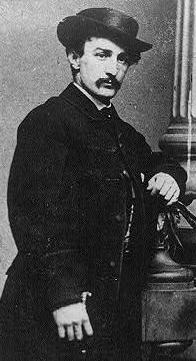
Journal Notes
A Knight’s Oath
“Be without fear in the face of your enemies.
Be brave and upright that God may love thee.
Speak the truth always, even if it leads to your death.
Safeguard the helpless and do no wrong – that is your oath.”
This is a Knight’s Oath, but I believe it could have been adopted the brave men and women who dared to travel over the plains to a wild, uncivilized land.
Rural Life
It’s difficult to think of country life in the Old West without illusion. We are always tempted to invest it with virtues that appear to have been corrupted by books and movies. Folklore shamelessly exploits and intensifies images of idyllic simplicity and bedrock values. Country living presents visions of nostalgia to soothe frontier town nerves. But these visions are grossly inaccurate. Country life in the post-Civil War era was an unremitting hardship. The farmer and his family toiled fourteen hours a day merely to sustain themselves, primarily on a landscape that lacked the picturesque inspiration of Currier & Ives’ prints. Nor did their endless drudgery reward the farmers with prosperity; during the economic distress of 1870-1900 few small and middle-sized farms produced anything beyond bare subsistence, and many were foreclosed. In place of a near rose garden, an expanse of muck and manure surrounded the farmhouse, sucking at boots and exuding a pestilential stench that attracted swarms of flies, ticks and worms to amplify the miseries of man and beast. The elemental task of survival precluded any concern for hygiene or sanitary installations. And the punitive winter brought with it isolation and terrible loneliness. To the farmers a hundred plus years ago swatting insects was an impractical solution to the spring and summer invasion of flies, mosquitoes and their kin that turned the farmhouse into a buzzing, biting bedlam. In fact, there was no solution. They swarmed through the open windows of the farmhouse, alighting on food and family, massing about the stove and ceiling, blackening fruit, wallowing in milk crocks and dying in the soup. Night brought no relief as the detestable insects assembled in the bedrooms to plague the defenseless sleepers. Russel Lynes said of window screening, introduced in the 1880s, that it was “the most humane contribution the nineteenth century made to the preservation of sanity and good temper.” 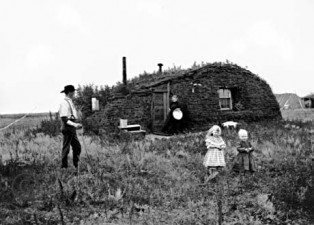
The Great Lillian Russell
In early June 1922, the Great White Way—forgot its “small talk” and resorted to reminiscences, as a way of paying rare tribute to Lillian Russell, the singer, actress and blonde beauty who never grew old, died in her Pittsburg home on June 7, 1922. In quiet, corners of the theatres and play houses, old timers recalled memories of the music hall on Broadway where Lillian Russell appeared. Lillian’s last appearance on the Broadway stage was on April 29, 1922 when she sang at a public celebration at the Palace. Dancers, acrobats, song writers, “dramatic people,” all the great talent that makes up Broadway, said a word or two in praise of the woman who had just died. They called her ‘the greatest of them all.’ Officially, tribute was paid by the professional world through its theatrical clubs. Floral tributes were sent by nearly all of them. The Lambs, the Players’ Club, the National Vaudeville Association, the Green Room Club and others were represented at her funeral in Pittsburg. One of the deepest tributes of all came from an old doorman, who, for 40 years watched, from his perch under the single light of the Manhattan stage doors, the comings and goings of the great actress. “Lillian Russell is dead, I see,” he said. “There was a wonderful woman. She was a big star, and not temperamental. The most beautiful woman I ever knew, and still as friendly as anyone on earth. There wasn’t a theatre in all the hundreds she played where the ‘back stage people’ didn’t love her.” Arrangements for the funeral of Mrs. Lillian Russell Moore, who died at her home were announced on the 27th of June. The day of her funeral more than 1000 telegrams and messages of condolences were received. Among those was one from President and Mrs. Harding. A bodyguard of United States Marines accompanied the body from Trinity Protestant Episcopal Church to the cemetery. At the cemetery entrance the casket carrying her body was met by the 107th Field Artillery, the organization which Mrs. Moore helped to equip during World War I. The escorted the procession to the grave. A detachment from the American Legion Post #112, of which Lillian was a member, formed the firing squad at the last resting place. President and Mrs. Harding’s telegram read: “Mrs. Harding and I are distressingly shocked to learn of the untimely death of Mrs. Moore. We feel the loss of a very dear friend. Please know of our sympathy, which is emphasized by our knowledge of your worship of Mrs. Moore.” Lillian had been ill for several weeks, following an accident suffered aboard the ship which she was sailing on her return from Europe. In addition to her husband, there were present at her bedside during her last moments her daughter Mrs. Dorothy Coalbolt and her niece, Mrs. Mildred A. Martin. Lillian Russell was born Helen Louise Leonard Lillian Russell on Dec 4, 1881 in Iowa. 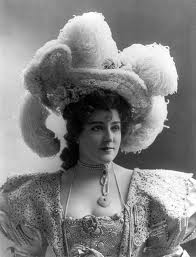
Who Killed Lewis?
There are enough suspects in the death of Meriwether Lewis-including the famous explorer himself-to fill an Agatha Christie mystery. How could the man who, with William Clark, was exalted for opening transcontinental passage to the Pacific Ocean wind up a few years later broke and dead on a well-traveled Eastern road? No one really knows, but theories abound. Upon Lewis’ triumphal return from his two-year expedition, President Thomas Jefferson, his friend and childhood neighbor, appointed him in 1807 governor of the upper Louisiana Territory. But Lewis was a better explorer than administrator. In office in St. Louis, he was plagued by unruly settlers, corrupt officials, and arduous negotiations with various Indian tribes. More and more distraught over his troubles by 1809, Lewis abruptly decided to go to Washington to try to straighten out some matters, including a dispute over unpaid expense reports that had left him in debt. In early September, Lewis left St. Louis on a boat for New Orleans, from where he would take ocean passage for Washington. During the river voyage, he made out his will, leaving whatever estate he had to his mother. He apparently suffered a breakdown, and a few days later, when the boat reached Chickasaw Bluffs, (now Memphis), Lewis was put ashore with a high fever and in a state of mental derangement. He had twice attempted to kill himself. The governor recuperated for a couple of weeks at Fort Pickering, then on September 29, after borrowing $100 to see him through his trip, left with two servants and an Army officer along the overland route called the Natchez Trace. What happened after that has been questioned by historians, but here is one version. On October 10, Lewis stopped for the night 72 miles southwest of Nashville in one of two log cabins owned by Mrs. Robert Grinder, whose husband was away. Mrs. Grinder said later that Lewis was clearly agitated. Well into the night he paced back and forth and mumbled, his muttering punctuated by occasional outbursts, about the unfairness of his problems in Washington. During the night, Mrs. Grinder said, she heard a gunshot followed by a thud in Lewis’ adjacent cabin. Then she heard him yell “Oh, Lord!,” then another shot. Lewis staggered to her cabin and pleaded through the door, “Oh, madam! Give me some water, and heal my wounds!” But Mrs. Grinder said she was too frightened to open the door. Only the next morning did she send one of her children out to the distant barn to alert Lewis’ servants, who apparently hadn’t heard the commotion. They found Lewis lying on his bed, shot once in his side and once in his head, alive but with part of his forehead shattered and his brain exposed. Lewis begged them to kill him. His last words were “I am no coward, but I am so strong. It is so hard to die.” Lewis was buried in a makeshift plank box near the cabin, alongside the Natchez Trace. All indications from that story are that Lewis committed suicide. That’s the version that made it to Washington and received the most attention. But local Tennesseeans believed otherwise. Speculation of foul play passed down through the generations, so that even on March 6, 1930, there was a headline in the Lewis County Herald that read: “Was Lewis Murdered?” Was he? There was never an investigation to find out. But historians have pointed to several plausible suspects. The Army officer who had been traveling with Lewis had been separated from the group for a couple of days. When he arrived later on the day Lewis died, he didn’t even examine Lewis’ wounds for gunpowder burns to determine whether he had been shot at extremely close range. Given the political backstabbing rampant in the Louisiana Territory, the officer himself could have killed Lewis. So could Lewis’ servants, who later complained that Lewis had never paid them enough. Lewis was found with only 25 cents on his body, although he had left Fort Pickering with more than $100. Also suspect is Mrs. Grinder, who may have been so spooked by Lewis that she decided to kill him. Some say Mr. Grinder returned during the night and killed Lewis while robbing him. In fact, there were highway robbers all over the Natchez Trace who could be held in suspicion. The verdict is forever suspended. Even the location of Lewis’ grave is unclear. It was poorly marked until a national monument was established on the site in 1925, well over a century after the mystery was played out.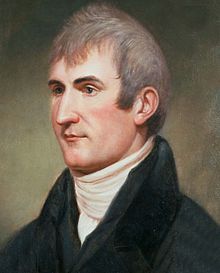
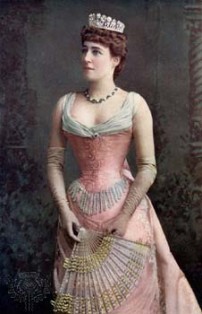
The Jersey Lily
The Royal Aquarium in Westminster, England, was a hub of activity on April 6, 1876. Many members of London’s wealthy aristocratic society were on hand for the gala opening of the magnificent structure built entirely underwater.
Dignitaries, barristers, popular sculptors, artists, and photographers were there to witness the occasion and to be inspired by the colorful coral reefs, graceful marine life, and crystal-blue waters. Their attention, however, was drawn away from the oceanic scenery when a tall, curvaceous young woman with Titian red hair entered the room. She was adorned in a simple black gown. Her azure eyes scanned the faces staring back at her, and she smiled ever so slightly. Within moments of her arrival, visitors descended upon the woman to admire her beauty.
Eminent portrait painters and photographers approached the unassuming woman and asked her to sit for them. Poets sought introductions and then recited blank verse about her arresting features. By the end of the evening, Lillie Langtry was the toast of Great Britain-a Professional Beauty to be reckoned with.
Emile “Lillie” Charlotte LeBrenton was born to William Corbet and Emilie Martin LeBreton in October of 1853 on the Isle of Jersey, a few miles off the coast of Saint-Malo, France. She was the only daughter in a family of six children.
Beauty alone was responsible for Lillie Langtry’s initial renown. Her photographs were printed in England and American newspapers, and by the time she was twenty-seven years old she was as famous in those countries as she was in her own.
The writer Oscar Wilde, whom Lillie had met at society parties, convinced her that the theatre was her calling and helped her get her start in the business. Lillie took the stage for the first time on December 15, 1881 in the play She Stoops to Conquer at the Theatre Royal. She was an instant hit.
Theatre managers throughout Europe clamored for a chance to star the famous beauty in one of their shows. After touring London and Scotland, performing for full houses nightly, she traveled to America. She appeared in a variety of productions in theatres from New York to San Francisco.
The Jersey Lily (a nickname she acquired because of where she was born) was romantically linked to the Prince of Wales, gambler Diamond Jim Brady, and actor Maurice Barrymore. Everywhere she went men found her shockingly attractive. Among her famous admirers was Judge Roy Bean of Texas. Bean fell in love with Lillie after seeing her photograph posted on a playbill. Soon the walls of Judge Bean’s saloon courthouse in Vinegaroon, Texas were covered with her pictures and press clippings. He renamed that town Langtry and Lillie visited the town named in her honor in 1904. Judge Bean had died not long before. She toured his Jersey Lily Saloon and drank a toast in his honor. Langtry residents gave her Bean’s pet bear, which had been chained for years to the foot of his bed, and the animal ran off as soon as it was released. Lillie was then presented with the Judge’s revolver, the same one he’d used to keep order in his court.
Everywhere Lillie performed across the West she packed venues and received excellent reviews. At times her theatrical performances were upstaged by her beautiful costumes and dazzling jewelry. Thousands of women bought seats in the hope that they would attend a performance in which Lillie wore her fabulous gems.
World-famous Lillie Langtry retired from the theatre in 1919 and made her home in Monaco. She died on February 12, 1929 from influenza. She was seventy-six years old. News of her death spread quickly through the United States. The front pages of newspapers across America recalled her contributions to the theatre, and some editorials declared her passing as “an era that has come to an end.”
Howdy Doody
Howdy Doody was the first children’s program presented live for one hour every Saturday morning, featuring a freckle-faced boy marionette. When kids across the country began yelling “It’s Howdy Doody Time!” it marked the beginning of the first generation of kids to be reared on TV. The program ran until 1960 and spawned a few other children’s programs from characters in the ensemble. “Buffalo” Bob Smith, who was the host and the voice of Howdy, died in 1998 at the age of eighty of pneumonia. The original Clarabell the clown was played by Bob Keeshan who later became Captain Kangaroo and the host of his own show in 1954: Keeshan died at seventy-six in 2004 of respiratory failure. Lew Anderson who took over the job as Clarabell, died in 2006 at age eighty-four of prostate cancer. Kids thought Howdy Doody was real, and in 1952 he received over a million write-in votes to become president. When the show ended, Howdy spent many years locked inside a dark trunk in a cold and lonely vault. In 2000, after an lengthy court battle deciding ownership, Howdy was finally freed, though currently hangs lifeless, on display at the McPharlin Puppetry Collection in the Detroit Institute of Arts. 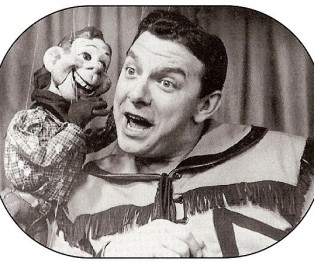
The Boys of Bonanza
Bonanza made its TV debut in 1959 and was a smash hit for fourteen years, ranking only second as the most popular western of all time after Gunsmoke. The story centered on a father raising three sons on the Ponderosa ranch, a huge spread on the shores of Lake Tahoe in Nevada. Ben Cartwright, the father, was Lorne Greene: He died from an ulcer at age seventy-two in 1987. Two of the three sons died young: The middle son, Hoss, played by Dan Blocker, a 6-foot-3, 300 pound, good natured guy on and off screen died in 1972 at age forty-three of a pulmonary embolism after routine gall bladder surgery. The youngest son, Little Joe, played by Michael Landon, later went on to star in Little House on the Prairie and Highway to Heaven. Landon died at age fifty-four in 1991 of pancreatic cancer. Married three times, with nine children, he is remembered most for how he publicly faced news of his fatal illness with an unusual frankness. Blocker’s type of embolism and Landon’s cancer are often caused by exposure to chemicals, frequently from too much contact with butoxyethanol, a chemical in many household cleaning products. It seems likely that both actors breathed air or had skin contact with the chemical while on the set of Bonanza. The family cook, Chinese immigrant Hop Sing, played by Victor Sen Yung also died from exposure to chemicals, this time from his real-life kitchen: He died in 1980 at age sixty-five due to carbon-monoxide poisoning, stemming from a gas leak in a household appliance. 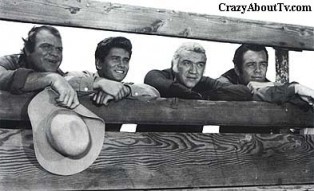
Rode Into the Sunset
The three top television westerns were Gunsmoke, Wagon Train, and Have Gun Will Travel. Gunsmoke featured Marshal Matt Dillon, modeled on Wyatt Earp. Howard McNear played morbid Doc Charles Adams: He died of a stroke in 1969 at age sixty-three. Georgia Ellis was the prostitute Kitty Russell on Gunsmoke: She died in 1988 at age seventy-one of AIDS, acquired after she married a bisexual younger husband. Wagon Train was a weekly drama portraying a clean-cut version of post-Civil War America’s journey westward, featuring Ward Bond as Major Seth Adams. He died in 1960 at age fifty-seven of a heart attack. Have Gun Will Travel was about a professional gunfighter named Paladin, played by Richard Boone and Kim “Hey Boy” Chan by Kam Tong: Boone holstered his six-shooter for a good as a result of cancer in 1981 at age sixty-three. Tong bowed out a sixty-two, going in 1969 of heart failure. 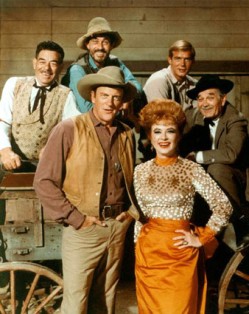
Closing the Open Range
Barbed wire doesn’t seem like such an important invention today, but it once played an integral part in the development of the American West. Joseph Glidden’s 1873 invention closed down the open ranges and placed cattle on well-defined lots of private plains and wide-open country was cordoned off with spikey wire, which effectively ended the era of the cowboy. Glidden, through barbed wire, became one of the richest men of his time. However, he died from an infection from an unhealed cut, much the way his invention had injured many handling it and the animals caught in its web. Upon his death, his body was shipped in a special ice-cooled train coach. His final wish was that he be buried far from the dusty plains where his Texas headquarters were located to lie eternally like a gentleman in a gravesite in New York.