The Posse After Cattle Annie and Little Breeches

Enter now to win a copy of

The Principles of Posse Management: Lessons from the Old West for Today’s Leaders


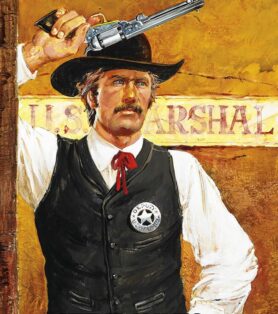
Deputy Marshal Bill Tilghman nudged his galloping horse in the side with his spurs to encourage the animal to run faster. The lawman was after a fugitive who had gotten a bit of a head start and whose ride was swift and agile. The horse’s ability to keep up with the outlaw’s mount had a great deal to do with the rider in the saddle. Tilghman was a solid, broad-shouldered man in his early forties and the desperado he was pursuing was a petite, seventeen-year-old woman. Jennie Metcalf, known in the Oklahoma Territory as Little Breeches, led her horse across the prairie around the town of Pawnee with ease. The ride was so fluid she managed to remove her Colt six-shooter from the waistband of the oversized trousers she was wearing, turn around in her seat, and fire a volley of shots at Tilghman.

The marshal grimaced as he spurred his horse on and lifted his Winchester out of the saddle holster. It was August 18, 1895, and the sun was a ball of fire. The wind at his face was like the breath of a furnace. He was hot and tired and in no mood to take part in a gun battle with a teenager. Tilghman hadn’t anticipated the young woman would make a run for it when he set out to arrest her and her cohort, Annie McDoulet alias Cattle Annie, for stealing horses.

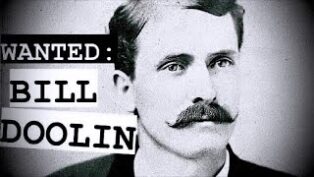
The pair’s misdeeds extended far beyond horse thievery. For several months, the women had been working with the Doolin Gang. In 1895, William “Bill” Doolin organized the group comprised of some of the most ruthless criminals in the region. They robbed banks, stagecoaches, and trains. Marshal Tilghman and two other deputy marshals, Heck Thomas, and Chris Madsen had been on their trail for years, but the gang was always one step ahead of them. It was clear someone was helping them to navigate around law enforcement’s efforts to apprehend the felons. After the Doolin Gang robbed the United States Army payroll near Woodward, Oklahoma, in March 1894, the three officers discussed what they knew about each crime and what dubious characters seemed to always be in the general vicinity.

Little Breeches and Cattle Annie were the prime suspects. The three men believed the women had been scouting for the gang, acting as their lookout, and keeping them in supplies. Tilghman was convinced the key to the Doolin Gang’s demise was to capture the misguided youth who were aiding and abetting them.

Acting on a tip Tilghman received in the summer of 1895, he and Deputy Steve Burke traveled to a farm outside of Pawnee where Cattle Annie and Little Breeches were rumored to be staying. The lawmen were less than three hundred yards from a crude cabin on the property when Little Breeches raced out of the structure, vaulted onto a nearby horse, and headed into the prairie. Tilghman gave chase after instructing his deputy to grab Cattle Annie who was watching the action from a busted window next to the front door.

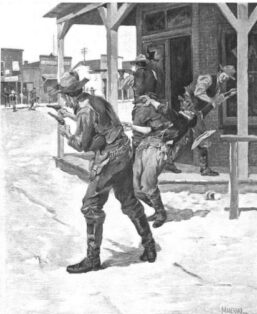
Little Breeches’ gun roared spitefully, but her aim was wild. It was difficult to hit a moving target on a horse at full gallop – a fact for which Tilghman was sincerely grateful. The marshal fired his shotgun over the young woman’s head in hopes her ride would spook and lose its footing. The animal reared and Little Breeches almost dropped her pistol. She swayed in her saddle like a drunken man, regained her composure, then spurred the horse back into a gallop. The distance between the marshal and the desperado widened.


The Principles of Posse Management Cover


The Principles of Posse Management 2

I'm looking forward to hearing from you! Please fill out this form and I will get in touch with you if you are the winner.

Join my email news list to enter the giveaway.

"*" indicates required fields
Your Name
Please add me to your email news list*

To learn more about the posse after Cattle Annie and Little Breeches read

The Principles of Posse Management: Lessons From the Old West for Today’s Leaders

A Doctor’s Review of The Doctor Was A Woman

The Posse After James Kenedy

Enter now to win a copy of

The Principles of Posse Management: Lessons from the Old West for Today’s Leaders


Dora Hand was in a deep sleep. Her bare legs were draped across the thick blankets covering her delicate form and a mass of long, auburn hair stretched over the pillow under her head and dangled off the top of a flimsy mattress. Her breathing was slow and effortless. A framed, graphite charcoal portrait of an elderly couple hung above the bed on faded, satin-ribbon wallpaper and kept company with her slumber. The air outside the window was still and cold. The distant sound of voices, backslapping laughter, profanity, and a piano’s tinny, repetitious melody wafted down Dodge City’s main thoroughfare and snuck into the small room where Dora was sleeping.

Dodge was an all-night town. Walkers and loungers kept the streets and saloons busy. Residents learned to sleep through the giggling, growling, and gunplay of the cowboy consumers and their paramours for hire. Dora was accustomed to the nightly frivolity and clatter. Her dreams were seldom disturbed by the commotion. All at once the hard thud of a pair of bullets charging through the door and wall of the tiny room cut through the routine noises of the cattle town with uneven, gusty violence.

The first bullet was halted by the dense plaster partition leading into the bed chambers. The second struck Dora on the right side under her arm. There was no time for her to object to the injury, no moment for her to cry out or recoil in pain. The slug killed her instantly. In the near distance a horse squealed and its galloping hooves echoed off the dusty street and faded away. A pool of blood poured out of Dora’s fatal wound, turning the white sheets she rested on to crimson. A clock sitting on a nightstand next to the lifeless body ticked on steadily and mercilessly.

It was 4:30 in the morning on October 4, 1878, and for the moment nothing but the persistent moonlight filtering into the scene through a closed window marked the thirty-four-year-old woman’s passing. Twenty-four hours prior to Dora’s being gunned down in her sleep, she had been on stage at the Alhambra Saloon and Gambling House. She was a stunning woman whose wholesome voice and exquisite features had charmed audiences from Abilene to Austin. She regaled love-starved wranglers and rough riders at stage and railroad stops with her heartfelt rendition of the popular ballads “Blessed Be the Ties That Bind” and “Because I Love You So.”


The Principles of Posse Management Cover


The Principles of Posse Management 2

I'm looking forward to hearing from you! Please fill out this form and I will get in touch with you if you are the winner.

Join my email news list to enter the giveaway.

"*" indicates required fields
Your Name
Please add me to your email news list*

To learn about who killed Dora Hand and the posse that tracked the murderer read

The Principles of Posse Management: Lessons From the Old West for Today’s Leaders

The Posse After the Reno Gang

Enter now to win a copy of the

Principles of Posse Management:

Lessons from the Old West for Today’s Leaders.


Newspaper readers from Hartford, Connecticut, to Portland, Oregon, were shocked to read about the bold and daring robbery of the Ohio and Mississippi Railroad on October 6, 1866.  It was the first robbery of its kind.  Banks and stage lines had been robbed before, but no one had perpetrated such a crime on a railroad.  According to the October 20, 1866, edition of the Altoona Tribune, three masked bandits entered the car stopped at a station near Seymour, Indiana, with the idea of taking money from the Adams Express safe.  They entered the car from the front platform, leveled their revolvers at the head of the guard on duty, and demanded he hand over the keys to the safe.  He did so with no argument.

While one of the bandits stood guard, the others opened and removed the contents of one of the three safes which included more than $20,000 in cash.  When the job was done, the desperadoes moved one of the safes to the door of the car, opened it, and tossed the box out.  The heavy safe hit the ground hard, rolled, and came to a stop.  One of the masked men pulled on the bell cord, and, as the engineer replied with the signal to apply the brakes, the robbers jumped out the train and made their escape.

The engineer saw the bandits leap off the train and speculated they were headed in the direction of Seymour.  The train slowed to a stop and one of the agents for the Adams Express Company who was on the train hopped off and ran back to the station with the news of the robbery.  He commandeered a handcar and recruited a few men to help him collect any evidence left behind by the thieves.  On the agent’s way back to the train, he found the safe tossed from the car.  The $15,000 inside had not been touched.

The Adams Express Company offered a $5,000 reward for the arrest and conviction of the robbers.  A witness aboard the train the evening it was robbed told authorities he recognized the desperadoes who stole the money as the Reno brothers, John and Simeon, and one of their friends, Frank Sparks.  Citizens and detectives alike began a vigorous search, but the brothers proved impossible to locate.

Unbeknownst to the Reno boys and the gang of outlaws with whom they associated, the Pinkerton Detective Agency had been hired to protect all Adams and Express Company shipments.  Armed with the descriptions provided by the witness, Allan Pinkerton, head of the investigation firm, set out to find the culprits.  Pinkerton traced the Renos to Seymour, a lawless community where rustlers, bandits, and cutthroats from all over the area gathered.


The Principles of Posse Management Cover


The Principles of Posse Management 2

I'm looking forward to hearing from you! Please fill out this form and I will get in touch with you if you are the winner.

Join my email news list to enter the giveaway.

"*" indicates required fields
Your Name
Please add me to your email news list*

To learn more about the posse after the Reno gang read

Principles of Posse Management: Lessons from the Old West for Today’s Leaders


The Posse After Tom Bell

Enter now to win a copy of

Principles of Posse Management: Lessons From the Old West for Today’s Leaders


Tom Brown was nearly where Buck’s Creek poured out into the open plains when he came upon the posse.  The sturdy and tenacious group of lawmen had been waiting for days for one of the members of the Bell gang to ride through the Northern California range.  A couple of placer miners working a claim on the American River told Sacramento County detective Robert Harrison that Bell’s men rode through the area between holdups.  Tom Brown, alias Sam Woodruff, didn’t fight the unfortunate situation he found himself.  Without saying a word he stepped off his horse and surrendered his six-shooters.  Detective Harrison was happy to relieve the bandit of his weapons.

Tom Bell, also known as the “gentlemen highway man”, was second only in notoriety to the cruel and bloodthirsty Joaquin Murrieta.  His true name was Thomas J. Hodges, a native of Rome, Tennessee, where he was born in 1826.  His parents were respected people and made sure he had a thorough education.  He graduated from a medical institution, and shortly after receiving his diploma, joined a military regiment and proceeded to the seat of war in Mexico, where he served honorably as a non-commissioned officer until the close of the struggle.

Like thousands of others he was attracted to California by its golden allurements and began life as a miner.  The hard work and privations of a miner’s life, coupled with a lack of success, caused him to follow in the footsteps of many, whose loose moral ideas led them into gambling as a means of making ends meet.  Soon tiring of this, he took to the road, where he continued his games of chance, simply staking his revolver against whatever loose coin his victims had about them.

He was convicted of grand larceny in 1855 and sentenced to five years in the state prison at Angel Island.

In May 1855, he made his escape with half a dozen other prisoners, among whom were Bill Gristy, alias Bill White, James Webster, Ned Conners, and Jim Smith.  These four remained together and formed the nucleus of the celebrated and notorious “Tom Bell gang,” that for nearly two years kept the state in a fever of excitement.

Management Principle Learned from the Posse After Tom Bell

Walk in Someone Else’s Shoes

Various members of the posse disguised themselves as outlaws and saloon patrons in order to collect the information needed to apprehend the criminals. Instead of figuratively walking in someone else’s shoes, posse members made it experiential. By doing this they were in a better position to propose solutions to potential problems and learned how to best achieve their objective.


The Principles of Posse Management Cover


The Principles of Posse Management 2

I'm looking forward to hearing from you! Please fill out this form and I will get in touch with you if you are the winner.

Join my email news list to enter the giveaway.

"*" indicates required fields
Your Name
Please add me to your email news list*

To learn more about Tom Bell and the posse who tracked him and his gang read

Principles of Posse Management: Lessons from the Old West for Today’s Leader

Lessons from the Old West for Today’s Leaders

Enter now to win a copy of

Principles of Posse Management: Lessons From the Old West for Today’s Leaders


“Chris Enss’s engaging book, The Principles of Posse Management, takes you back in time to the Old West, where with incredible detail and fun anecdotes, she reveals many universal leadership tools that were surprisingly effective in keeping order at such a lawless time. Subsequently, many of these same tools are needed today within our own corporate climate. Read this fascinating book and reconnect to these powerful principles from the past.” – Sean Convey, executive vice president, Global Solutions and Partnerships, FranklinCovey

“Posses were created very strategically to catch the outlaws that sure had a ‘never give up’ way of life. I was fascinated by the stories and bravery that built our Western lifestyle.” – Lisa Bollin, CEO and director of design, Cowgirl Tuff Company


Throughout the month of May visit www.chrisenss.com to enter to win a copy of

Principles of Posse Management


The Notorious Lola Montez

Enter now to win a copy of

Entertaining Women: Actresses, Dancers, and Singers in the Old West


Lola Montez


More than a hundred-sixty years ago citizens in New York were discussing with avid interest the approaching theatrical engagement in the city of a woman with a romantic Spanish name – and a titled one, no less – who had caused one monarch to lose his throne and had left a trail of affairs in her wake after a hectic zig-zag career of adventure and amour which had taken her pretty much all over the map of Europe.

This woman, who had been described as the most beautiful woman in Europe, whose comeliness, flashing, black eyes, crimson lips, intelligence and ready wit, few men had been known to resist, was now in the United States and was slated to appear in New York before traveling to California.  Small wonder, then, that honest housewives shook their heads when their husbands and sons displayed too much interest in “that adventuress” and suggested that they had better stay at home that evening.

Nevertheless, a well-filled house greeted the celebrity from overseas. Enough New Yorkers passed their cash into the box office till to make her engagement well worthwhile.

Lola Montez was the attraction. The Countess of Landsfeld, as Lola was also known, may not have been the best dancer in the world in fact, one New York newspaperman reported that, in his opinion she was quite the worst, but the former uncrowned queen of Bavaria could hardly have been accused of being dull.

The audience had come to taste optically an exotic dish and Lola added a liberal dash of paprika.  She included in her Iberian repertoire the “spider dance” a creation of her own, based on the most exotic of foreign sources, but watered down a bit for American consumption.

The “spider dance” was simple and titillating. Lola started the dance routine from the wings of the stage. She would twirl her way in front of the audience dressed in a pair of multicolored tights and a skirt cut just above her knee. After another few twirls she would end up under a canopy of corks hanging from the ceiling that had been painted black. The corks represented spiders falling from the sky. As the music reached fever pitch, she would spin around and around until she was tangled in the corks. Lola would spend the remainder of the dance twirling around trying to free herself from the corks.


Entertaining Women 4

I'm looking forward to hearing from you! Please fill out this form and I will get in touch with you if you are the winner.

Join my email news list to enter the giveaway.

"*" indicates required fields
Your Name
Please add me to your email news list*

To learn more about Lola Montez and other performers like her read

Entertaining Women: Actresses, Dancers, and Singers in the Old West


The Self-Made Star

Enter now to win a copy of

Entertaining Women: Actresses, Dancers, and Singers in the Old West


The angry hawk clenched its talons on the heavy leather gauntlet, stabbing the delicate wrist beneath.  Wings batting, the half-wild bird glared fiercely into the large, gray eyes of his captor.  Mary Anderson stared back with steely determination.  This unruly bird would be tamed, she resolved, and would become a living prop for her performance of the Countess in Sheridan Knowles’ comedy, Love.  A stuffed bird would not provide the realism she intended, and what Mary Anderson intended usually came to be.

“There is a fine hawking scene in one of the acts,” Mary wrote in her memoirs, “which would have been spoiled by a stuffed falcon, however beautifully hooded and gyved he might have been; for to speak such words as:  ‘How nature fashion’d him for his bold trade, / Gave him his stars of eyes to range abroad, / His wings of glorious spread to mow the air, / And breast of might to use them’ to an inanimate bird, would have been absurd,” she declared.  Always absolutely serious about her profession, Mary procured a half-wild bird and set to work on bending its spirit to her will.

“The training,” she explained, “started with taking the hawk from a cage and feeding it raw meat hoping thus to gain his affections.”  She wore heavy gloves and goggles to protect her eyes.  The hawk was not easily convinced of her motives, and “painful scratches and tears were the only result.”

She was advised to keep the bird from sleeping until its spirit broke, but she refused to take that course.  Persevering with the original plan, Mary continued to feed and handle the hawk until it eventually learned to sit on her shoulder while she recited her lines, then fly to her wrist as she continued; then, at the signal from her hand, the bird would flap away as she concluded with a line about a glorious, dauntless bird.

The dauntless hawk and Mary Anderson were birds of a feather.


Entertaining Women 4

I'm looking forward to hearing from you! Please fill out this form and I will get in touch with you if you are the winner.

Join my email news list to enter the giveaway.

"*" indicates required fields

Your Name
Please add me to your email news list*

To learn more about Mary and other performers like her read

Entertaining Women: Actresses, Dancers, and Singers in the Old West


The Divine Sarah

Enter now to win a copy of

Entertaining Women: Actresses, Dancers, and Singers in the Old West


The pliant figure leaned over the ship’s rail, expressive eyes intent on the blue-green waters of the harbor.  A mass of wavy, light brown hair with tints of gold lifted and curled with every breeze, its arrangement a matter of complete indifference to the angler.  Suddenly the slender form froze, breath held, and then, with a quick yank and a breaking smile, lifted the rod and hauled a wriggling fish aboard the Cabrillo.  Exclaiming in French, dark eyes sparkling with pleasure, Sarah Bernhardt ordered her catch, small as it was, to be prepared for dinner.

It was May 19, 1906, and the farewell production of Camille was scheduled for a few hours later at the ocean auditorium built on the water at Venice, California. Sarah stayed, and fished, at the hotel built like a ship, and performed in the adjacent theater on the wharf at the seaside resort, Venice of America. Having caught a fish, Sarah wended her way to her quarters. Piled high in her dressing room were the results of a recent shopping trip to the Oriental bazaar nearby:  silk and crepe matinee coats of pink and pale blue and mauve, all embroidered in butterflies and bamboo designs.

The tiny window in the dressing room provided a sparkling view of the ocean, and the streaming sunshine picked out details of the furnishings: a repoussé silver powder box, containers of pigment, eyebrow pencils, silver rouge pots, and scattered jewelry twinkling in the light. The tragedienne who attracted huge audiences wherever she went swooped up a small tan and white fox terrier, wriggling with joy at her return, and snuggled it close for a moment as she related the happy details of her fishing venture to a visiting reporter.  Then, she put down the small dog and closed her mind to the fun waiting outside the porthole.

Within moments Sarah became Marguerite Gautier, filled with the sadness and torment of the beautiful French courtesan in Camille. The play, written by Alexandre Dumas, became her signature role. She performed Camille more than 3,000 times all over the world. Sarah’s ability to sink fully into the character of the play made the tragic death scene so convincing that it became a trademark for “the Divine Sarah.”

No one played tragedy with such believable intensity as Sarah Bernhardt, and no one brought as much passion and enthusiasm to the pursuit of pleasure.  From fishing on the southern California coast to bear hunting in the woods outside Seattle, on every western tour the French actress indulged in some kind of adventure.  Sarah Bernhardt threw herself into life with the same characteristic energy she put into her stage appearances.  Yet she often slept in a coffin, preparing for that final sleep.


Entertaining Women 4

I'm looking forward to hearing from you! Please fill out this form and I will get in touch with you if you are the winner.

Join my email news list to enter the giveaway.

"*" indicates required fields

Your Name
Please add me to your email news list*

To learn more about Sarah and other performers like her read

Entertaining Women: Actresses, Dancers, and Singers in the Old West