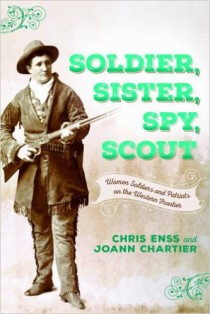
The national tour of
The Doctor Was a Woman: Stories of the First Female Physicians on the Frontier
starts on February 27 and goes through March 11
One of the first events will be on the Desert Belle.


Wear a mask.
Live a clean, healthy life.
Keep the pores open—that is, bathe frequently.
Wash your hands before each meal.
Live in an abundance of fresh air—day and night.
Keep warm.
Get plenty of sleep.
Gargle frequently (and always after having been out) with a solution of salt in water. (Half teaspoon of salt to one glass—eight ounces—of water)
Report early symptoms to the doctor at once. Respect the quarantine regulations.
Avoid crowds. You can get the influenza only by being near someone who is infected.
Avoid persons who sneeze and cough.
Do not neglect your mask.
Do not disregard the advice of a specialist just because you do not under
Do not disregard the rights of a community—obey cheerfully the rules issued by the authorities.
Do not think you are entitled to special privileges.
Do not go near other people if you have a cold or fever—you may expose them to the influenza and death.
See the doctor.
Do not think it is impossible for you to get or transmit influenza.
Keep your hands out of your mouth.
Do not cough or sneeze in the open.
Do not use a public towel or drinking cup.
Do not visit the sick or handle articles from the sick room.
Don’t worry.

I'm looking forward to hearing from you! Please fill out this form and I will get in touch with you if you are the winner.
Join my email news list to enter the giveaway.
"*" indicates required fields


I'm looking forward to hearing from you! Please fill out this form and I will get in touch with you if you are the winner.
Join my email news list to enter the giveaway.
"*" indicates required fields

Women heading West with their families in the mid-1800s were responsible not only for preparing food and making it last through the journey but were also in charge of the overall healthcare for the others. Armed with herbal medicine kits and journals filled with remedies, women administered doses of juniper berries, garlic, and bitter roots to cure the ailing. These “granny remedies,” as they were called, were antidotes for a variety of illnesses from nausea to typhoid. There were a combination of superstition, religious beliefs, and advice passed down from generation to generation.
The following are a few of those “granny remedies” that explains why historians refer to this time period as the “Golden Age of Medical Quackery.”
The hot blood of chickens cures shingles.
Carry a horse chestnut to ward off rheumatism.
Sassafras tea thickens the blood.
The juice of a green walnut cures ringworms.
To remove warts, rub them with green walnuts, bacon rind, or chicken feet.
Mashed snails and earthworms in water are good for diphtheria.
Boiled pumpkin seed tea for stomach worms.
Use wood ashes or cobwebs to stop excessive bleeding.
Mashed cabbage for ulcers or cancer of the breast.
Owl broth cures whooping cough.

I'm looking forward to hearing from you! Please fill out this form and I will get in touch with you if you are the winner.
Join my email news list to enter the giveaway.
"*" indicates required fields

More than two dozen women dressed in high-collared, mutton-sleeved blouses and gray or black skirts, all members of the Church of Latter-Day Saints, occupied the chairs around a conference room at the Woman’s Exponent newspaper office in the Salt Lake Valley in 1878. Most of the women were talking quietly among themselves; some were flipping through medical books and making sure they had paper and pencils. Others were studying an announcement in the morning edition of the publication. “Mrs. Romania B. Pratt, M.D., continues her interesting and instructive free lectures to the Ladies’ Medical Class every Friday afternoon,” the announcement read. “All ladies desirous of obtaining knowledge of the laws of life and how to preserve their health, and rear children, and how to determine the cases of illness should improve with these opportunities and not fail in punctuality.”
The eager, makeshift classroom of women turned its full attention to Dr. Pratt when she entered. The coal-haired instructor with dark eyes and a broad nose smiled at the students expecting to learn something about anatomy, physiology, and obstetrics from the first female doctor in Utah. As she took her place in front of the group, she couldn’t help but see herself reflected in the beginners. Five years prior to agreeing to act as a medical instructor, Romania had been encouraged to become a doctor by Mormon leader Brigham Young.
The plea for women to pursue the study of medicine had been issued from the pulpit in 1873. Romania answered the call not only because she was enthusiastic about learning but also because she had personally experienced death and wished she’d been able to intercede.
The death of a dear friend helped influence her decision to become a doctor. “I saw her lying on her bed, her life slowly ebbing away, and no one near knew how to ease her pain or prevent her death,” Dr. Pratt recalled in her memoirs. “It was a natural enough case, and a little knowledge might have saved her. Oh, how I longed to know something to do, and at that moment I solemnly vowed to myself never to be found in such a position again, and it was my aim ever afterward to arrange my life work that I might study the science which would relieve suffering, appease pain, and prevent death.”

I'm looking forward to hearing from you! Please fill out this form and I will get in touch with you if you are the winner.
Join my email news list to enter the giveaway.
"*" indicates required fields

Dr. Jenny Murphy flipped the collar up on the thick, gray coat she was wearing and tightened the grip she had on the medical bag in her lap. It was below freezing when she left Yankton, South Dakota, in November 1894, on her way to a homestead in Nebraska, and temperatures continued to plummet. An anxious farmer had burst into her office in the afternoon and pleaded with her to accompany him to his home to help his wife deliver their first child.
The man’s farm could only be reached by crossing the Missouri River. Dr. Murphy followed the expectant father to his canoe anchored at the river’s edge and climbed inside. The water was cold, and chunks of ice clung to the shoreline. The farmer pushed off from the bank and quickly paddled into the middle of the water. He avoided most of the chunks of ice pulled downstream with the strong current. Just before they reached the other side of the river, a massive hunk of ice slammed into the boat, and it overturned. The doctor and the farmer were dumped into the water. Still holding on to her medical bag, Dr. Murphy fought her way to the bank of the river and onto dry land.
The frazzled farmer also managed to get out of the water. He gave the doctor a moment to recover from the near-drowning experience before hurrying her along to his homestead. When the pair arrived at the farmhouse, Dr. Murphy’s clothes were still wet from the swim in the river. Peeling off her coat and apron, she rushed to the bedside of the farmer’s wife.

I'm looking forward to hearing from you! Please fill out this form and I will get in touch with you if you are the winner.
Join my email news list to enter the giveaway.
"*" indicates required fields

Woman Doctor demonstrates operation to class – 1883
Two well-dressed men with pistols holstered to their sides crossed the dusty thoroughfare of Herndon, Kansas. Through the wavering heat and stabbing glare of sunlight, Doctor Mary Canaga Rowland watched the pair check to make sure their six-shooters were loaded. “This office is about to get busy,” she said to herself as she watched the men square off against a couple of ranch hands standing in front of the telegraph office.
Mary couldn’t hear what the men were saying, but she could tell they were arguing. The quarrel quickly turned violent. One of the ranch hands reared back to throw a punch, but was stopped dead in his tracks by a bullet. The second ranch hand was just as quickly gunned down. The gunmen fled, firing their pistols in the air as they rode off. One of the injured men was carted off to the hotel and the other was delivered to Doctor Rowland.
The doctor’s patient was covered in blood and writhing in pain. Mary tore the faded blue shirt away from the wound so she could begin the examination. Once the saturated material was removed, she began soaking up the blood with strips of material. The bullet had gone through the man’s forearm and struck his suspender buckle, leaving an egg-sized lump just below his heart.
As Mary started dressing the piercing, the ranch hand pulled his arm away from her. “You’re a woman doctor,” he said incredulously. Mary stared down at him and offered a partial smile. “I know what you’re thinking,” she said. “Every man to his trade, but every woman to the washtub, right?” The ranch hand merely groaned. “I could just let you bleed to death,” Mary added. He could tell she was serious and didn’t resist as she gently lifted his injured arm onto a fresh sheet.

I'm looking forward to hearing from you! Please fill out this form and I will get in touch with you if you are the winner.
Join my email news list to enter the giveaway.
"*" indicates required fields

Eighteen-year-old Nellie Mattie MacKnight stepped confidently into the spacious examination room at San Francisco’s Toland Hall Medical School. Thirty-five male students stationed around cadavers spread out on rough board tables turned to watch the bold young woman enter. The smell of decomposing corpses mixed with the tobacco smoke wafting out of the pipes some of the students were puffing on, and it assaulted Helen’s senses. Her knees weakened a bit as she strode over to her appointed area while carrying a stack of books and a soft rawhide case filled with operating tools.
To her fellow students, Nellie was a delicate female with no business studying medicine. Determined to prove them wrong, she stood up straight, opened her copy of Gray’s Anatomy, and removed the medical instruments from the case. It was the spring of 1891. She nodded politely at the future doctors glowering at her. A tall, dapper, bespectacled professor stood at the front of the classroom, watching Nellie’s every move. The sour expression on his face showed his disdain for a woman’s invasion into this masculine territory.
The assignment the students were required to complete within an hour was the dissection of male cadavers’ heads, upper torsos, and pelvic regions. The part of the body Nellie was given to dissect was the pelvis. She studied the corpse lying before her, then nervously flipped through her anatomy textbook.
The students at the other operating tables around her were busy cutting and slicing, but Nellie couldn’t bring herself to pick up a scalpel. The annoyed instructor strode over to her, his brows furrowed. “Do you expect to graduate in medicine or are you just playing around?” he snarled. “I hope to graduate,” Nellie responded in a small voice. All eyes turned to watch the exchange between the professor and the first-year student.
I'm looking forward to hearing from you! Please fill out this form and I will get in touch with you if you are the winner.
Join my email news list to enter the giveaway.
"*" indicates required fields


A team of bald-faced horses pulling a buckboard wagon galloped wildly along a dirt road, heading toward the Santa Ynez Mountains, twenty miles outside of Santa Barbara. The driver, a pudgy man wearing a worried expression, urged the animals along. Dr. Harriet Belcher, a distinguished-looking forty-year-old woman with dark hair and dark eyes, held tightly to the railing next to her seat with her right hand and clutched a leather medical bag to her chest with her left.
The doctor had been summoned to help a young man suffering with erysipelas, a bacterial infection in the blood that had spread to the heart valves and bones. His condition was serious, and Harriet was needed right away. The driver and passenger rode through the rough country of deep creeks and high ridges. It was eight thirty at night when they came to a creek that was off the beaten trail, which the horses balked crossing. Tall black mountains loomed before them, and a half-moon emerged from behind a cluster of clouds. Though she didn’t know for sure, Dr. Belcher sensed they were lost, and she wanted to cry from sheer hopelessness. A man’s life depended upon her, and she was anxious to get to the patient.
The wagon hurried along over rocky, winding paths and under dense stands of oak trees. A singular pack of coyotes was standing in an open space at the top of a hill, and it quickly scattered without making a sound as the vehicle approached. After dragging the wagon over a row of tree trunks, the driver brought the horses to a stop. He hopped out of the wagon and hurried ahead of the team on foot. He returned moments later, climbed back into the vehicle, snatched up a whip resting beside his seat, and snapped it at the horses. The wagon jerked forward, and the team proceeded down a steep embankment into a dry streambed, over boulders, and up the opposite bank. The wagon creaked and groaned, and Harriet feared it wouldn’t make it to their destination.

I'm looking forward to hearing from you! Please fill out this form and I will get in touch with you if you are the winner.
Join my email news list to enter the giveaway.
"*" indicates required fields

A loud rap on the door of the hat shop coaxed the diminutive young woman from her work of loading bolts of fabric into a trunk. The scruffy messenger on the other side of the door smiled politely when Bethenia Owens greeted him and then handed her a letter. The monogram on the envelope showed that the correspondence came from Dr. Palmer, a prominent physician in the northwestern area of the United States.
The messenger waited patiently for Bethenia to break the seal on the envelope and read the enclosed note. “How sad,” she said to no one in particular. “One of our elder citizens passed away . . . and six local physicians who treated him at one time or another want to do an autopsy. And as one of the newest doctors in town, I’m invited to attend the operation.”
The messenger grinned and nodded, anticipating a negative response. Bethenia knew the invitation was meant as a joke and was determined to turn the tables on the pranksters. There were very few women in medicine in 1872, and, by and large, they were not well received by men in the same profession. Bethenia studied the note, carefully considering the proper response. “Give Dr. Palmer and the others my regards,” she announced, “and tell them I’ll be there in a few minutes.”
A stunned look fell over the courier’s face as he turned and hurried off down the dusty thoroughfare in Roseburg, Oregon. Bethenia followed a safe distance behind the messenger to Dr. Palmer’s office, where she waited outside. She listened in as the courier relayed the information she had given him and heard the doctors laughing heartily. Bethenia opened the door, momentarily interrupting the merriment.
One of the doctors regained his composure and walked toward her with his hand outstretched. She shook it, and the physician choked back a giggle. “Do you know the autopsy is on the genital organs?” he snickered. “No,” Bethenia replied, “but one part of the human body should be as sacred to the physician as another.” The mood in the room quickly changed to one of disbelief and then, in an instant, to indignation.

I'm looking forward to hearing from you! Please fill out this form and I will get in touch with you if you are the winner.
Join my email news list to enter the giveaway.
"*" indicates required fields