Along Came Alice Sisty

Enter now to win a copy of

Along Came a Cowgirl: Daring and Iconic Women of the Rodeo and Wild West Shows


A hush fell over the large crowd at the rodeo arena in Salt Lake City, Utah, in July 1938 as daredevil rider Alice Sisty raced into the arena atop two English jumpers. She was standing on the backs of the animals with one foot on one horse and the other foot on the second mount, known as Roman riding. Alice led the horses into a gallop around the arena as the audience cheered and applauded. She expertly handled the jumpers named Whale and Brownstone.  Alice had performed the Roman standard jump a number of times and was confident the trick would come off perfectly.

The trick involved the excited horses leaping over a parked automobile. It was an outstanding feat that, when executed well, brought rodeo fans out of their seats shouting for joy. Alice did not disappoint. Her signature jump was flawlessly carried out. She waved to the wildly cheering audience as she urged her horses into another pass at the stunt.

Born in Netcong, New Jersey, in January 1913, Alice first broke into national headlines when, at twenty years of age, she rode an Indian pony from Reno, Nevada, to the steps of New York City Hall.  It was a three- thousand-mile journey, and, when she arrived in New York, mayors from coast-to-coast celebrated Alice’s accomplishment with letters of congratulations. The Cheyenne, Wyoming, Chamber of Commerce helped defray Alice’s expenses on the journey, and she helped advertise the Cheyenne Frontier Days by wearing a cowboy suit with the Cheyenne inscription on its back.

Alice had been riding horses since the age of six. Her grandfather owned a racetrack, and the love of horses was undoubtedly born in her. One of Alice’s first rodeo appearances was in Asbury Park. It was followed by well received appearances in such places as Des Moines, Iowa; Cheyenne, Wyoming; Omaha, Nebraska; and Billings, Montana. She performed at the Chicago World’s Fair and at Madison Square Garden.

Billed as a trick and fancy rider, Alice won numerous cowgirl championships. She was one of the highest paid, female rodeo performers in the 1930s. Friends and fans seldom, if ever, saw her without her makeup and hair done to perfection and adorned in beautiful cowgirl clothing. The dark-haired, blue-eyed Alice had decided to become a cowgirl when she was nineteen and signed to ride in Colonel Zack Millers’ 101 Ranch.

In addition to the prized English jumpers with which she used to perform the Roman standard jump trick; she owned a white Arabian horse named Chopa. Chopa was a highly intelligent animal who responded to every command of Alice’s voice. The pair were seen together in rodeo shows from coast to coast.

Alice passed away from an unnamed illness on September 11, 1953, in Crescent City, California, where she lived with her second husband, Hennie Sommer. Alice was forty years old when she died.


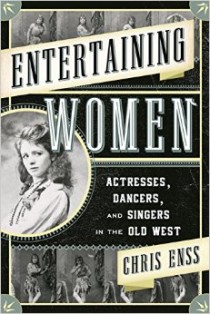
along came a cowgirl cover


To learn more about fearless riders like Alice read

Along Came a Cowgirl: Daring and Iconic Cowgirls of the Rodeo and Wild West Shows

Along Came Cowgirl Tillie Baldwin

Enter now to win a copy of

Along Came a Cowgirl: Daring and Iconic Women of the Rodeo and Wild West Shows


Tillie Baldwin

Hundreds of rodeo fans filled every available seat at the Pendleton Roundup in northwestern Oregon in late September 1912.  They cheered loudly for Swedish bronc buster Tillie Baldwin sitting atop an outlaw horse named Spike.  The gate was moments away from opening and the bronc was already bucking wildly.  Tillie ground her hat down tight on her head, and then clenched onto the thick reins of her ride.  The chute opened and Spike darted out into the arena.  Tillie bobbed up and down in the saddle, holding on with all her might, as the horse worked violently to try and throw her off his back.  At long last, a horn sounded, and the ride was officially over.  Tillie had survived the long trek around the arena on top an animal who had been unsuccessful in tossing her to the ground.  The crowd enthusiastically applauded the twenty-four-year-old, and the remarkable ride earned her first prize in the women’s bucking bronco contest.  She was awarded a $350 saddle.  In addition to winning the bucking bronco championship, Tillie also won the trick riding competition and its $150 purse.

Tillie Baldwin was born Anna Mathilda Winger in Arendal, Norway, in 1888.  She was fourteen years old when she migrated to the United States with her family in 1902, and she did not speak English.  Six years later, she had not only mastered the language but had become a hairdresser with a healthy clientele of New York ladies wanting a new look.

During a trip to Staten Island in early 1908, Tillie saw a troupe of cowboy and cowgirl actors making a movie.  The teenage hairdresser immediately wanted to learn to ride a horse and join the talent.  Tillie approached one of the actors and asked them to teach her to ride.  She worked for weeks with her paid instructor and eventually became a competent horsewoman.  Shortly thereafter, she asked the producer of the film if she could join the cast.  He agreed.

From those silent pictures, the eager young equestrian signed a contract to perform live in Captain Jack Baldwin’s Western Show.  There she perfected her riding skills and met her husband, cowboy Johnny Baldwin.  While employed in Baldwin’s show, she changed her name from Mathilda to Tillie.  In time, she signed with the renowned 101 Ranch Wild West Show.  When she wasn’t performing, she was competing in various rodeos around the country.

Over the course of her thirteen-year rodeo career, Tillie Baldwin won roping and riding events in such prestigious programs as the Winnipeg and Calgary Stampedes and the California Rodeo in Salinas.  Routinely billed as the “fearless rider who had never been thrown by a bucking bronco”, rodeo fans in 1921 named her as one of three best women riders in the country.  Also on that list were Fannie Sperry and Bertha Blanchard.

Tillie retired from rodeo competition in 1925 and moved to South Lyme, Connecticut, where she operated a horse ranch and riding school.  She died on October 23, 1958, at the age of seventy.


along came a cowgirl cover


To learn more about talented riders like Tillie read

Along Came a Cowgirl: Daring and Iconic Women of the Rodeo and Wild West Shows


Along Came Cowgirl Kitty Canutt

Enter now to win a copy of

Along Came a Cowgirl: Daring and Iconic Women of the Rodeo and Wild West Shows


Bronc busting champion Kitty Wilkes won her first title at the Wild West Celebration Rodeo in Miles City, Montana, in 1916.  The seventeen-year-old, New York native’s straightforwardness and untamed physical daring gave fans the impression she was born and bred into the rugged life of a Wyoming ranch.  Few would have guessed she was new to the sport or that winning the top prize would inspire her to excel in other rodeos.  From that exciting moment in Miles City she was determined to show the world that one need not be “born in the saddle” to be a crack rider.

Katherine Derre, whose stage name was Kitty Wilkes, was born on July 15, 1899.  She had a natural talent for breaking horses and parlayed that skill into bronc riding in public showings.  Not only did she have a way with wild horses, but she was also an exceptional trick and fancy rider.  Owners of relay strings were eager to gain her services.

Between the rodeo in Montana in the summer of 1916 and the Pendleton Roundup in Pendleton, Oregon, in early fall of 1916, Kitty honed her bronc riding talent at ranches and rodeos throughout the West.  She insisted on using the orneriest animals for training.  Outlaw horses were blindfolded and saddled for her to ride.  One encounter resulted in the horse bucking Kitty off and bruising her ribs.  She wouldn’t allow the horse to beat her, however.  She swung back into the saddle, refusing to leave it until the animal finally broke.

Kitty’s nickname was Diamond Girl because she had a diamond set in her front tooth.  When needed, she would remove the diamond and pawn it for the entry fees to rodeo contests.

Her performance at the Pendleton Roundup in 1916 resulted in her being named the All-Around Champion Cowgirl.  Among the many people she met during the roundup was Yakima Canutt.  Canutt, who also competed at the rodeo, would go on to become one of Hollywood’s leading stuntmen.  Kitty and Yakima fell in love and were married in Kalispell, Montana, in 1917.

Kitty was a fierce athlete who hated to lose.  It was not uncommon for her to challenge women who outrode her, and she believed cheated, to a fistfight.  In September 1918, she was disqualified from participating in a rodeo in Washington because she hit a rider in the mouth with a piece of wood.

Not content with being the top female bronc rider in the country, she aspired to be the top female relay racer as well.  Rodeo fans loved to watch the petite woman fly past the grandstands on her horse, hurrying to meet the next mount waiting to be saddled and ridden to the next point.  More than once Kitty would be finishing part of the race standing on the stirrups trying to get into the saddle.  Her grit and resolve often paid off with a win.

The rodeo stars Kitty often competed against were Mabel Strickland, Bonnie McCarroll, and Prairie Rose Henderson.

Kitty Wilkes was eighty-eight years old when she died on June 3, 1988.


along came a cowgirl cover


To learn more about fearless women like Kitty read

Along Came a Cowgirl: Daring and Iconic Women of the Rodeo and Wild West Shows


Along Came Cowgirl Berenice Dossey

Enter now to win a copy of

Along Came a Cowgirl: Daring and Iconic Women of the Rodeo and Wild West Shows


In early February 1941, more than twenty-five hundred people jammed into the stadium to watch the exciting events at the World’s Championship Rodeo in Phoenix, Arizona. They came to see wild cow riding, calf roping, steer roping, bronc riding, and trick rider Berenice Dossey. Not only was she a “spectacular performer” according to the Arizona Republic newspaper, but she was also known as one of the most beautiful women on the rodeo circuit. Among the myriad of tricks that she perfected on top of her horse Sundee were the hippodrome stand, double vault, and the Cossack drag, where she would hang under her ride’s belly at full gallop. It was her flawless execution of the Cossack drag that helped earn her the title of World Champion Trick rider in 1941 and 1945.

Berenice was born on April 26, 1913, in Ellensburg, Washington. Her parents Louis and Winnifred Smith Blair owned a ranch and its’ there she began riding horses at the age of three. By the time she was twelve she was standing up in the saddle when she rode and attempting a number of other stunts on the backs of the many thoroughbred horses belonging to her father and uncle. Like many skilled horsewomen in the 1930s, Berenice was a part of the Miller Brothers 101 Ranch Wild West shows. While she was with the famous show, she not only honed her trick riding skills, but became an accomplished horse racer and an expert of a type of choregraphed dressage riding called quadrille.

The trick rider’s peers considered her to be a “real trouper of the rodeo game.” On those occasions when she lost her balance and fell to the ground or was thrown off the back of her ride, she always continued with show, doing all the difficult stunts no matter what kind of pain she was experiencing.

Not only was Berenice an exceptional rider, but she was also a gifted seamstress. She made all the western apparel she wore in the various rodeos in which she participated.

Berenice worked as a professional trick rider for more than twenty years, performing in rodeos across the United States and Canada. She was married three times. Her second husband, Carl Dossey, was a World Champion bareback rider. The pair were living in Chandler, Arizona, when died tragically trying to stop of team of runaway horses at the Madison Square Garden Rodeo parade held on March 12, 1955.

The talented Berenice retired in 1956 after marrying Frank Bolen in Nogales, Arizona. The couple moved to California for a brief time before settling in Pocatello, Idaho. Berenice was active in several civic organizations and served as a 4-H leader and was on the board of directors for the Little Britches Miniature Rodeo. Her hobbies included dress pattern making and leather works. She made custom belts for her three adult children, grandchildren, and numerous friends.

Berenice Blair Taylor Dossey Bolen died of cancer on September 18, 1974, at the age of sixty-one. She was inducted into the Cowgirl Hall of Fame in 1991.


along came a cowgirl cover


To learn more about fearless riders like Berenice read

Along Came a Cowgirl: Daring and Iconic Women of the Rodeo and Wild West Show


Along Came Cowgirl Alice Greenough

Enter now to win a copy of

Along Came a Cowgirl: Daring and Iconic Women of the Rodeo and Wild West Show


Spain.  September 1932.  Alice Greenough, a seasoned cowgirl, sits astride an angry steer.  In the place of a saddle a surcingle, a sort of plastic girdle has been fashioned around the animal’s back and cinched to his stomach.  He doesn’t like it.  Alice’s attractive face is focused as she secures a good grip on the flat braided rope tied to the steer’s flank.  When she was ready the bucking chute opened, and the angry beast stormed into the arena.  The spectators were on their feet, cheering.  Alice was quickly thrown from the steer’s back, but not off the animal entirely.  He wouldn’t stop kicking and jumping long enough for the rider to drop safely to the ground.  Matadors dressed in traditional garb raced to the scene and threw their capes over the steer’s head to slow him.  Finally, the cowgirl leapt off.

Thirty-year-old Alice was one of only six people in history, and the only woman, to avoid injury riding a steer with a surcingle.  Bullfighting fans erupted with applause at the achievement.  Alice bowed and waved at the enthusiastic onlookers.

Alice was born daring.  Her parents, Benjamin and Myrtle Greenough, were residents of Red Lodge, Montana.  They welcomed their daughter to the world on March 17, 1902.  Benjamin was a rancher, and his seven children helped him work the property.  Alice learned to rope and ride at a young age.  By the time she was fourteen she was delivering the U. S. mail on horseback to friends and neighbors along a thirty-seven-mile route around Billings.  She was still in grammar school when she began riding saddle broncs at local rodeos, and a few years later, she and her sister Marge were hired by the Jack King Wild West Show to be trick riding performers.

Alice won the World’s Championship in women’s bronc riding in Boston in 1933, 35, and 36, and again in 1940 in New York.  Her professional career spanned more than twenty-four years.  She was one of the stars of the Madison Square Garden rodeo for eighteen straight seasons.  She traveled throughout the United States, Mexico, and Canada competing for titles in relay racing, trick roping and riding.  Alice toured England and Australia and in 1934 won the women’s bronc riding event in Melbourne.  During her travels, she met with British royalty including King George V and the Duke of Windsor.

Not content with performing solely in Wild West Shows, Alice was eventually hired as a stunt woman for motion pictures and provided riding lessons to the King of the Cowboys and the Queen of the West, Roy Rogers and Dale Evans.

Alice was married twice, to Roy Cabill and then to Joe Orr.  She and Joe created their own show, the Greenough-Orr Rodeo.  Their rodeo featured the first woman’s barrel racing event.  Not only did Alice help produce the various shows, but she also participated in the acts as well.

Alice Greenough-Orr was inducted into the Cowgirl Hall of Fame in 1985.  She passed away at the age of ninety-three at her home in Tucson, Arizona, in 1995.


along came a cowgirl cover


To learn more about fearless riders like Alice read

Along Came a Cowgirl: Daring and Iconic Women of the Rodeo and the Wild West Shows 

Along Came Cowgirl Mamie Francis

Enter now to win a copy of

Along Came a Cowgirl: Daring and Iconic Women of the Rodeo and Wild West Show


Cowgirl Mamie Francis sat atop her horse, Babe, waiting for the director of California Frank Hafley’s Wild West show to let her know when the program began.  Mamie and Babe were perched on a wooden platform thirty feet in the air over Coney Island, New York, looking down at the audience in the grandstands.  Directly below the platform was a forty-foot tank filled to overflowing with water.  It was the summer of 1908.

Mamie gently urged Babe to the edge of the platform, both stood like a beautiful statue surveying the landscape before them.  After receiving the signal, Mamie coaxed Babe forward.  The horse pushed away from the boards and lunged outward into space.  Moments later, rider and horse entered the water in the tank with a giant splash.  When they came to the surface, the audience erupted in applause.  Mamie patted Babe’s neck as the horse carried her up the ramp and out the tank.

Born in Nora, Illinois, on September 8, 1885, to Charles and Anna Ghent, and given the name Elba Mae, Mamie was an accomplished equestrienne by the time she turned sixteen.  Her parents moved from Illinois to Wisconsin when she was a baby.  Her mother worked for a farmer who owned several horses, and it was there she learned how to ride and use a gun to hunt.  When Pawnee Bill’s Wild West show stopped in Kenosha, Wisconsin, for a two-night performance, Mamie was in the audience to take in the excitement.  Before the show left town, she had signed on to be one of the entertainers.

As Mamie excelled at riding and shooting, that’s what Pawnee Bill had her do in the show.  In time, she would be billed the greatest horseback and rifle shot in the world.  Mamie met her first husband, trick rider Herbert Skepper, shortly after joining the show.  The pair was married on July 7, 1901.

By 1905, Mamie had left the Pawnee Bill’s Wild West show and divorced Skepper.  Charles Francis Hafley and his wife, trick shooter Lillian Smith, were familiar with Mamie’s talents and sought her out to join Hafley’s Wild West show.  She happily agreed to be a part of the troupe.  During her time with the experienced group, Mamie perfected her own sharpshooting routine, tried her hand at bronc riding, and even mastered a few rope tricks.  In late 1907, she added horse diving to her repertoire.  Known as the Diving Equestrienne, she and Babe made over six hundred jumps between 1907 and 1914.

When Mamie stopped horse diving, she turned her attention solely to sharpshooting, trick riding, and training horses to compete in dressage* events.  Mamie married Charles Hafley in November 1909, a year after he and Lillian Smith divorced.  The two managed the Wild West show for thirty-one years.

Mamie Francis Hafley died on February 15, 1950.  She was sixty-four years old.

*The art of riding and training a horse in a manner that develops obedience, flexibility, and balance.


along came a cowgirl cover


To learn more about fearless women like Mamie read

Along Came a Cowgirl: Daring and Iconic Women of the Rodeo and Wild West Shows

Along Came Cowgirl Marie Gibson

Enter now to win a copy of

Along Came a Cowgirl: Daring and Iconic Women of the Rodeo and Wild West Shows


Twenty-three-year-old Marie Gibson straddled a cantankerous bronco waiting inside a chute at the Havre Stampede in Havre, Montana. It was July 1917, and this ride would be the cowgirl’s first as a professional. Long, black curls dangled from the wide sombrero atop her head, and she wore men’s riding breeches and a flamboyant silk shirt to match. When the onery bronc was set free, he bolted into the rodeo arena kicking and bucking. Marie held on, refusing to be thrown. She placed third in the women’s bucking contest but promised to return the following year to beat the riders that finished first and second – Fanny Sperry Steele and Fox Hastings.

Marie Antoinette Massoz Dumont Gibson was born in Holland, Manitoba, Canada on August 18, 1894. Her father operated a stable and trained horses at their family home in North Dakota. Marie learned to break horses at an early age and had a natural talent for trick riding.   When she was sixteen, she married a businessman named Wilford Joseph Dumont and the couple moved to Canada. They had three children and when their marriage ended in 1916, Marie moved to Montana and found work on a ranch in Havre. It was there she honed her riding skills and learned to rope steers.

After her debut at the Havre Stampede, Marie went to Canada where she rode in more than a dozen rodeos. She was the sole supporter for her family and, in an effort to add to her winnings, she often announced that for a collection from the audience she would ride any horse brought into the arena. Marie was hired to perform with several Wild West shows and traveled all over the world demonstrating her trick riding skills.

Marie married professional bronc rider Tom Gibson in 1919. Five years after their wedding, Tom was involved in a car crash that left him crippled.  Marie became the sole supporter for her family. She participated in several rodeos winning titles in steer riding and the money that went along with it. A series of minor accidents while taking part in bronc riding events left her with permanent injuries that required her to use a cane when she walked. But Marie did not let the disability come between her and taking part in various rodeos. She was named Women’s World Bronc Riding Champion at Cheyenne Frontier Days in 1925.

In 1931, after winning her third championship, she was badly hurt at a rodeo in Great Falls, Montana, when she was thrown from a horse called Scar Face. As she was coming out of the chute, her foot caught in the fence, tearing her boot almost off her foot.  Marie lost her balance and was thrown violently. The horse then turned and struck her with both feet. The next day she rode with a bandaged head.

The plucky champion didn’t fear injury or death. When a reporter asked her about the many times she had been hurt riding she simply said, “It’s to be expected, but the sport is in one’s blood. It’s also a fine way to earn a living.”

Marie Gibson died on September 23, 1933, when her ride accidentally fell on her at a rodeo in Idaho Falls, Idaho. She was thirty-nine years old.


along came a cowgirl cover


To learn more about fearless women like Marie read

Along Came a Cowgirl: Daring and Iconic Women of the Rodeo and Wild West Shows


Along Came Cowgirl Bertha Kaepernik Blancett

Enter now to win a copy of

Along Came a Cowgirl: Daring and Iconic Women of the Rodeo and Wild West Shows


Fashionably dressed bronc rider Bertha Kaepernik picked herself up from the dust and mud of the rodeo arena in Cheyenne, Wyoming, in August 1904, and wiped the dirt out of her eyes. She had just been thrown from a big gray horse, a bucker of the worst type. “Why of course I’m going to ride him again,” she told the rodeo officials. The charming and resilient cowgirl from Sterling, Colorado, was determined to show the crowd that the hard fall she had just received was merely a slight incident in the life of a woman who wanted to make a name for herself busting outlaw horses.

The big gray was brought back after a long chase down the arena, and Bertha once more swung into the saddle.  Spurs were sunk, and the quirt was brought down on the animal’s flanks; however he was tired of the routine and merely stampeded, much to the disgust of the daring rider.

Urging her horse back to the judge’s stand, Bertha called for another horse. A little roan containing the combined elevating power of a volcano and a charge of dynamite was brought out and duly saddled after a hard fight in which the animal tried to kill the horse wrangler by striking the man down with iron shod hooves.  The roan’s cantankerous attitude didn’t seem to faze her.  She was ready for whatever was to come.

Grasping the saddle horn with one hand and deftly inserting one foot in the stirrup and then swinging into the saddle with a nicety that left her well balanced for any jump the horse might make, Bertha was away on her rough voyage.  The roan proved to be a better bucker than the big gray that had thrown her.  He pitched and flipped and changed ends, but Bertha was in the saddle to stay.  She rode upright until the horse fairly wore himself out.

Born in Cleveland, Ohio, in 1883, Bertha Kaepernik made history in 1904 by becoming the first woman to ride a bucking horse at Cheyenne Frontier Days. She would go on to win the bucking championship at the Pendleton Roundup in Oregon in 1911, 1912, and 1914.

Not only was Bertha an accomplished bronco buster, but she also established the world record for the Roman race, making a quarter mile in eight seconds at Pendleton. She also set a record for a female Roman rider at the Washington Rodeo in Walla Walla.

In 1909 she married Dell Blancett, a trick rider for the Bison Moving Picture Company. He was killed in action during World War I.

In addition to competing in rodeos, she was a stunt woman working on some of the first Western films which starred Tom Mix and Hoot Gibson. She traveled extensively across the United States and Europe while working for Pawnee Bill’s Wild West show and the 101 Ranch Wild West show. When her career in rodeos and motion pictures ended, she became a guide at Yosemite National Park. She died at the age of ninety-five on July 3, 1979.


along came a cowgirl cover


To learn more about fearless women like Bertha read

Along Came a Cowgirl: Daring and Iconic Women of the Rodeo and Wild West Shows


Along Came Cowgirl Donna Card

Enter now to win a copy of

Along Came a Cowgirl: Daring and Iconic Women of the Rodeo and Wild West Shows


Professional bronc rider Kitty Canutt grabbed a stick of wood lying next to a horse stall at the rodeo grounds in Spokane, Washington, and smacked champion relay racer Donna Card in the mouth with it. The incident occurred in early September 1918 and was the start of a feud between the cowgirls that would continue until their passings.

Kitty, wife of famed Hollywood movie stuntman Yakima Canutt, was upset with Donna over the way she behaved in the women’s relay race at the Spokane Rodeo. She claimed Donna fouled her in the third lap by crowding her into the fence. She complained to the judges, and, after investigating the charge, they determined Donna had run a clean race. Kitty was furious over the ruling and confronted Donna about the perceived indiscretion.  Kitty was disqualified from riding in any other events at the rodeo and was fined $25 for her violent outburst.  Donna went on to win the trophy as top relay racer.

Missoula, Montana, born Donna Card was a horseback riding phenomenon. She was an expert trick roper and fancy rider who won numerous championships, but her expertise was the women’s relay. Often associated with the Drumheller Company, a respected ranching firm that raised thoroughbred horses used in relay races, Donna was considered by rodeo enthusiasts to be one of the best women riders in the field.

The relay race required riders to make three laps around the track, changing horses at the end of the first and second laps. It was compulsory for riders to touch the ground with both feet when making horse changes. Early on, the relay race was considered a man’s game because of the danger and physical effort necessary in changing mounts. Donna was one of a few who proved women could become as good in the ranch sport as the men.

Donna frequently competed against accomplished relay racers Vera McGinnis and Mary Harsh. The women’s relay was considered by most rodeo attendees as the most spectacular of the events. Vera and Donna generally finished first and second in the contest, with Donna beating Vera for the top spot most of the time.

In 1918, Donna’s big win at the Spokane Rodeo made headlines. “Among the most interesting races of the day was the women’s relay, in which three strings were entered,” an article in the September 3, 1918, edition of the Spokesman Review read. “Miss Donna Card, clad in blue and white silk, was the winner, negotiating the two miles in three minutes forty-seven seconds.”

Donna defeated the world’s champion relay racer, Mabel Strickland, at the Spokane fair in September 1922. She took a commanding lead in the first lap and held it throughout the race. So outrode both Mable and Kitty Canutt.

In addition to being recognized for her efforts in relay racing, Donna was also a fashion trendsetter. The blue satin riding skirt, white jersey, and patent leather slippers worn at the Yankee Stadium Rodeo in New York in 1923 was duplicated by clothing designers in attendance and sold to the public.


along came a cowgirl cover


To learn more about fearless ladies like Donna Card read

Along Came a Cowgirl: Daring and Iconic Women of the Rodeo and Wild West Shows

Along Came Cowgirl Mary Duncan

Enter now to win a copy of

Along Came a Cowgirl: Daring and Iconic Cowgirls of the Rodeo and Wild West Shows


Rodeo fans at the Round-Up in Pendleton, Oregon, in 1928 were thrilled by the prospect of meeting the cowgirl actress chosen to reign over the prestigious event.  Queen Mary Duncan had entertained motion picture audiences with her horseback riding skills in the popular silent films Four Devils and The River.  Audience members hoped she would demonstrate some of the roping and riding techniques she performed on screen at the event, maybe even participate in a relay race or two.  Champion trick rider Mabel Strickland, who had ruled as queen over the prior year’s program, had dazzled ticket buyers with an exhibition of her talent.  Queen Mary’s contribution to the festivities would not be as daring.

Born on August 13, 1894, in Luttrellville, Virginia, Mary learned to ride at a young age and could have gone on to work in Wild West shows but decided to attend Cornell University instead.  She left college after two years to go on the stage.  She had phenomenal success in the Broadway plays Poppy and Shanghai Gesture.  On the merits of those performances, she was signed by Fox Film Corporation to appear in a series of films portraying a feisty rancher’s daughter who helped fight off cattle thieves.  The vivacious, auburn-haired beauty’s talent for the screen equaled her talent on stage.

Mary Duncan had been in Pendleton a month prior to the Round-Up.  She arrived with director Edward Sedgwick and other cast and crew members to film a movie entitled Our Daily Bread.  Sedgwick wanted to use the rodeo as a backdrop for the setting.  It was the first time in motion picture history that the Round-Up would be both heard and seen on the screen.  The director filmed the rodeo in 1924 when his then wife, Josie Sedgwick had been the queen of the event.  Unlike Josie’s court, Mary’s did not feature cowboy attendants.  The Round-Up board of directors appointed a traditional court: two princesses from Pendleton and two from the surrounding area.  Queen Mary and her attendants appeared in the parade dressed in white leather costumes trimmed in black.  Mary rode in a stagecoach and her attendants followed her on horseback.

When the Round-Up concluded, Mary, Edward Sedgwick, and the others associated with the production of Our Daily Bread remained in the area.  Local newspaper reporters followed Mary’s every move, referring to her as “Queen” in the articles written about her and the film being made in the wheatfields and hills of Umatilla County.  “The people out here are perfectly marvelous,” she told a reporter for the La Grande Observer. “I wish you would convey for me how glorious my time in Oregon has been.”

Pendleton residents who spent time with the actress during her visit praised her for her charm and kindness.  Some claimed she was one of the “most talented Round-Up Queens who never rode a horse.” The community invited Mary back to the rodeo to serve again as the queen of the event years after she returned to Hollywood, but she declined the offer, insisting the honor should go to a working cowgirl.

Queen Mary Duncan died on May 9, 1993, at the age of ninety-eight.


along came a cowgirl cover


To learn more about talented women like Mary Duncan read

Along Came a Cowgirl: Daring and Iconic Women of the Rodeo and Wild West Shows