The Posse After James Kenedy

Enter now to win a copy of

Principles of Posse Management: 

Lessons from the Old West for Today’s Leaders


Dora Hand was in a deep sleep. Her bare legs were draped across the thick blankets covering her delicate form, and a mass of long, auburn hair stretched over the pillow under her head and dangled off the top of a flimsy mattress. Her breathing was slow and effortless. A framed, graphite-charcoal portrait of an elderly couple hung above the bed on faded, satin-ribbon wallpaper and kept company with her slumber.

The air outside the window was still and cold. The distant sound of voices, backslapping laughter, profanity, and a piano’s tinny, repetitious melody wafted down Dodge City’s main thoroughfare and snuck into the small room where Dora was sleeping.

Dodge was an all-night town. Walkers and loungers kept the streets and saloons busy. Residents learned to sleep through the giggling, growling, and gunplay of the cowboy consumers and their paramours for hire. Dora was accustomed to the nightly frivolity and clatter. Her dreams were seldom disturbed by the commotion.

All at once the hard thud of a pair of bullets charging through the door and wall of the tiny room cut through the routine noises of the cattle town with uneven, gusty violence. The first bullet was halted by the dense plaster partition leading into the bed chambers. The second struck Dora on the right side under her arm.  There was no time for her to object to the injury, no moment for her to cry out or recoil in pain. The slug killed her instantly.

In the near distance, a horse squealed, and its galloping hooves echoed off the dusty street and faded away.

A pool of blood poured out of Dora’s fatal wound, turning the white sheets she rested on to crimson. A clock sitting on a nightstand next to the lifeless body ticked on steadily and mercilessly. It was 4:15 in the morning on October 4, 1878, and for the moment nothing but the persistent moonlight filtering into the scene through a closed window marked the thirty-four-year-old woman’s passing.

Twenty-four hours prior to Dora’s being gunned down in her sleep, she had been on stage at the Alhambra Saloon and Gambling House. She was a stunning woman whose wholesome voice and exquisite features had charmed audiences from Abilene to Austin. She regaled love-starved wranglers and rough riders at stage and railroad stops with her heartfelt rendition of the popular ballads “Blessed Be the Ties That Bind” and “Because I Love You So.”

Adoring fans referred to her as the “nightingale of the frontier,” and admirers continually competed for her attention. More times than not, pistols were used to settle arguments about who would be escorting Dora back to her place at the end of the evening. Local newspapers claimed her talent and beauty “caused more gunfights than any other woman in all the West.”

Dora arrived in Dodge City in June of 1878.  Several of the city’s residents who knew the songstress was on her way were eagerly anticipating her arrival.  Among them was the mayor of Dodge City, James Kelley.  Mayor Kelley had made Dora’s acquaintance at Camp Supply.  He was smitten with her, and the pair became romantically involved shortly after she stepped off the stage in Dodge.

James “Spike” Kenedy, the handsome, overly indulged son of Texas cattle baron Mifflin Kenedy, was annoyed that Dora was spending time with the mayor.  He hoped to make her his own.  James was a tall man with a strong build, and he was accustomed to getting his own way.  He wore tailor-made clothes and carried himself with confidence derived mostly from his family’s sizeable bank account and land holdings.  In September 1878, James strutted into the Alhambra Saloon and Gambling House with the intention of proposing to Dora.  He hoped they’d marry quickly, and then he would escort her back to the family ranch.  It didn’t enter his mind that Dora would reject his offer of marriage in favor of a relationship with the mayor.  He was furious when she told him, and his hatred of Mayor Kelley and Dora grew from that day forward.
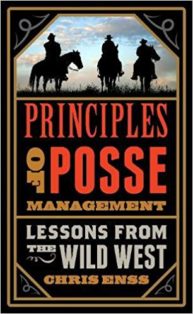
 

To learn more about the posse after James Kenedy read The Principles of Posse Management
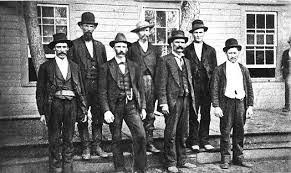


Management Principles Learned from the Posse After the Reno Gang

Enter now to win a copy of Principles of Posse Management: 

Lessons from the Old West for Today’s Leaders.


Identify your objective and carefully consider how you want to hit your target.

Allan Pinkerton was able to track the bandits responsible for robbing the Adams Express Company only after he was given a full description of the Reno gang members.  That basic information led the posse to the outlaw’s hiding place where they could put together a plan to apprehend the bad guys and retrieve the stolen money.


Go the extra mile. 

When the Pinkerton posse kidnapped the leader of the Reno gang, they were employing extreme measures to ensure the desperados faced justice.  That daring action proved to be positive for the detective agency because businesses could see the Pinkertons offered exceptional service.  Allan Pinkerton and his men were hired to solve several other robberies after brining in the Reno gang.


Never underestimate the powers of observation. 

If the posse wasn’t paying close attention to the coming and goings of various townspeople in Council Bluffs, Iowa, they would have missed the strange behavior of a citizen who eventually led them to the spot where the Reno gang was hiding.


Embrace the benefits of cross training.

Posse members took on a variety jobs in an effort to achieve their objective.  Some worked as bartenders, others as railroad employees.  They gained valuable knowledge about the offenders they were after that helped define the best way to apprehend the Renos.


Follow a job to the end.

You haven’t failed until you quit trying.  The Pinkerton posse never abandoned their quest to arrest the Reno gang even when the outlaws fled to Canada.  The bandits thought they were safe in another country, but Pinkerton acquired the necessary legal documents to have them extradited.


To learn more about the business practices behind the forming of some of the most legendary posses read

The Principles of Posse Management
 

The Posse After Bronco Bill Walters

Enter now to win a copy of

Principles of Posse Management:

Lessons from the Old West for Today’s Leaders


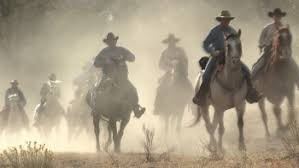
Five riders moved swiftly across the open country through Granite Pass in southwest New Mexico.  An electrical storm lit up the sky around them, and a deluge of hail broke free from the clouds, pelting the men in their saddles and their horses.  Sounding like a troop of demons advancing, the wind howled and screamed as it pushed over the massive walls of rock the riders passed.

Former peace officer Jefferson Davis Milton rode in front of the others.  He was a tall man with sloping shoulders, his granite like visage partly hidden by a dark mustache that curled around to meet his thick sideburns.  George W. Scarborough, a blue-eyed, gruff looking, one time law man from El Paso, Texas, took a position on Jeff’s left.  Eugene Thacker, a youthful son of a railroad detective, rode on Jeff’s right side.  Directly behind the three were Bill Martin and Thomas Bennett, Diamond A ranch cowboys turned bounty hunters.  The men pulled their slickers around their necks and urged their mounts on through the tempest.  Claps of thunder ushered in another downpour of hail.

The determined riders, members of a posse pursuing a gang of train robbing outlaws, were soaked to the bone once they reached Fort Apache, a military post near Coolidge Lake.  No one said a word as they made camp outside the garrison’s gates.  Discussing the obstacles on the way to achieving that goal wasn’t necessary.  Their focus was on capturing Bronco Bill Walters and his boys.

William E. Walters, also known as Bronco Bill Walters, was from Fort Sill, Oklahoma.  What he did before being hired at the Diamond A ranch in 1899 is anyone’s guess.  It’s what he did after getting a job as a cowhand that warranted attention.  The Diamond A was a five hundred square mile spread nestled in the boot heel of New Mexico.  The magnificent acres of grass there made it the perfect spot for raising cattle.  The ranch was always in need of workers.  Cowpunchers that dropped by looking for employment were generally hired on the spot.  It was considered a rude violation of the proprieties of a cow camp to inquire into a man’s connections or character.  Just wanting to work was enough.  Bronco Bill Walters wanted to work, and that’s all that mattered and all the foreman at the Diamond A would have cared about if Bronco Bill hadn’t had desired more than the job had to offer.

During long, dull evenings around the campfire, Bronco Bill contemplated a life that was exciting and profitable.  He thought about robbing a stage or a train.  He imagined how he would tackle such a daring feat and rehearsed a getaway.  After a while, it wasn’t enough only to imagine such actions.  Bronco Bill left the Diamond A ranch in the fall of 1890 in search of excitement and money.


To learn more about Bronco Bill and the posse after him read

Principles of Posse Management.


Principles of Posse Management

Enter now to win a copy of The Principles of Posse Management


Pat Garrett and Wyatt Earp, management experts?  Expert management skills were necessary to quickly organize a group of law enforcement officers able to effectively keep the peace and pursue and arrest felons.

The actual work of transforming the frontier into farms and cities was carried on by the stream of settlers, but working with, or sometimes ahead of them were the business people who directed the conquest of the wilderness and law enforcement officials who helped protect their interests.

The business people brought capital and labor together, sent logging crews into the forests; built bridges, canals, and railways; bought, sold, and transported commodities; laid out town sites and planned cities; started industries; developing mines; and nearly always speculating in land.  Often times their efforts were thwarted by criminal elements who kept the goods, services, and funds from their appointed destination.  Posses were formed to make sure fleeing desperados were brought to justice.  In the process civility was brought to the lawless territory as well.


This month enter to win a copy of The Principles of Posse Management
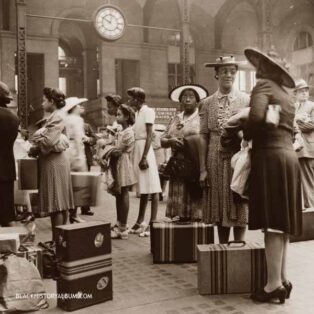
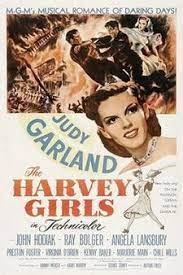
The Harvey Girls

Enter now to win a copy of

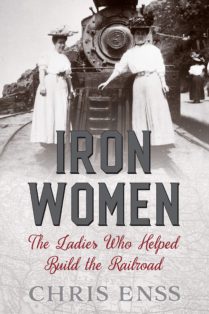
Iron Women:  The Ladies Who Helped Build the Railroad


One of the chapters in the book Iron Women:  The Ladies Who Helped Build the Railroad is about the Harvey Girls.  Judy Garland portrayed Susan Bradley in the musical The Harvey Girls released in April 1926.  The movie was a huge success for MGM.  The subject matter and Judy Garland made the film popular.  Garland was a much-loved performer whose warmth and spirit, along with her rich and exuberant voice, kept theatergoers entertained with an array of delightful musicals.  The singer-actress died on June 22, 1969.

Standing in line outside the funeral home, a 23-year-old Queens housewife explained why she had joined thousands to pass by the coffin of Judy Garland.  “Everyone’s got sadness and problems, everyone gets lonely,” she said.  “Judy Garland made all of us feel something tied her and us together.”  It is not to say that Judy Garland would never have been a legendary entertainer had she led a happy life, but certainly part of what captivated her audiences was the awareness of what she brought onstage with her.  She was a child star, a superstar at 17 in The Wizard of Oz, and the leading movie musical actress by 1948.  She also was seeing a psychiatrist when she was 18, attempted suicide at 28, had four failed marriages, and had been addicted to uppers to perform and downers to sleep since her early years at the movie studio.

For almost the last twenty years of her life – more than half her career – Garland followed failures with smashing comebacks almost with regularity, most notably in A Star is Born in 1954 and at London’s Palladium in 1960.  Even after her voice failed Garland pushed her frail legs and bony face through exhausting performances, so that, in 1967, Vincent Canby wrote in a review, “that the voice is now a memory seems almost beside the point.”

In 1969, Garland was living in London with her fifth husband, Micky Deans, a 35-year-old New York discotheque manager.  She had performed unevenly at a London supper club earlier that year, but in June seemed happy in her new marriage.  At 10 A.M. on Sunday, June 22, Deans was awakened by a telephone call from one of Garland’s friends in the United States.  His wife wasn’t in bed, so he called her in the bathroom.  He got no answer, but found the door locked, which was usual for Garland since her early days on crowded movie sets.  He climbed out onto the roof of their house to look in the bathroom window.  He saw her sitting with her head slumped over in her lap.

Doctors said Garland had died of “an incautious self-over-dosage of sleeping pills.”  They said it was not a suicide, that probably she had taken her usual

dose of Seconal to get to sleep, then awakened and confused, swallowed more pills.  Liza Minnelli saw her mother’s death in less clinical terms.  “It wasn’t suicide,” she said in a statement soon after.  “It wasn’t sleeping pills, it wasn’t cirrhosis.  I think she was just tired, like a flower that blooms and gives joy and beauty to the world and then wilts away.”


iron women book cover

Still #1

Iron Women is the little book that could. 

Released in February, Iron Women: The Ladies Who Helped Build the Railroad

continues to lead the way. 

A month later it’s still the Number #1 New Release in History of Railroads.  


Enter now to win a copy of Iron Women


Women vs. the Railroad The Fight for Fairness on the Rails

Enter now to win a copy of

Iron Women:  The Ladies Who Helped Build the Railroad


The creation of the railroad system in the United States is a stirring story of American initiative and enterprise.  Every conceivable obstacle stood in the way of the railroad’s success.  An apathetic public jeered at early efforts to provide rail transportation; it was difficult to convince them that it was safe or would make a profit.  Mechanical difficulties ran all the way from finding engines that would run to perfecting rails, wheels, and signals.

In some eastern locations, tracks were torn up by indignant citizens, and in one city they were declared a public nuisance.  A famous newspaper issued a warning that “the use of steam with its train of coaches, its ‘soft effeminate cushions causing easement to bodies and legs,’ would rob passengers of manliness.”

The close relation of railroads to all the people was aptly described by railroad historian Agnes C. Laut in an article in the October 24, 1929, edition of The Daily Republican.  Laut noted that the railways can prosper “only as the communities they service prosper and their empires prosper.  The well- being of one is bound up in the well-being of the other; and neither can be hurt without hurting the other.”

The first routes where the tracks could be laid were little more than crude trails through thick undergrowth that led west from Boston and New England along the Mohawk Valley to Lake Erie, from Philadelphia and Baltimore across the Appalachians to the Ohio River Valley, and from Virginia and North Carolina to Nashville and Louisville.  For more than thirty years, railway tracks were laid without interruption across the country from the late 1820s.  By 1850, they crisscrossed many states totaling more than nine thousand miles of tracks.  Men from all walks of life and many ethnic backgrounds, from the Chinese to the Irish, carved out sections in the vast grasslands, dense forests, and rolling mountains.  Women contributed to the grand effort in many ways, not the least of which was refining the creation and making it suitable for all who hoped to benefit from the revolutionary mode of transportation.  Women also played a part in bringing about an end to the discriminating tactic employed by railroad companies.

A great deal was accomplished technologically in a relatively short amount of time in the railroad industry.  What didn’t progress as quickly as the advancement in conveyance was the acceptance of the population regardless of race or ethnic background.  The less attractive element of railroad development was the creation of the Jim Crow car.  The car was identical in structure to other passenger cars but contained a patrician which would separate the races.  The section where the Black Americans would sit had no restroom and often times no water fountain.

In 1870 and 1881, the practice of segregating ticket buyers was challenged by two women.  In early 1870, Mary Jane Chilton boarded a train in St. Louis with her fifteen-year-old daughter and eight-year-old nephew.  The trio were bound for Carondelet, an annexed neighborhood in St. Louis, Missouri.  With tickets in hand, Mary proceeded to the ladies’ car.  A brakeman quickly stepped in front of her and blocked her way.  The conductor following behind him approved of his actions.  Mary was told that the ladies’ car was not for women of color and was instructed to find a place to sit in the smoker’s car.  Men rode in the smoker’s car, most of which smoked and drank while traveling.


iron women book cover


To learn more about the heroic Mary Chilton read Iron Women

Artist for the Pioneer Zephyr

Enter now to win a copy of Iron Women:  The Ladies Who Helped Build the Railroad


While attending college in Pennsylvania, Mary Lawser was part of a group comprised of several accomplished female artists.  They were known as the Philadelphia Ten.

Among the members was a talented painter and sculptor named Mary Louise Lawser.  Like Mary Colter, Mary Lawser was hired by a major rail line company to help promote westward travel.

Born in 1906 in Pennsylvania, she exhibited at a young age.  She attended the Pennsylvania Museum School, the Pennsylvania Academy of Fine Arts, and the Ecole des Beaux Arts in Paris.  Mary’s work was exhibited in galleries in Europe and New York.  She was recognized by her peers as a gifted, bronze work artist.  After graduation she took a position as an art instructor at Cedar Crest College in Allentown, Pennsylvania, and at Bryn Mawr.

In early 1940, she was hired to work for notable architect Paul Cret.  The French-born, Philadelphia architect and industrial designer was impressed with Mary’s design and execution of bronze tablets found inside Alexander Hamilton’s home, The Grange.  Commissioned by the American and Historic Preservation Society, the tablets were made to honor Alexander Hamilton, first secretary of the United States treasury.  In addition to designing buildings on the University of Texas campus and the Pan American Union Building in Washington, D.C., Paul Cret designed railroad cars for the Burlington and Santa Fe rail lines.  While Mary was employed by Cret, she contributed to decorating various railroad passenger cars with sculptures, wood carving, and mixed metal creations.

When Cret passed away in 1945, Mary was hired by another respected Pennsylvania architect, John Harbeson, to aid him in creating a new look for Burlington’s Pioneer Zephyr.  Although in the employ of Harbeson, Mary was singled out by the Budd Company, a railroad industry manufacturer, to design murals for the interior of the passenger cars that would inspire ticket-buyers to go west.

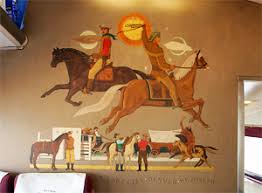
In 1948, Mary began work on a mural for the California Zephyr’s Silver Lariat.  The train was built as a dome coach, a series of cars that have glass domes on the top where passengers can ride and see in all directions around the train.  Mary painted a mural of the Pony Express in the large dining and lounge car.

Over the course of her five-year business relationship with the Budd Company, she created murals for the Atchison, Topeka and Santa Fe, the Denver and Rio Grande Western, and the Western Pacific Railroad.  Mary’s murals generally adorned the end walls of the dome coaches and they always depicted Western historical themes.  She also sculpted the appliques of apples and grapes which hung at each end of the dining cars as well as the lyre-based radio speakers.

Mary Lawser died in 1985 at the age of seventy-nine.


iron women book cover

To learn more about Mary Lawser and the other ladies who helped build the railroad read

Iron Women

The Trouble With Some Authors


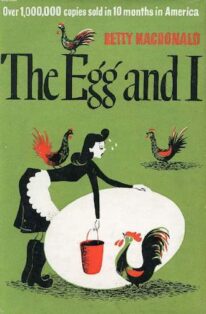
Betty MacDonald put her heart and soul into her humorous memoir.  The Egg and I, which became an unexpected 1947 bestseller.  The film rights to this story about a young woman on a chicken farm in Washington state were purchased for a down payment of $100,000, a large sum at the time, with a percentage of movie profits to follow.  However, soon after this financial windfall, MacDonald was sued for libel for $975,000 by the people of the small town, which was the basis of her book on the grounds that they felt their portrayal was a humiliation.  Defending herself caused the author to spend considerable money and grief, though MacDonald finally won the case when she proved that the characters in the book were composites.  MacDonald eventually moved from the Washington area she loved to California, but the whole episode had put a crack in her joy and she died of cancer at the age of forty-nine in 1958.

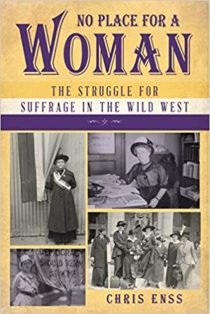
No Place for a Woman Foreword Review Magazine Book of the Year Finalist


Several years ago, there was a television show called M. A. N. T. I. S.  I thought it was one of the greatest shows ever.  It was about a guy that was half man, half praying mantis, and he fought crime.  And the network cancelled it!  A regular guy who, when trouble reared its ugly head, half of him would turn into a praying mantis.  It’s interesting how some bad television shows become cult classics.  I wrote a book entitled No Place for a Woman:  The Struggle for Suffrage in the Wild West.  I spent more than two and a half years researching and writing the book.  I thought it was going to be a good book, but alas…  Like M. A. N. T. I. S., the problem wasn’t the idea, it was the presentation.  In addition to the various chapters about how suffrage was achieved in the Wild West there were several shorter stories about the movement.  Those sidebars should have been placed at the end of the chapters.  Instead, they were placed in the MIDDLE of the chapters.  The sidebars were supposed to be on darker gray paper, but that never happened.  The result, it’s difficult to read.  I’ve received numerous emails from people who think there are pages missing or simply find the work too complicated to muddle through.   It’s unfortunate.  I worked hard on that book and it turned out to be a disaster.  I had no control over the printing of the book, but my name is on it and readers blame me for everything about the book.  I’ve entered No Place for a Woman in a few book contests including the Spur Awards.  I’m so sorry for the judges.  They had the unfortunate task of trying to figure out just how to read the book.  The book didn’t win, place, or show.  The judges reviewing books for the Foreword Review Magazine Book of the Year award managed to look past the issue of the poor presentation.  I was informed yesterday that No Place for a Woman was one of five titles in the running for Book of the Year.  I’m sure it won’t do any better than that but given the issues with the book I’m grateful it got that far.  Bad TV and bad books are part of our culture and harmless enough when properly abused.  Like M. A. N. T. I. S., the only way to make No Place for a Woman better is if a laugh track is added.