Losing George

Enter now to win a copy of the book

None Wounded, None Missing, All Dead: The Story of Elizabeth Bacon Custer


“Indescribable yearning for the absent, and untold terror for their safety, engrossed each heart.”

Elizabeth Custer on waiting to hear news about the fate of George and the members of his command – 1885


It was almost two in the morning. Elizabeth couldn’t sleep. It was the heat that kept her awake, the sweltering, intense heat that had overtaken Fort Lincoln earlier that day and now made even sleeping an uncomfortable prospect. Even if the conditions for slumber were more congenial, sleep would have eluded Elizabeth. The rumor that had swept through the army post around lunchtime disturbed her greatly and until this rumor was confirmed she doubted that she’d ever be able to get a moment’s rest.

Elizabeth walked her anxious frame over to the window and gazed out at the night sky. It had been more than two weeks since she had said goodbye to her husband. She left him and his troops a few miles outside of Fort Lincoln. His orders were to intercept the Sioux and Cheyenne Indians in the territory, force them back to the reservation, and bring about stability in the hills of Montana.

Just before riding out she turned around for one last glance at General George Custer’s column departing in the opposite direction. It was a splendid picture. The flags and pennons were flying, the men were waving and even the horses seemed to be arching themselves to show how fine and fit they were. George rode to the top of the promontory and turned around, stood up in his stirrups and waved his hat. Then they all started forward again and, in a few seconds, they had disappeared, horses, flags, men, and ammunition – all on their way to the Little Bighorn River. That was the last Elizabeth saw of her husband alive.

Over and over again she played out the events of the hot day that made her restless. Elizabeth and several other wives had been sitting inside her quarters singing hymns. They desperately hoped the lyrics would give comfort to their longing hearts. All at once they noticed a group of soldiers congregating and talking excitedly. One of the Indian scouts, Horn Toad, ran to them and announced, “Custer killed. Whole command killed.” The woman stared back at Horn Toad in stunned silence. Catherine Benteen asked the Indian how he knew that Custer was killed? He replied: “Speckled Cock, Indian Scout, just come. Rode pony many miles. Pony tired. Indian tired. Say Custer shoot himself at end. Say all dead.”


To learn more about Elizabeth Bacon Custer and her marriage to

George Armstrong Custer read

None Wounded, None Missing, All Dead: The Story of Elizabeth Bacon Custer


Suddenly Alone

Enter now to win a copy of the book

None Wounded, None Missing, All Dead: The Story of Elizabeth Bacon Custer


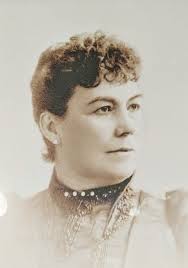
Persistent raindrops tapped against the windows of Elizabeth Custer’s Park Avenue apartment in New York. The prim, 74-year-old women, dressed head to toe in black, Victorian clothing, stared out at the dreary, foggy weather. She wore a pensive expression. Her graying hair was pulled back neatly into a tight bun, a few loose tendrils had escaped and gently framed her small face. Her throat was modestly covered with lace.

The room around Elizabeth was grand in size and filled with items she had collected from her days on the western plains. Framed drawings of the Kansas prairie, a trunk with George’s initials across the top, photographs of friends and family at various outposts, and an assortment of books on subjects ranging from travel beyond the Mississippi to the types of wild flowers that lined the Oregon trail were among her treasures. The sparse furnishings in the apartment were covered with newspapers and journals. A small desk was littered with hundreds of letters.

Elizabeth glanced at the clock on a nearby table then clicked on a radio housed in a gigantic cabinet beside her. As she tuned the dial through static and tones, a bright, maroon light sifted into the hollow of the dark room. At the same time the fog outside the window lifted a bit and the vague, misty outlines of palatial apartment buildings, museums, and churches came into view.

Elizabeth found the radio station she was looking for and leaned back in a plush chair as a voice described upcoming programming. She pulled a shawl around her shoulders and sat patiently waiting. After a few moments, an announcer broke in with pertinent information about the broadcast. The program Elizabeth was tuned in to was Frontier Fighters and the episode was entitled Custer’s Last Stand. The airdate was June 26, 1926, 50 years after the Battle at Little Bighorn.

As the reenactment unfolded, Elizabeth’s eyes settled on a photograph of George hanging on the wall above the radio and she remembered that awful moment. The devastated look on the faces of the 20 wives who lost their husbands the same day she lost hers would never be forgotten. “From that time the life went out of the hearts of the women who wept,” Elizabeth wrote in her memoirs, “and God asked them to walk on alone in the shadows.”


To learn more about Elizabeth Bacon Custer and her marriage to George Armstrong Custer read

None Wounded, None Missing, All Dead: The Story of Elizabeth Bacon Custer


Trouble Apart

Enter now to win a copy of

None Wounded, None Missing, All Dead:  The Story of Elizabeth Bacon Custer


“I would be willing, yes glad, to see a battle every day during my life.”

George Custer – October 1862

Spirited music and laughter burst through the doors of Chicago’s Opera House. The velveteen drapes subdued the whir of roulette wheels that lined the theatre lobby and muffled the voices of the Faro dealers. Patrons poured into the establishment seeking entertainment and shelter from the freezing cold. Chicago was a city of handsome dwellings whose elegance and refinements were reflected in the brilliant social life. A throb beat through its every artery. One of the many acts that could hold the attention of the bustling area was Lydia Thompson’s British Blondes. The troupe of celebrated actresses with overwhelming proportions who specialized in dancing and pantomime, performed for packed houses nightly. Among some of the most famous audience members were Grand Duke Alexis Romonoff, Wild Bill Hickock, and George Custer.

Over the Thanksgiving holiday in 1869, George had visited the show a couple of times, partaking not only in the burlesque styling of the irresistible sirens, but the popular games of chance that greeted people when they entered the building. George had been in Michigan taking care of family business when he decided to travel to Illinois to visit Phil Sheridan, his former army commander and respected mentor who was ill. News that he was in the Windy City spread quickly and George was inundated with invitations to attend dinners and theatrical openings. His reputation as soldier and military leader, along with the numerous published articles he had written about his combat experience, preceded him. Everyone wanted to be in George’s company, and he delighted in the attention. Local newspapers reported on his outings, giving special concentration to the fact that Elizabeth was not at his side. “George Custer,” the article began, “has been seen about without his wife, chasing blondes instead of Indian maidens.” He made light of the report in a letter he wrote to Elizabeth and let her know that in addition to the Blonde Beauties Show he also took in a play featuring the best known comedian of the day, Joseph Jefferson. “I never had so nice a time in all my life – expect when I am with you,” George assured his wife.

Elizabeth read over her husband’s letters from their quarters at Fort Leavenworth, Kansas. She usually accompanied George in his travels, but for this trip she decided to remain behind. Her cousin, Anne Bingham, was coming to visit and she didn’t want to miss spending time with her. After receiving George’s letter Elizabeth wished she had gone with him. Along with the list of entertaining activities, his correspondences contained some worrisome information about playing cards with friends. George was a gambler who found it difficult to resist a game.


To learn more about Elizabeth Bacon Custer and her marriage to

George Armstrong Custer read

None Wounded, None Missing, All Dead: The Story of Elizabeth Bacon Custer


Plains Living

 Enter now to win a copy of the book

None Wounded, None Missing, All Dead: The Story of Elizabeth Bacon Custer


“My husband used to tell me that he believed he was the happiest man on earth, and I cannot help but thinking he was.”

Elizabeth Custer – 1882

A group of some 40 officers and their wives congregated in the parlor of George and Elizabeth Custer’s home at Fort Abraham Lincoln in North Dakota. A fiddler entertained several men and women at one end of the tastefully decorated room. More guests paraded past a table filled with a variety of food and drinks at the other. Elizabeth manned the door, kindly welcoming latecomers to the party in progress. She touched her finger to her lips indicating that the attendees should enter quietly.

The music stopped. A hush fell over the guests. Elizabeth’s brother-in-law, Tom, sister-in-law, Maggie, and family friend, Agnes, marched into the setting and crossed to the musicians. All three wore costumes. Maggie was dressed as a Sioux Indian Maiden. Agnes and Tom were dressed as Quakers. George and the others in attendance stifled a chuckle as the trio struck a dignified pose for the captive audience. They were acting out a scene from a current event in the region. Known as a tablie ux, the object of the entertaining charade was to guess the event and whom the players represented.

Partygoers enthusiastically shouted out their best guesses. Others issued comical remarks that made everyone erupt in laughter. When the right guess was announced, the actors broke character and took a bow. The happy audience applauded their efforts and the music started up again.


To learn more about Elizabeth Bacon Custer and her marriage to George Armstrong Custer read

None Wounded, None Missing, All Dead: The Story of Elizabeth Bacon Custer.


Yours Forever, Elizabeth

Enter now to win a copy of

None Wounded, None Missing, All Dead:  The Story of Elizabeth Bacon Custer


George & Elizabeth Custer seated.


It was rare for women in the 19th century to accompany their husbands on adventures that were so exciting they seemed almost fictitious. It was rarer still for women to write about those adventures in books designed to bring glory to their husband’s name. Such was the life and career of Elizabeth Custer who lived primarily in reflected wonder of her gallant husband, George Armstrong Custer, one of the most charming and controversial soldiers the country ever produced.

When young George Custer visited his sister in Monroe, Michigan, he was introduced to, and quickly swept off his feet by Elizabeth Bacon. Judge Bacon, Elizabeth’s father, was not initially impressed with the young army captain with yellow curls. So young George rode away and came back two years later as a Brigadier-General, the youngest in the army, and he and Elizabeth were married in 1864. Their honeymoon was spent in a war zone since it was the last year of the Civil War. This gave Elizabeth Custer her first taste of what would become her life – the uncertainty and discomfort of army life.

In the 12 years the Custers were together, Elizabeth lived history. She saw the surrender of Lee to Grant at Appomattox, and later was given the table at which the terms of surrender were signed. After the war, George was sent to Texas and the Plains States to fight the Indians, and so began for Elizabeth the most thrilling events of her life.

The Custers were devoted to one another and valued the time they spent together. Not only did Elizabeth follow George across the frontier, but she also went with him into the field. Though, at times, she lived in tents alongside members of the 7th Cavalry, the army didn’t allow Elizabeth to go with George everywhere. General Custer and the military considered some assignments too hazardous for women. During the time they had to be separated, George and Elizabeth wrote each other constantly.

The Custers were very much in love, but there were periods when they antagonized each other. Occasionally, George or Elizabeth would use the rumor mill or drop hints to make the other one jealous. Sometimes, Elizabeth would write her husband just to tell him how annoyed he made her. Fearing her letters might be read by someone other than George, she wrote all such correspondences in shorthand. He wasn’t always as discreet. One time when he was particularly irritated with Elizabeth, he cut and pasted a note together that strongly expressed his feelings. The message he sent her is shown below.

The duo inevitably arrived on the other side of each difficulty closer than they were before and more committed to their marriage.

Elizabeth’s thrilling life adventure with George lasted until that unfortunate day when Custer and his troops made their immortal last stand against the Sioux Indians at the battle of the Little Bighorn on June 25, 1876. During the battle, Elizabeth was only a few hundred miles away, waiting bravely for news of the outcome. From that day forward, she lived to glorify her husband’s memory and keep his heroism forever green in the annals of brave fighters.


To learn more about Elizabeth Custer and the life she lived in the field with her husband read

None Wounded, None Missing, All Dead.


Elizabeth Custer: Champion of the Seventh Cavalry

Enter now to win a copy of

None Wounded, None Missing, All Dead:  The Story of Elizabeth Bacon Custer


It was almost two in the morning, and Elizabeth Custer, the young wife of the famed “boy general” George, couldn’t sleep. The heat kept her awake—a sweltering intense heat that had overtaken Fort Lincoln in the Dakota Territory earlier that day. Even if the conditions had been more congenial, however, sleep would have eluded Elizabeth. The rumor that had swept through the army post around lunchtime disturbed her greatly, and, until this rumor was confirmed, she doubted that she’d be able to get a moment’s rest.

Elizabeth, or Libbie as her husband and friends called her, carried her petite, slender frame over to the window and gazed out at the night sky. It had been more than two weeks since she had said good-bye to her husband. She left him and his battalion a few miles outside the fort. George had orders from his superior officers in Washington, DC, to “round up the hostile Indians in the territory and bring about stability in the hills of Montana.” Elizabeth knew he would do everything in his power to fulfill his duty.

George and Elizabeth said their good-byes, and she headed back to the fort. As she rode away, she turned around for one last glance at General Custer’s column departing in the opposite direction. It was a splendid picture. The flags and pennons were flying, the men were waving, and even the horses seemed to be arching themselves to show how fine and fit they were. George rode to the top of the promontory and turned around, stood up in his stirrups, and waved his hat. They all started forward again and, in a few seconds, disappeared—horses, flags, men, and ammunition all on their way to the Little Bighorn River. That was the last time Elizabeth saw her husband alive.

Over and over again, she played out the events of the hot day that had made her restless. She and several other wives had been sitting on the porch of her quarters singing, reluctant for some inexplicable reason to go inside. All at once they noticed a group of soldiers congregating and talking excitedly. One of the Native scouts, a man named Horn Toad, ran to them and announced, “Custer killed. Whole command killed.” The women stared at Horn Toad in stunned silence. Finally, one of the wives asked the man how he knew that Custer was killed. He replied, “Speckled Cock, Indian scout, just come. Rode pony many miles. Pony tired. Indian tired. Say Custer shot himself at end. Say all dead.”

Elizabeth remembered George’s warning about trusting in rumors. She believed that there might have been a skirmish but felt it unlikely that an entire command could be wiped out. At that moment, she refused to believe George would ever dare die. She would wait for confirmation before she did anything else. Now, in her bedroom, listening to the chirping of the crickets and the howls of the coyotes, she sat up, wide awake, waiting.

The loud sound of boots tromping across the path toward her front door gave her a start. She hurried to the door and threw it open. Captain William S. McCaskey entered her home, holding his hat in his hands. He didn’t want to be there. Elizabeth looked at him with eyes pleading. “None wounded, none missing, all dead,” he sadly reported. Elizabeth stood frozen for a moment, unable to move, the color drained from her face.

“I’m sorry, Mrs. Custer,” the captain sighed. “Do you need to sit down?”

Elizabeth blinked away the tears. “No,” she replied. “What about the other wives?”

“We’ll let them know of their husbands’ fates,” he assured her.

Despite the intense heat, Elizabeth was now shivering. She picked up a nearby wrap and draped it around her shoulders. Her hands were shaking. “I’m coming with you,” she said, choking back the tears. “As the wife of the post commander it’s my duty to go along with you when you tell the other . . . widows.” The captain didn’t argue with the bereaved woman. He knew there would be no point. Elizabeth Custer was as stubborn as her general husband—if not more so.


To learn more about the champion of the Seventh Cavalry read

None Wounded, None Missing, All Dead:  The Story of Elizabeth Bacon Custer


Missing Elizabeth

Enter now to win a copy of

None Wounded, None Missing, None Dead:  The Story of Elizabeth Bacon Custer


“Daughter, marrying into the army, you will be poor always; but I count it infinitely preferable to riches with inferior society.”  Judge Bacon to Elizabeth Custer – 1866

George Custer raced his stallion, Jack, at full speed over the limitless Alkali grass covered plateau miles away from the main entrance of Fort Riley, Kansas. The foam-flecked animal was inches behind Elizabeth and her fast horse, Custis Lee. Both riders urged their horses on to even greater speed, the cold wind biting at their smiling faces.

George steered his ride along the foot of a high hill. Abruptly reaching a steep decline, he brought his horse to a quick halt. Elizabeth, dressed in a black riding skirt, uniform jacket, and an Excelsior hat, and riding sidesaddle pulled further ahead of her husband. Quickly looking around, George turned Jack in the direction of a narrow trail through a flinty apron of rocks. He followed the crude path as it wound around the hill then suddenly dropped back down and came out the other side of the steep decline in front of Elizabeth. She waved playfully at him. The horses found their rhythm and broke into a smooth gallop. Elizabeth glanced over at George and giggled like a little girl. The two rode on towards a distant, tumbled pile of thunderheads, sooty black at their base and pure white as whipped cream where they towered against the dome of the sky.

They slowed their horses and stopped next to a cluster of rocks. George dismounted and helped Elizabeth down from her ride. Draping their arms around one another they stood quietly staring at the land stretched out before them. “The prairie was worth looking over,” Elizabeth noted in her memoirs, “because it changed like the sea.” “People thought of the deep-grass as brown, but in the spring, it could look almost anything else,” she added, “purple, or gold, or red, or any kind of blue. 1 Often when cloud shadows crossed the long swells, the whole prairie stirred, and seemed to mold and flow, as if it breathed.” In late January 1867, the terrain the Custers admired was winter-defeated, lightless and without color.

George loosened the hold he had on Elizabeth and she noticed his expression changed subtly. As post commander he needed to return to his duties. The responsibilities of coordinating and training more than 960 enlisted men was daunting, but the 27-year-old was committed to the task. The occasional outing with Elizabeth gave him incentive to carry on and her a chance to explore the countryside, blissfully unaware of anything other than her husband. “It was delightful ground to ride over Fort Riley,” she remembered years later. “Ah! What happy days they were, for at that time I had not the slightest realization of what Indian warfare was, and consequently no dread.” 2


To learn more about Elizabeth Custer and her life with General George Armstrong Custer read

None Wounded, None Missing, All Dead

Legacy: From Seneca Falls to the League of Women Voters

Last chance to enter to win a copy of the new book

No Place for a Woman:  The Fight for Suffrage in the Wild West


The watershed year of 1848, in the strife-filled period before the American Civil War, saw the rise of women at Seneca Falls who declared that they were equal to men and not just worthy of the vote—deserving of it by the divine right of being human and citizens. Of course, while that organized group was determined to fight for the equality of women, they were fighting at a time when the equality of all people was the central question of the day. The denial of rights to women and blacks (freed and slave) was incongruous with the enlightenment ideals of democracy and the hopes of a new republic—but those in charge of the new republic were having a tough time seeing past the blinders of their race and sex.

During and immediately after the Civil War, many abolitionists and suffragists worked together toward the common goal of ending slavery, and in 1866, after the end of the war, Elizabeth Cady Stanton and Susan B. Anthony formed the American Equal Rights Association intending to continue the fight for voting and civil rights for all citizens.  That was when things got complicated.

As part of the process of reconstructing the Confederate states into the Union, Congress became absorbed in passing the Fourteenth and Fifteenth Amendments to the Constitution, amendments that defined both who qualified for citizenship regardless of race and sex and that drew criteria for who could vote in elections. The interpretation of the language in both amendments drew challenges from all sides—and ultimately split the previously strong movement in favor of suffrage for all former slaves and women into factions who were in favor of the political expedience of allowing males of African descent the right to vote regardless of their previous state of servitude while letting women’s interest be pushed to the side.

But the split was more complicated than that. In the late 1860s, a further division erupted between women’s suffrage advocates after the Fourteenth and Fifteenth were the law of the land. The faction led by Elizabeth Cady Stanton and Susan B. Anthony favored taking swift action to enact national woman suffrage through yet another constitutional amendment. The faction led by Lucy Stone, Henry Blackwell, and Julia Ward Howe—once staunch allies of Stanton and Anthony in the struggle for suffrage and the end to slavery—favored using the clause of the Fifteenth that gave the states the right to decide who could vote. They wanted to approach the woman suffrage issue one state at a time.


To learn more about how women won the right to vote in the West read

No Place for a Woman

Visit www.chrisenss.com to enter to win a copy of No Place for a Woman

Elizabeth Cady Stanton: Not For Ourselves Alone

Enter now to win a copy of the new book

No Place for a Woman:  The Fight for Suffrage in the Wild West.


Elizabeth Cady Stanton, who signed the first call for a woman’s rights convention in the United States, was born in Johnstown, New York, on November 12, 1815. She was the daughter of Judge Daniel Cady and Margaret Livingston Cady, both persons of exceptional educational refinement. As a child Elizabeth displayed unusual intelligence and began her education at Johnstown Academy. After finishing the coursework at her homeschool, she went to Mrs. Emma Willard’s seminary in Troy, New York, where she was graduated in 1822.

In 1839 she met Henry Brewster Stanton, an anti-slavery orator of some note, and in 1840 they were married. Immediately after their wedding they went to London where the international anti-slavery convention was to be held.

Mrs. Stanton was one of the delegates from America but was denied participation in the proceedings because she was a woman. While in London she met Lucretia Mott and with her signed the first call for a women’s rights convention. Returning to Boston, Mr. and Mrs. Stanton made their home there until Mr. Stanton was compelled to move to Seneca Falls, New York, because of his health. It was in Seneca Falls on the 19th and 20th of July 1848, in the Wesleyan chapel, that the first women’s rights convention was held. Mrs. Stanton was at the head of the movement at that time and, besides caring for the delegates, wrote the declaration of aims which became the subject of ridicule and jest throughout the United States.

From 1867 to 1874 she went from state to state campaigning for woman’s suffrage and became associated with numerous organizations having that end in view. She became a candidate for Congress from the Eighth New York District, having the support of the New York Herald. She became associated in the management of the resolution with Susan B. Anthony and was the joint author of many books on woman’s suffrage.


To learn more about how women won the right to vote in the West read

No Place for a Woman

Visit www.chrisenss.com to enter to win a copy of No Place for a Woman

War Work and National Suffrage

Enter now to win a copy of

No Place for a Woman:  The Struggle for Suffrage in the Wild West.


Among the busy men sitting at rows of welding machines at the Standifer-Clarkson Shipyard in Vancouver, Washington, in 1917, were several equally busy women. All were dressed in drab gray or brown clothing, work boots, heavy, canvas aprons, and off-white, triangular scarves covered their heads. Sparks flew from the metal pieces being fused together to be used to build ships that would be dispatched to fight in the war in Europe. The assassination of Archduke Franz Ferdinand of Austria-Hungary in June 1914 propelled the major European military powers toward war. Gavrilo Princip, a Yugoslav nationalist, was responsible for Ferdinand’s death. His actions prompted Austria-Hungary to declare war on Serbia. European nations aligned themselves with the side of the argument they favored and fighting ensued for more than three years before the United States entered the conflict. Germany’s atrocities during this time forced the United States to declare war on the country in April 1917. Hundreds of thousands of American men were enlisted to fight, leaving numerous vacancies in the work force. Women were recruited to fill those positions. Some of those positions were in shipyards such as the Standifer-Clarkson Shipyard.


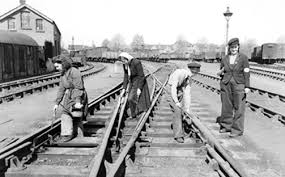
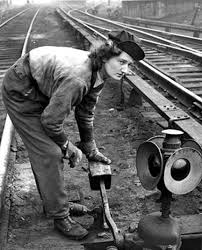
Despite the prevailing idea among traditionalists that women should stay out of the work force, World War I made the need for labor so urgent that women were hired in record numbers. In addition to taking jobs in department stores, railroads, and with the postal department, women answered the call to be employed as police officers, firefighters, munitions workers. By the spring of 1918, munitions factories were the largest employer of American women.

When it came to serving their country, women proved they were equal to men. The employment of women supported the war. Women worked not only as nurses but also as ambulance drivers, in steel mills, and in the textile industry. Women across the nation were doing their part to help. Although some political leaders recognized their contributions and were grateful, they still were not convinced granting women the vote was right for the country.

By the time the United States had entered World War I, all the western states had achieved women’s suffrage at some level, but securing the right for women to vote in every state continued to be a struggle. As a leader of the National Woman’s Party, Lucy Burns’ comments about that struggle were echoed by women everywhere. “It’s unthinkable that a national government which represents women should ignore the issue of the right of all women to be politically free,” Lucy noted. Regardless of the battle being fought abroad, key suffragist leaders such as Harriot Stanton Blatch, (daughter Elizabeth Cady Stanton), Alice Paul, and Lucy Burns believed women needed to continue to fight for their rights on the home front.


To learn more about the fight for the Nineteenth Amendment read

No Place for a Woman:  The Struggle for Suffrage in the Wild West