Ma Barker: America’s Most Wanted Mother

Enter now for a chance to win

Ma Barker:  America’s Most Wanted Mother
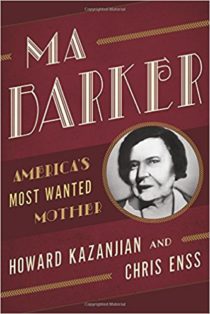


In a time when notorious Depression-era criminals were terrorizing the country, the Barker-Karpis Gang stole more money than mobsters John Dillinger, Vern Miller, and Bonnie and Clyde combined. Five of the most wanted thieves, murderers, and kidnappers by the Federal Bureau of Investigation (FBI) in the 1930s were from the same family. Authorities believed the woman behind the band of violent hoodlums that ravaged the Midwest was their mother, Kate “Ma” Barker.

It was a raw, gusty day in mid-January 1934 when bank president Edward G. Bremer dropped off his nine-year-old daughter, Betty, at Summit School in St. Paul, Minnesota. Parents and children dressed in heavy overcoats and wearing woolen hats hurried across the street and passed in front of Edward’s black Lincoln sedan on their way to the building. A light snow began to fall as he pulled away from the elementary school and headed toward his office. Edward was the president of the Commercial State Bank and traveled the same route to work every day. Each morning he waved goodbye to his little girl at 8:25 and proceeded to his job. He traveled along Lexington Avenue for a half hour, stopping at all the traffic signs along the way.

The car Edward drove was comfortable and warm, and cheerful music spilled from the radio as he contemplated the paperwork waiting for him on his desk. He cast a glance in his rearview mirror every so often but noticed nothing out of the ordinary. It wasn’t until Edward stopped at a stop sign and Alvin Karpis, a tall, slim man in a blue shirt streaked with mud, hurried to the driver’s side window holding a gun, that he considered anything was wrong. Edward was stunned and didn’t move as the armed man flung the driver’s side door open and shoved the weapon into his side. “Move over or I’ll kill you,” Alvin barked at him.

Before Edward had a chance to comply, the passenger’s side door of his car was jerked open, and Arthur “Doc” Barker leaned inside the vehicle. Arthur struck Edward on the head several times with the butt end of a .45 caliber automatic revolver. Blood from the gash sprayed the dashboard. Edward slumped in his seat, unconscious, and Alvin pushed him onto the floor. Arthur jumped inside the car and closed the passenger’s side door.
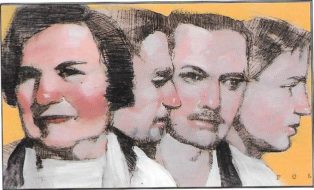


Enter now for a chance to win Ma Barker:  America’s Most Wanted Mother.

The Trials of Annie Oakley

Enter now for a chance to win a copy of

The Will Rogers Medallion Award Winning book

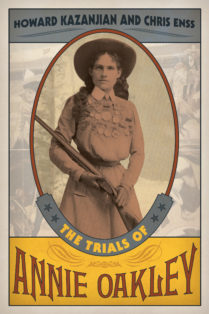
The Trials of Annie Oakley


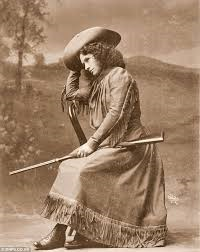
Say the name Annie Oakley and the image of a young woman who could shoot targets out of the sky without a miss and rode across the frontier with Wild West showman Buffalo Bill Cody comes to mind. Annie Oakley was a champion rifle shot and did perform alongside well-known riders, ropers, and Indian chiefs in Colonel Cody’s vaudevillian tour, but there was more to Annie Oakley’s fame than her skill with a gun. The diminutive weapons wonder was a strong proponent of the right to bear arms, a noted philanthropist, and warrior against libel who fought the most powerful man in publishing and won.

The native Ohioan astonished the world with her almost unbelievable feats of rifle marksmanship. She could pepper a playing card sailing through the air, puncture dimes tossed into the sky, and break flying balls with her rifle held high above her head. She once shot steadily for nine hours, using three sixteen-gauge hammer shotguns which she loaded herself, breaking 4,772 out of 5,000 balls.

Annie Oakley fell in love with and married the first man she defeated in a rifle match. Frank E. Butler was one of the most noted marksmen in the West and he and Annie were married for more than fifty years. The couple never had any children of their own. The reasons they were childless are varied and speculative at best. What is not without question is how Annie helped fund the care and education of orphaned children from coast to coast.

Annie Oakley was a combination of dainty, feminine charm, and lead bullets, adorned in fringed handmade fineries and topped with a halo of powder blue smoke. She had a reputation for being humble, true, and law abiding and was careful with her character at all times. When powerful, newspaper magnate William Randolph Hearst challenged her honor and questioned her respectability in his publication in 1903, Annie filed a lawsuit against him that’s still discussed at universities today.


To learn more about the famous sure shot read

The Trials of Annie Oakley


Soldier, Sister, Spy, Scout: Women Soldiers and Patriots on the Western Frontier

Enter the Blizzard of Books Giveaway

12 Signed Books for 1 Very Lucky Winner!

You could win a copy of

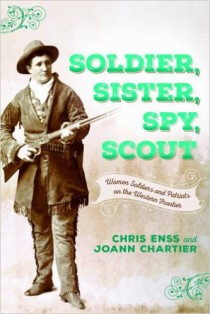
Soldier, Sister, Spy, Scout:  Women Soldiers and Patriots on the Western Frontier


From the earliest days of storytelling, the courageous man has been celebrated in myth and legend. Every culture develops stories about dauntless adventurers, valiant patriots, fearless warriors, and heroic leaders. These stories teach as well as entertain and set up positive role models to inspire future generations. Sometimes, these dauntless, valiant, fearless, and heroic individuals are women.

The true stories you’ll find in this book about women in the American West illustrate the depth of courage, the physical bravery, and the commitment to a cause that impelled them to throw off the constraints of nineteenth-century conventions and plunge into situations that many men of their era would not, and did not, face.

In the latter half of the nineteenth century, the US Army battled western Native American tribes over territorial rights, resources, and culture. Each side had its motives, its victories, its defeats, its victims, and its heroes. Among those heroes, on both sides, were women—wives, mothers, interpreters, laundresses, soldiers, and shamans—who willingly headed into the unknown, into a land fraught with danger and hardship. Courageous defines the character of the thousands of women who left the towns and cities of the East for the unknown dangers of the western territories. Setting up housekeeping in wild, unsettled lands, risking their lives on the journey, and bearing children under primitive conditions tested their courage daily. The stories selected for this book describe some who went two or three steps beyond the ordinary, everyday courage of women in the West.


Enter now for a chance to win

Soldier, Sister, Scout, Spy:

Women Patriots and Soldiers on the Western Frontier.


Winning The Pinks

Enter the Blizzard of Books Giveaway

12 Signed Books for 1 Very Lucky Winner!

You could win a copy of

The Pinks:

The First Women Detectives, Operatives, and Spies with the

Pinkerton National Detective Agency


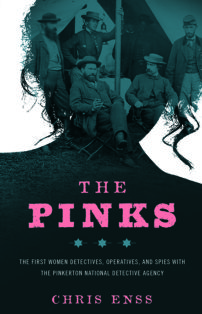
The Pinks is the true story of Kate Warne and the other women who served as Pinkertons, fulfilling the adage, “Well-behaved Women Seldom Make History.”

Most students of the Old West and American law enforcement history know the story of the notorious and ruthless Pinkerton Detective Agency and the legends behind their role in establishing the Secret Service and tangling with Old West Outlaws. But the true story of Kate Warne, an operative of the Pinkerton Agency and the first woman detective in America—and the stories of the other women who served their country as part of the storied crew of crime fighters—are not well known. For the first time, the stories of these intrepid women are collected here and richly illustrated throughout with numerous historical photographs. From Kate Warne’s probable affair with Allan Pinkerton, and her part in saving the life of Abraham Lincoln in 1861 to the lives and careers of the other women who broke out of the Cult of True Womanhood in pursuit of justice, these true stories add another dimension to our understanding of American history.


Enter now for a chance to win a copy of The Pinks.

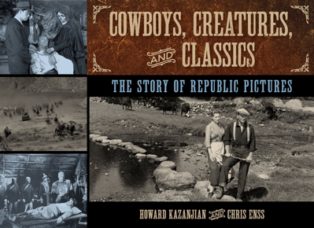
Praise for Cowboys, Creatures, and Classics: The Story of Republic Pictures

Enter the Blizzard of Books Giveaway

12 Signed Books for 1 Very Lucky Winner!

You could win a copy of Cowboys, Creatures, and Classics:

The Story of Republic Pictures


“Exploding onto the movie scene in 1935, Republic Pictures brought the pop culture of the 1930’s & 40’s to neighborhood movie houses. AWARD-WINNING screenwriter Chris Enss along with AWARD-WINNING producer & entertainment executive Howard Kazanjian have put together a BEAUTIFUL coffee table presentation on, in “my” opinion, one of the coolest movie studios ever. The book is, “Cowboys, Creatures, and Classics; The Story of Republic Pictures.” Movie buffs & readers alike will be treated to the inside story of the “little studio” that John Wayne, the Duke himself, built. In fact, Republic Pictures was home to Mr. Wayne for some 33 films & featured the west’s FIRST singing cowboy. Republic promised & delivered action, adventure, & escape. “Cowboys, Creatures, and Classics: The Story of Republic Pictures is for anyone who likes B movies magic. I submit that this spectacular presentation is the honest account of an extraordinary production house. I encourage you to check out one of the coolest, if not THE coolest book I’ve ever read pertaining to the film industry, from Lyons Press, An imprint of The Rowman & Littlefield Publishing Group, Inc. at LyonsPress.com. And, next weekend when you kick back to one of your favorite all time classic movies on the Turner Movie Channel (TMC,) check to see if it’s a REPUBLIC picture!”

Jerry Puffer, Townsquare Media KSEN/KZIN


Enter now for a chance to win

Cowboys, Creatures, and Classics:  The Story of Republic Pictures.

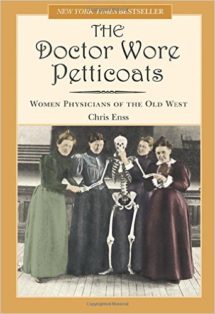
The Doctor Wore Petticoats

Enter the Blizzard of Books Giveaway

12 Signed Books for 1 Very Lucky Winner!

You could win a copy of The Doctor Wore Petticoats.

Visit www.chrisenss.com now to enter to win.


“No women need apply.” Western towns looking for a local doctor during the frontier era often concluded their advertisements in just that manner. Yet apply they did. And in small towns all over the west, highly trained women from medical colleges in the East took on the post of local doctor to great acclaim. These women changed the lives of the patients they came in contact with, as well as their own lives, and helped write the history of the West. In this new book, author Chris Enss offers a glimpse into the fascinating lives of ten of these amazing women.


Enter now to win!

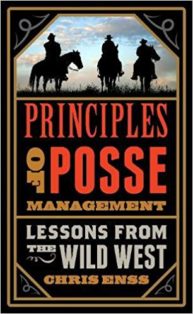
The Principles of Posse Management

Enter The Giveaway

A Blizzard of Books Giveaway

12 Signed Books for 1 Very Lucky Winner!

You could win a copy of The Principles of Posse Management.


Pat Garrett and Wyatt Earp, management experts?  Expert management skills were necessary to quickly organize a group of law enforcement officers able to effectively keep the peace and pursue and arrest felons.

The actual work of transforming the frontier into farms and cities was carried on by the stream of settlers, but working with, or sometimes ahead of them were the business people who directed the conquest of the wilderness and law enforcement officials who helped protect their interests.

The business people brought capital and labor together, sent logging crews into the forests; built bridges, canals, and railways; bought, sold, and transported commodities; laid out town sites and planned cities; started industries; developing mines; and nearly always speculating in land.  Often times their efforts were thwarted by criminal elements who kept the goods, services, and funds from their appointed destination.  Posses were formed to make sure fleeing desperados were brought to justice.  In the process civility was brought to the lawless territory as well.


Enter now to win!

Blizzard of Books & The Trials of Annie Oakley

Enter now to win a Blizzard of Books. 

You could win twelve autographed copies of books from my catalog of books if you sign up to receive my newsletter, share this post,

and follow me on Facebook and Twitter.

You could win a copy of The Trials of Annie Oakley.


Long before the screen placed the face of Mary Pickford before the eyes of millions of Americans, this girl, born August 13, 1800 and who was christened Phoebe Anne Oakley Moses and was destined to make the shortened form her name, “Annie Oakley,” known throughout the world, had won the right to the title of the first “America’s Sweetheart.”

The life story of Annie Oakley is a combination Cinderella fairy story and frontier melodrama.

The Cinderella part of it begins with the pioneer home near a small cross-roads settlement to Darke County, Ohio, where in a little log cabin lived Jake Moses and his wife, whom, as a twelve-year-old child he had rescued from a brutal stepfather in Pennsylvania.  He had given her a home with her sister and, after marrying her, when she was fifteen, set out with her to make a new home in the Ohio country.  In this new home Moses and his wife fought a constant battle with privation and poverty.  Then Moses returning from the saw mill, was frozen to death in a blizzard and upon the mother fell the whole task of carrying for her seven children.

At the age of six Annie began helping fill the family larder by trapping quail and a few years later she had made the first start on the rifle career that made her famous.  One of the few possessions that Jake Moses had brought with him from Pennsylvania was a 40 inch cap and ball Kentucky rifle which hung over the fireplace, but which had never been used because Moses was a Quaker with the Quaker prejudice against firearms.  The tomboy Annie, however, did not share that prejudice.  She saw in the weapon an instrument for getting more food for her brothers and sisters, and finally gained her mother’s reluctant consent.

But the beginning of her career as a markswoman was soon interrupted.  She went to the country infirmary to get the chance to attend school and while there a stranger appeared and offered to take one of the girls at the infirmary to work for her “board and keep.”  Annie was the girl selected and in the home of this man began her Cinderella existence.  The man was a brute and his wife a virago.  Annie was held as a virtual slave subjected to all sorts of cruel treatment.  Once when she fell asleep over a basket of mending the woman threw her out into a snowstorm half-naked.  After two years of this existence she finally escaped and returned home.

There she continued her former role of provider for the family with the rifle and thus laid the foundation for the marvelous skill which was to make her world famous.  News of her skill spread throughout Darke County and even to Cincinnati where hotel keepers had been buying the game which she killed.  When Annie was fifteen there came to Cincinnati the “far-famed team of Butler and Company, performing deeds of daring and dexterity with firearms, seldom exhibited before the eyes of an audience.  As a publicity stunt, Frank E. Butler was accustomed to issue a challenge to all comers to a shooting match.  The challenge was taken up by one of Annie’s hotel keeping patrons who prevailed upon her to shoot against the professional.

The girl not only won the match, but also won the heart of Frank Butler and a year or so later they were married.  Frank often wrote Annie poems that shared his plans for their future together.

Some find day I’ll settle down

And stop this roving life.

With a cottage in the country

I will claim my little wife.

Then we will be happy and contented,

No quarrels shall arise

And I’ll never leave my little girl

With the rain drops in her eyes.

Annie eventually began taking part in her husband’s act and for some time they were billed as “Butler and Oakley.”  Then Butler, who was a skillful showman, began giving his wife more and more of the limelight and pushing himself more and more into the background.  Within a short time, Annie was a noted figure in the Wild West theater.

“What fools we mortals be!  Annie once wrote of her beloved husband.  “My admiration for Frank Butler’s poodle led me into signing some sort of alliance papers with him that tied a knot so hard it lasted some fifty years.”


Enter now to win a Blizzard of Books!

The Hero, Black Kettle

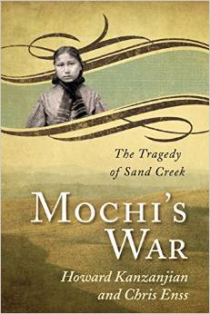
Enter now to win a copy of Mochi’s War:  The Tragedy of Sand Creek


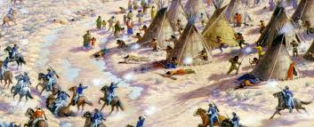
Colonel John Chivington and representatives of the First and Third Colorado Cavalry rode hard and fast from the sun-touched butte where they’d been waiting at the Indian encampment along Sand Creek. A bugler sounded the charge as the horses’ hooves drummed and the soldiers shouted, reins in their teeth and guns in their fists.  Members of the Cheyenne and Arapaho tribes living in the path of the cavalry hurried from their lodges and frantically scattered in different directions. Mothers scooped young children into their arms and ushered elderly men and women to clusters of trees. Braves grabbed weapons in order to defend themselves from the surprise invasion.

Several of Chivington’s troops raced to the paddock where the Indians’ horses were corralled. Without the herd the Indians would be at a disadvantage, unable to pursue attackers or flee from the chaos. Just before the flood of soldiers arrived on the scene, Colonel Chivington urged his men to “recall the blood of wives and children spilled on the Platte and Arkansas Rivers.”

The full force of the cavalry’s strike yielded immediate devastation. Bullet-ridden children fell where they once played; mothers lay dying with their babies in their arms; elderly women and men collapsed from gunshot wounds in their backs. It was a killing frenzy. Some Indians managed to escape without injury and take refuge in thick brush and behind scattered rock outcroppings.

Black Kettle tried desperately to keep his people from panicking. He clung to the belief that the attack would cease when the soldiers noticed the American flag unfurled. He and Chief White Antelope huddled at the base of the flag post. They only ran for cover when they realized the soldiers were hell-bent on annihilating them.

Fearless Cheyenne women and braves stood their ground, refusing to leave without a fight. The men exchanged shots with the soldiers and the women fought using spears and knives, all of which gave members of the tribe a chance to retreat slowly up the dried streambed. Many Cheyenne and Arapaho were killed as they ran to hide in the banks of the Sand Creek.

Indian horses spooked by gunfire broke away from the soldiers trying to drive them from the encampment. Indian women who managed to capture and calm a horse long enough to climb onto its back were shot. Their lifeless bodies slid from the backs of the horses onto the hard earth. Braves on foot who dared charge the relentless soldiers were stopped in their tracks with a barrage of bullets. According to accounts from those who witnessed the battle, children who ventured out of hiding waving white flags and mothers who pleaded for their infants’ lives were beaten with the butt of the soldiers’ guns and then scalped.

Black Kettle stood watching the bloody event in disbelief. He made a white flag of truce and raised it under the American flag. It had no effect upon the soldiers. Chivington’s persistent orders to continue to pursue the enemy were strictly followed. Black Kettle grabbed his wife, and the two fled toward a creek bed. The bark of the rifles all around him was steady, and there seemed to be no escape for the Cheyenne leader. Black Kettle’s wife was struck by several bullets, and the concussion of the shots knocked her face first onto the ground. Black Kettle tried to get her onto her feet again, but her injuries were too serious. The cavalry was bearing down on him quickly and he was forced to leave his wife’s body behind. He continued running until he reached the sandy creek bed. He hid in the dry wash under a thick overgrowth of brush.


To learn more about the Sand Creek Massacre read

Mochi’s War:  The Tragedy of Sand Creek