Tales & Victoria Claflin

Last chance to enter to win a copy of
More Tales Behind the Tombstones:
More Deaths and Burials of the Old West’s Most Nefarious Outlaws,
Notorious Women, and Celebrated Lawmen


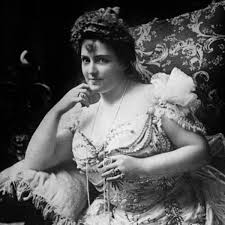
When Victoria Claflin Woodhull died on June 9, 1927, news of her passing was announced on two continents. The press referred to the controversial writer, stockbroker, and politician as a “most immoral woman.” Not only was Victoria the first woman to be officially nominated for president of the United States, but she was also one of the first individuals to have been jailed on federal obscenity charges. Both events occurred in 1872.

Before her involvement with the women’s rights movement in the mid-1860s, Victoria and her sister, Tennessee, were the owners and publishers of a newspaper called the Woodhull and Claflin Weekly. They printed scandalous articles promoting the idea of “free love.” In a letter Victoria sent to the New York Times in 1871, she claimed that free love was the “only cure for immorality, the deep damnation by which men corrupt and disfigure God’s most holy institution of sexual relations.” She continued, “It is not marriage but sexual intercourse, then, that is God’s most holy institution.” Victoria and Tennessee’s progressive views on sex and the brazen printing of those ideals appalled citizens not only in the United States but also in other countries like Germany and Russia, as well. They “threaten to destroy the morals nations so desperately needed to cling to,” was the opinion voiced in the New York Times on November 23, 1871.

Victoria and Tennessee were not strangers to confrontation with the law. Their father, Reuben Buckman “Buck” Claflin, was a scoundrel who excelled at breaking the rules of conventional society and spent time behind bars for his actions. Buck and his wife, Roxanna Hummel, lived in a rundown house in Homer, Ohio. The couple had ten children. Born on September 23, 1838, Victoria was the Claflins’ sixth child. Although Victoria’s father claimed to be a lawyer with his own profitable practice, he was actually a skilled thief with no law degree at all. He owned and operated a gristmill and also worked as a postmaster. Buck supplemented his income by stealing from merchants and business owners, and he was a counterfeiter and a suspected arsonist.

Victoria’s mother was a religious fanatic who dismissed Buck’s illegal activities in favor of chastising her neighbors for what she claimed was hedonism. Her public prayers were loud, judgmental, and dramatic. She preached to her children and insisted they memorize long passages of the Old Testament. By the time Victoria was eight, she was able to recite the Bible from cover to cover. Reflecting on her life, Victoria wrote in Autobiography of Victoria Claflin that her mother’s spiritual zeal so influenced her childhood that young Victoria believed she could see into the future and predict what was to come of those whom sought her out to preach.

Tennessee was reported to be the true clairvoyant of the family. Born in 1845, she was the last child born to Roxanna and Buck. Roxanna claimed Tennessee had the power to perceive things not present to the senses. She would slip into trances and speak with spirits, answering voices no one else could hear.

Victoria and Tennessee had very little formal education. Although Victoria attended school for only four years, she was bright, precocious, and well read. She was uninhibited and at the age of eleven delivered sermons from a busy location in Homer, Ohio.

In 1849, the Claflins left Homer and moved to Mount Gilead, Ohio. Victoria’s father had abandoned gristmill work and decided to venture into the field of psychic phenomena with his daughters in tow. He introduced Victoria and Tennessee to the public and announced the girls’ talent for “second sight” or “extrasensory perception, the ability to receive information in the form of a vision by channeling spirits.” Buck rented a theater and charged patrons seventy-five cents to watch the four-year-old and eleven-year-old communicate with deceased Claflin family members and predict the future. One such specific prediction was that one day a woman would be president of the United States.

Victoria and Tennessee’s shows, in which they would conduct séances and interpret dreams for audience members, attracted a large following, and in a short time the two young girls became the sole source of income for their family.


To learn about More Deaths and Burials of the Old West’s Most Nefarious Outlaws, Notorious Women, and Celebrated Lawmen read
More Tales Behind the Tombstones

Tales & the Flame of the Yukon

Enter now to win a copy of
More Tales Behind The Tombstones:
More Deaths and Burials of the Old West’s Most Nefarious Outlaws,
Notorious Women, and Celebrated Lawmen


A frigid wind blew hard past the weather-beaten exterior of the Palace Garden Theatre in Dawson City, Alaska. It was the spring of 1900, and gleeful patrons were tucked warmly inside, waiting for the “Flame of the Yukon” to take the stage.

A fiery, red-headed beauty glided out before the crowd, her violet eyes smiling. The men went wild with applause. The music began, and the entertainer swayed with the beat, placing a gloved hand to her breast and a fingertip to her lips and then, stretching her arm out, beckoning her admirers. The elaborate red-sequin dress she was wearing was form-fitting, and the long black cape that draped over her shoulders clung to her alabaster skin.

The piano player accelerated his playing, and Kate gyrated gracefully in and out of the shadow of the colored lights that flickered across the stage. After a moment, with a slight movement of her hand, she dropped the cape off her shoulders and it fell to the floor. The glittering diamonds and rhinestones around her neck sparkled and shined. Ever so seductively, she picked up a nearby cane adorned with more than 200 yards of red chiffon and began leaping, while twirling the fabric-covered walking stick. Around and around she fluttered, the chiffon trailing wildly about her like flames from a fire, the material finally settling over her outstretched body. The audience erupted in a thunderous ovation. She was showered with nuggets and pouches filled with gold dust. This dance would make her famous.

Kathleen Eloisa Rockwell came to the Klondike in April 1900. She attracted a following wherever she performed across Alaska. Kate was born in Junction City, Kansas, on October 4, 1876, to parents of Scottish-Irish descent. Her love for music and dancing began when she was a toddler. The piano and scratchy gramophone had an intoxicating effect on her. Her wealthy stepfather provided the gifted child with the education she needed to hone her natural talents. She was trained in French, voice and instrumental music at the Osage Mission in Kansas.
Kate’s parents eventually moved to Spokane, Washington, leaving their daughter behind to complete her studies. She visited her family during the summer months, when Spokane was abuzz with entertainment opportunities. Inspired by performances by traveling troupes of vaudevillians who sang and danced their way across the Northwest, she dreamed about joining the troubadours and of someday being a New York stage actress.

Kate moved to New York with her parents in the late 1800s and found work as a chorus girl in one of the city’s many theatres. She enjoyed her time on the stage and quickly became addicted to the nightlife of the big city. In time, Kate took her act on the road. She traveled across the Great Plains states, working her way back and forth across the country. She stood out among the other singers and dancers by always holding her head up high and smiling proudly for the appreciative audiences.


To learn about More Deaths and Burials of the Old West’s Most Nefarious Outlaws, Notorious Women, and Celebrated Lawmen read
More Tales Behind the Tombstones

Tales & Jessie Fremont

Enter now to win a copy of
More Tales Behind The Tombstones:
More Deaths and Burials of the Old West’s Most Nefarious Outlaws,
Notorious Women, and Celebrated Lawmen


On December 27, 1902, the woman many historians referred to as the “Guardian of Yosemite National Park” passed away. Jessie Anne Benton Fremont was born on May 31, 1824, in the Blue Ridge Mountains of Virginia. Her father, Thomas Hart Benton, was an ambitious man who went from farming into politics and eventually became a United States senator from Missouri (and great-uncle of twentieth-century muralist Thomas Hart Benton). Jessie visited Washington, D.C., often as a child and met with such luminaries as President Andrew Jackson and Congressman Davy Crockett.

Jesse and her sister, Elizabeth, attended the capital’s leading girl’s boarding school, alongside the daughters of other political leaders and wealthy business owners. It was for that very reason Jessie disliked school. “There was no end to the conceit, the assumption, the class distinction there,” she wrote in her memoirs. In addition to the lines drawn between the children of various social standings, Jessie felt the studies were not challenging to her. “I was miserable in the narrow, elitist atmosphere. I learned nothing there,” she recalled in her journal. The best thing about attending school was the opportunity it afforded her to meet John Fremont, the man who would become her husband.

Born on January 21, 1813, John was an intelligent, attractive man with gray-blue eyes who excelled in mathematics and craved adventure. While awaiting an assignment from the United States Corp of Topographical Engineers (a war department agency engaged in exploring and mapping unknown regions of the United States), John was introduced to Thomas Benton. Benton was a key proponent in Washington for western expeditions. He and John discussed the great need for the land west of the Missouri River to be explored. Benton invited the young surveyor and map maker to continue the conversation at his home over a meal with his family. It was there that Jessie and John first met, and they were instantly smitten with each other. Within a year, they were wed.
Jessie Benton was sixteen years old and John Fremont was twenty-seven when they married on October 19, 1841. The newlyweds lived at the Gatsby Hotel on Capitol Hill until John was assigned to lead a four-month expedition to the Rocky Mountains. Jessie helped him prepare for the journey by reviewing information about the plant life, Indian encampments, and rock formations he would come in contact with during his trip. John headed west on May 2, 1842. Jessie, who was pregnant with their first child, moved into a small apartment near her parents’ home.
John returned to Washington, D. C., in November 1842, just two weeks before their daughter was born. He watched over baby Elizabeth Benton “Lily” Fremont while Jessie reviewed the slim notes John had taken during the expedition and fashioned a report for the government using his data and detailed recollections of life on the trail. Politicians such as Missouri Senator Lewis Linn praised the report for being not only practical and informative but entertaining as well. The material would be used by emigrants as a guidebook.

In early 1843, John moved his family to St. Louis, Missouri, where his next expedition would be originating. Jessie took on the role as John’s secretary, reviewing mail from suppliers and frontiersmen such as Kit Carson. She wrote the necessary correspondence to members of the Topographical Bureau, apprising them of the date the expedition would begin, how long it would take, and what the party planned to accomplish. Shortly before John departed to explore a route to the Pacific Coast, a letter came to the Fremont’s home instructing him to postpone the expedition until questions over a request to purchase weapons had been settled. Fearing the entire mission would be jeopardized if the journey was delayed, Jessie did not give the letter to her husband. John set out on the expedition on May 13, 1843. He returned home the following August, having successfully begun opening up the great territory between the Mississippi Valley and California.


To learn about More Deaths and Burials of the Old West’s Most Nefarious Outlaws, Notorious Women, and Celebrated Lawmen read
More Tales Behind the Tombstones

Tales & Ellen Clark Sargent

Enter now to win a copy of
More Tales Behind The Tombstones:
More Deaths and Burials of the Old West’s Most Nefarious Outlaws,
Notorious Women, and Celebrated Lawmen


The memory of Ellen Clark Sargent’s arrival in Nevada City, California, stayed with her all her life. Long after she had left the Gold Country, she recalled: “It was on the evening of October 23, 1852 that I arrived in Nevada [City], accompanied by my husband. We had traveled by stage since the morning from Sacramento. Our road for the last eight or ten miles was through a forest of trees, mostly pines. The glory of the full moon was shining upon the beautiful hills and trees and everything seemed so quiet and restful that it made a deep impression on me, sentimental if not poetical, never to be forgotten.”

In the newly formed state of California, shaped by men and women who had endured unbelievable hardships to cross the plains, Ellen saw an opportunity to gain something she passionately wanted: the right to vote. Despite defeat after defeat, she never gave up.

Ellen Clark fell in love with Aaron Augustus Sargent, a journalist and aspiring politician, in Newburyport, Massachusetts, when they were in their teens. Both taught Sunday school in the Methodist Church. Upon their engagement, Aaron promised to devote his life to being a good husband and making their life a happy one. But several years passed before he had a chance to make good on that promise.

In 1847, Aaron left Ellen in Newburyport to go to Philadelphia, where he worked as a printer. His interest in politics intensified with the new friends he made. Aaron, an ardent opponent of slavery, closely followed arguments of free-soilers and antislavery forces.

He worked as a print compositor and as a newspaper writer. However, the trade paid poorly. With word of the gold strike in California, Aaron borrowed $125 from his uncle and sailed from Baltimore on February 3, 1849, leaving Ellen with a promise to return and make her his wife.

Aaron arrived in the gold camp called Nevada in the spring of 1849 and was moderately successful in his search for gold. He then became a partner with several others in the Nevada Journal newspaper. But with a promise to keep, Aaron obtained the help of a friend and built a small frame house near the corner of Broad and Bennett Streets, right in the center of town. In January 1852, he returned to Newburyport to claim his bride. Aaron and Ellen were married on March 15 and returned to Nevada City in October of that year.

Ellen Sargent had no notion of the home she would find, but she was agreeably surprised. She later wrote an account of her arrival in Nevada City: “My good husband had before my arrival provided for me a one-story house of four rooms including a good-sized pantry where he had already stored a bag of flour, a couple of pumpkins and various other edibles ready for use, so that I was reminded by them a part of the prayer of the minister who had married us, seven months before, in faraway Massachusetts. He prayed that we might be blessed in basket and in store. It looked like we should be.”

Ellen set up housekeeping in a town where the cost of everything was astonishing. Eggs sold for three dollars a dozen, chickens for five dollars apiece.

To learn about More Deaths and Burials of the Old West’s Most Nefarious Outlaws, Notorious Women, and Celebrated Lawmen read
More Tales Behind the Tombstones

Praise for Cowboys, Creatures, and Classics


“Exploding onto the movie scene in 1935, Republic Pictures brought the pop culture of the 1930’s & 40’s to neighborhood movie houses. AWARD-WINNING screenwriter Chris Enss along with AWARD-WINNING producer & entertainment executive Howard Kazanjian have put together a BEAUTIFUL coffee table presentation on, in “my” opinion, one of the coolest movie studios ever. The book is, “Cowboys, Creatures, and Classics; The Story of Republic Pictures.” Movie buffs & readers alike will be treated to the inside story of the “little studio” that John Wayne, the Duke himself, built. In fact, Republic Pictures was home to Mr. Wayne for some 33 films & featured the west’s FIRST singing cowboy. Republic promised & delivered action, adventure, & escape. “Cowboys, Creatures, and Classics: The Story of Republic Pictures is for anyone who likes B movies magic. I submit that this spectacular presentation is the honest account of an extraordinary production house. I encourage you to check out one of the coolest, if not THE coolest book I’ve ever read pertaining to the film industry, from Lyons Press, An imprint of The Rowman & Littlefield Publishing Group, Inc. at LyonsPress.com. And, next weekend when you kick back to one of your favorite all time classic movies on the Turner Movie Channel (TMC,) check to see if it’s a REPUBLIC picture!”

Jerry Puffer, Townsquare Media KSEN/KZIN


Tales Behind the Tombstones & Lillian Russell

Enter now to win a copy of

More Tales Behind The Tombstones:

More Deaths and Burials of the Old West’s Most Nefarious Outlaws,

Notorious Women, and Celebrated Lawmen


Lillian Russell, (Mrs. Alexander P. Moore) bright star of American comic opera for three decades and internationally known as a professional beauty who died at 2:20 o’clock this morning, had been ill several weeks following a shipboard accident while returning from Europe. Her death was unexpected, as her physicians two days ago announced she had passed the crisis and would recover.”

The Clinton Herald, June 6, 1922

It was not so much Lillian Russell’s great dramatic ability or her clear, well-trained voice as it was her personality and physical beauty that made her the most famous musical comedy star of her day and acclaimed for more than a generation as “America’s greatest beauty.”

Born on December 4, 1861, in Clinton, Iowa, Helen Louise Leonard had the kind of beauty that stopped traffic from her earliest years. She had a voice that her mother, Cynthia Rowland Leonard, an ardent feminist, paid to have trained when her daughter was still in her teens. Helen Louise was educated at the Convent of the Sacred Heart in Chicago and attended finishing school at Park Institute. She took singing lessons and sang in the church choir at the Episcopal church.

Her parents separated when she was in her teens, and her mother took Helen Louise and moved to New York, where young Helen started training for the grand opera. She could sustain the highest notes with virtually no effort, and do it again and again without strain. Her voice coach, Dr. Leopold Damrosch, told her mother that with a few years of training, he could make her a diva to rival the best.

The beautiful blond from Iowa had other ideas. Years of training and rehearsals, with only bit parts and backup roles as an understudy, lay before her on the road to stardom in opera. Helen Louise joined the Park Theatre Company in Brooklyn. She was eighteen when she danced onstage for the first time in the chorus of H. M. S. Pinafore, a Gilbert and Sullivan operetta that went on to resounding success.

Before the run of Pinafore was over, Helen Louise had accepted a proposal of marriage from an admirer in the show. She married the company’s musical director, Harry Graham. That marked the end of her appearance in the chorus. She withdrew from the company and settled into domestic life, but her time as a homemaker didn’t last.

In late 1879, Helen Louise gave birth to a son. A nurse was hired to care for the baby so the actress could once again take up her career. Her paycheck made a big difference for the little family. Her much older husband was not happy with his wife being the bread winner, however; he wanted her to stay home and take care of their child. But a woman raised to be independent is not easily swayed when fame and fortune call.

Then one day Helen Louise returned from the theatre to find her baby desperately ill. Despite all attempts to cure the infant, he died in convulsions. Apparently, the inexperienced nurse had accidentally pierced his abdomen with a diaper pin. Harry accused his wife of neglect, and he divorced her in 1881.

Grieving over the death of her son, feeling betrayed by her husband’s accusation, and devastated over the end of her marriage, Helen Louise concentrated on her career. Tony Pastor, legendary producer of musical comedy, heard her sing at the home of a friend and consequently offered her a job. Helen Louise liked the immediate success she’d already tasted in comic opera. At nineteen, with a statuesque figure, golden curls, skin like “roses and cream,” and a soprano voice that could do everything with ease she had found her first mentor in Tony Pastor.


To learn about More Deaths and Burials of the Old West’s Most Nefarious Outlaws, Notorious Women, and Celebrated Lawmen read

More Tales Behind the Tombstones


Tales & Bill Tilghman

Enter now to win a copy of

More Tales Behind The Tombstones:

More Deaths and Burials of the Old West’s Most Nefarious Outlaws,

Notorious Women, and Celebrated Lawmen


Sheriff Bill Tilghman

“A deputy marshal and a posse arrested two notorious female outlaws. … One was in men’s clothing.”

—August 21, 1895 edition of Evening Gazette, Cedar Rapids, Iowa

On the afternoon of August 18, 1895, United States Marshal Bill Tilghman and Deputy Marshal Steve Burke led their horses toward a small farm outside Pawnee, Oklahoma. The lawmen had tracked a pair of outlaws to the location and were proceeding cautiously when several gunshots were fired.

Marshall Tilghman caught sight of a Winchester rifle sticking out a broken window of a dilapidated cabin. He spurred his horse out of the line of fire just as the weapon went off. He steered his mount around the building and arrived at the backdoor the same time sixteen-year-old Jennie Stevens, alias Little Britches, burst out the house. She shot at him with a pistol while racing to a horse waiting nearby.

By the time Marshal Tilghman settled his ride and drew his weapon Jennie was on her horse. She turned the horse away from the cabin, kicked it hard in the ribs, and the animal took off. Tilghman leveled his firearm at the woman and shot. Jennie’s horse stumbled and fell, and she was tossed from the animal’s back, losing her gun in the process.

The marshal hopped off his own ride and hurried over to the stunned and annoyed runaway. Jennie picked herself up quickly and cursed her misfortune. She charged the lawman, dug her fingernails into his neck, and slapped him several times before he could subdue her. He was a battered man when he finally pinned her arms behind her back.

Back at the cabin, Deputy Marshal Steve Burke wrestled a gun away from thirteen-year-old Annie McDoulet, alias Cattle Annie, a rail-thin young woman wearing a gingham dress and a black, wide-brimmed straw hat. The pistol she had tried to shoot him with was lying in the dirt several feet in front of her.

Two years prior to their apprehension and arrest, Cattle Annie and Little Britches were riding with the Doolin gang, a notorious band of outlaws who robbed trains and banks. Enamored by the fame of the well-known criminals, the teenage girls had decided to leave home and follow the bandits. They helped the criminals steal cattle, horses, guns, and ammunition and warned them whenever law enforcement was on their trail.

Legend tells that Bill Doolin, leader of the Doolin gang, gave Cattle Annie and Little Britches their nicknames. Cattle Annie was born Anna Emmaline McDoulet in Kansas in 1882. Jennie Stevenson was born in 1879 in Oklahoma. Both girls had run afoul of the law before joining the Doolin gang. Each sold whisky to Osage Indians. According to the September 3, 1895, edition of the Ada, Oklahoma, newspaper the Evening Times, Jennie seemed to have “plied her vocation for a long time successfully, going in the guise of a boy tramp hunting work.” In between selling liquor to Indians and life with the Doolins, Jennie had married a deaf mute named MidKiff and Annie rustled livestock.

News of Cattle Annie and Little Britches’ arrest was reported in the August 21, 1895 edition of the Cedar Rapids, Iowa newspaper the Evening Gazette. “A deputy marshal and a posse arrested two notorious female outlaws but had to fight to make the arrest,” the article read. “The marshal’s posse ran into them and they showed fight. Several shots were fired before they gave up. One was in men’s clothing.”

The teenage outlaws were held in the jail in Guthrie, Oklahoma Territory until a trial was held. They were found guilty of horse stealing and sentenced to ten years’ imprisonment at the Farmington Reform School in Massachusetts. Cattle Annie and Little Britches were model prisoners and only served three years of their sentence.

Annie returned to Oklahoma Territory, where she met and married Earl Frost in March 1901. The couple divorced after eight years. In 1912 Annie married a house painter and general contractor named Whitmore R. Roach. They had two sons and lived a respectable life in Oklahoma City. Annie McDoulet Frost Roach died from natural causes on November 7, 1978, at the age of ninety-five. Her obituary ran in the November 8, 1978, edition of the Oklahoma City newspaper The Oklahoman. The article noted that “she was a retired bookkeeper and member of the American Legion Auxiliary and the Olivet Baptist Church. She had five grandchildren and thirteen great-grandchildren. She was laid to rest at Rose Hill Burial Park in Oklahoma City.”

To learn about More Deaths and Burials of the Old West’s Most Nefarious Outlaws, Notorious Women, and Celebrated Lawmen read

More Tales Behind the Tombstones


Judge Roy Bean

Enter now to win a copy of

More Tales Behind The Tombstones:

More Deaths and Burials of the Old West’s Most Nefarious Outlaws,

Notorious Women, and Celebrated Lawmen


“I aim to shoot the hell out of anybody that tries to stop me. I aim to mind my own business, and aim to back up the law.”

—Judge Roy Bean

With the passing of Judge Roy Bean, who referred to himself as the “Law West of the Pecos,” the rowdy frontier lost one of its most unique and picturesque characters. It was Judge Bean that was said to have held an inquest on the body of an unknown man found in his precinct, and, finding on the corpse a pistol and $40 in cash, proclaimed the dead man guilty of carrying a concealed weapon and fined him $40, which was forthwith collected from the pocket of the offender.

There were no customers from Judge Roy Bean’s opera house and saloon by his side when he died on March 16, 1903; no friends from the Langtry, Texas, community where he had resided; no lawbreakers to be tried and sentenced. Judge Bean’s son, Sam, was the only one with him when he passed.

The stout, seventy-eight-year-old man with a gray beard spent his last hours on earth in a near comatose state unaware of where he was or who he was. He died of heart and lung complications exasperated by alcohol.

Roy was born in a cabin in Mason County, Kentucky, in 1823, but he spent his childhood in Independence, Missouri. He followed his older brother to the Southwest in 1846, and the pair opened a trading post in Chihuahua, Mexico.

In 1848, eighteen-year-old Roy killed a desperado trying to steal from him and fled the area to escape arrest. There were several more run-ins with the law between 1849 and 1862. In 1862, Roy decided to join the army to fight for the North in the Civil War. He married Virginia Chavez in 1866 and the couple settled in San Antonio, Texas. Roy and his wife had four children, but the marriage was rocky and didn’t last.

When the Southern Pacific Railroad began its extension from San Antonio to the Rio Grande, Roy followed the line with a moveable house that featured a saloon. During one of the rides he met an attorney from Chicago who regaled him with stories of how the justice system worked in the eastern states. The fascinating details of law and order stuck with Roy, and when he was appointed Justice of the Peace at a railroad stop in West Texas he decided to employ all he had learned from the Chicagoan.

Roy Bean gave the temporary railroad stop that grew into a town its name. He called the spot Vinegroon. A vinegroon is a whip-tailed scorpion common in that region. The name was appropriate as well as symbolic. “I aim to run a square place,” the judge informed all potential customers. “I aim to shoot the hell out of anybody that tries to stop me. I aim to mind my own business, and aim to back up the law.”

“What law?” some brave railroad worker ventured to ask. “There hasn’t been any sign of civilized law this far west yet.”

“My own!” Judge Bean roared. “I’m the law from now on. I’m the law west of the Pecos.”

Judge Roy Bean hung a sign in front of his establishment that read: “Roy Bean, Notary Public, Ice Cold Beer. Judge Roy Bean, Law West of the Pecos.” The railroad executives liked it. It was convenient and gave the railroad a location to tie themselves to, and somebody to punish thieves and other rowdy cowboys. Cattle ranchers came in fast, and they liked the semblance of law, too. They had no time to organize and hold elections, so they took Roy Bean on as the authority.

To learn about More Deaths and Burials of the Old West’s Most Nefarious Outlaws, Notorious Women, and Celebrated Lawmen read

More Tales Behind the Tombstones


Cattle Annie & Little Britches

Enter now to win a copy of

More Tales Behind The Tombstones:

More Deaths and Burials of the Old West’s Most Nefarious Outlaws, Notorious Women, and Celebrated Lawmen

On the afternoon of August 18, 1895, United States Marshal Bill Tilghman and Deputy Marshal Steve Burke led their horses toward a small farm outside Pawnee, Oklahoma. The lawmen had tracked a pair of outlaws to the location and were proceeding cautiously when several gunshots were fired.

Marshall Tilghman caught sight of a Winchester rifle sticking out a broken window of a dilapidated cabin. He spurred his horse out of the line of fire just as the weapon went off. He steered his mount around the building and arrived at the backdoor the same time sixteen-year-old Jennie Stevens, alias Little Britches, burst out the house. She shot at him with a pistol while racing to a horse waiting nearby.

By the time Marshal Tilghman settled his ride and drew his weapon Jennie was on her horse. She turned the horse away from the cabin, kicked it hard in the ribs, and the animal took off. Tilghman leveled his firearm at the woman and shot. Jennie’s horse stumbled and fell, and she was tossed from the animal’s back, losing her gun in the process.

The marshal hopped off his own ride and hurried over to the stunned and annoyed runaway. Jennie picked herself up quickly and cursed her misfortune. She charged the lawman, dug her fingernails into his neck, and slapped him several times before he could subdue her. He was a battered man when he finally pinned her arms behind her back.

Back at the cabin, Deputy Marshal Steve Burke wrestled a gun away from thirteen-year-old Annie McDoulet, alias Cattle Annie, a rail-thin young woman wearing a gingham dress and a black, wide-brimmed straw hat. The pistol she had tried to shoot him with was lying in the dirt several feet in front of her.

Two years prior to their apprehension and arrest, Cattle Annie and Little Britches were riding with the Doolin gang, a notorious band of outlaws who robbed trains and banks. Enamored by the fame of the well-known criminals, the teenage girls had decided to leave home and follow the bandits. They helped the criminals steal cattle, horses, guns, and ammunition and warned them whenever law enforcement was on their trail.

Legend tells that Bill Doolin, leader of the Doolin gang, gave Cattle Annie and Little Britches their nicknames. Cattle Annie was born Anna Emmaline McDoulet in Kansas in 1882. Jennie Stevenson was born in 1879 in Oklahoma. Both girls had run afoul of the law before joining the Doolin gang. Each sold whisky to Osage Indians. According to the September 3, 1895, edition of the Ada, Oklahoma, newspaper the Evening Times, Jennie seemed to have “plied her vocation for a long time successfully, going in the guise of a boy tramp hunting work.” In between selling liquor to Indians and life with the Doolins, Jennie had married a deaf mute named MidKiff and Annie rustled livestock.

News of Cattle Annie and Little Britches’ arrest was reported in the August 21, 1895 edition of the Cedar Rapids, Iowa newspaper the Evening Gazette. “A deputy marshal and a posse arrested two notorious female outlaws but had to fight to make the arrest,” the article read. “The marshal’s posse ran into them and they showed fight. Several shots were fired before they gave up. One was in men’s clothing.”


To learn about More Deaths and Burials of the Old West’s Most Nefarious Outlaws, Notorious Women, and Celebrated Lawmen read

More Tales Behind the Tombstones


More Tales Behind the Tombstones

Enter now to win a copy of

More Tales Behind The Tombstones:

More Deaths and Burials of the Old West’s Most Nefarious Outlaws, Notorious Women, and Celebrated Lawmen


Visitors walking through the graveyards of frontier ghost towns often times find themselves stepping over weeds that have grown around fallen headstones. Sadly, the final resting place for many small families and communities has been left unattended or even forgotten. The seasons have taken with them the names chiseled in the granite, nearly erasing all memory of those mourned beneath the dilapidated tombstones.

It is estimated that one in every seventeen people died on the journey west from 1847 to 1900. Oftentimes the men, women, and children that died en route to the gold hills of California and Colorado, or the fertile farmlands of the Pacific Northwest, were buried on the spot where they died. A proper burial and lengthy funeral were forfeited in favor of pushing on to the far-off destination. Traveling across the plains demanded that sojourners constantly be on the move. The threat of bad weather, hostile Indians, wild animals, or desperados kept pioneers from staying too long in one area.

Contrary to popular belief, the thousands of settlers who perished on the trail west did not solely die in gunfights or Indian attacks. Scorching deserts, starvation, and dehydration claimed many lives. Poor sanitation bred typhoid, cholera, and pneumonia. Blood poisoning brought on by a cut or scrape from a sharp object, or shock from an accident, such as a wagon spilling over with travelers inside, brought about numerous deaths as well.

There were pioneers, though, who could not be persuaded to forego a ceremonial funeral if they lost a loved one. Nothing could keep them from burying the deceased in a plot where they could be remembered. A section of ground in a scenic location with trees to shade the grave was the preferred spot. To leave someone dear in an unmarked plot was impossible for some to accept.

As pioneers established homesteads and built towns around their farms and ranches, the dead were either buried in family cemeteries near where they had lived or next to churches where they worshipped. For nineteenth-century ancestors, it was important to remember death. The fact of death served as a reminder to those that continued on to persevere and do good works as preparation for a final judgment by a righteous God.

Whatever the cause of death might have been for early immigrants, the need to take care of a deceased person’s remains was a necessity. Until the discovery of formaldehyde in 1867, and the subsequent introduction of the product and its use as an acceptable practice in America in 1872, there were limited ways to deal with the dead. Immediate burial was preferred. If a person died in the winter and the ground was frozen and a grave could not be dug, the body was stored in a barn or woodshed until the earth thawed and the departed could be buried.

Carpenters in mining camps or cattle towns were usually the undertakers, since they had the tools and supplies to build coffins. The wooden caskets might be lined with white linen if it was supplied by the deceased’s family or friends. Sextons, people who looked after a church and churchyard, would determine where in the cemetery a person was to be buried. They would also dig the grave and fill it again.

People who lived in small towns would often gather at the graveyard where the coffin was placed atop two sawhorses. For those who lived in less rural areas, there were hearses to rent to transport the dead from the undertaker’s office to the cemetery. The vehicle had glass sides and was decorated with elaborate carvings and brass ornaments. On top were tall, shako-like plumes, one on each corner.

While cemeteries house the dead, the tombstones record on them not only their pleasures, sorrows, and hopes for an afterlife, but also more than they realize of their history, ethnicity, and culture. In this book are thirty true stories about those buried in marked and unmarked graves throughout the frontier. How these famous and infamous western characters contained within lived and then exited this world is reflected on their headstones. Tales of their demise add details of their courage, adventure, hardship, and joy not included on those tombstones.

The dead herein will never exhaust their potential to enlighten.


To learn about More Deaths and Burials of the Old West’s Most Nefarious Outlaws, Notorious Women, and Celebrated Lawmen read

More Tales Behind the Tombstones