The Pinks & Operative Potter

Enter now to win a copy of

The Pinks:  The First Female Operatives, Detectives and Spies with the Pinkerton National Detective Agency.


In the spring of 1858 a friendly, two-horse match race attracted the attention of many residents in the town of Atkinson, Mississippi. Mrs. Franklin Robbins and Mrs. R. C. Potter, both guests at one of the community’s finest hotels had decided to see which one of their mounts was the fastest.  They had begun their afternoon ride in the company of several others enjoying the balmy air, blooming flowers, and waving foliage of the sunny southern landscape.  Exploring a path that led to a bubbling stream, Mrs. Robbins and Mrs. Potter had lagged far behind the party and decided to narrow the gap when talk about who could make that happen first arose.

For a few moments both of the horses the women were riding ran at an uneven but steady pace then suddenly Mrs. Robbins’ horse bolted ahead.  Her ride didn’t stop until they reached the business district of town.  Mrs. Robbins slowed the flyer to a trot before she glanced back to check on her competitor.  Mrs. Potter was nowhere to be seen.  Mrs. Robbins backtracked a bit; her eyes scanned the road she’d traveled.  Her horse reared and threatened to continue the run but she restrained the animal and pulled tightly on the reins.  “Mrs. Potter!” she called out frantically, “Mrs. Potter?!”  Mrs. Robbins urgent cries drew the attention of the people with whom the pair had started the ride. They had congregated in front of the hotel when they heard Mrs. Robbins call for help.  Not only did the fellow riders hurry to the scene, but men and women at various stores or saloons rushed to Mrs. Robbins’ aide.

Through broken tears she explained what had transpired and asked volunteers to accompany her in her search for Mrs. Potter.  Many quickly agreed and wasted no time in following after Mrs. Robbins.  She spurred her horse back along the roadway they had just traveled.

The riders spread out in hopes of finding a trail leading to where Mrs. Potter’s mount might have carried her.  One rider spotted a woman’s scarf caught in a low hanging branch of an oak tree and made his find public.  Tracks near the tree led searchers to believe Mrs. Potter’s horse might have been spooked and out of control.  After several tense moments trekking back and forth over field and stream, Mrs. Potter was located.  She had been thrown from her ride and was lying motionless in a meadow adjacent to the home of the county clerk, Alexander Drysdale.
Mrs. Robbins rode to Alexander’s house and informed him of what had happened.  In less than five minutes he had improvised a stretcher out of a wicker settee and a mattress, and had summoned four of his hired hands to help retrieve the injured Mrs. Potter.  She was groaning in pain.  She told those attending to her that her head hurt.  In a few moments the hired hands had lifted her off the ground and gently placed her in the settee.  While being carried to the Drysdale’s home Mrs. Potter complained that her ribs were sore and her back was aching.  Mr. Drysdale sent Mrs. Robbins and the other riders on their way and requested that Mrs. Robbins return with a physician.  He promised that he and his wife would keep Mrs. Potter comfortable while waiting for the doctor to arrive.

Mrs. Potter was grateful for the Drysdale’s consideration and thanked them over and over again.  The hired hands were instructed to put her in one of the guest bedrooms and see to her every need.

When the physician arrived he examined her but could not determine the extent of her injuries.  He recommended that she remain in bed and not be moved.  He thought she would not have to be confined to bed rest for more than two weeks.  Mrs. Potter asked if she could be moved to the hotel, as she did not want to trespass on the Drysdale’s hospitality.  Mrs. Drysdale, however, refused to hear of such a thing as the removal of a sick person from her house, and said that she would enjoy Mrs. Potter’s company.  Mrs. Potter agreed to stay with the Drysdales until she could move about without assistance.

No one suspected that Mrs. Potter was an operative for the Pinkerton Detective Agency.  They had no idea her real name was Kate Warne and that she had been tasked with infiltrating the Drysdale’s home to locate a murderer.  As Mrs. Potter, Kate had pretended her horse had been frightened and out of control and eventually threw her, that she’d been deposited purely by chance near the Drysdale’s house and that the injuries sustained in the fall were substantial enough to render her too fragile to move.


To learn more about Operative Potter and the other female agents with the Pinkerton Detective Agency read The Pinks.

Tombstone Epitaph and The Pinks

Enter now to win a copy of

The Pinks:  The First Women Detectives, Operatives and Spies with the Pinkerton National Detective Agency.


The Tombstone Epitaph is a Tombstone, Arizona, based monthly publication that serves as a window in the history and culture of the Old West. Founded in January 1880 (with its first issue published on Saturday May 1, 1880), The Epitaph is the oldest continually published newspaper in Arizona.

It long has been noted for its coverage of the infamous Gunfight at the O.K. Corral on Oct. 26, 1881, and its continuing research interest in Wyatt Earp, Doc Holliday and their cowboy adversaries. In 2005, for example, it presented for the first time a sketch of the O. K. Corral gunfight hand drawn by Wyatt Earp shortly before his death. 


Introducing The Pinks

Enter to win a copy of

The Pinks:

The First Women Detectives, Operatives, and Spies with the Pinkerton National Detective Agency.


The Pinks is the true story of Kate Warne and the other women who served as Pinkertons, fulfilling the adage, “Well-behaved Women Seldom Make History.”

Most students of the Old West and American law enforcement history know the story of the notorious and ruthless Pinkerton Detective Agency and the legends behind their role in establishing the Secret Service and tangling with Old West Outlaws. But the true story of Kate Warne, an operative of the Pinkerton Agency and the first woman detective in America—and the stories of the other women who served their country as part of the storied crew of crime fighters—are not well known. For the first time, the stories of these intrepid women are collected here and richly illustrated throughout with numerous historical photographs. From Kate Warne’s probable affair with Allan Pinkerton, and her part in saving the life of Abraham Lincoln in 1861 to the lives and careers of the other women who broke out of the Cult of True Womanhood in pursuit of justice, these true stories add another dimension to our understanding of American history.


To learn more about Kate Warne and the other

women Pinkerton agents read

The Pinks:

The First Women Detectives, Operatives, and Spies with the Pinkerton National Detective Agency.


The Railroad Fakers

Enter now to win a copy of the

Bedside Book of Badgirls: Outlaw Women of the Midwest.

Nineteen-year-old Jennie Freeman stared pensively out the partially opened window of the tenement building where she lived in Chicago, Illinois. A cold, gentle breeze blew across the bed she was lying on and she pulled the dingy blankets that were draped across her legs around her waist. Jennie was a petite, be-speckled girl with mousey-brown hair and green eyes. She was a fierce reader, as proof by the many books stacked around the bed. A stern-faced doctor stood over her fiddling with a stethoscope. When he finally placed one end of the stethoscope on Jennie’s chest she turned her attention from the busyness on the street outside the window to him. After the doctor listened to his patient’s heartbeat he scratched his head, perplexed. He eyed the wheelchair next to the bed and sighed a heavy sigh. Jennie’s mother, Fannie entered the room from the kitchen carrying a tray of food. She was a large woman of dark complexion who wore diamond eardrops and a large marquise ring. She looked worried and carefully studied the doctor’s face, waiting for a verdict.

The doctor lifted the covers off Jennie’s legs and studied her feet. He removed a straight pin from his medical bag and touched the pin to Jennie’s foot and calves. No matter what he did he could not get her limbs to even twitch. After a few moments he stopped the examination, pulled the blanket back over Jennie’s legs, and began packing his medical instruments into his bag. Fannie sat the tray she was carrying on a nightstand next to the bed and took her daughter’s hand in hers. The doctor confirmed what the troubled mother had suspected – Jennie was paralyzed. As the doctor put his coat on and exited the cramp, poorly-lit home, Jennie was crying and Fannie was comforting her.

Jennie has incurred her injury when she got caught between two cable cars. The intricate system of street railways in downtown Chicago had malfunctioned on January 9, 1893, and the cars collided. Jennie was found on the ground writhing in pain, near the accident. After a short stay in the hospital to treat her cracked ribs, bruises, and cuts, she was released into the care of her mother. Two days later she claimed she couldn’t move her legs from the thighs down. A railway company physician verified the report. Believing it would be cheaper to settle than it would be to go to court the company paid Jennie five hundred dollars.

By October 5, 1893, Jennie Freeman’s paralysis had passed. According to the July 5, 1903, edition of the San Antonio, Texas, newspaper the San Antonio Sunday Light, Jennie was injured while riding the Manhattan Elevated Railroad in New York. The teenager told authorities she was an actress on her way to an audition when she fell against the door of a Second Avenue train. She told them the car swung too close to the corner she was standing on at Twenty-Third Street. “I lost my balance and hit it hard,” she reported. “The car was going too fast too,” she added. Her mother, Fannie Freeman, was on hand to back up the story. Jennie was awarded one hundred dollars from the rail line for the injuries she claimed to have sustained and Fannie was given fifty dollars for suffering. “Seeing my daughter go through that was horrible,” she told the police who responded to the scene of the accident.

On April 20, 1894, the Freemans were in Boston, Massachusetts, traveling aboard the West End Street Railway Company car. This time Jennie claimed to have slipped on a banana peel lying in the aisle of the car. She told law enforcement who responded to her emergency call that she couldn’t move from the waist down. A doctor for the railway examined her and found her in an apparent paralysis condition. As a result of the doctor’s report the West End Railway Company paid her three-hundred and twenty-five dollars.


To learn more about the Freemans and other grifters and nefarious women read the

Bedside Book of Badgirls: Outlaw Women of the Old West.


Mochi’s War: Tragedy of Sand Creek

Enter to win a copy of

Mochi’s War: The Tragedy of Sand Creek


“Mochi was so distinguished for fiend-like fierceness and atrocity that it was not deemed safe to leave her on the plains. She was a fine looking Indian woman but as mean as they come.”

Observation made by a military officer after Mochi’s arrest on March 5, 1875


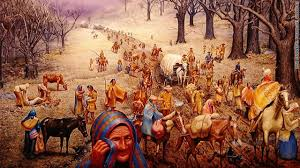
Somewhere amid the high plains sage country, the Big Sandy Creek once ran red with the blood of dozens of Cheyenne and Arapaho men, women, and children. On November 29, 1864, hundreds of members of the Colorado Volunteers poured down upon a sleeping Indian camp, leaving in their wake the slaughtered remains of Native Americans who were scalped and mutilated.

The unprovoked attack on the Indian settlement was led by Colonel John Milton Chivington, who is said to have ordered every Indian at the scene killed. To those settlers and traders who had been terrorized by the Indians and because of exaggerated reports of Indian attacks on families and troops, the Sand Creek Massacre was regarded by some as proper retribution on the Indians, and Chivington was revered for his actions.

The event that forced frontiersmen and women to address the serious issues that had been building between them and the Indians occurred on June 11, 1864. Rancher Nathan Ward Hungate, his wife, Ellen, and their two little girls were slaughtered by Indians. Their mutilated bodies were brought to Denver and put on display in the center of town. The people there were thrown into a panic. In the following weeks, at the mere mention of Indians in the outlying areas, women and children were sent to homes that were fortified and guarded. Plains travel slowed to a trickle. The supply of kerosene was exhausted, and the settlers had to use candles.

A regiment of 100 day volunteers known as the Third Colorado Cavalry was organized and George L. Shoup, a scout during the Civil War, was named the outfit’s colonel. At the same time, John Evans, governor of the Colorado Territory, issued a proclamation stating: “Friendly Arapahoe and Cheyenne belonging to the Arkansas River will go to Major Colley, U.S. Indian Agent at Fort Lyon, who will give them a place of safety…. The war on hostile Indians will be continued until they are effectually subdued.”

On August 29, 1864, before the regiment saw active service, a letter from Cheyenne leader Black Kettle explaining the Indians had agreed to make peace was delivered to officers at Fort Lyon, 150 miles away from Denver. The letter noted that Cheyenne and Arapaho war parties had prisoners they would like to exchange for Indians being held by the volunteers.

Major E. W. Wynkoop of the 1st Colorado at Fort Lyon marched his troops to Black Kettle’s camp to collect the captives. While there, Wynkoop persuaded the chief to send a delegation to Denver to talk about the conditions for peace.

From Fort Leavenworth, Major General Samuel Ryan Curtis, commander of the Department of Kansas, telegraphed Chivington prior to the conference with the chiefs: “I shall require the bad Indians delivered up; restoration of equal numbers of stock; also hostages to secure. I want no peace till the Indians suffer more.” Chivington took the order to heart.

To learn more about Mochi and the vendetta war she started read

Mochi’s War: The Tragedy of Sand Creek


Love Lessons from the Old West: Wisdom from Wild Women

Enter to win a copy of

Love Lessons from the Old West: Wisdom from Wild Women.

Maria Josefa Jaramillo was fifteen when she married well-known frontiersman Kit Carson on February 3, 1843. The thirty-three year old Carson made Maria’s stomach flutter with excitement. He was fearless and decent and in him she saw forever.

Maria Josefa was born on March 19, 1828, in Santa Fe, New Mexico. Her father, Francisco Jaramillo, was a merchant, and her mother, Maria Apolonia Vigil, owned substantial acreage in the Rio Grande area of the state. Maria Josefa helped her parents maintain their ranch and cared for her younger brothers and sisters. She met Carson in Taos in 1842. He had been on an expedition with Colonel John Charles Fremont in the Rocky Mountains and was anxious to visit a place where there were lots of people.

Although Maria Josefa and Carson were equally impressed with one another, her father would not permit them to marry because Carson was illiterate. Francisco was an educated man and very well respected in the community. He was aware of Carson’s work as an accomplished scout, criss crossing the western territories, but preferred his daughter marry someone with a scholastic background, at the very least someone who was a member of the Catholic faith. Carson was determined to make Maria Josefa his wife and decided to convert to Catholicism. He attended the necessary classes, counseled with a priest, and paid the fee required for a wedding ceremony in the church.

A short three months after the wedding, Carson left on the first of many expeditions he would participate in during his married life. Carson had been leading treks to various parts of the unsettled frontier since he was fifteen years old. He was born in Madison County, Kentucky, on December 24, 1809. Just after his first birthday his parents moved to Howard County, Missouri. Carson had five brothers and six sisters. His father was a lumberjack and died in a work related accident when Carson was nine years old. At the age of fourteen he was an apprentice to a saddle maker, a job which he said “soon became irksome to him.” He ran away (a one cent reward was offered for his return) and arrived in Santa Fe in the fall of 1826.


To learn more about Maria Josefa Carson and the other incredible women on the frontier read

Love Lessons from the Old West: Wisdom from Wild Women.


The Pinks: Finalist for True Crime for the Foreword INDIES Award


March 20, 2018

FOR IMMEDIATE RELEASE

CONTACT: TwoDot Books

Caroline McManus: Marketing 203/458-4557

Helena, Montana —Today, TwoDot Books is pleased to announce The Pinks: The First Women Detectives, Operatives, and Spies with the Pinkerton Detective Agency has been recognized as a finalist in the 20th annual Foreword INDIES Book of the Year Awards.

As part of its mission to discover, review, and share the best books from university and independent publishers (and authors), independent media company Foreword Magazine, Inc. hosts its annual awards program each year. Finalists represent the best books published in 2017. After more than 2,000 individual titles spread across 65 genres were submitted for consideration, the list of finalists was determined by Foreword’s editorial team. Winners will be decided by an expert team of booksellers and librarians—representing Foreword’s readership—from across the country.

The complete list of finalists can be found at:

https://www.forewordreviews.com/awards/finalists/2017/

“Choosing finalists for the INDIES is always the highlight of our year, but the job is very difficult due to the high quality of submissions,” said Victoria Sutherland, founder/publisher of Foreword Reviews. “Each new book award season proves again how independent publishers are the real innovators in the industry.”

Winners in each genre—along with Editor’s Choice Prize winners and Foreword’s INDIE Publisher of the Year—will be announced June 15, 2018.

###


The Doctor Wore Petticoats

Enter to win a copy of

The Doctor Wore Petticoats: Women Physicians of the Old West.


Eighteen year-old Nellie Mattie MacKnight stepped confidently into the spacious dissecting room at San Francisco’s Toland Hall Medical School. Thirty-five male students stationed around cadavers spread out on rough board tables, turned to watch the bold young women enter. The smell of decomposing corpses mixed with tobacco smoke wafting out of the pipes some of the students were puffing on assaulted Helen’s senses. Her knees weakened a bit as she strode over to her appointed area, carrying a stack of books and a soft, rawhide case filled with operating tools.

To her fellow students Nellie was a delicate female with no business studying medicine. Determined to prove them wrong she stood up straight, opened her copy of Gray’s Anatomy and removed the medical instruments from

It was the spring of 1891. She nodded politely at the future doctors glowering at her. A tall, dapper, be speckled professor stood at the front of the classroom watching Nellie’s every move. The sour look on his face showed his distain for a woman’s invasion into this masculine territory. “Do you expect to graduate in medicine or are you just playing around,” he snarled? The blood rushed to Nellie’s face and she clinched her fists at her side. She had expected this kind of hostile reception when she dared to enroll, but was taken aback just the same. “I hope to graduate,” she replied firmly. Disgusted and seeing that Nellie could not be intimidated, the professor turned around and began writing on a massive chalk board behind him. The students quickly switched their attention from Nellie to their studies. Nellie grinned and whispered to herself, “I will graduate…and that’s a promise.”


To learn more about Nellie MacKnight and other women physicians of the

Old West read

The Doctor Wore Petticoats.


Frontier Teachers: Stories of Heroic Women of the Old West

Enter now to win a copy of

Frontier Teachers: Stories of Heroic Women of the Old West

Sister Mary Baptist Russell and four other nuns from the Sisters of Mercy Convent weaved their way around a parade of scruffy miners, traveling salesmen, and saloon girls crowded on a sturdy dock that was hugging a shore in San Francisco. Wearing black habits complete with scapulars, veils, and coifs, the women stepped aboard the steamer boat that was splattered with mud and dirt. The deck of the vessel was a swarm with prospectors en route to their diggings down river. Some were sleeping, others were playing cards or discussing their mining claims. The Sister inched their way to a clearing near the bow and grabbed hold of the railing as the small craft moved slowly away from the landing.

The scene around the bay in August 1863 was chaotic. News of the discovery of gold north of the city had prompted people of every kind and description to pour into the place to gather supplies before rushing to the hills. Men, women, and children were living in shacks, or sleeping on the ground under blankets draped over poles. The noise and pandemonium lessened considerably as the boat continued on past abandoned ships, old-riggers, and new vessels anchored and waiting patiently for more eager passengers to come aboard.

The nuns smiled pleasantly at their fellow travelers before turning their attention to the golden brown landscape on either side of the clay-colored water. The furious mining activities in the mountains had left the one time clear and clean river muddy and rolling, and fast receding flood waters had left the channel that use to be deep, shallow and treacherous. Sister Russell spotted a steamer in the near distance that was stuck in the bars and lifted her heard to heaves in a silent prayer that their boat would not suffer the same fate.

If the vessel did not get lodged in the mud or a boiler did not explode, the trip between San Francisco and Sacramento was six hours. The intense heat and savage mosquitoes and fleas the nuns were forced to fight off made the trip seem longer. Sister Russell referred to the riverboat as that “miserable steamer” and had it not been for the fact that the ladies were dedicated to care and educate children in the isolated mining camps,

none would have chosen to ever leave the comforts of their San Francisco based order.

The nuns who dared to make the journey had proven to the leaders of the church to be the most qualified for the job. They were strong, resourceful women who had provided food to hungry pioneers who had lost everything coming west, tended to cholera patients, and taught school to orphans.

Sister Russell had endured a number of hardships on her way from Ireland to California and was the leader of the group of traveling Sisters. Born in County Down, Ireland in 1829, she was only twenty-five years old when she came to America to help develop the rugged west. Like all the Sisters of Mercy she devoted her life to the service of the poor, the sick, and the ignorant. As a member of the Sister of Mercy order in San Francisco she helped establish St. Mary’s Hospital, the oldest Catholic hospital in existence in the Gold Country.


To learn more about the Sisters of Mercy read

Frontier Teachers: Stories of Heroic Women of the Old West


Love Untamed: Romances of the Old West

Enter now to win a copy of

Love Untamed: Romances of the Old West

A pair of large, mean steers burst out of the gate and raced onto the parade field. Eighteen-year-old Lucille Mulhall bolted after the beasts atop her trained horse, Governor. The beautiful blond with petite features and blue-gray eyes quickly tossed the lasso she was twirling and snagged one of the animals around its neck. The steer jerked to a stop as Governor planted his feet firmly on the ground. Lucille leapt at the steer with another rope and began to tie its feet together. In thirty seconds she had completed the task, breaking the steer-roping record at the rodeo grounds in Denison, Texas.

On a hot September day in 1903, Lucille won the Grayson County Fair’s roping contest, beating out two of the top cowboys in the county in the process. She was awarded a pendant of gold with a raised star in which was imbedded a diamond. In the center of the pendant was a steer-roping scene set in blue enamel. It was a prize she wore with pride for the rest of her career.

Lucille Mulhall was destined to be a cowgirl. Her father, Zack Mulhall, had her on the back of a horse before she could walk.

She was born on October 21, 1885, and raised on her family’s 80,000-acre ranch near Guthrie, Oklahoma. At an early age she showed a talent for horse riding. She was a natural in the saddle, at training horses, roping, branding cattle, and all the other chores associated with ranch hands. History records that she was extremely bright and could have gone on to be a teacher, but she preferred cowboying, and with her father’s help, she made it her life’s work.

After a successful roping-and-riding contest in 1899, Zack decided this form of entertainment had massive monetary potential. He put together a group of horseback performers and called them Mulhall’s Congress of Rough Riders and Ropers. Lucille was a part of the group and began her career at a riding exhibition in Oklahoma City. She was fourteen years old. Lucille and her horse captivated audiences with their speed and precision. In less than a year, she was the best-known cowgirl performer in the West.

In 1902 Lucille had an accident that would have caused any professional rider to give up the sport. It happened during a relay race in St. Louis when she was dismounting a bronco. She was struck by the pony of one of the other cowboys in the show and the muscles and tendons of her ankle were torn away and the limb badly bruised. She finished the tour with her leg in a cast.


To learn more about Lucille Mulhall and other tough ladies on the frontier read Love Untamed: Romances of the Old West