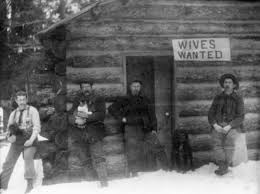
Love and the Outlaw

Enter now to win a copy of

Love Lessons from the Old West: Wisdom from Wild Women
A blazing hot sun shone through the branches of a few canadensis trees standing beside a crude wooden table in the patio of a small café in the town of San Vicente in Bolivia. The two men and one woman at the table pulled the chairs they were sitting on into the limited shade offered by the thin limbs of the trees. The city around them was noisy and crowded with people, some of whom were loud and nearly shouting their conversation to those with them as they made their way from one shop to another. Wagons without springs pulled by half-wild horses passed by, and the rattle of the wheels over the rocks and gravel added to the commotion.1

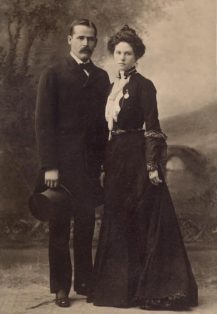
Robert LeRoy Parker, better known as Butch Cassidy, leaned forward in his chair in order for his friends to hear him over the racket in the street. Harry Longabaugh, also known as the Sundance Kid, and his paramour Etta Place leaned in closely to listen. Butch was regaling the pair with stories of the South American riches yet to be had by those willing to take them. Bolivia’s plateaus were filled with silver, gold, copper, and oil. Butch’s plan was to steal as much as they could of the income made by the people who mined or drilled for the resources there.2

Having spent much of their lives in the United States holding up trains and robbing banks, Butch and the Sundance Kid considered absconding with mining companies’ payroll shipments to be a natural course of events. Butch reasoned that law enforcement in Bolivia was lacking and their chances of getting away with the crime great. His point had been proven many times in the six years the outlaws had been in South America. Since arriving in Bolivia in 1902, the trio had robbed numerous banks and intercepted one mule train after another carrying gold and paper money.3

After migrating to the land-locked city, Butch, Sundance, and Etta discussed another heist. A mule train rumored to be transporting a rich payroll was going to be in the area. It traveled a little-known route outside of San Vicente. Butch had a plan to overtake the train and meet back at the café shortly after the job was done. His cohorts in crime thought the idea had promise and were enthusiastic about the opportunity.4

Twenty-eight-year-old Etta smiled happily at her two companions as the conversation strayed from the execution of the job to the large amount they had stolen. As the cheerful three laughed and reminisced about their crime wave, several members of the Bolivian Army surrounded the area. A gun suddenly fired, and a bullet almost took Butch’s head off. The two men quickly dove under the table. Sundance pulled Etta down with him. Bullets ricocheted around them as they surveyed the scene looking for a place to take cover.5
To learn more about Etta Place and the Sundance Kid read

Love Lessons from the Old West: Wisdom from Wild Women
 

Loving Geronimo

Enter now to win a copy of

Love Lessons from the Old West: Wisdom from Wild Women
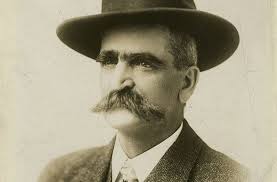
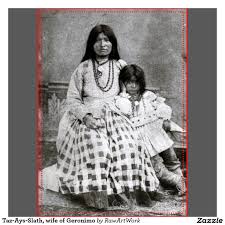
Geronimo was a prominent leader of the Apache Indians. His battles against Mexico and Arizona for their expansion into Apache Tribal lands is well-known. What is not well-known is the deep love he had for his first wife, Alope. They had planned to spend a lifetime together but a senseless murder deprived Geronimo of his spouse. Her memory was all he had to keep him going. He would have other wives, but no one like Alope.

Geronimo was seventeen when he married Alope. He and his bride made their home near his mother Juanita’s wickiup near Clifton in southern Arizona. According to Geronimo, Alope was “slender and fair, loyal and dutiful.” The two had been lovers for a long time, and he considered marrying her to be the “greatest joy offered to him.” The pair wed in 1846 and resided in a wickiup made of buffalo hides. The interior of their home was filled with bear and lion robes, spears, bows, and arrows. Alope decorated their dwelling with beadwork and elaborate drawings made on buckskin. Her artistry extended onto the canvas walls of the wickiup as well.

Geronimo boasted in his autobiography entitled Geronimo, His Own Story, that Alope was a good wife. They followed the traditions of their forefathers and were very happy. During the first few years of their married life, Alope bore Geronimo three sons. “Children that played, loitered, and worked as I had done,” Geronimo later recalled of his family.

In 1858, Geronimo took his wife and sons and traveled from his camp with other Apache tribesmen and their families to Chihuahua to trade items for supplies that were needed. The journey from Janos into the Mexican state was something the Apache Indians did once a year. The tribe set up camp outside the town of Janos, and the men made the trip to the northern Mexico location to do business with general stores willing to trade with them. It was during one of the visits to Janos that the Apache encampment was attacked by Mexican troops who considered the Indians to be intruders in their territory. Many of the Apache women, children, and elderly were slaughtered and scalped. In addition to the murders of the defenseless Indians, Mexican soldiers seized all the supplies and weapons from the wickiups.5

To learn more about Geronimo and Alope read

Love Lessons from the Old West: Wisdom from Wild Women


In Love with Kit Carson

Enter now to win a copy of

Love Lessons from the Old West: Wisdom from Wild Women


Maria Josefa Jaramillo was fifteen when she married well-known frontiersman Kit Carson on February 3, 1843. The thirty-three year old Carson made Maria’s stomach flutter with excitement.  He was fearless and decent and in him she saw forever.

Maria Josefa was born on March 19, 1828, in Santa Fe, New Mexico.  Her father, Francisco Jaramillo, was a merchant, and her mother, Maria Apolonia Vigil, owned substantial acreage in the Rio Grande area of the state. Maria Josefa helped her parents maintain their ranch and cared for her younger brothers and sisters.  She met Carson in Taos in 1842.  He had been on an expedition with Colonel John Charles Fremont in the Rocky Mountains and was anxious to visit a place where there were lots of people.

Although Maria Josefa and Carson were equally impressed with one another, her father would not permit them to marry because Carson was illiterate.  Francisco was an educated man and very well respected in the community.  He was aware of Carson’s work as an accomplished scout, criss crossing the western territories, but preferred his daughter marry someone with a scholastic background, at the very least someone who was a member of the Catholic faith.  Carson was determined to make Maria Josefa his wife and decided to convert to Catholicism. He attended the necessary classes, counseled with a priest, and paid the fee required for a wedding ceremony in the church.

A short three months after the wedding, Carson left on the first of many expeditions he would participate in during his married life. Carson had been leading treks to various parts of the unsettled frontier since he was fifteen years old.  He was born in Madison County, Kentucky, on December 24, 1809.  Just after his first birthday his parents moved to Howard County, Missouri.  Carson had five brothers and six sisters.  His father was a lumberjack and died in a work related accident when Carson was nine years old.  At the age of fourteen he was an apprentice to a saddle maker, a job which he said “soon became irksome to him.”  He ran away (a one cent reward was offered for his return) and arrived in Santa Fe in the fall of 1826.


To learn more about Kit Carson and his wife Maria read

Love Lessons from the Old West: Wisdom from Wild Women.


Love & the Lawman

Enter now to win a copy of

Love Lessons from the Old West: Wisdom from Wild Women
Western author Zoe Tilghman’s source of inspiration was her husband lawman, Bill Tilghman. He was, according to his friend and one time fellow lawman Bat Masterson, “the best of all of us.” Bat was referring to all the lawmen in the west. Zoe didn’t disagree.

Born on November 15, 1880, in Kansas, Zoe Agnes Stratton was twenty-three when she married Bill. He was more than twenty years older than she, but he suited the school teacher turned author perfectly. “He was a Christian gentleman,” Zoe told reporters at the Ada Evening News on April 16, 1960. “He was quiet, kindly, greatly respected, and loved.”

Born on the fourth of July 1854 to an army soldier turned farmer and a young homemaker, Bill spent his early childhood in the heart of Sioux Indian territory in Minnesota. Grazed by an arrow when he was a baby, he was raised to respect Native Americans and protect his family from tribes that felt they had been unfairly treated by the government. Bill was one of six children. His mother insisted he had been “born to a life of danger.”

In 1859 his family moved to a homestead near Atkinson, Kansas. While Bill’s father and oldest brother were off fighting in the Civil War, he worked the farm and hunted game. One of the most significant events in his life occurred when he was twelve years old while returning home from a blackberry hunt. His hero, Marshal Bill Hickok (Wild Bill), rode up beside him and asked if he had seen a man ride through with a team of mules and a wagon.

The wagon and mules had been stolen in Abilene, and the marshal had pursued the culprit across four hundred miles. Bill told Hickok that the thief had passed him on the road that led to Atkinson. The marshal caught the criminal before he left the area and escorted him back to the scene of the crime. Bill was so taken by Hickok’s passion for upholding the law he decided to follow in his footsteps and become a scout and lawman.


To learn more about Bill Tilghman and his wife Zoe read

Love Lessons from the Old West: Wisdom from Wild Women
 

Wanted: A Gentlemen of Honor

Enter to win a copy of two books about mail order brides of the Old West.

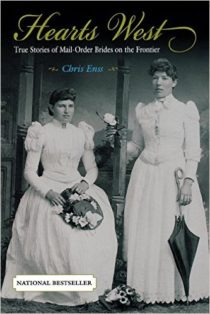
The titles you can win are Hearts West: True Stories of Mail Order Brides on the Frontier and

Object Matrimony: The Risky Business of Mail Order Match Making on the Western Frontier.


In the early days of westward travel, when men and women left behind their homes and acquaintances in search of wealth and happiness, there was a recognized need for some method of honorable introduction between the sexes. The need was readily fulfilled by the formation of a periodical devoted entirely to the advancement of marriage.

Throughout the 1870s, 80s and 90s, that periodical, to which many unattached men and women subscribed, was a newspaper called Matrimonial News. Here’s a sample of one of the advertisements that appeared in the publication:

No, 228 – If there is a gentlemen of honor and intelligence between the age of 35 and 50 who wants a genuine housekeeper, let him write to this number. I am a widow, 34 years old, weight 110 pounds, 4 feet and 5 inches in height: am brunette and have very fine black hair.

To learn more about mail order brides and the advertisements they placed in various publications read Hearts West: True Stories of Mail Order Brides on the Frontier and

Object Matrimony: The Risky Business of Mail Order Match Making on the Western Frontier.To


Toothless Men Need Not Apply

Enter to win a copy of two books about mail order brides of the Old West. The titles you can win are Hearts West: True Stories of Mail Order Brides on the Frontier and Object Matrimony: The Risky Business of Mail Order Match Making on the Western Frontier.

In the early days of westward travel, when men and women left behind their homes and acquaintances in search of wealth and happiness, there was a recognized need for some method of honorable introduction between the sexes. The need was readily fulfilled by the formation of a periodical devoted entirely to the advancement of marriage.

Throughout the 1870s, 80s and 90s, that periodical, to which many unattached men and women subscribed, was a newspaper called Matrimonial News. Here’s a sample of one of the advertisements that appeared in the publication:

No. 14 Boys, I am a lonesome little girl, alone in the world and earning my own living and am tired of doing so; my age is 20 years, weight 145, height 5 feet 3 inches, blue eyes, dark hair, good housekeeper, am considered good looking, have some means, also piano; common school education; prefer country life; will marry if suited; no toothless men need apply.

To learn more about mail order brides and the advertisements they placed in various publications read Hearts West: True Stories of Mail Order Brides on the Frontier and

Object Matrimony: The Risky Business of Mail Order Match Making on the Western Frontier.


No Elderly Ladies Need Apply

Enter to win a copy of two books about mail order brides of the Old West. The titles you can win are Hearts West: True Stories of Mail Order Brides on the Frontier and Object Matrimony: The Risky Business of Mail Order Match Making on the Western Frontier.


In the early days of westward travel, when men and women left behind their homes and acquaintances in search of wealth and happiness, there was a recognized need for some method of honorable introduction between the sexes. The need was readily fulfilled by the formation of a periodical devoted entirely to the advancement of marriage. Throughout the 1870s, 80s and 90s, that periodical, to which many unattached men and women subscribed, was a newspaper called Matrimonial News. Here’s a sample of one of the advertisements that appeared in the publication:

No. 282 – A few lady correspondents wanted by two bashful men in their 30s, of fair complexion. Both 5 feet 5 inches tall, weight 130 – 145 pounds. Would prefer brunettes of fair form about five feet, between 18 and 20 years of age. Object, improvement, and if suited, matrimony. No elderly ladies need apply.


To learn more about mail order brides and the advertisements they placed in various publications read Hearts West: True Stories of Mail Order Brides on the Frontier and Object Matrimony: The Risky Business of Mail Order Match Making on the Western Frontier.


Tired of Bachelor Life

To do list: WIN!

Enter to win a copy of two books about mail order brides of the Old West. The titles you can win are Hearts West: True Stories of Mail Order Brides on the Frontier and Object Matrimony: The Risky Business of Mail Order Match Making on the Western Frontier.


In the early days of westward travel, when men and women left behind their homes and acquaintances in search of wealth and happiness, there was a recognized need for some method of honorable introduction between the sexes. The need was readily fulfilled by the formation of a periodical devoted entirely to the advancement of marriage. Throughout the 1870s, 80s and 90s, that periodical, to which many unattached men and women subscribed, was a newspaper called Matrimonial News. Here’s a sample of one of the advertisements that appeared in the publication:

May 1873 – I am 33 years of age, and as regards to looks I am average with most men. I am looking for a lady to make her my wife, as I am heartily tired of bachelor life. I desire a lady not over 28 or 30 years of age, not ugly, well educated and musical. Nationality makes no difference, only I prefer not to have a lady of Irish birth. She must have at least $20,000.


To learn more about mail order brides and the advertisements they placed in various publications read Hearts West: True Stories of Mail Order Brides on the Frontier and Object Matrimony: The Risky Business of Mail Order Match Making on the Western Frontier.


Refined Lady Wanted: Must Like Biking

Time is short. Enter now to win a copy of two books about mail order brides of the Old West. The titles you can win are Hearts West: True Stories of Mail Order Brides on the Frontier and Object Matrimony: The Risky Business of Mail Order Match Making on the Western Frontier.


In the early days of westward travel, when men and women left behind their homes and acquaintances in search of wealth and happiness, there was a recognized need for some method of honorable introduction between the sexes. The need was readily fulfilled by the formation of a periodical devoted entirely to the advancement of marriage. Throughout the 1870s, 80s and 90s, that periodical, to which many unattached men and women subscribed, was a newspaper called Matrimonial News. Here’s a sample of one of the advertisements that appeared in the publication:

No. 236: A gentleman of 25 years old, 5 feet 3 inches, doing a good business in the city, desires the acquaintance of a young, intelligent and refined lady possessed of some means, of a loving disposition from 18 to 23, and one who could make home a paradise. Must like biking.


To learn more about mail order brides and the advertisements they placed in various publications read Hearts West: True Stories of Mail Order Brides on the Frontier and Object Matrimony: The Risky Business of Mail Order Match Making on the Western Frontier.


The Dreamer and the Lothario

Enter to win a book for history lovers and brides to be who believe the risk is worth it all – Object Matrimony: The Risky Business of Mail-Order Bride Matchmaking on the Western Frontier.


Annie Gayle was considered one of the prettiest, most ambitious girls in Akron, Ohio. Her eyes were large, her features were well proportioned, and her desire to go west was her number-one aspiration. She was well on her way to achieving her goal when she accepted the proposal of a man living in French Camp, California. He had advertised for an adventurous woman anxious to settle in the Gold Country and experience the excitement of the wild frontier. Annie wasted no time favorably responding to his letter asking for her hand in marriage.

Born an only child in 1874 to Charles Gayle and Margaret Stantz Gayle, Annie grew up hearing her father’s tales of the land beyond the Rockies and the endless possibilities to be had there. Charles died before he realized his own dream of moving to San Francisco. Fearing that the chance to make such a journey had died with her father, Annie decided to consider mail-order bride opportunities.

Horace Knapp, a handsome man in his late forties, collected his teenage bride-to-be at the train depot in Sacramento, California, on September 10, 1890. Annie was anxious to meet the sheepish suitor who had described himself in his letters as a “good fellow, with means and prospects.” The plan was for the two to marry the day after Annie arrived—and only if their first encounter proved to be mutually satisfactory. The couple dined together and discussed their possible future. By the end of the evening they were in complete accord to wed. Vows and a ring were exchanged the following morning.

Annie was delighted not only to be married, but also finally to be at a location that seemed bursting with potential. If she had remained in Ohio working at a millinery shop, life as a farmer’s wife was the best she thought she could hope for. She believed being Mrs. Knapp would bring her happiness, and she therefore surrendered to her husband the small amount of money she had earned working as a seamstress in Akron. It never crossed her mind that Horace might be untrustworthy. She was honest and thought everyone else was as well.

The newlyweds moved to a small cabin nestled in a mining community in the San Juan Valley. Everything went along nicely. It was as though the couple had been settled for years in their new position. Horace invested his wife’s funds in a mining venture he explained to her would produce great dividends—enough for them to see the world beyond California. Annie was thrilled by the idea, and while her husband was away tending to their interests, she planned trips to distant lands.

One night, alone again in their fledgling homestead, a ragged little boy arrived at the doorstep and delivered a soiled note to her. It read as follows:


To learn more about the note found on the doorstep and tales from other mail-order brides read Object Matrimony: The Risky Business of Mail-Order Matchmaking on the Western Frontier.