
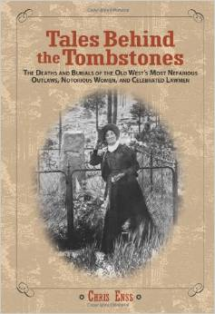
Enter now to win a copy of Tales Behind the Tombstones
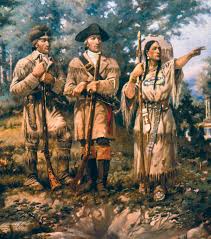
Sacagawea was the young Shoshone Indian woman who served as Lewis and Clark’s translator on their 1803 expedition to explore the uncharted western regions of America. She made the entire journey to the Pacific, and the return trip, with a newborn baby on her back; many believe without her aid, the journey, commissioned by President Thomas Jefferson, would have ended in failure. Some accounts say she died in 1812 at age twenty-five of putrid fever, while others believe she died in 1884 on an Indian Reservation in Wyoming.
The child she carried in a papoose was Jean-Baptiste Charbonneau, nicknamed Pompy, meaning first-born, who eventually attended St. Louis Academy with tuition paid by Clark. Pompy later met Prince Wilhelm of Germany while on a natural history expedition and traveled back to Europe with him, where Pompy learned to speak four different languages. But by the time he was twenty-four Pompy was back in North America, living as a mountain man. When the Gold Rush of 1849 started, he got caught up in the fever and died from too much time wading through cold rivers panning for gold. His cause of death was bronchitis at age sixty-one, and his portrait is the only one of a child on any U. S. coin.
Tales Behind the Tombstones 2
I'm looking forward to hearing from you! Please fill out this form and I will get in touch with you if you are the winner.
Join my email news list to enter the giveaway.
"*" indicates required fields
To learn more about the deaths and burials of some of the West’s most legendary figures read
Tales Behind the Tombstones