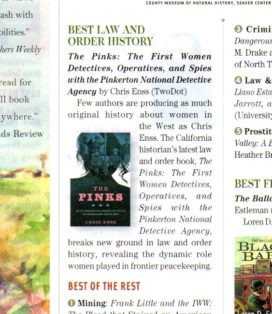
Spend Christmas with the Lady and the Mountain Man
Enter the Holiday Giveaway now for your chance to win a copy of
The Lady and the Mountain Man:
Isabella Bird, Rocky Mountain Jim, and their Unlikely Friendship
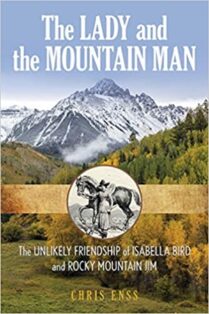
Isabella Bird is one of Colorado’s favorite historical figures. The fearless Englishwoman rode all over Colorado’s mountains in 1873, in bad weather and by herself. “The Lady and the Mountain Man” is a definitive treatment of Bird’s life.
Bird was an invalid, and doctors recommended sea voyages to improve her health. She was intrigued with the American West, and once healed, she came here by herself to explore the mountains. She settled in Estes Park where she met infamous mountain man Jim Nugent. Mauled by a grizzly, Mountain Jim was scarred and missing an eye, but Bird found him handsome. He had a reputation for violence, particularly when he was drunk, and Bird was warned against him.
The two fell in love, but a future together was not to be.
In this detailed account of the star-crossed lovers, the author — who is known for her books on Western women — plumbs both Colorado and British resources. In Enss’ hands, Bird is not a female oddity, but a woman of strength, courage, and loyalty.
The Denver Post – September 2022
This Day…
1878 – Joseph Pulitzer begins publishing the “St. Louis Post-Dispatch”.
Wanted: A Good Teacher
Visit www.chrisenss.com and enter the Holiday Giveaway for your chance to win a copy the
Doctor Wore Petticoats: Women Physicians of the Old West.
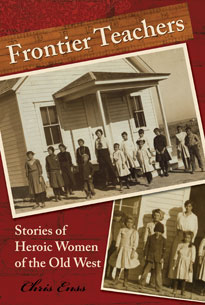
On Wednesday, January 25, 1911, physicians across the world gathered at the great hall at the Academy of Medicine in New York to honor America’s first woman doctor, Elizabeth Blackwell. The tenacious pioneer in the fight for the right of women to study and practice medicine had died nine months prior to the event honoring the contributions she made to the field. The audience was composed largely of women, all of whom owed a debt of gratitude to Elizabeth Blackwell.
Born in Bristol, England on February 3, 1821, Elizabeth immigrated to America in 1832 with her parents. Her desire to attend school and study medicine began at an early age. Elizabeth was twenty-six years old when she was admitted to New York’s Geneva College in 1847. She had applied to twenty institutions before being accepted as a medical student at the prestigious university. The male students there believed Elizabeth’s request was a joke and agreed to let her attend the classes based on that idea, but the daring young woman was not playing around. She prevailed and triumphed over taunts and bias while at school to earn her degree only two years after enrolling.
While in her last year of school, she treated an infant with an eye infection. As she was washing the baby’s eye with water, she accidentally splattered the contaminated liquid in her own eye. Six months later she had the eye removed and replaced with a glass eye. Hospitals and dispensaries refused to admit her to practice at their facilities, and she was denounced by the press and from the pulpit.
After graduating in 1849, Elizabeth found herself socially and professionally boycotted. Public sentiment was so against her for pursuing a career in a field deemed unladylike that she could not find a place to live anywhere in New York. Using funds given to her by her family she built her own home.
In 1854, she borrowed the capital needed to build the first hospital for women in the country. Most of the patients she worked with were poor. Patients were charged a mere $4 a week for services that would cost them $2,000 at another facility. Elizabeth also founded the Women’s Medical College of New York, and, when the Civil War broke out, she assisted in launching the Sanitary Aid Association. In addition to maintaining her practice and creating benevolent community services, Elizabeth also wrote a number of books on the subject of medicine. Two of her most popular titles were Pioneer Work in Opening the Medical Profession for Women and Essays in Medical Sociology.
By the turn of the century, Elizabeth Blackwell had retired from medicine and returned to England. In the spring of 1907, she was injured in a fall from which she never fully recovered. She died on May 31, 1910, from a stroke. The epitaph below the Celtic cross which marks her grave at Kilmun Churchyard on the Holy Loch, near Clyde, includes these words: “The first woman in modern times to graduate in medicine (1849) and the first to be placed on the British Medical Register (1859).
This Day…
1907 – Christmas Seals went on sale for the first time, in the Wilmington, DE, post office.
Christmas with a Cowgirl
Visit www.chrisenss.com and enter the Holiday Giveaway for your chance to win a copy of
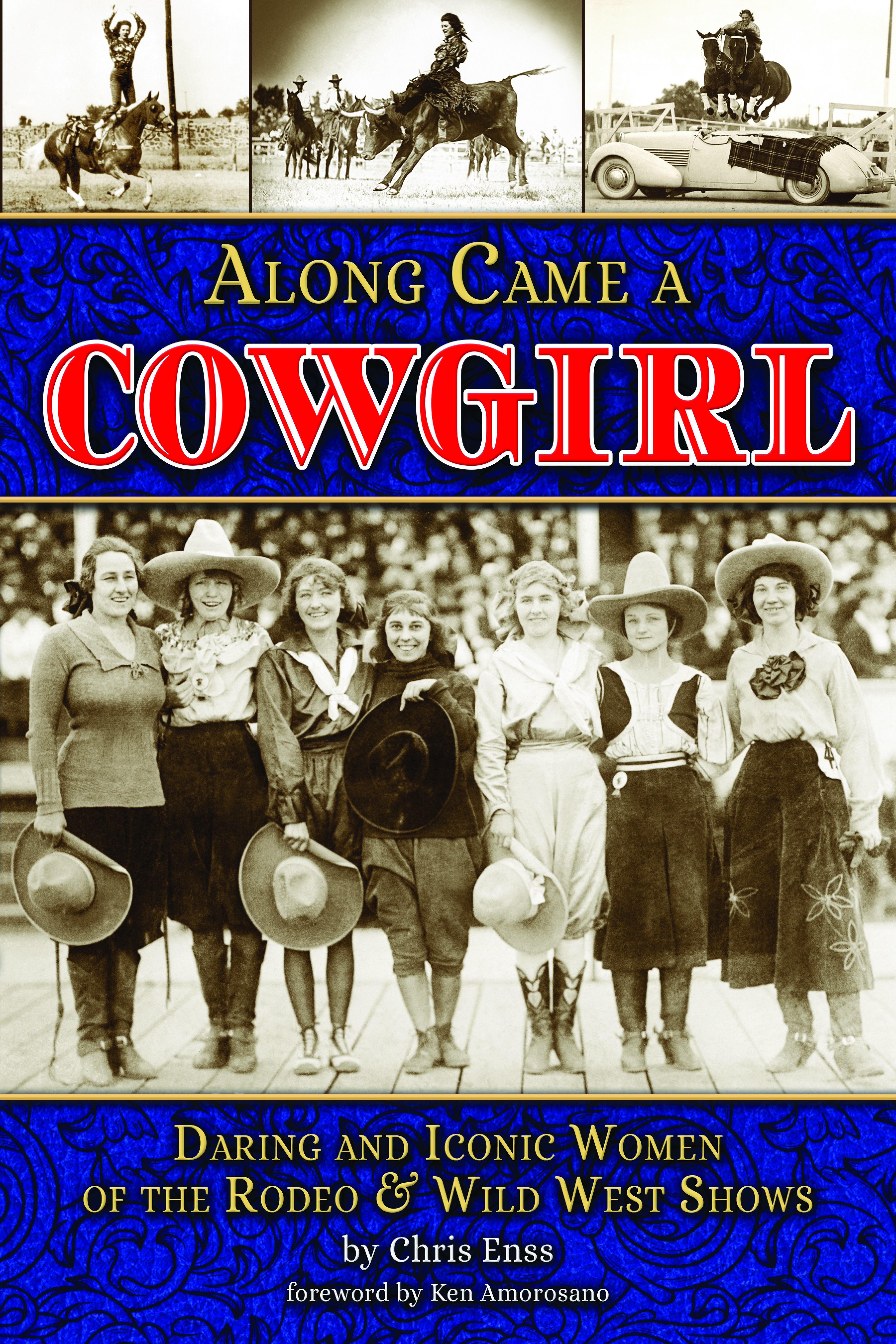
Along Came a Cowgirl:
Daring and Iconic Women of the Rodeos and Wild West Shows
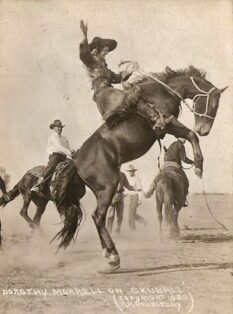
Trick Rider Dorothy Morrell
“I rode my first horse on a bet,” admitted World Champion cowgirl Dorothy Morrell in 1917. “That I am champion woman rider of the world today was due to an accident, or rather a dare.” At the age of twenty-four Dorothy attended a wild west exhibition in Fresno, California, and was mesmerized by the women bronc riders. A cowboy spectator named Skeeter Bill Robbins, who was seated next to her at the event, bet she could ride one of the broncs. Skeeter had met Dorothy in Montana and witnessed her extraordinary riding skills. Even after she told him she’d never ridden a bucking horse in her life, Skeeter insisted she had what it took and dared her to try it. Dorothy reluctantly agreed.
The mustang’s name was Lillian Russell. “When I was fairly seated someone gave a whoop and the horse bowed its back and began to lunge,” she told a newspaper reporter years later. “With every impact there was a terrific jolt and I thought that every bone in my body would be thrown out of joint. Had it not been for Skeeter though, I think I surely would have been thrown. ‘Every time that cayuse hits the ground,’ he told me, ‘Raise your hat high and when he comes up hit him between the ears.’ The advice saved the day, for it kept me erect and well forward and going with the animal when he was in the air. That’s all there is to riding a bronc.”
Born Caroline Eichhorn in Russia in 1888, Dorothy immigrated to Canada with her family in 1889 and settled in Winnipeg. She came to the United States in 1912 and for several years lived near Helena, Montana. She learned to ride working as a mounted mail carrier for the Blackfeet Indians.
Shortly after accepting Skeeter’s bet and realizing she could indeed ride bucking broncos, Dorothy embarked on a career with the rodeo. She signed on with the 101 Ranch show and there perfected the art of riding fractious horses. In 1914, she won the title of Women’s World Champion Bucking Horse Rider at the Cheyenne Frontier Days rodeo and married Skeeter Robbins. Skeeter was also a bronc rider and the couple traveled together participating in rodeos from Dallas to London.
Dorothy and Skeeter spent time in Hollywood during the mid-1920s, where they worked as horseback riding extras and stunt doubles on several Western films. They also performed in vaudeville acts and in circuses. Skeeter was killed in a car accident in 1933. Dorothy was in the vehicle with him and was seriously injured. She returned to the rodeo circuit the following year winning awards in trick riding and roping and relay racing.
When Dorothy retired from professional riding, she returned to Canada where she enrolled in college and eventually became a nurse.
“I love being a cowgirl,” she told a reporter when she first started riding in rodeos. “That, perhaps, is because I love horses – horses, and babies. I often wish I could be a horse. Of course, I have been a baby once and therefore have no desire to be a baby again. But I would dearly love to be a horse!”
Dorothy Morrell died in Ontario in 1976 at the age of eighty-eight
This Day…
1941 – Imperial Japanese Navy with 353 planes attack the US fleet at Pearl Harbor Naval Base, Hawaii, killing 2,403 people
For the Love of Margaret Dumont
Enter the Christmas giveaway now for a chance to win a copy of
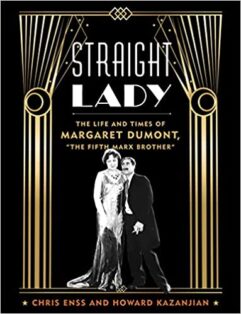
Straight Lady:
The Life and Times of Margaret Dumont, “The Fifth Marx Brother”
“I’ve been a longtime Marx Brothers fan for 50 years. I’ve always been curious about Groucho’s foil, the great Margaret Dumont. Was she in on the jokes? Did she understand the jokes? All of them? ANY of them? Straight Lady: The Life and Times of Margaret Dumont, “The Fifth Marx Brother,” by Chris Enss and Howard Kazanjian set my mind at rest with everything I’d been curious about for years. In addition to giving me the “story-behind-the-story” on Dumont, I also learned along the truth behind several rumors and falsehoods regarding this grand dame of film. After all, she appeared in fifty-some movies between 1917 and 1964. Then, there was Groucho! Oh my, if you’re any kind of Marx Brothers fan, and who in their right mind is not, you’ll love and cherish this book. It’s one of those reads that when you put it away, you’re done knowing full well you’ll want to read it again, and again…”
Jerry Puffer, KSEN Radio
This Day…
1933 – Prohibition ends in the US when 21st Amendment to the US Constitution ratified, 18th Amendment repealed (5:32 PM EST).