Along Came a Cowgirl and Hazel Hickey Moore

Enter now to win a copy of

Along Came a Cowgirl:

Daring and Iconic Women of the Rodeo and Wild West Shows
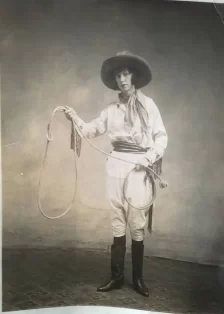
 

You could tell by the way Hazel Elizabeth Hickey Moore dressed when she was growing up, she was a cowgirl. You could also tell she was a cowgirl by the way she rode magnificent jumping horses in the Ringling Brothers and Barnum Bailey Circus. Hazel was also destined for a career as a Wild West Show cowgirl because of her parents. Her father was an equestrian circus performer, and her mother was a trapeze artist. Hazel was raised under the big top.

Born in Watertown, New York, on June 25, 1902, Hazel’s early years were spent raising and training a variety of animals from sheepdogs to stallions. When she wasn’t training animals, she practiced her horseback riding skills and became an expert in dressage and high jumping atop her horse Perfect Lady. When the Ringling Brothers Circus was performing in Kentucky, Hazel took some time away from her act to enter Perfect Lady in a jumping competition. The pair rode away with the top prize.

Hazel and Perfect Lady performed in several other western shows including the 101 Ranch, Cole Brothers, the Joe Green Wild West Show, and the Tim McCoy Wild West Show. In one of her most popular routines, Hazel would ride out into the center of the arena dressed in a long gown. After dazzling the audience with a series of dressage maneuvers, she would break into song and doves would fly about overhead. When Hazel signaled the birds, they would land on the horse and ride about the ring with her.

Not only did Hazel possess exceptional horseback riding talent, but she was a gifted fashion designer and seamstress. Throughout her career in the arena, Hazel designed, made her own costumes, and beaded accessories. In addition to making clothes for herself, she made outfits for several of the other men and women in the show. Hazel always had a small, travel-sized treadle sewing machine and riding tack with her.

The accomplished rider and seamstress met saddle bronc rider Percy Moore while performing in a show in the Midwest. The couple married on May 13, 1932 and continued to travel about the United States entertaining audiences.  The Moores had three daughters, the oldest of which was born while they were on the road performing. News of the blessed event and the location of the birth, a tent in Colonel Jim Eskew’s Wild West Show, was carried by newspapers across the country. Two of Hazel and Percy’s daughters went on to be rodeo performers, regaling spectators with their abilities as trick riders and ropers.

Hazel’s children and grandchildren proved to be just as interested in her legacy in fashion design as they were in her legacy in horseback riding. Her granddaughter, Linda Clark, and great granddaughter, Darcey Good, not only became remarkable barrel racers and a breakaway roper but went on to open a clothing boutique showcasing garments inspired by Hazel’s style. Hazel’s Fashion Wagon pays homage to the diminutive horseback riding superstar who entertained enthusiastic crowds from Syracuse to San Francisco.

Hazel Hickey Moore passed away on July 24, 1977, in Oklahoma City, Oklahoma, at the age of seventy-five.
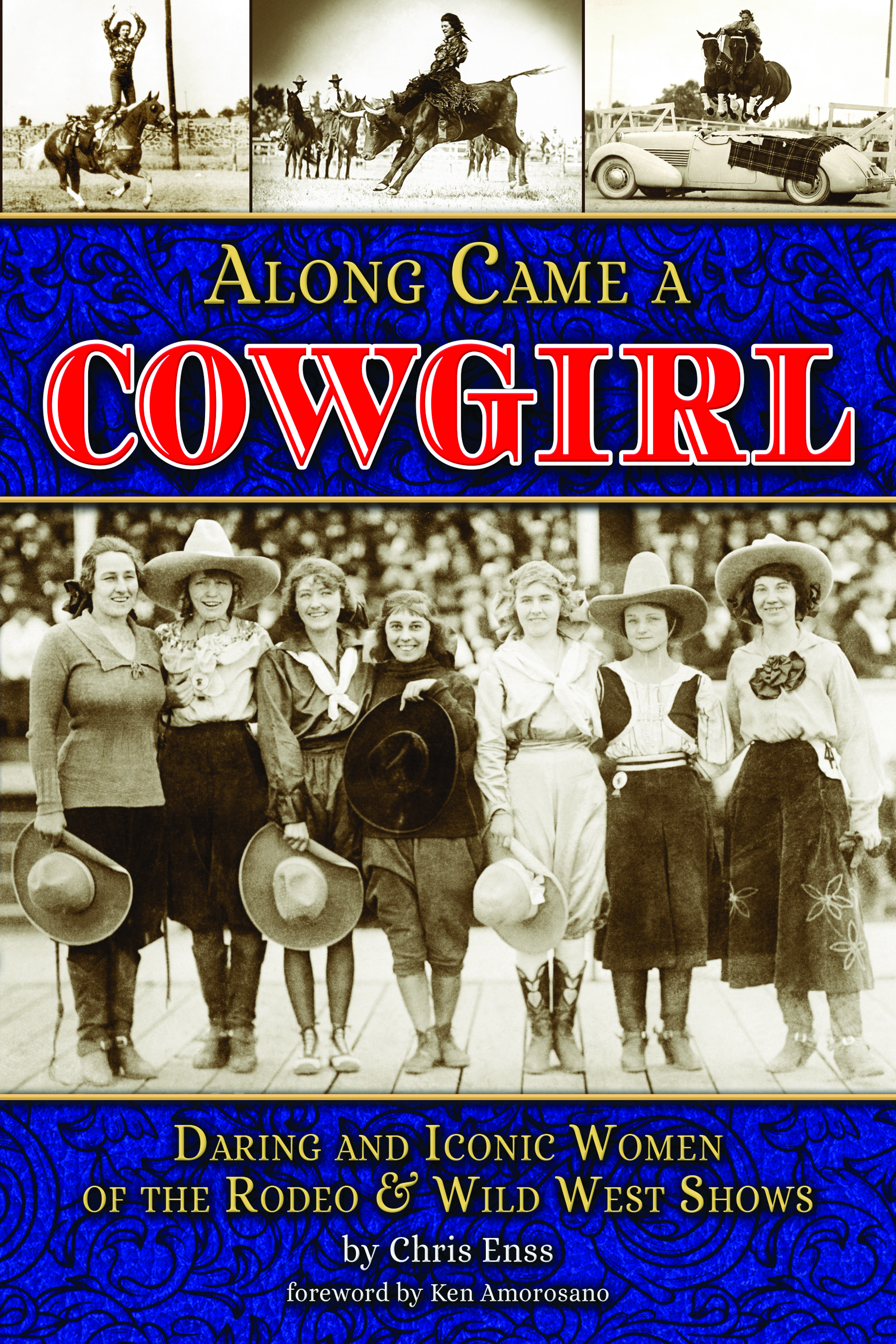
 

To learn more about iconic rodeo stars like Hazel read Along Came a Cowgirl

Along Came a Cowgirl and Pearl Biron

Enter now to win a copy of

Along Came a Cowgirl:

Daring and Iconic Women of the Rodeos and Wild West Shows


The crowd attending the John Robinson’s Circus in Clarksdale, Mississippi, swelled around the rodeo arena where expert equestrian, roper, and whip cracker Pearl Biron was performing.  The twenty-six-year-old Pearl was the master of the Australian bullwhip.  She could flick the ashes off the cigarette of a fellow performer or a flag off the head of her horse.  Pearl had traveled to Australia early in her career to learn how to use the heavy whip designed for mustering cattle.  From atop her roan she could crack the whip through strategically placed targets and flick a row of balls off posts around the stadium.  Audiences across the country marveled at her exceptional talent.

Pearl Biron was born in Maine in 1902, and while she was in her late teens became a skilled horseback rider and master of the bull whip.  Often billed as the “sweetheart of the rodeo”, Pearl was beautiful as well as clever.  She appeared in the arena of a variety of shows including the George V. Adams Rodeo and Col. T. Johnson’s Championship Rodeo.

Pearl was often paired with rodeo circus clown Cherokee Hammond.  Pearl would demonstrate her trick riding skills around Cherokee and his mule, Piccolo Pete.  Cherokee and Piccolo Pete would play a prospector and his ride heading off to the Gold Rush in their nightly performances.  In the show, when the pair found themselves attacked by Indians, Pearl and her horse would ride in to save the day.  Critics praised the routine as “thrilling” and “one that spectators thoroughly enjoyed.”

Pearl also won honors for fancy roping and trick horseback riding at Madison Square Garden in New York, and at similar rodeo competitions in Dallas, Texas, and Cheyenne, Wyoming.  In 1940, she was billed as the World’s Champion Trick Rider.

The beautiful rodeo performer received standing ovations for her signature trick performed at the close of her time in the arena.  Enthusiastic fans selected from the audience would tear sheets of paper in half and give them to members of the rodeo troupe to hold in their mouths.  Pearl would ride past the brave members of the troupe and snap the paper out of their teeth with the flick of her whip.

Pearl married Dan H. Biron of Arizona and the couple made a home for themselves and their son in Chandler.  Dan was a foreman on a guest ranch, and when Pearl retired from the rodeo, the couple worked together.  Pearl would teach guests how to ride and would dazzle them with her bull whip skills at night around the campfire.

Pearl Biron passed away in 1978 at the age of seventy-six.


To learn more about the remarkable women whose names resounded in rodeo arenas across the nation in the early twentieth century read the new book

Along Came a Cowgirl:

Daring and Iconic Women of Rodeos and Wild West Shows by Chris Enss.


Along Came a Cowgirl and Pearl Biron

Enter now to win a copy of

Along Came a Cowgirl:

Daring and Iconic Women of Rodeos and Wild West Shows


The crowd attending the John Robinson’s Circus in Clarksdale, Mississippi, swelled around the rodeo arena where expert equestrian, roper, and whip cracker Pearl Biron was performing.  The twenty-six-year-old Pearl was the master of the Australian bullwhip.  She could flick the ashes off the cigarette of a fellow performer or a flag off the head of her horse.  Pearl had traveled to Australia early in her career to learn how to use the heavy whip designed for mustering cattle.  From atop her roan she could crack the whip through strategically placed targets and flick a row of balls off posts around the stadium.  Audiences across the country marveled at her exceptional talent.

Pearl Biron was born in Maine in 1902, and while she was in her late teens became a skilled horseback rider and master of the bull whip.  Often billed as the “sweetheart of the rodeo”, Pearl was beautiful as well as clever.  She appeared in the arena of a variety of shows including the George V. Adams Rodeo and Col. T. Johnson’s Championship Rodeo.

Pearl was often paired with rodeo circus clown Cherokee Hammond.  Pearl would demonstrate her trick riding skills around Cherokee and his mule, Piccolo Pete.  Cherokee and Piccolo Pete would play a prospector and his ride heading off to the Gold Rush in their nightly performances.  In the show, when the pair found themselves attacked by Indians, Pearl and her horse would ride in to save the day.  Critics praised the routine as “thrilling” and “one that spectators thoroughly enjoyed.”

Pearl also won honors for fancy roping and trick horseback riding at Madison Square Garden in New York, and at similar rodeo competitions in Dallas, Texas, and Cheyenne, Wyoming.  In 1940, she was billed as the World’s Champion Trick Rider.

The beautiful rodeo performer received standing ovations for her signature trick performed at the close of her time in the arena.  Enthusiastic fans selected from the audience would tear sheets of paper in half and give them to members of the rodeo troupe to hold in their mouths.  Pearl would ride past the brave members of the troupe and snap the paper out of their teeth with the flick of her whip.

Pearl married Dan H. Biron of Arizona and the couple made a home for themselves and their son in Chandler.  Dan was a foreman on a guest ranch, and when Pearl retired from the rodeo, the couple worked together.  Pearl would teach guests how to ride and would dazzle them with her bull whip skills at night around the campfire.

Pearl Biron passed away in 1978 at the age of seventy-six.


To learn more about the remarkable women whose names resounded in rodeo arenas across the nation in the early twentieth century read the new book Along Came a Cowgirl: Daring and Iconic Women of Rodeos and Wild West Shows by Chris Enss.


Clarion Review Stands Up for Straight Lady

Clarion Review Stands Up for Straight Lady


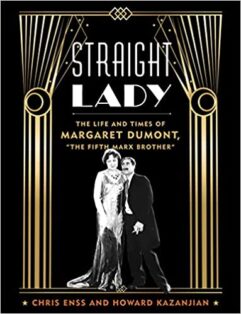
Straight Lady Book Cover


“Straight Lady is the untold story of an iconic, underappreciated talent who helped to shape early Hollywood comedies.

Chris Enss and Howard Kazanjian’s Straight Lady is the biography of Margaret Dumont, best known for playing opposite the Marx Brothers.

Dumont spent most of her life performing onstage and on-screen, yet she was best known—then and now—for her role in various Marx Brothers pictures. Born Daisy Baker, she began her career in vaudeville, left the stage to marry a wealthy man with whom she stayed until his premature death, and returned to acting just in time to join the Marx Brothers in their career-launching play The Cocoanuts. Though her name is not as familiar as those of Groucho, Chico, and Harpo, critics have long recognized how indispensable she was to their longevity and success.

Enss and Kazanjian cover Dumont’s career as a study in contrasts. She performed in both vaudeville and regular theater productions at the turn of the century. She made her name as a singer, dancer, and comedian, but she didn’t achieve widespread fame until she assumed the role of the ever-dignified straight woman, smoothing out the Marx Brothers’ signature madcap humor. The Marxes subjected her to a series of outrageous, sometimes cruel pranks off-screen and on, yet Dumont remained loyal and professional, even stating that they were her closest friends.

But the book notes that Dumont performed the role of haughty society lady so well that she became typecast. She expressed mixed feelings about this to the press but maintained her poise both on- and off-screen. Dumont was, as ever, a fixed point in a world of chaos. It all makes for a tantalizing story.”

Straight Lady:  The Life and Times of Margaret Dumont “The Fifth Marx Brother” arrives in bookstores everywhere on October 1.  Visit www.chrisenss.com for details.

Along Came a Cowgirl & Peggy Warren

Enter now to win a copy of

Along Came a Cowgirl:

Daring and Heroic Women of the Rodeo and Wild West Shows


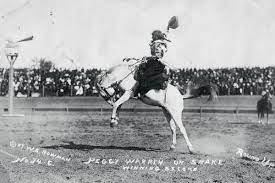
On Saturday, July 1, 1916, at the Passing of the West rodeo in Butte, Montana, it appeared all the wild, outlaw horses had been saved for the lady riders.  It took cowboys ten minutes to corral and saddle the cantankerous animal cowgirl Peggy Warren was to ride.  The horse reared and bucked, kicked and plunged, and fought against the harness and the blind.  When Peggy finally climbed onto his back and raced out of the chute, the horse threw himself backwards in a vicious lunge.  In a masterful display of grit and determination, Peggy held on and stayed in the saddle despite the horse’s extraordinary exhibition of bucking.  It was that kind of bold riding that earned Peggy the reputation for being one of the most daring equestriennes of the West.

Born Hazel Agnes Wedderien in California in September 1889, Peggy learned to ride at an early age, and, by the time she was in her late teens, she was recognized as an expert hobbled stirrup rider.  She was fearless on the back of a horse.  She could ride standing in the saddle, a trick known as the hippodrome; and balance on one foot and perform death defying tricks such as the Death Drag, a trick where the rider hangs upside down from her horse.

Between 1912 and 1916, Peggy participated in the Pendleton Roundup, the Calgary Stampede, the Winnipeg Stampede, and the Los Angeles Rodeo.  In addition to bronco busting, she competed in relay and pony races.  From atop her horse Babe Lee, Peggy dazzled audiences with her fast riding and trick roping.

She was married twice and began her career using her first husband’s name.  Billed as Hazel Walker, she performed alongside other celebrated female rodeo stars such as Fanny Sperry Steele, Lucille Mulhall, and Vera McGinnis.  Her second husband was first-class bulldogger Frank Warren.  After the pair wed, Hazel changed her name to Peggy Warren.

Peggy won numerous rodeo championships, sustaining more than a few injuries along the way.  She was the victim of many sprained ankles, fractured ribs, and broken wrists.  One of her most serious injuries occurred in October 1916 at a rodeo in Great Falls, Montana, while participating in an event called the “race for a bride.”  Peggy was in the lead, but, in no time, other riders caught up to her.  As the riders flanked her on either side her horse spooked, stumbled, fell, and rolled on top of her.  She was left unconscious on the ground.  “Any ride can end badly,” Peggy later remarked to a reporter at the Great Falls Tribune.  “If nothing is broken, you shake it off and get back in the race as fast as you can.”

Peggy Warren retired from rodeo riding in the early 1920s and lived out the rest of her life with her family in Garfield County, Washington.


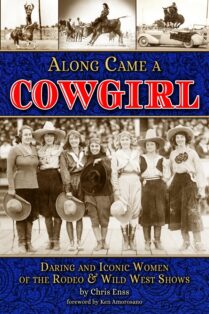
along came a cowgirl cover


To learn more about iconic cowgirls like Peggy Warren read Along Came a Cowgirl