
1861 – The “Organized Incorporated Territory of Nevada” is created, lasting until October 31st, 1864.
Denver Post Review of The Lady and the Mountain Man
Sandra Dallas’s Review of The Lady and the Mountain Man for the Denver Post.
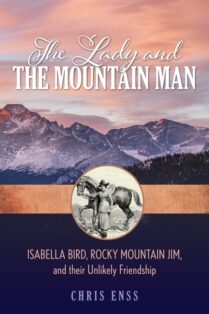
“Isabella Bird is one of Colorado’s favorite historical figures. The fearless Englishwoman rode all over Colorado’s mountains in 1873, in bad weather and by herself. “The Lady and the Mountain Man” is a definitive treatment of Bird’s life.
Bird was an invalid, and doctors recommended sea voyages to improve her health. She was intrigued with the American West, and once healed, she came here by herself to explore the mountains. She settled in Estes Park where she met infamous mountain man Jim Nugent. Mauled by a grizzly, Mountain Jim was scarred and missing an eye, but Bird found him handsome. He had a reputation for violence, particularly when he was drunk, and Bird was warned against him.
The two fell in love, but a future together was not to be.
In this detailed account of the star-crossed lovers, the author — who is known for her books on Western women — plumbs both Colorado and British resources. In Enss’ hands, Bird is not a female oddity, but a woman of strength, courage and loyalty.”
This Day…
Cowboys & Indians Magazine
This Day…
1848 – James Marshall finds gold in Sutter’s Mill in Coloma, California.
Praise for The Widowed Ones
Enter now to win a copy of
The Widowed Ones: Beyond the Battle of the Little Bighorn
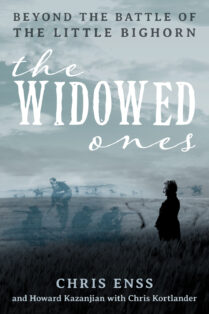
America has a mythic story that is inhabited by giants, men like General George Armstrong Custer, Captain Thomas Ward Custer, and Lieutenant James Calhoun. They live large on the silver screen, in literature, and in the American imagination. We can all see them on Last Stand Hill, out of ammunition, their sabers drawn, knowing the end is coming. But there is another story—a story that has largely been ignored for over a century and a half. It’s the powerful and heartrending tale of what happened to the wives they left behind after the Battle of the Little Big Horn. Hounded by the media and tormented by souvenir hunters, they were not allowed to move beyond the sorrow.
Once or twice in a lifetime comes a meticulously researched book that so radically changes your understanding of a historical event it is as though the scales fall from your eyes and you actually see what happened for the first time. The Widowed Ones. Beyond the Battle of the Little Bighorn is that book.
Listen to the women’s side of the story. We promise you will never be the same.
Michael Gear and Kathleen O’Neal Gear
New York Times bestselling authors of Dissolution and The Ice Orphan
This Day…
1849 – Elizabeth Blackwell, who was born in England, received an M.D. degree from Geneva Medical College in New York, becoming the first American-trained woman physician.
The Widows Are On the Way
Enter now to win a copy of
The Widowed Ones: Beyond the Battle of the Little Bighorn
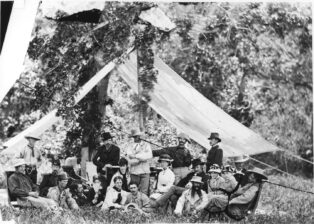
It was almost two in the morning. Elizabeth couldn’t sleep. It was the heat that kept her awake, the sweltering, intense heat that had overtaken Fort Lincoln earlier that day and now made even sleeping an uncomfortable prospect. Even if the conditions for slumber were more congenial, sleep would have eluded Elizabeth. The rumor that had swept through the army post around lunchtime disturbed her greatly and until this rumor was confirmed she doubted that she’d ever be able to get a moment’s rest.
Elizabeth walked her anxious frame over to the window and gazed out at the night sky. It had been more than two weeks since she had said goodbye to her husband. She left him and his troops a few miles outside of Fort Lincoln. His orders were to intercept the Sioux and Cheyenne Indians in the territory, force them back to the reservation, and bring about stability in the hills of Montana.
Just before riding out, she turned around for one last glance at General George Custer’s column departing in the opposite direction. It was a splendid picture. The flags and pennons were flying, the men were waving and even the horses seemed to be arching themselves to show how fine and fit they were. George rode to the top of the promontory and turned around, stood up in his stirrups and waved his hat. Then they all started forward again, and, in a few seconds, they had disappeared, horses, flags, men, and ammunition – all on their way to the Little Bighorn River. That was the last Elizabeth saw of her husband alive.
Over and over again she played out the events of the hot day that made her restless. Elizabeth and several other wives had been sitting inside her quarters singing hymns. They desperately hoped the lyrics would give comfort to their longing hearts. All at once they noticed a group of soldiers congregating and talking excitedly. One of the Indian scouts, Horn Toad, ran to them and announced, “Custer killed. Whole command killed.” The woman stared back at Horn Toad in stunned silence. Catherine Benteen asked the Indian how he knew that Custer was killed? He replied: “Speckled Cock, Indian Scout, just come. Rode pony many miles. Pony tired. Indian tired. Say Custer shoot himself at end. Say all dead.”
To learn more about the widows of the Last Stand read The Widowed Ones.
Coming in June.
This Day…
1873 – A group of Modoc warriors defeats the United States Army in the First Battle of the Stronghold, a part of the Modoc War
Silent Western Film Star Bessie Barriscale
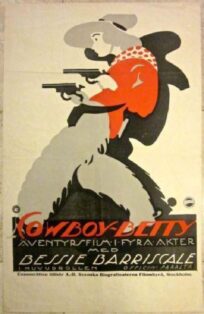
Between 1914 and 1926, roper, rider, and actress Bessie Barriscale dazzled silent film fans in a series of fast paced Westerns. Movie audiences were fascinated with the versatile and beautiful star’s ability to outsmart and outshoot the outlaws in pictures such as The Bells of Austi and The Gambler’s Pal.
Named Elizabeth Mary Barriscale at birth in New York City, she came to San Francisco with her family as a child and made her stage debut at the age of eight at the Baldwin Theatre. For three years beginning in 1905, she toured the United States and England in the play Mrs. Wiggs of the Cabbage Patch, playing the role of Lovey Mary. During the tour, the attractive blonde actress married Howard C. Hickman, actor, director, and author.
Late in 1907, she starred in The Bird of Paradise at the Alcatraz Theatre where she remained a favorite in later plays. In 1912, she and her husband went to Los Angeles where she made her silent film debut as Juanita in Rose of the Rancho. The Western picture was based on a play by David Belasco and Richard Walton Tully and was directed by Cecil B. DeMille. Bessie’s character was the feisty love interest of a government agent sent to help California landowners battle with an unscrupulous banker threatening to take over the territory. The film cost $16,988 to make and grossed $87,028 in 1914.
One of Bessie’s most popular films was Two-Gun Betty. The immensely talented cowgirl actress was able to show her incredible range in the tongue-in-cheek comedy Western. The premise was an inspired and unique one in 1918. Hoping to win a bet, Betty Craig (Barriscale) disguises herself as a man and lands a job as a ranch hand on the spread owned by her best friend’s brother, Jack Kennedy. It doesn’t take long for Kennedy and the other cowboys to see through Betty’s masquerade, but they don’t let on that they know that “he” is a “she”, and Betty becomes convinced that she has pulled off her deception. Betty and Jack inevitably fall in love and plan to get married, but first Jack must rescue Betty from a gang of desperadoes who don’t want to play along with her little game. Two-Gun Betty was directed by her Howard Hickman, produced by Robert Brunton, and distributed by Pathe Exchange.
Bessie and her husband left Hollywood in 1919 and crisscrossed the country for eight years on the Keith-Orpheum vaudeville circuit. The pair performed comedy skits with Bessie adding in rope tricks when appropriate. Following the Hickmans’ retirement in 1927, the couple lived in Los Angeles before moving to Marin County in 1945. Howard died in 1949. Bessie died in 1965 at the age of eighty-one.