The September 2022 edition of Wild West Magazine included a review of
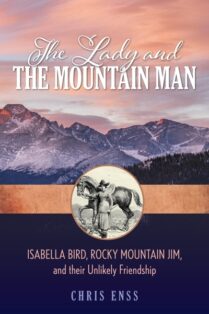
The Lady and the Mountain Man

1858 – First use of fingerprints as a means of identification is made by Sir William James Herschel of the Indian Civil Service.
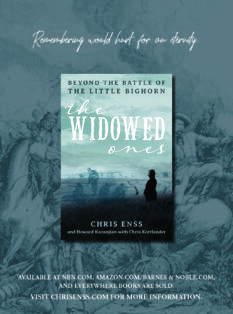
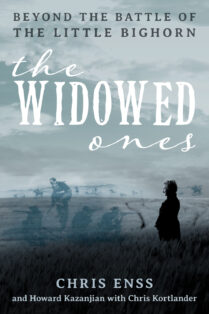
 The Battle of Little Bighorn or the Battle of Greasy Grass, the climax of the Great Sioux War of 1876, is remembered for the resounding, bloody defeat of U.S. forces (led by Lt. General George Armstrong Custer) by Lakota Sioux, Northern Cheyenne, and Arapaho warriors. Enss and co-author Howard Kazanjian (who together wrote None Wounded, None Missing, All Dead: The Story Of Elizabeth Bacon Custer), and their collaborator Chris Kortlander (founder of Montana’s Custer Battlefield Museum) examine this well-studied battle (part of the U.S. theft of Plains Indian lands in the Black Hills of present-day South Dakota) through the lens of Gen. Custer’s widow Elizabeth Custer and six other widows of Custer’s U.S. 7th Cavalry officers, focusing on how the widows processed their grief and attempted to rebuild their lives. Drawing on never-before-seen archival material from the Elizabeth Custer Library and Museum in Garryowen, MT, (particularly correspondence among the seven widows, and between the widows and U.S. politicians, military leaders, and soldiers), Enss and Kazanjian recount how it fell to Elizabeth Custer to break the news of the massacre to the officers’ wives. In the years following, she kept in contact with many of them while answering reams of correspondence and defending her husband’s honor and conduct during the battle. Enss and Kazanjian write that some of the widows struggled with debilitating grief and were unable to process their husband’s fates, while others set out to secure government jobs to supplement meager U.S. army pensions.
1946 – At Club 500 in Atlantic City, New Jersey, Dean Martin and Jerry Lewis stage their first show as a comedy team.
Isabella Bird is one of Colorado’s favorite historical figures. The fearless Englishwoman rode all over Colorado’s mountains in 1873, in bad weather and by herself. “The Lady and the Mountain Man” is a definitive treatment of Bird’s life.
Bird was an invalid, and doctors recommended sea voyages to improve her health. She was intrigued with the American West, and once healed, she came here by herself to explore the mountains. She settled in Estes Park where she met infamous mountain man Jim Nugent. Mauled by a grizzly, Mountain Jim was scarred and missing an eye, but Bird found him handsome. He had a reputation for violence, particularly when he was drunk, and Bird was warned against him.
The two fell in love, but a future together was not to be.
In this detailed account of the star-crossed lovers, the author — who is known for her books on Western women — plumbs both Colorado and British resources. In Enss’ hands, Bird is not a female oddity, but a woman of strength, courage, and loyalty
1934 – Outside Chicago’s Biograph Theatre, “Public Enemy No. 1” John Dillinger is mortally wounded by FBI agents.
“A poignant biography of the survivors of Little Bighorn, a new collection of short stories, a biography of a Chinese frontier leader, a history of a new people of the West and a stark Western tale.” True West Magazine
Over the past two decades, Western Writers of America President Emeritus Chris Enss has established herself as one of the preeminent authors of Western women’s history. Her most recent, The Widowed Ones: Beyond the Battle of the Little Bighorn (TwoDot, $26.95), sets a new standard for Western researchers seeking a greater understanding of the stories of survivors of war, epidemics and natural disasters in the post-Columbian era of the Western United States. Written with her longtime collaborator Howard Kazanjian and Chris Kortlander, a noted collector of George Armstrong and Elizabeth “Libbie” Bacon Custer primary materials, Enss’s book places the reader into the storyline of the lives of the 7th Cavalry officers and their ignoble leader Lt. Col. Custer just after the Battle of Little Bighorn. The authors’ narrative recounts the story of the widows of the seven married officers, before, during and after the battle—and how each of their lives were fated to be assigned to Custer’s 7th Cavalry at Fort Lincoln, Dakota Territory. At the center of the seven-decade chronicle is Libbie Custer, the acknowledged leader of the 7th Cavalry’s officers’ wives, a role she would hold until her passing in 1933. As the authors note, until her final breath four days before her 91st birthday, Libbie championed her late husband and lived her life as positively as possible in support of herself and those who survived those killed at Little Bighorn on June 25, 1876.
I particularly like The Widowed Ones for its expansion of our understanding of the well-chronicled Battle of Little Bighorn and the leadership of both the American and Indian allies and enemies of the Great Sioux War of 1876. I have thought for many years that historians of post-Civil War America still have a lot of material to quantify and qualify related to the aftermath and long-term effects of the violence meted out and absorbed by so many Americans of all ethnicities, races and religions. The post-traumatic effects of the War Between the States, which contributed to the frontier violence between settlers, Native peoples and the American military, also affected subsequent generations, especially those who had family killed or maimed in conflict during the settlement of the Western half the United States after 1865.
Enss’ next book, Along Came a Cowgirl: Daring and Iconic Women of Rodeos and Wild West Shows (TwoDot), will be on shelves in September 2022, but I believe she will be willing to shed tears on the page to write the stories of more women and their children, whose voices have been rarely or never heard before.
—Stuart Rosebrook
1817 – The English novelist Jane Austen, who wrote such classics as Sense and Sensibility (1811) and Pride and Prejudice (1813), died in Winchester, Hampshire, at age 41.
Seven, Seventh Cavalry officers’ wives became widows on June 25, 1876. Six of those ladies lived out the rest of their years in constant communication with one another. They visited each other in their homes and traveled together to various tributes for their husbands. In person and in letters, the widows discussed the difficulties of carrying on without their spouses, the financial hardships they were facing, and how best to handle the public criticism of the Seventh Cavalry and General Custer. The bond the women shared proved to be what they needed to survive. Each admitted to family or in their memoirs the crucial necessity of their friendships.
Grace Harrington, wife of Lieutenant Henry Moore Harrington, chose not to stay in close touch with the other widows. Unlike Elizabeth Custer, Annie Yates, Maggie Calhoun, Molly McIntosh, Nettie Smith, and Eliza Porter, the remains of Grace’s husband could not be found, nor could any personal effects be identified that indicated where he last was on the battlefield. There was no information at all regarding his whereabouts or if he had survived the savage fight. He was listed as missing in action. It was a declaration Grace couldn’t accept.
According to a letter written to Elizabeth Custer from Nettie Smith in December 1876, “Mrs. Harrington is adrift with no resolve. She has kindly declined any effort to be consoled. As her husband is the only one of the soldiers missing without a trace, she believes there is a chance he lived through the ordeal and must be rescued.”
An article from the July 7, 1876, edition of the Inter-Ocean listing the history of the deceased troops noted the likelihood Lieutenant Harrington was alive was extremely remote. “…[O]f course, there is a bare possibility that this officer may have escaped,” the article read, “but men of experience in the wars of the borders, when asked a question on the subject, shrug their shoulders and say he had better have been killed. The shrug and the remark suggest nameless horrors in connection with his name.”
July 12, 1916 — Many called her Lady Death. To Adolf Hitler‘s men, she was “the Russian bitch from hell.” Lyudmila Pavlichenko, who was born on this day, is the most successful female sniper in history, having killed 309 German soldiers during the Second World War.