Enter now to win a copy of
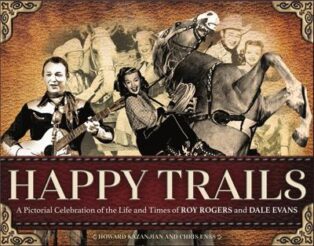
Happy Trails:
A Pictorial Celebration of the Life and Times of Roy Rogers and Dale Evans

1883 American Old West: Self-described “Black Bart the poet” gets away with his last stagecoach robbery, but leaves an incriminating clue that eventually leads to his capture.
1848 – Classes begin at Boston Female Medical College, 1st US female medical college.
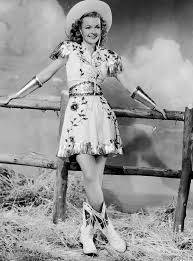
Dale Evans was born Frances Octavia Smith on October 31, 1912, in Uvalde, Texas. In her words, her upbringing was “idyllic.” As the only daughter of Walter and Betty Sue Smith, she was showered with attention and her musical talents were encouraged with piano and dance lessons. While still in high school, she married Thomas Fox and had a son, Thomas Jr. The marriage, however, was short-lived. After securing a divorce, she attended a business school in Memphis and worked as a secretary before making her singing debut at a local radio station. In 1931 she changed her name to Dale Evans. By the mid-1930s, Dale was a highly sought-after big-band singer performing with orchestras throughout the Midwest. Her stage persona and singing voice earned her a screen test for the 1942 movie Holiday Inn. She didn’t get the part, but she ended up signing with the nationally broadcast radio program the Chase and Sanborn Hour and soon after signed a contract with Republic Studios. She hoped her work in motion pictures would lead to a run-on Broadway doing musicals
In August 1943, two weeks after signing a one-year contract with Republic Studios, Dale began rehearsals for the film Swing Your Partner. Although her role in the picture was small, studio executives considered it a promising start. Over the next year Dale filmed nine other movies for Republic, and in between she continued to record music. When she wasn’t working, Dale spent time with her son, Tom, and her second husband, orchestra director Robert Butts. Her marriage was struggling under the weight of their demanding work schedules, but neither spouse was willing to compromise. “I was torn between my desire to be a good housekeeper, wife, and mother and my consuming ambition as an entertainer,” Dale told the Los Angeles Daily News in 1970. “It was like trying to ride two horses at once, and I couldn’t seem to control either one of them.” Dale’s marriage might have been suffering, but her career was taking off. Republic Studios’ president Herbert Yates summoned Dale to a meeting to discuss the next musical the studio would be doing. She took this as a hopeful sign. It was common knowledge around the studio lot that Yates had recently seen a New York stage production of the musical Oklahoma and had fallen in love with the story. Dale imagined that the studio president wanted to talk with her about starring in a film version of the play. It was the opportunity she had always envisioned for herself. For a brief moment she was one step closer to Broadway.
1955 “Rebel Without a Cause”, directed by Nicholas Ray, starring James Dean and Natalie Wood, is released.
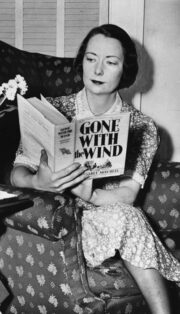
Gone With the Wind, the first and only novel written by Margaret Mitchell was a runaway success from the moment it was published in 1936. The book won the Pulitzer Prize and is still considered the most purchased book, other than the Bible, selling over two hundred thousand copies a year. Mitchell learned of the stories she used in her epic while sitting on the laps of Confederate veterans when she was a young girl growing up in Georgia. In fact, she wasn’t told the South lost the war until she was ten. She wrote her book while laid up with a broken ankle and told no one other than her husband of her literary aspirations. At the time she was employed by the Atlanta Journal and had an assignment to take publisher Howard Latham from Macmillan Publishing Company around town supposedly in search of the new southern writers. Margaret brought the partially completed and heaping Gone With the Wind manuscript to Latham’s hotel later that night after a friend of hers laughed at the possibility that she possessed any talent. She sent a telegram the next day, asking Latham to send the manuscript back. He refused, convinced her of its worth, and sent Margaret Mitchell an advance to finish the book. Supposedly, Margaret wrote another book, which was found in notebooks among her letters, but she never pursued publication of anything else. In 1949 she was heading to see a movie and stepped into the street without looking and was hit by a taxi. She died five days later of internal injuries at age forty-eight. The twenty-five-year-old taxi driver Hugh D. Gravitt was convicted of involuntary manslaughter and sentenced to one year to eighteen months in jail.
1930 – 1st scheduled transcontinental air service began.