
1862 – The eighth president of the United States, Martin Van Buren, dies at the age of 79.
This Day…
1881 – Sioux Indian Chief Sitting Bull, surrenders to US federal troops.
Caroline Chapman, The Quick Change Artist
Enter to win a copy of
Entertaining Women:
Actresses, Dancers, and Singers in the Old West
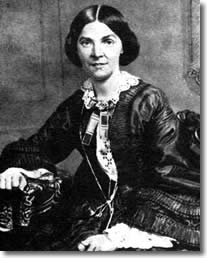
The theater at Camp Seco, a gold camp in California, could hardly compare to the Greenwich Theater in New York, or the Jenny Lind in San Francisco, or theaters in New Orleans, Philadelphia, or other cities she’d played in, but Caroline Chapman had rarely seen a more enthusiastic audience. Twitching her skirts into place, she waited for her cue. Tonight, they would conclude the program with a spoof of notorious entertainer Lola Montez, an act that always brought down the house.
Caroline and her brother, “Uncle Billy” Chapman, had left San Francisco in an uproar after starring in a hilarious play by Dr. Robinson. Newspaper editors had sharp words for Who’s Got the Countess? and Caroline’s part in it. How, they asked, could the “modest” Miss Caroline Chapman descend to such tasteless, even cruel burlesque of the lovely Lola?
That was easy, Caroline thought. She was a professional actress, and as she waited for her cue, she could balance that accomplishment against a lack of beauty that had also been politely noted in the press. Critics admired Lola’s stunning face and form, but few of them considered her a serious actress. Lola’s stage career in Europe had included a stint as the mistress of the King of Bavaria, who had made her Countess of Landsfelt. Caroline, on the other hand, had started learning stage work as a child on her father’s riverboat and had garnered praise from her first performance.
Beauty was not Caroline’s stock in trade. Caroline was too plain to compete with the legendary Lola’s charms. The most complimentary report on her appearance had come from theater historian Joseph Ireland, who described her as slender and plain-featured but with excellent teeth in a large, mobile mouth. Her face was radiant with expression communicated by a pair of gleaming, dark eyes that could convey more meaning, either of mirth or sadness, said Ireland, than any contemporary female on the New York stage.
Unlike the scandalous Lola, Caroline had never indulged in affairs with royalty or famous authors and had never smoked a cigar, kept a pet bear, or threatened to take a riding whip to a cynical newspaper editor. Caroline Chapman had what Lola lacked: talent. Nowhere did she find it more fun to exhibit than in Dr. Robinson’s send-up of the glamorous Countess of Landsfelt, whose stage reputation depended more on her display of shapely legs than on a demonstration of acting ability.
Lola became famous for her Spider Dance–a frantic effort to shake blackened cork “spiders” from her skirts that required lifting and shaking of dress and petticoats–which shocked the polite world but attracted droves of admirers to the theater. Lola’s well-attended appearances in San Francisco in 1853 inspired local theatrical entrepreneur Dr. G. C. Robinson to pen the hilarious farce Who’s Got the Countess? in which Caroline performed. “Some weeks ago, the Countess came to fill us with delight and drew admiring throngs to see her spider dance each night. . . .” As Dr. Robinson’s familiar song rang out over the heads of miners crowded into the makeshift theater, Caroline swirled haughtily onstage. She might not be beautiful, but she could act rings around the likes of Lola Montez.
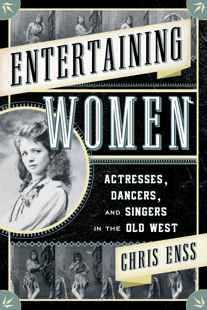
To learn more about Caroline Chapman and other female entertainers of the Old West read Entertaining Women: Actresses, Dancers, and Singers in the Old West.
This Day…
The Talented Divorcee
Enter now to win a copy of
Entertaining Women: Actresses, Dancers, and Singers in the Old West
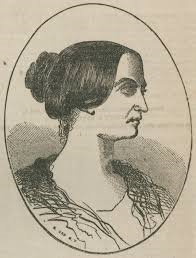
Shakespearean actor Edwin Forrest rifled through the desk drawer in the sitting room of the New York home he shared with this wife, socialite turned actress and theater manager Catherine Norton Sinclair. The contents of the drawer belonged to Catherine, but Edwin wasn’t interested in maintaining her privacy. In his frantic search, he uncovered a worn and rumpled letter written to his bride from fellow thespian, George Jamieson. “And now, sweetest, our brief dream is over; and such a dream!” the correspondence began. “Have we not known real bliss? Have we not realized what poets have to set up as an ideal state, giving full license to their imagination, scarcely believing in its reality? Have we not experienced the truth that ecstasy is not fiction? And oh, what an additional delight to think, no, to know, that I have made some happy hours with you… With these considerations, dearest, our separation, though painful will not be unendurable; I am happy, and with you to remember and the blissful anticipation of seeing you again, shall remain so…” Jamieson’s declaration of his feelings for Catherine ended with a promise to do “my utmost to be worthy of your love.”
Edwin reread the letter with poised dignity and on its completion sank into the nearest chair, cursing the day he had met the woman he had married. After a few moments, he arose and frantically paced about the room. He denounced Catherine for her infidelity and fell to the floor weeping uncontrollably. According to Edwin’s biographer William Rounseville Alger, Edwin was “struck to the heart with surprise, grief, and rage.” Catherine’s take on Edwin’s reaction and the circumstances surrounding her husband reading the letter are vastly different from Alger’s account. Almost from the moment the pair met, Edwin was jealous of everyone Catherine knew in her social standing and did not shy away from making a scene.
Catherine was born near London in 1818 to Scottish parents who had four children in all. Her father, John Sinclair, was a well-known vocalist who had toured America in 1831 and 1833. Historical records note that Catherine was endowed with natural beauty, and, whatever the quality and quantity of her formal and social education, she had in her teens acquired a sparkle and vivacity that attracted men. She was popular and well-liked and attended formal soirees, theater openings, and art exhibits with a myriad of friends from all walks of life.
To learn more about how Catherine Norton Sinclair’s acting career began and about the other talented performers of the Old West read
Entertaining Women: Actresses, Dancers, and Singers in the Old West.
This Day…
1866 – US House of representatives passes 14th Amendment (Civil rights).
Adventures in Kidnapping
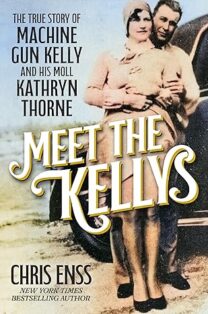
The enormous suite at the luxurious Dallas hotel where George Kelly and his bride Kathryn were spending their honeymoon was strewn with open boxes and empty shopping bags from several department stores. The floor, dresser, and chairs were cluttered with new dresses, high-heeled shoes, lingerie, silk stockings, fancy hats, and gloves. Kathryn pirouetted in front of an ornate floor-length mirror wearing nothing more than a formfitting, lace slip and a mink coat. Kelly watched her model the trousseau he’d purchased for her from the comfort of a wingback chair opposite an unmade bed. He was dressed in a pair of new trousers and a crisp white shirt with an attached soft collar unbuttoned to the nape of the neck. His appreciation for fine clothing matched that of his new wife’s.
The Kellys had been married less than a week and when they weren’t locked away in their suite or buying out the stores, they were dining in the city’s most expensive restaurants and visiting speakeasies. Kathryn didn’t ask her husband where the large roll of bills he frequently unfurled to pay for their lavish living had come from. She knew and she didn’t care. She wanted more and Kelly promised there would be.
On October 2, 1930, Kelly and Kathryn packed their belongings into a top-of-the-line Cadillac and drove sixty-seven miles to the town of Paradise in Wise County, Texas. Kathryn’s family was eagerly awaiting their arrival. The Shannon farm wasn’t much to look at. Three dilapidated buildings sat on the property. In addition to the main house there was a shed and a garage of sorts. Each one looked as if a strong wind would bring down the walls. Boss Shannon built the home four miles outside of Paradise on the acreage he purchased with his first wife, Icye. Boss and Icye had two children and she passed away at the age of twenty-five. Boss’s second wife was his deceased wife’s sister. They had three children together before she too died. The Shannon children helped their father work the farm and for a time they managed to eke out a meager living. The drought that struck the region in the late 1920s transformed the promising homestead. High winds and choking dust swept across the area and people and livestock were killed and crops failed. Add to that the crushing economic impact of the Great Depression and farms like the Shannons’ fell into disrepair. The Shannons’ earnings were derived from a variety of sources, the majority of which weren’t legal.
In addition to Kathryn’s mother and stepfather, Kelly would be meeting seventeen-year-old Armon, fifteen-year-old Otha, and nine-year-old Ruth, Boss’s children from his second wife, and Kathryn’s daughter, ten-year-old Pauline.
The Shannons stepped out onto the porch when they saw Kelly’s car approaching. Kathryn checked her look in a compact she produced from her purse and adjusted the mink draped over her shoulders. The newlyweds seemed out of place in their designer outfits and behind the wheel of their slick automobile. The contrast wasn’t lost on the pair. Outside of thinking how much his wife didn’t belong in the setting, Kelly was indifferent to the matter, but Kathryn relished it. Proving she was better than what she’d come from meant everything to her.
Kathryn emerged from the vehicle like a starlet arriving at a film premiere. After hugging her mother and daughter she stretched out her hand to Kelly. Smiling proudly, he took her hand in his and stood at her side as she introduced him to the family. Kathryn hadn’t informed her parents that she’d gotten married again so they were taken aback. Boss was quick to welcome Kelly to the clan and Ora was equally as inviting. After congratulating the couple, they were ushered inside to share the meal Ora, Pauline, and Ruth had prepared. It was a pleasant evening with lots of attention paid to Kathryn’s fur coat and the adults sharing a glass or two of Boss’s bootleg whiskey. Questions about how the pair met were happily answered but Kelly hesitated briefly when he was queried about his occupation. Kathryn tried to hide a grin when he announced he was in banking.
The Kellys’ visit with the Shannons concluded after two days and the happy couple returned to Fort Worth. They moved into a modest house on Mulkey Street that Kathryn’s third husband had owned and was passed onto her after his death. There was nothing typical about Kathryn and Kelly’s home life. They were constantly on the go. They liked parties and attending the theater and if the action became too tame for them in Texas, they would travel to Miami or Chicago. When Kelly’s portion of the money he helped steal from banks in Iowa and Minnesota began to dwindle, he briefly entertained the idea of pursuing a legitimate profession. He had an opportunity to purchase a Ford dealership but decided it wouldn’t provide the money he and Kathryn needed to live as they had been. Both relished shortcuts in life – robbing instead of working and stealing whatever they wanted instead of buying.
This Day…
1800 – Dr Benjamin Waterhouse gives 1st cowpox vaccination in the US to his son to prevent smallpox.
The Devine Sarah
Enter to win a copy of the book
Entertaining Women: Actresses, Dancers, and Singers in the Old West
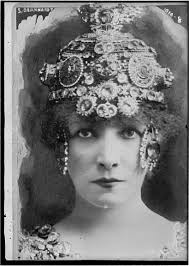
The pliant figure leaned over the ship’s rail, expressive eyes intent on the blue-green waters of the harbor. A mass of wavy light-brown hair with tints of gold lifted and curled with every breeze, its arrangement a matter of complete indifference to the angler. Suddenly the slender form froze, breath held, and then, with a quick yank and a breaking smile, lifted the rod and hauled a wriggling fish aboard the Cabrillo. Exclaiming in French, dark eyes sparkling with pleasure, Sarah Bernhardt ordered her catch, small as it was, to be prepared for dinner.
It was May 19, 1906, and the farewell production of Camille was scheduled for a few hours later at the ocean auditorium built on the water at Venice, California. Sarah stayed, and fished, at the hotel built like a ship, and she performed in the adjacent theater on the wharf at the seaside resort, Venice of America. Having caught a fish, Sarah wended her way to her quarters. Piled high in her dressing room were the results of a recent shopping trip to the Oriental bazaar nearby: silk and crepe matinee coats of pink and pale blue and mauve, all embroidered with butterflies and bamboo designs.
The tiny window in the dressing room provided a sparkling view of the ocean, and the streaming sunshine picked out details of the furnishings: a repoussé silver powder box, containers of pigment, eyebrow pencils, silver rouge pots, and scattered jewelry twinkling in the light. The tragedienne who attracted huge audiences wherever she went swooped up a small tan and white fox terrier, wriggling with joy at her return, and snuggled it close for a moment as she related the happy details of her fishing venture to a visiting reporter. Then she put down the small dog and closed her mind to the fun waiting outside the porthole.
Within moments Sarah became Marguerite Gautier, filled with the sadness and torment of the beautiful French courtesan in Camille, the play by Alexandre Dumas that became her signature role, performed all over the world more than three thousand times. Sarah’s ability to sink fully into the character of the play made the tragic death scene so convincing that it became a trademark for “the Divine Sarah.”
No one played tragedy with such believable intensity as Sarah Bernhardt, and no one brought as much passion and enthusiasm to the pursuit of pleasure. From fishing on the Southern California coast to bear hunting in the woods outside Seattle, on every western tour the French actress indulged in some kind of adventure. Sarah Bernhardt threw herself into life with the same characteristic energy she put into her stage appearances. Yet she often slept in a coffin, preparing for that final sleep.
To learn more about Sarah Bernhardt and about the other talented performers of the Old West read
Entertaining Women: Actresses, Dancers, and Singers in the Old West.