1887 Anne Sullivan teaches “water” to Helen Keller.

Identify your objective and carefully consider how you want to hit your target.
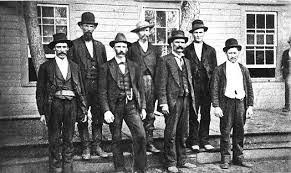
Allan Pinkerton was able to track the bandits responsible for robbing the Adams Express Company only after he was given a full description of the Reno gang members. That basic information led the posse to the outlaw’s hiding place where they could put together a plan to apprehend the bad guys and retrieve the stolen money.
Go the extra mile.
When the Pinkerton posse kidnapped the leader of the Reno gang they were employing extreme measures to ensure the desperados faced justice. That daring action proved to be positive for the detective agency because businesses could see the Pinkertons offered exceptional service. Allan Pinkerton and his men were hired to solve several other robberies after brining in the Reno gang.
Never under estimate the powers of observation.
If the posse wasn’t paying close attention to the coming and goings of various townspeople in Council Bluffs, Iowa, they would have missed the strange behavior of a citizen who eventually led them to the spot where the Reno gang was hiding.
Embrace the benefits of cross training.
Posse members took on a variety jobs in an effort to achieve their objective. Some worked as bartenders, others as railroad employees. They gained valuable knowledge about the offenders they were after that helped define the best way to apprehend the Renos.
Follow a job to the end.
You haven’t failed until you quit trying. The Pinkerton posse never abandoned their quest to arrest the Reno gang even when the outlaws fled to Canada. The bandits thought they were safe in another country, but Pinkerton acquired the necessary legal documents to have them extradited.
Newspaper readers from Hartford, Connecticut, to Portland, Oregon, were shocked to read about the bold and daring robbery of the Ohio and Mississippi Railroad on October 6, 1866. It was the first robbery of its kind. Banks and stage lines had been robbed before, but no one had perpetrated such a crime on a railroad. According to the October 20, 1866, edition of the Altoona Tribune, three masked bandits entered the car stopped at a station near Seymour, Indiana, with the idea of taking money from the Adams Express safe. They entered the car from the front platform, leveled their revolvers at the head of the guard on duty, and demanded he hand over the keys to the safe. He did so with no argument.
While one of the bandits stood guard, the others opened and removed the contents of one of the three safes which included more than $20,000 in cash. When the job was done, the desperadoes moved one of the safes to the door of the car, opened it, and tossed the box out. The heavy safe hit the ground hard, rolled, and came to a stop. One of the masked men pulled on the bell cord, and, as the engineer replied with the signal to apply the brakes, the robbers jumped out the train and made their escape.
The engineer saw the bandits leap off the train and speculated they were headed in the direction of Seymour. The train slowed to a stop and one of the agents for the Adams Express Company who was on the train hopped off and ran back to the station with the news of the robbery. He commandeered a handcar and recruited a few men to help him collect any evidence left behind by the thieves. On the agent’s way back to the train, he found the safe tossed from the car. The $15,000 inside had not been touched.
The Adams Express Company offered a $5,000 reward for the arrest and conviction of the robbers. A witness aboard the train the evening it was robbed told authorities he recognized the desperadoes who stole the money as the Reno brothers, John and Simeon, and one of their friends, Frank Sparks. Citizens and detectives alike began a vigorous search, but the brothers proved impossible to locate.
Unbeknownst to the Reno boys and the gang of outlaws with whom they associated, the Pinkerton Detective Agency had been hired to protect all Adams and Express Company shipments. Armed with the descriptions provided by the witness, Allan Pinkerton, head of the investigation firm, set out to find the culprits. Pinkerton traced the Renos to Seymour, a lawless community where rustlers, bandits, and cutthroats from all over the area gathered.
Three dozen fresh-faced young men jockeyed for position behind a row of windows on a train leaving Poughkeepsie, New York, bound for Camp Mills on Long Island. The new Army recruits waved goodbye to those on the railroad platform; they wore happy expressions and cheered as the car lurched forward. The men were excited and blissfully naïve about the journey ahead of them. Family and friends on the platform offered last-minute farewells as the train slowly began to move ahead. Some people cried as the vehicle left the station, and they blew kisses to the courageous souls who had answered the call to serve their country when America announced it would join Britain, France, and Russia to fight in World War I.
The United States entered the war on April 6, 1917, and by the end of that same month thousands of men had eagerly flooded recruited stations, enlisted in the Army and Navy, and promised to defend the nation in time of peril.
On July 6, 1917, newspapers and unofficial dispatches from Canadian army headquarters in Europe documented when America went into battle for the first time during the World War. A young Texan who had traveled to Ontario to enlist had the honor of being the first to carry the American flag in the European war. He was carrying the official Stars and Stripes on his bayonet when he was wounded and subsequently transported to a medical unit.
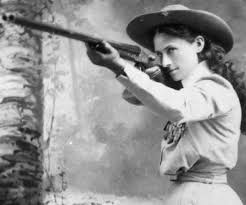
According to the July 20, 1917, edition of the Democrat and Chronicle News the Texan’s brave action prompted even more patriotic men to join a branch of the service. Men did not have a moratorium on devotion to country. Women also wanted to do their part. Annie Oakley was among them. From the time the Spanish-America War began in 1898, Annie had desired to recruit and train women to be expert shots and fight for the United States. She offered her unique services to President William McKinley in a letter dated April 5, 1898.
Dear Sir,
I for one feel confident that your good judgement will carry America safely through without war. But in case of such an event I am ready to place a company of fifty lady sharp shooters at your disposal. Every one of them will be an American and as they will furnish their own arms and ammunition there will be little if any expense to the government.
Very Truly,
Annie Oakley
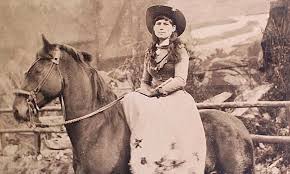
It was three o’clock in the morning when Southern Railway Engine 75 collided with Western legends and showman Buffalo Bill Cody’s train outside Lexington, North Carolina, on October 29, 1901. The rumble of the trains hurrying toward one another sounded like the gathering of a cyclone. Whistles blew and brakes scraped hard against the rails in a desperate attempt to prevent the crash, but the impact was unavoidable.
The force of the engines smacking into one another caused the derailment of the cars in tow, and all at once the air was filled with flying missiles of iron and wood. Smoke poured in great black streaks from the steam funnels, and the popping of steam rose high in the air. A veritable hell of fire erupted. Members of the cast and crew of Buffalo Bill’s Wild West show fought madly in their attempt to crawl out the doors and windows of the overturned cars. Horses trapped in the twisted, mangled debris whinnied and brayed frantically.
People rushed to the scene from nearby farmhouses and stood helplessly around the wreckage, holding their hands to their ears in order to shut out the frightful screams of the injured passengers and animals. Gathering their composure, they fought to rescue the hurt from the coaches scattered about the landscape. Slowly the suffering were lifted from the destruction and carried to a grassy field. Many cried and groaned in pain, their heads and hands cut and blood streaming from their wounds.
Annie Oakley, world famous exhibition sharpshooter, was one of the unfortunate victims of the train wreck. She was lying unconscious somewhere among the rubble. The car where Annie and her husband Frank had been sleeping was turned upside down. When the engines slammed into one another and their car tumbled over, the petite entertainer was thrown from her berth onto a trunk. Before hitting the trunk with her back, she tried to break the fall by putting her hand out. Both her hand and back were injured. Frank suffered only minor cuts and bruises. He carried his wife out of the wreckage to the spot where the other hurt passengers had been taken. Annie’s eyes fluttered open long enough to see the severely damaged vehicle. What once had been a speeding marvel was now a broken scrap heap.
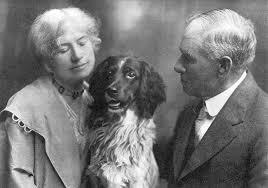
Annie Oakley was born Annie Moses on August 13, 1860, in Darke County, Ohio. Her father’s untimely death when she was still a child forced Annie to find work to help support her seven brothers and sisters and their mother.
Annie first learned to hunt with a rifle when she was eight. She used her natural markswoman ability to provide food for the evening meals. She became such a good shot she was hired on by a merchant to supply his store with fresh game. By the time Annie turned nine, she was a major provider for her family.
A shooting match between Annie and Western showman Frank Butler in 1875 changed her life forever. The challenge was for each marksman to shoot twenty-five clay pigeons. Frank hit twenty-four of the twenty-five targets. Annie hit all of them.
Frank was so taken by the young woman’s expertise and femininity that he invited her to come and see him perform in one of his Western programs. She was impressed with his kindness and proficiency with a weapon. After a short time, their mutual fondness and admiration blossomed into love. They were married on June 22, 1876.
Frank and Annie pooled their talents and took their shooting know-how on the road. The two gave exhibitions at theaters across the country. By this time Annie had changed her name to Oakley. She decided on that name because she’d liked the sound of it ever since her sister told her of the Ohio district with the same handle.
Butler and Oakley were well received wherever they performed. People were not only amazed at the teenager’s shooting but admired the pluck of a girl who could hold a coin steady until it was shot from her fingers. By December of 1884 Frank and Anne had become the top shooting act in the country.