
1917 – Loretta Perfectus Walsh became the first woman to join the navy and the first woman to officially join the military in a role other than a nurse
Frontier Teachers: Stories of Heroic Women of the Old West
Enter now to win a copy of
Frontier Teachers: Stories of Heroic Women of the Old West
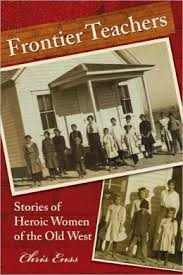
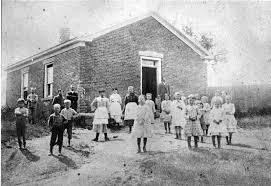
Sister Mary Baptist Russell and four other nuns from the Sisters of Mercy Convent weaved their way around a parade of scruffy miners, traveling salesmen, and saloon girls crowded on a sturdy dock that was hugging a shore in San Francisco. Wearing black habits complete with scapulars, veils, and coifs, the women stepped aboard the steamer boat that was splattered with mud and dirt. The deck of the vessel was a swarm with prospectors en route to their diggings down river. Some were sleeping, others were playing cards or discussing their mining claims. The Sister inched their way to a clearing near the bow and grabbed hold of the railing as the small craft moved slowly away from the landing.
The scene around the bay in August 1863 was chaotic. News of the discovery of gold north of the city had prompted people of every kind and description to pour into the place to gather supplies before rushing to the hills. Men, women, and children were living in shacks, or sleeping on the ground under blankets draped over poles. The noise and pandemonium lessened considerably as the boat continued on past abandoned ships, old-riggers, and new vessels anchored and waiting patiently for more eager passengers to come aboard.
The nuns smiled pleasantly at their fellow travelers before turning their attention to the golden brown landscape on either side of the clay-colored water. The furious mining activities in the mountains had left the one time clear and clean river muddy and rolling, and fast receding flood waters had left the channel that use to be deep, shallow and treacherous. Sister Russell spotted a steamer in the near distance that was stuck in the bars and lifted her heard to heaves in a silent prayer that their boat would not suffer the same fate.
If the vessel did not get lodged in the mud or a boiler did not explode, the trip between San Francisco and Sacramento was six hours. The intense heat and savage mosquitoes and fleas the nuns were forced to fight off made the trip seem longer. Sister Russell referred to the riverboat as that “miserable steamer” and had it not been for the fact that the ladies were dedicated to care and educate children in the isolated mining camps,
none would have chosen to ever leave the comforts of their San Francisco based order.
The nuns who dared to make the journey had proven to the leaders of the church to be the most qualified for the job. They were strong, resourceful women who had provided food to hungry pioneers who had lost everything coming west, tended to cholera patients, and taught school to orphans.
Sister Russell had endured a number of hardships on her way from Ireland to California and was the leader of the group of traveling Sisters. Born in County Down, Ireland in 1829, she was only twenty-five years old when she came to America to help develop the rugged west. Like all the Sisters of Mercy she devoted her life to the service of the poor, the sick, and the ignorant. As a member of the Sister of Mercy order in San Francisco she helped establish St. Mary’s Hospital, the oldest Catholic hospital in existence in the Gold Country.
To learn more about the Sisters of Mercy read
Frontier Teachers: Stories of Heroic Women of the Old West
This Day…
Love Untamed: Romances of the Old West
Enter now to win a copy of
Love Untamed: Romances of the Old West
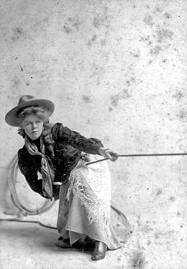
A pair of large, mean steers burst out of the gate and raced onto the parade field. Eighteen-year-old Lucille Mulhall bolted after the beasts atop her trained horse, Governor. The beautiful blond with petite features and blue-gray eyes quickly tossed the lasso she was twirling and snagged one of the animals around its neck. The steer jerked to a stop as Governor planted his feet firmly on the ground. Lucille leapt at the steer with another rope and began to tie its feet together. In thirty seconds she had completed the task, breaking the steer-roping record at the rodeo grounds in Denison, Texas.
On a hot September day in 1903, Lucille won the Grayson County Fair’s roping contest, beating out two of the top cowboys in the county in the process. She was awarded a pendant of gold with a raised star in which was imbedded a diamond. In the center of the pendant was a steer-roping scene set in blue enamel. It was a prize she wore with pride for the rest of her career.
Lucille Mulhall was destined to be a cowgirl. Her father, Zack Mulhall, had her on the back of a horse before she could walk.
She was born on October 21, 1885, and raised on her family’s 80,000-acre ranch near Guthrie, Oklahoma. At an early age she showed a talent for horse riding. She was a natural in the saddle, at training horses, roping, branding cattle, and all the other chores associated with ranch hands. History records that she was extremely bright and could have gone on to be a teacher, but she preferred cowboying, and with her father’s help, she made it her life’s work.
After a successful roping-and-riding contest in 1899, Zack decided this form of entertainment had massive monetary potential. He put together a group of horseback performers and called them Mulhall’s Congress of Rough Riders and Ropers. Lucille was a part of the group and began her career at a riding exhibition in Oklahoma City. She was fourteen years old. Lucille and her horse captivated audiences with their speed and precision. In less than a year, she was the best-known cowgirl performer in the West.
In 1902 Lucille had an accident that would have caused any professional rider to give up the sport. It happened during a relay race in St. Louis when she was dismounting a bronco. She was struck by the pony of one of the other cowboys in the show and the muscles and tendons of her ankle were torn away and the limb badly bruised. She finished the tour with her leg in a cast.
To learn more about Lucille Mulhall and other tough ladies on the frontier read Love Untamed: Romances of the Old West
This Day…
Tales Behind the Tombstones
Enter now to win a copy of
Tales Behind the Tombstones
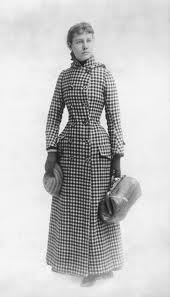
Nellie Bly was one of the most rousing characters of the late nineteenth and early twentieth centuries. In the 1880s, she pioneered the development of “detective” or “stunt” journalism, the acknowledged forerunner of full-scale investigative reporting. While she was still in her early twenties, the example of her fearless success helped open the profession to coming generations of women journalist clamoring to write hard news.
Bly performed feats for the record books. She feigned insanity and engineered her own commitment to a mental asylum, then exposed its horrid conditions. She circled the globe faster than any living or fictional soul. She designed, manufactured, and marketed the first successful steel barrel produced in the United States. She owned and operated factories as a model of social welfare for her 1,500 employees. She was the first woman to report from the Eastern Front in World War I. She journeyed to Paris to argue the case of a defeated nation. She wrote a widely read advice column while devoting herself to the plight of the unfortunate, most notably unwed and indigent mothers and their offspring.
Bly’s life – 1864 to 1922 – spanned Reconstruction, the Victorian and Progressive eras, the Great War and its aftermath. She grew up without privilege or higher education, knowing that her greatest asset was the force of her own will. Bly executed the extraordinary as a matter of routine. Even well into middle age, she saw herself as Miss Push-and-Get-There, the living example of what, in her time, was “That New American Girl.” To admirers, she was Will Indomitable, the Best Reporter in America, the Personification of Pluck. Amazing was the adjective that always came to mind. As the most famous woman journalist of her day, as an early woman industrialist, as a humanitarian, even as a beleaguered litigant, Bly kept the same formula for success: Determine Right. Decide Fast. Apply Entergy Act with Conviction. Fight to the Finish. Accept the Consequences. Move on.
Nelllie Bly is an example of possibility. She viewed every situation as an opportunity to make a significant difference in other people’s lives as well as her own. Not wealth or connections or position or beauty or outstanding intellect eased her way to greatness. She never dwelled on inadequacy or defeat. Bly just harnessed her pluck, her power to decide, and then did as she saw fit, to both impressive and disastrous ends.
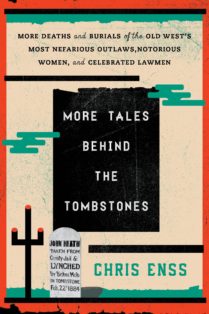
To learn more about one of the most famous female journalists of the Old West read Tales Behind the Tombstones.
This Day…
The Trials of Annie Oakley
Enter now to win a copy of
The Trials of Annie Oakley
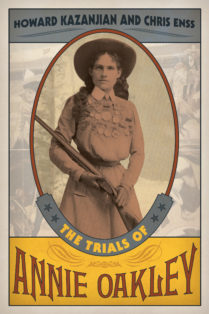
Say the name Annie Oakley and the image of a young woman who could shoot targets out of the sky without a miss and rode across the frontier with Wild West showman Buffalo Bill Cody comes to mind. Annie Oakley was a champion rifle shot and did perform alongside well-known riders, ropers, and Indian chiefs in Colonel Cody’s vaudevillian tour, but there was more to Annie Oakley’s fame than her skill with a gun. The diminutive weapons wonder was a strong proponent of the right to bear arms, a noted philanthropist, and warrior against libel who fought the most powerful man in publishing and won.
The native Ohioan astonished the world with her almost unbelievable feats of rifle marksmanship. She could pepper a playing card sailing through the air, puncture dimes tossed into the sky, and break flying balls with her rifle held high above her head. She once shot steadily for nine hours, using three sixteen-gauge hammer shotguns which she loaded herself, breaking 4,772 out of 5,000 balls.
Annie Oakley fell in love with and married the first man she defeated in a rifle match one of the most noted marksmen in the West. Childless herself, she helped fund the care and education of eighteen orphan girls. The most deadly rifle shot alive, she was a beautiful, gentle woman, whose husband, Frank E. Butler died of a broken heart three weeks after her death in 1926.
Annie Oakley was a combination of dainty, feminine charm and lead bullets, adorned in fringed handmade fineries and topped with a halo of powder blue smoke. She had a reputation for being humble, true, and law abiding and was careful with her character at all times. When powerful, newspaper magnate William Randolph Hearst challenged her honor and questioned her respectability in his publication in 1903, Annie filed a lawsuit against him that’s still discussed at universities today.

To learn more about one of the most famous female sharp shooters
of the Old West read The Trials of Annie Oakley.
This Day…
Love and the Gold Miner
Enter now to win a copy of
Love Lessons from the Old West: Wisdom from Wild Women

Luzena Stanley Wilson stood in the center of her empty, one-room log home in Andrew County, Missouri, studying the opened trunk in front of her. All of her worldly possessions were tucked inside it: family Bibles, two quilts, one dress, a bonnet, a pair of shoes, and a few pieces of china. Mason Wilson, Luzena’s husband of five years, marched into the house just as she closed the lid on the trunk and fastened it tightly. They exchanged a smile, and Mason picked up the trunk and carried it outside. Luzena took a deep breath and followed after him. In a few short moments they were off on a journey west to California. It was May 1, 1849, Luzena’s birthday. She was thirty years old.1
The Wilsons were farmers with two sons: Thomas, born in September 1845, and Jay, born in June 1848. Three payments had been made on the plot of land the Wilsons purchased in January 1847. Prior to news of the Gold Rush captivating Mason’s imagination, the plan was to work the multi-acre homestead and pass the farm on to their children and their children’s children.2
Rumors that the mother lode awaited anyone who dared venture into California’s Sierra foothills prompted Mason to abandon the farm and travel to the rugged mountains beyond Sacramento. In addition to Luzena and her husband, their sons, her brothers, and their wives had committed to travel to California as well. A train of five wagons was organized to transport the sojourners west. On the off chance Mason never found a fortune in gold, the couple left behind funds with the justice of the peace to make another payment on their homestead. In the event the Wilsons were able to stake out a claim for themselves in the Gold Country, they would sell their Missouri home and use the proceeds to aid in their new life.3
“It was the work of but a few days to collect our forces for the march,” Luzena recorded in her journal shortly after they left on the first leg of their trip. “We never gave a thought to selling our section [of land], but left it. I little realized then the task I had undertaken. If I had, I think I should have stayed in Andrew County.” It would take five months for the Wilsons to reach their westward destination. Most of the belongings Luzena packed in their prairie schooner would be lost or left behind on the trail because they proved to be too burdensome to continue hauling.4
Luzena described the long journey west in her memiors as “plodding, unvarying monotony, vexations, exhaustions, throbs of hope and depth of despair.” Dusty, short-tempered, always tired, and with their patience as tattered as their clothing, the Wilson family and thousands like them plodded on and on. They were scorched by heat, enveloped in dust that reddened their eyes and parched their throats; they were bruised, scratched, and bitten by innumerable insects.5
Luzena’s Quaker upbringing in North Carolina had not prepared her for such a grueling endeavor. Her parents, Asa and Diane Hunt, had relocated from Piedmont, North Carolina, to Saint Louis in 1843, but the trip was comparatively easy. After the Hunts arrived in Missouri, they purchased a number of acres of land at a government auction. Luzena lived on the family farm until she and Mason wed on December 19, 1844.6

To learn more about Luzena Stanley Wilson and gold miner read
Love Lessons from the Old West: Wisdom from Wild Women