
| 1862 | President Abraham Lincoln issues a proclamation calling for all slaves within the rebel states to be freed on January 1, a political move that helps keep the British from intervening on the side of the South. |
Annie Oakley vs. William Randolph Hearst
Enter now for a chance to win a copy of
The Trials of Annie Oakley
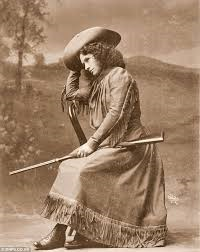
On August 8, 1903, a drifter named Charles Curtis made his way to the Harrison Street Police Station in Chicago and filed a complaint to Justice of the Peace John R. Caverly about a woman named Little Cody. Curtis had befriended the woman he supposed was down on her luck and provided her a place to stay for a few days. During her visit with Charles, she stole a pair of pants and generally made herself a nuisance. The complaint charged her with having “made an improper noise, riot, and disturbance.” A warrant for the woman’s arrest was issued, and “Little Cody” was arrested and escorted to jail. The fee she was to pay was $100. She didn’t have the money to give the court and was to be held until she came up with the funds.
The prisoner did not give the clerks or the jail matrons a difficult time. She was chatty during the intake process, but polite. Her appearance was slovenly, clothes were torn and unwashed, and she was obviously under the influence of drugs. She told officials at the facility about her work as a crack rifle shot and of the days she spent with Buffalo Bill Cody’s Wild West show. The curious matron couldn’t help but pursue the matter further. “You are the noted Annie Oakley, I guess.” The woman proudly announced that she was indeed the famed sure shot.
Charles Curtis came to visit the woman once she was behind bars and seeing her distressed state decided not to press charges.
When arraigned before the justice on Monday morning August 10, the police officer who had booked her into jail stated she was the famous Annie Oakley who had exhibited with Buffalo Bill Cody. The officer informed the court that if she was allowed to go free she would only spread disease and implored the judge to send her to a women’s asylum where she could be taken care of. The judge agreed and instructed the court to send the woman to Bridewell Prison Farm. Her fine was reduced to $25.
After her day in court, she was taken downstairs to the lock up again. A number of people were waiting for her to arrive so they could talk with her. One of those individuals was George W. Pratt, a reporter for the Chicago American. Pratt had visited Buffalo Bill’s Wild West show many times and was acquainted with several acts associated with the program. He wanted to get the woman’s full story and spent hours with her asking questions about what brought her to such a lowly state. Her answers contained specific information about who performed in Cody’s shows with her, when, and the exhilarating experience she had at the Chicago World’s Fair in 1893. Pratt and other reporters were convinced this woman was the real Annie Oakley. Pratt wrote a story about his first-hand experience with the accused. As many reporters did at that time, he elaborated and sensationalized the account.
To learn more about the famous sure shot read
The Trials of Annie Oakley
This Day…
1862 Union soldiers find a copy of Confederate General Robert E. Lee’s orders detailing the Confederates’ plan for the Antietam campaign near Frederick, Maryland. But Union General George B. McClellan was slow to act, and the advantage the intelligence provided was lost. On the morning of September 13, the 27th Indiana rested…
Queen of the Rifle
Enter now for a chance to win a copy of
The Trials of Annie Oakley
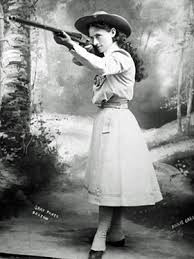
It was three o’clock in the morning when Southern Railway Engine 75 collided with western legend and showman Buffalo Bill Cody’s train outside Lexington, North Carolina, on October 29, 1901. The rumble of the trains hurrying toward one another sounded like the gathering of a cyclone. Whistles blew and brakes scrapped hard against the rails in a desperate attempt to prevent the crash, but the impact was unavoidable.
The force of the engines smacking into one another caused the derailment of the cars in tow, and all at once the air was filled with flying missiles of iron and wood. Smoke poured in great black streaks from the steam funnels, and the popping of steam rose high in the air. A veritable hell of fire erupted. Members of the cast and crew of Buffalo Bill’s Wild West show fought madly in their attempt to crawl out the doors and windows of the overturned cars. Horses trapped in the twisted, mangled debris whinnied and brayed frantically.
People rushed to the scene from nearby farmhouses and stood helplessly around the wreckage holding their hands to their ears in order to shut out the frightful screams of the injured passengers and animals. Gathering their composure, they fought to rescue the hurt from the coaches scattered about the landscape. Slowly the suffering were lifted from the destruction and carried to a grassy field. Many cried and groaned in pain, their heads and hands cut and blood streaming from their wounds.
Annie Oakley, world famous exhibition sharpshooter was one of the unfortunate victims of the train wreck. She was lying unconscious somewhere among the rubble. The car where Annie and her husband Frank had been sleeping was turned upside down. When the engines slammed into one another and their car tumbled over, the petite entertainer was thrown from her berth onto a trunk. Before hitting the trunk with her back, she tried to break the fall by putting her hand out. Both her hand and back were injured. Frank suffered only minor cuts and bruises. He carried his wife out of the wreckage to the spot where the other hurt passengers had been taken. Annie’s eyes fluttered open long enough to see the severely damaged vehicle. What once had been a speeding marvel was now a broken scrap heap.
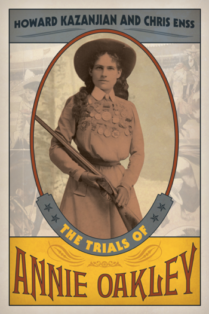
To learn more about the famous sure shot read
The Trials of Annie Oakley
Tweet A Western
Tweet us a Western

Western Writers of America is sponsoring a micro-western contest. Micro-westerns are original Western fiction, nonfiction, or poetry stories 280 characters in length (the equivalent of two tweets). Participants have the opportunity to win $500 in cash prizes and have their work recognized and electronically published by WWA. First prize is $300, second is $125, and third prize is $75.
Interested writers with the gift of brevity can post their Westerns on the Western Writers of America’s Twitter account (@Western_Writers) as a private message between September 1, 2017 and November 30, 2017. Winners will be announced on December 15, 2017.
For more information about the micro-western contest including the contest rules visit Western Writers of America’s Facebook page, the WWA website www.westernwriters.org, and of course on Twitter @Western_Writers.
This Day…
The Trials of Annie Oakley Giveaway
Enter now for a chance to win a copy of
The Trials of Annie Oakley
Say the name Annie Oakley and the image of a young woman who could shoot targets out of the sky without a miss and rode across the frontier with Wild West showman Buffalo Bill Cody comes to mind. Annie Oakley was a champion rifle shot and did perform alongside well-known riders, ropers, and Indian chiefs in Colonel Cody’s vaudevillian tour, but there was more to Annie Oakley’s fame than her skill with a gun. The diminutive weapons wonder was a strong proponent of the right to bear arms, a noted philanthropist, and warrior against libel who fought the most powerful man in publishing and won.
The native Ohioan astonished the world with her almost unbelievable feats of rifle marksmanship. She could pepper a playing card sailing through the air, puncture dimes tossed into the sky, and break flying balls with her rifle held high above her head. She once shot steadily for nine hours, using three sixteen-gauge hammer shotguns which she loaded herself, breaking 4,772 out of 5,000 balls.
Annie Oakley fell in love with and married the first man she defeated in a rifle match. Frank E. Butler was one of the most noted marksmen in the West and he and Annie were married for more than fifty years. The couple never had any children of their own. The reasons they were childless are varied and speculative at best. What is not without question is how Annie helped fund the care and education of orphaned children from coast to coast.
Annie Oakley was a combination of dainty, feminine charm and lead bullets, adorned in fringed handmade fineries and topped with a halo of powder blue smoke. She had a reputation for being humble, true, and law abiding and was careful with her character at all times. When powerful, newspaper magnate William Randolph Hearst challenged her honor and questioned her respectability in his publication in 1903, Annie filed a lawsuit against him that’s still discussed at universities today.
To learn more about the famous sure shot read
The Trials of Annie Oakley
This Day…
Trials of Annie Oakley Book Launch
You’re invited to attend the launch of two new books:
The Trials of Annie Oakley and
The Pinks: The First Women Detectives, Operatives, and Spies with the Pinkerton National Detective Agency.
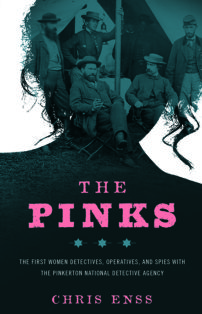
The event will be held at the Nevada County Narrow Gauge Railroad Museum in Nevada City, California, on Sunday, September 17, from 12:00 to 2:00 P.M.
Hope to see you there.
The Trials of Annie Oakley – Introduction
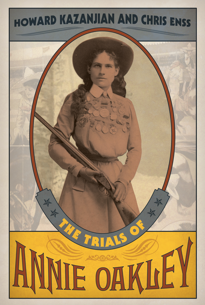
Say the name Annie Oakley and the image of a young woman who could shoot targets out of the sky without a miss and rode across the frontier with Wild West showman Buffalo Bill Cody comes to mind. Annie Oakley was a champion rifle shot and did perform alongside well-known riders, ropers, and Indian chiefs in Colonel Cody’s vaudevillian tour, but there was more to Annie Oakley’s fame than her skill with a gun. The diminutive weapons wonder was a strong proponent of the right to bear arms, a noted philanthropist, and warrior against libel who fought the most powerful man in publishing and won.
The native Ohioan astonished the world with her almost unbelievable feats of rifle marksmanship. She could pepper a playing card sailing through the air, puncture dimes tossed into the sky, and break flying balls with her rifle held high above her head. She once shot steadily for nine hours, using three sixteen-gauge hammer shotguns which she loaded herself, breaking 4,772 out of 5,000 balls.
Annie Oakley fell in love with and married the first man she defeated in a rifle match. Frank E. Butler was one of the most noted marksmen in the West and he and Annie were married for more than fifty years. The couple never had any children of their own. The reasons they were childless are varied and speculative at best. What is not without question is how Annie helped fund the care and education of orphaned children from coast to coast.
Annie Oakley was a combination of dainty, feminine charm and lead bullets, adorned in fringed handmade fineries and topped with a halo of powder blue smoke. She had a reputation for being humble, true, and law abiding and was careful with her character at all times. When powerful, newspaper magnate William Randolph Hearst challenged her honor and questioned her respectability in his publication in 1903, Annie filed a lawsuit against him that’s still discussed at universities today.
Annie’s experience with Hearst wasn’t the only trial she encountered in her celebrated life. A couple of motor vehicle accidents left her in constant pain, subjected her to numerous back surgeries, and resulted in Annie having to wear a leg brace. There were other struggles as well, some just as stifling as a leg brace.
Although Annie’s position on what women should be allowed to do was progressive for the time (she believed in equal pay and in women’s right to carry a gun) she was not for women’s suffrage. Her chief concern was that not enough “good” women would vote. Annie wasn’t political in that sense. She tried for years to convince the government to allow her to recruit a team of women sharpshooters to fight for the country, but was never successful. Public servants dismissed the firearms expert’s idea outright, but Annie never fully abandoned the notion.
The incomparable Annie Oakley suffered through numerous heartaches in her lifetime, the death of her father in 1866, her mother in 1908, her beloved dog, Dave in 1923, and her dear friend, Buffalo Bill Cody in 1917. She was also forced to deal with reports of her own death in 1890. “I am indeed, very grateful for your many kinds words in my obituary,” she wrote the editor at a Cincinnati, Ohio, magazine. “How such a report got started I do not know. I am thankful to say I’m in the best of health.”
Annie and Frank battled imposters trying to use Oakley’s famous name to gain work at theaters and rodeos and endeavored to tolerate brash rivals like Lillian Smith, who was hired by Buffalo Bill Cody to appear in the Wild West show. Lillian was younger than Annie and she was braggadocios and flirtatious with the male cast members of the Wild West show. Her unladylike behavior contributed to Annie’s eventual departure from the program, a way of life that had been a constant for her for more than sixteen years.
Only those close to Annie were aware of the difficulties she experienced. She handled every trial that came her way with such dignity and grace it was easy for the general public to believe she never had a worry, but nothing could have been further from the truth.
The Trials of Annie Oakley describe the hardships the peerless lady wing shot overcame, from her early life using her marksmanship as a means of providing food for her widowed mother, brother, and sisters, to her final days dealing with all the symptoms associated with pernicious anemia. It is the story of a young woman who survived scandal and misfortune to become a true American hero.