Trials of Annie Oakley Book Launch


You’re invited to attend the launch of two new books:

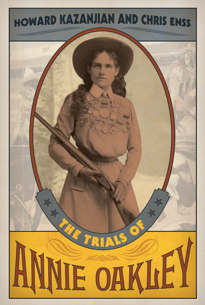
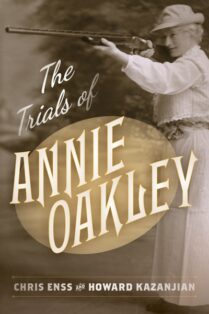
The Trials of Annie Oakley and

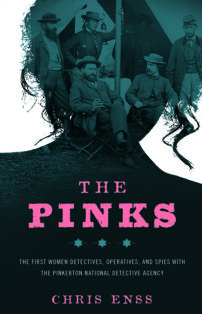
The Pinks: The First Women Detectives, Operatives, and Spies with the Pinkerton National Detective Agency.


The event will be held at the Nevada County Narrow Gauge Railroad Museum in Nevada City, California, on Sunday, September 17, from 12:00 to 2:00 P.M.

Hope to see you there.


The Trials of Annie Oakley – Introduction

Say the name Annie Oakley and the image of a young woman who could shoot targets out of the sky without a miss and rode across the frontier with Wild West showman Buffalo Bill Cody comes to mind.  Annie Oakley was a champion rifle shot and did perform alongside well-known riders, ropers, and Indian chiefs in Colonel Cody’s vaudevillian tour, but there was more to Annie Oakley’s fame than her skill with a gun.  The diminutive weapons wonder was a strong proponent of the right to bear arms, a noted philanthropist, and warrior against libel who fought the most powerful man in publishing and won.

The native Ohioan astonished the world with her almost unbelievable feats of rifle marksmanship.  She could pepper a playing card sailing through the air, puncture dimes tossed into the sky, and break flying balls with her rifle held high above her head.  She once shot steadily for nine hours, using three sixteen-gauge hammer shotguns which she loaded herself, breaking 4,772 out of 5,000 balls.

Annie Oakley fell in love with and married the first man she defeated in a rifle match.  Frank E. Butler was one of the most noted marksmen in the West and he and Annie were married for more than fifty years.  The couple never had any children of their own.  The reasons they were childless are varied and speculative at best.  What is not without question is how Annie helped fund the care and education of orphaned children from coast to coast.

Annie Oakley was a combination of dainty, feminine charm and lead bullets, adorned in fringed handmade fineries and topped with a halo of powder blue smoke.  She had a reputation for being humble, true, and law abiding and was careful with her character at all times.  When powerful, newspaper magnate William Randolph Hearst challenged her honor and questioned her respectability in his publication in 1903, Annie filed a lawsuit against him that’s still discussed at universities today.

Annie’s experience with Hearst wasn’t the only trial she encountered in her celebrated life.  A couple of motor vehicle accidents left her in constant pain, subjected her to numerous back surgeries, and resulted in Annie having to wear a leg brace.  There were other struggles as well, some just as stifling as a leg brace.

Although Annie’s position on what women should be allowed to do was progressive for the time (she believed in equal pay and in women’s right to carry a gun) she was not for women’s suffrage.  Her chief concern was that not enough “good” women would vote.  Annie wasn’t political in that sense.  She tried for years to convince the government to allow her to recruit a team of women sharpshooters to fight for the country, but was never successful.  Public servants dismissed the firearms expert’s idea outright, but Annie never fully abandoned the notion.

The incomparable Annie Oakley suffered through numerous heartaches in her lifetime, the death of her father in 1866, her mother in 1908, her beloved dog, Dave in 1923, and her dear friend, Buffalo Bill Cody in 1917.  She was also forced to deal with reports of her own death in 1890.  “I am indeed, very grateful for your many kinds words in my obituary,” she wrote the editor at a Cincinnati, Ohio, magazine.  “How such a report got started I do not know.  I am thankful to say I’m in the best of health.”

Annie and Frank battled imposters trying to use Oakley’s famous name to gain work at theaters and rodeos and endeavored to tolerate brash rivals like Lillian Smith, who was hired by Buffalo Bill Cody to appear in the Wild West show.  Lillian was younger than Annie and she was braggadocios and flirtatious with the male cast members of the Wild West show.  Her unladylike behavior contributed to Annie’s eventual departure from the program, a way of life that had been a constant for her for more than sixteen years.

Only those close to Annie were aware of the difficulties she experienced.  She handled every trial that came her way with such dignity and grace it was easy for the general public to believe she never had a worry, but nothing could have been further from the truth.

The Trials of Annie Oakley describe the hardships the peerless lady wing shot overcame, from her early life using her marksmanship as a means of providing food for her widowed mother, brother, and sisters, to her final days dealing with all the symptoms associated with pernicious anemia.  It is the story of a young woman who survived scandal and misfortune to become a true American hero.

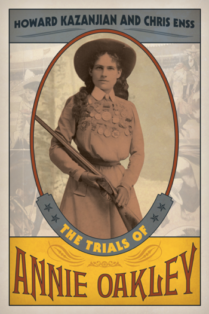
The Trials of Annie Oakley

The Trials of Annie Oakley

Long before the screen placed the face of Mary Pickford before the eyes of millions of Americans, Phoebe Anne Oakley Moses—aka “Annie Oakley”—had won the right to the title of the first “America’s Sweetheart.” The world loved Annie Oakley, but the road to fame and affection was filled with trials and tribulation. Authors Howard Kazanjian and Chris Enss have written about those difficulties in the new book The Trials of Annie Oakley.

The life story of Annie Oakley is a combination Cinderella fairy story and frontier melodrama. Born in a humble log cabin in Ohio in 1860, young Annie began shooting game to help support her six siblings and twice-widowed mother. At fifteen, she entered a shooting contest where she ended up winning first prize by outshooting her future husband, who also became her manager.

She became well known and loved worldwide for her incredible shooting performances with Buffalo Bill’s Wild West Show, where she captured the hearts of young and old, ruffians and royalty. But she fought many battles along the way—for her life after severe accidents, and for her reputation after becoming the subject of a scandal that spread through the media like wildfire. Throughout her triumphs and trials, however, Annie Oakley never failed to advocate for the causes and individuals about which she was most passionate.

This Day…

1886: On this day, famed Apache leader Geronimo officially surrendered unconditionally to General Nelson Miles at Fort Sam Houston, becoming the last major Native American to surrender in this fashion. After two years of captivity, he was freed and relocated to the Indian Territory of Colorado, where died many years later.

Tweet A Western

Tweet us a Western

Western Writers of America is sponsoring a micro-western contest. Micro-westerns are original Western fiction, nonfiction, or poetry stories 280 characters in length (the equivalent of two tweets). Participants have the opportunity to win $500 in cash prizes and have their work recognized and electronically published by WWA. First prize is $300, second is $125, and third prize is $75.

Interested writers with the gift of brevity can post their Westerns on the Western Writers of America’s Twitter account (@Western_Writers) as a private message between September 1, 2017 and November 30, 2017. Winners will be announced on December 15, 2017.

For more information about the micro-western contest including the contest rules visit Western Writers of America’s Facebook page, the WWA website www.westernwriters.org, and of course on Twitter @Western_Writers.


This Day…

1874- Waverly – Lexington, Missouri- two robberies attributed to the James gang occurred with twenty five miles apart on the same day. Many reports stated that the robbers were recognized. Later the witnesses recanted after visiting with Zerelda James-Samuel.

The Forsaken Gambler

Enter for a chance to win a copy of

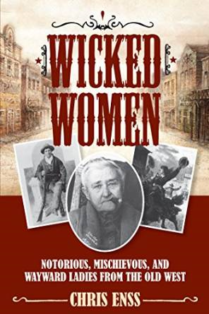
Wicked Women:

Notorious, Mischievous, and Wayward Ladies from the Old West.


Blood spattered across the front of the dark-eyed, brunette gambler Belle Siddons, as she peered into the open wound of a bandit stretched in front of her. Biting down hard on a rag, the man winched in pain as she gently probed his abdomen with a wire loop. She mopped up a stream of blood inching its way to the crude wooden table where he was lying.

Two men on either side of the injured patient struggled to keep his arms and legs still as the stern-faced Belle plunged the loop further into his entrails. “How do you know about gunshots,” one of the rough looking assistants asked? “My late husband was a doctor and I worked with him,” Belle replied. “Is he going to die,” the other man inquired? “Not if I can help it,” Belle said as she removed the wire loop. She shifted through the tissue and blood attached to the instrument until she uncovered a bullet. She smiled to herself as she tossed it into a pan sitting next to her and then set about stitching the man‘s wound closed.

When Belled decided to go west in 1862, she envisioned a comfortable frontier home, a life-long husband and several children. But fate had other plans for the head-strong woman many cowhands admitted was a “startling beauty.”

Belle’s story began in Jefferson City, Missouri where she was born sometime in the late 1830s. Her parents were wealthy land owners who made sure their daughter was well educated. She attended and graduated from the Missouri Female Seminary at Lexingtion, Missouri. Belle’s uncle was the state’s Governor, Claibourne Fox Jackson. She spent a great deal of time with him traveling in elite circles that elevated the charming teenage to the toast of society.

When the war between the states erupted, Missouri residents were divided between support for North and South. Belle and her family were Southern sympathizers, actively seeking ways to crush the Union’s agenda. The attractive, young Ms. Siddons, fraternized with troops training in the area, hoping to glean valuable information from them. They were enamored with her and in their zeal to impress her, shared too much about military plans and the position of soldiers. Belle passed those secrets along to rebel intelligence.

Her deceptive actions were found out by General Newton M. Curtis of the Union Brigade from New York. A warrant was issued for Belle’s arrest in 1862 and she was apprehended 50 miles south of St. Genevieve on the Mississippi. When Belle was captured she was found with proof of her duplicitous behavior in her possession. She had detailed plans of the stops of the Memphis and Mobile Railroad. The rail line was being used by the Union Army to transport supplies and weapons. When questioned about the crime Belle proudly admitted being a spy. She was tried, found guilty and sentenced to a year in prison. She was released after having only served 4 months.


To learn more about the wild ladies on the rugged frontier read

Wicked Women:

Notorious, Mischievous, and Wayward Ladies from the Old West.


This Day…

1872- Niagara Falls, New York/Canada- James Butler “Wild Bill” Hickok starred in the Grand Buffalo Hunt at Niagara Falls, Ontario. Although there were only three buffalo to be “hunted”, the Native American and Mexican cowboys presented a thrilling display of roping and riding in Canada’s first Wild West show. The show was a financial failure, unable to draw enough to even pay Wild Bill’s salary.

The Gambling Outlaw

Enter now for a chance to win a copy of

Wicked Women:

Notorious, Mischievous, and Wayward Ladies from the Old West.


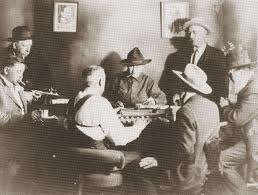
The faces around the poker table in “Poker Alice’s” gambling house in Deadwood, South Dakota, were nonchalant but their nonchalance only veiled excitement. Only the face of “Poker Alice” showed absolutely no flicker of tautness.  She shifted her cigar to the other corner of her mouth and narrowly watched the face of the man holding the only hand, besides hers.  All the others had tossed their cards in the center of the table.  At last: “Well, I’ll see yah,” the man breathed and added another bag of gold dust to the small mountain of bags already in the center of the table.  “What yah got, Alice?”  “Then you ain’t going to raise me again?”  Alice asked and lifted an eyebrow, shifting the cigar once more.  “No?  Well, it’s pretty full,” she said with a sweeping gesture displaying her cards.  “Three aces and a pair of ladies.  Beat that and the dust is yours.”  “Take the pot,” her opponent ordered, and rose.  He stomped disgustedly to the exit of the business and disappeared into the night.

Alice removed a gun from the folds of her skirt and placed it on the table in front of her.  She considered the fact that the disgruntled gambler might walk back into the gaming hall and accuse her of cheating, and she wanted to be ready.  It wouldn’t have been the first time Alice Ivers, more famously known as “Poker Alice,” shot a combative card sharp.   While working at a gambling parlor in Deadwood in 1890, she successfully fended off a drunken miner who had pulled a knife on a fellow dealer.

A steady stream of prospectors, ranchers, and cowhands filtered in and out of a Deadwood saloon owned by a man named Bedrock Tom where Alice worked then.  An inexperienced musician playing an out of tune accordion squeezed out a familiar melody ushering the pleasure seekers walking by the establishment inside.  Burlap curtains were pulled over the dusty windows, and fans hung down from the ceiling and turned lazily.  A distressed mahogany bar stood along one wall of the business, and behind it was a bartender splashing amber liquid into glasses as fast as he could.  A row of table and chairs occupied the area opposite the bar.  Every seat was filled with a card player.  Poker Alice sat among a sea of male gamblers.  She was alarmingly beautiful, fair-skinned, well-dressed, and slim.  She had one eye on the cards she was dealing and another on the men at the game two tables down.

Warren G. Tubbs was studying the cards in his hands so intently he didn’t notice the hulk of a man next to him get up and walk around behind him.  The huge man with massive shoulders and ham-like hands that hung low at his side peered over Warren’s shoulder and eyeballed the mountain of chips before him.  Alice’s intensely blue eyes carefully watched the brute’s actions.  She watched as he casually reached for his belt and produced a sharp knife from a leather sheath hanging off his waist.  Just as he was about to plunge the weapon into Warren’s back, a gunshot rang out.

The frivolity in the saloon came to a sudden halt.  A sick look filled the man’s face, and he slowly dropped the knife.  Before dropping to his knees, he turned to see from which direction the bullet came.  Alice stared back at him, her .38 pistol pointed at his head.  The man collapsed face first onto the floor.  His dead body was quickly removed to make way for another player.  In a matter of minutes the action inside the tavern returned to normal.  Warren caught Alice’s gaze and grinned.  He nodded to her and waggled his fingers in a kind of salute.  She smiled slightly and wholly turned her attention back to the poker game in front of her.


To learn more about the wild ladies on the frontier read

Wicked Women:

Notorious, Mischievous, and Wayward Ladies from the Old West.


This Day…

1896- Oklahoma- Bill Doolin was approaching his father-in-law’s farmhouse, where his wife and child were staying. Lawmen led by Heck Thomas, however, had learned of Doolin’s presence in the area and were waiting in ambush. Doolin appeared on foot, leading his horse, carrying a rifle, whistling as he walked in the bright moonlit night. Suddenly Thomas shouted from behind some bushes, calling to the outlaw to surrender. Doolin raised his rifle which was shot out of his hand by several shots fired by posse. Doolin then drew his six-gun and fired twice before a blast from a shotgun fired by Deputy Bill Dunn and rifle bullets fired by Thomas cut him to pieces. The outlaw’s body was later displayed, naked from the waist up, to show the many holes made by shotgun pellets.