1875 – Pinkerton agents bomb the home of Jesse and Frank James. The result is the death of their younger brother, Archie, and their mother lost her arm.
Destined for Disappointment
Be a winner. Enter now to win a book for history lovers and brides to be who believe the risk is worth it all – Object Matrimony: The Risky Business of Mail-Order Bride Matchmaking on the Western Frontier.

Deacon Joe Sleet’s correspondence with the widow Nellie Wallace was full of promise for the future. When they began writing one another in late 1925, Mrs. Wallace had hoped to find a man who would love and care for her as her deceased husband once had. When she placed an ad in the Get Acquainted section of a western magazine and the deacon responded, she believed he was the answer to her heart’s longing. “I’m not a flapper,” her advertisement read, “but I would like to exchange letters with a man between the age of twenty-five and thirty-two. I want a husband good and true, there is a chance it might be you,” the notice concluded.
Twenty-two-year-old Nellie Wallace lived in Tchula, Mississippi, 1,500 miles from Joes Sleet’s home in El Paso, Texas. Of all the letters she received in reply to her ad, Joe’s struck her fancy completely. In a short time Nellie was writing Joe to the exclusion of anyone else. Through his letters she learned that he was a deacon in the Baptist church and that he was a widower. Nellie confided in him that she too was the victim of a sad romance, her husband having died some years ago.
The correspondence was hardly a month old before Joe had been granted permission to call his fair correspondent “Sweetheart.” Another week and respective photographs were exchanged; still another and a row of x’s appeared at the bottom of their letters. Another month passed and more letters were delivered at the Sleet home. In one of those letters Nellie admitted there was a “spark of love aglow” in her heart.
To learn what happened to Deacon Sleet and Nellie Wallace read
Object Matrimony: The Risky Business of Mail-Order Matchmaking on the Western Frontier.
This Day…
The Belle and the Businessman
Enter now to win a book for history lovers and brides to be who believe the risk is worth it all – Object Matrimony: The Risky Business of Mail-Order Bride Matchmaking on the Western Frontier.
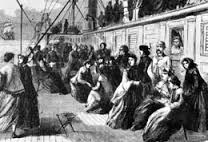
The SS Continental pitched and rolled as it traveled over the rough waters of the Pacific Ocean en route to the northwestern section of the United States. The nearly three dozen women on board were violently ill with seasickness and desperate for the waves to subside. They were either lying on their bunks in their berths or hanging over the railing of the vehicle heaving into the sea. The tormented females were part of a unique group headed west in search of a spouse.
In 1860, Asa Mercer, a twenty-one-year-old educator and entrepreneur, conceived the idea of bringing eligible females to the Washington Territory in hopes of settling the area and making it fit for societal advancements. The Pacific Northwest was known as a man’s paradise. Everything a young man ever dreamed of or wanted was there, except young women.
Life without the presence of a woman to share a home and life grew monotonous-so much so, in fact, that a big percentage of single men vowed they could pull up stakes and seek a new place to settle unless someone did something in a hurry. Enter Asa Mercer.
Mercer organized an expedition of prospective brides to go west in 1864. He recruited dozens of young ladies (mostly teachers) to journey to a place where their talent and gender were in high demand. The Mercer Belles, as the primarily Massachusetts-born females became known, welcomed the chance to accompany the businessman on his second voyage to the growing coastal town of Seattle. In addition to offering the chance to meet and marry ambitious, hardworking bachelors, Mercer promised the eager, single passengers honorable employment in schools and good wages.
To learn more about the Mercer Belles and the other mail-order brides who came West read
Object Matrimony: The Risky Business of Mail-Order Matchmaking on the Western Frontier.
This Day…
The New Plan Company Catalog for Matrimony
Don’t wait. Enter now to win a book for history lovers and brides to be who believe the risk is worth it all – Object Matrimony: The Risky Business of Mail-Order Bride Matchmaking on the Western Frontier.

Matrimonial clubs date as far back as 1849. Lonely hearts from Syracuse, New York, to San Francisco, California, joined such organizations in hopes of finding a suitable mate with whom to spend the rest of their lives. The New Plan Company based in Kansas City, Missouri, was a matrimonial club that claimed to have more than thirty-two thousand members during its existence from 1911 to 1917. According to the New Plan Company’s handbook, printed in the fall of 1910, the plan and method of the club were simple and easy to understand and follow.
“Our time and money is devoted entirely to the interest of the unmarried. We are dedicated to elevating and promoting the welfare of marriageable people and furnishing them with a safe, reliable, and confidential method at a nominal cost, whereby good honorable people of sincere and moral intentions, may better enable themselves to become acquainted with a large number of such people of the opposite sex as they may deem worthy of consideration, which may lead to their future happiness and prosperity.”
The follow are a sample of some of the ads placed in The New Plan Company catalog:
American; widow by death, age 38; weight, 135; height, 5 feet 6 inches; brown eyes; brown hair; Methodist religion; occupation, housewife, income $700 per year, business education and musician. Have means of $10,000. I am considered very good looking and neat. Will marry if suited.
A nice little blue-eyed Miss from North Carolina, with brown hair, age 18, weight 125, height 54 inches, fair complexion; can sing and plan piano; have a fine home, also have means of $50,000; my occupation is trained nurse; would like to hear from a nice young man of suitable age, rich or poor, but must be good-hearted and true; will marry a true love only.
Am not considered good looking, but make a nice appearance; plain, and neat dresser; immaculate character; quiet, loving disposition; Christian religion, age, 22; weight, 135; height 5 feet 4 inches, blue eyes; blonde hair; light complexion. Would like to hear from gentleman interested in missionary work.
To learn more about the mail-order bride business in the Old West or to read exciting tales about mail-order brides read
Object Matrimony: The Risky Business of Mail-Order Matchmaking on the Western Frontier.
This Day…
Making Matrimony Pay
Enter to win a book for history lovers and brides to be who believe the risk is worth it all – Object Matrimony: The Risky Business of Mail-Order Bride Matchmaking on the Western Frontier.
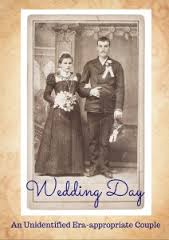
Long after an advertisement is placed in the newspaper by lonely hearts in need of a spouse, and once nerves have settled after meeting the bride or groom of choice for the first time, comes the challenge of making a mail-order marriage last. Matches that came about through a public announcement, marriage broker, or matrimonial agency in the mid-1800s were not necessarily unhappy. Though embodying more of the lottery element than the ordinary marriage is said to contain, they frequently yielded surprises to the persons involved.
Conscientious marriage brokers like Edgar Kaborchev of Bachmut, Russia, wanted his clients to be satisfied with their decision for a lifetime. Kaborchev resided in New York City and represented several men west of the Mississippi looking for a bride. According to the June 23, 1890, edition of the Longansport, Indiana, newspaper the Daily Reporter, Kaborchev provided photographs to those interested in marrying so “the individual who hired him could make a more informed decision about the person entering into such a sacred union.” Each photograph was accompanied by details concerning the social and financial standing of the person pictured.
The Daily Reporter noted that Kaborchev was “kindly received everywhere.” He was quick to point out to the eager men and women he had arranged to marry that he wanted them to be happy for years. “Knowing a potential spouse is attractive and of fair fortune before they exchange vows is the key to success,” Kaborchev proudly confessed.
To learn more about the mail-order bride business in the Old West or to read exciting tales about mail-order brides read
Object Matrimony: The Risky Business of Mail-Order Matchmaking on the Western Frontier.
This Day…
Marriage and Money
Enter to win a book for history lovers and brides to be who believe the risk is worth it all – Object Matrimony: The Risky Business of Mail-Order Bride Matchmaking on the Western Frontier.
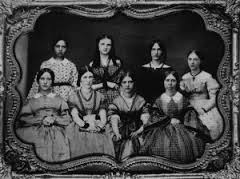
It is said that early pioneers were compelled to go west. Their strong desire to learn what was beyond the boundaries of the Mississippi River beckoned them. Thousands of men made the initial trek over the plains, many of them unencumbered by a wife or children. It was an isolated and lonely existence for them, but given the fact that there were few single women living on the frontier, there was little they could do about their circumstances.
Women who remained in the East experience a similar lack. The push to expand the United States territories, the fever of the Gold Rush, and the Civil War claimed the greater majority of marriageable men. The highest percentage of unmarried women in American history was recorded between 1860 and 1880. According to the November 1886 edition of the Ladies’ Home Journal, the reasons for the decline in wedding vows being exchanged went beyond politics or the urge to find wealth. Rather, there was a close connection between marriage and the price of wheat, beef, pork, beans, corn, and other things. “As the price of these commodities went up the number of marriages went down,” the article explained.
To learn more about the marital statistic in the Old West or to read exciting tales from mail-order brides read
Object Matrimony: The Risky Business of Mail-Order Matchmaking on the Western Frontier.