
1861 – The Civil War officially began.
Juana Navarro Alsbury – Alamo Survivor
Enter to win a copy of the new book
Soldier, Sister, Scout, Spy:
Women Soldiers and Patriots of the Western Frontier.
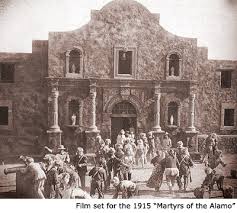
The distant cadence of drums from the nearly deserted town of San Antonio de Bexar sent a shiver of fear through Juana Navarro Alsbury. She clutched her baby son closer and strained to hear. Mexican president and General Antonio Lopez de Santa Anna, enemy of her uncle and her husband, had come when least expected, bringing thousands of men and artillery as well as a thirst for vengeance. The baby wailed at the nearby roar of exploding powder from the cannon mounted at one corner of the Alamo.
That shot signaled defiance by the Texians (Texans from the United States) and Tejanos (Texans of Mexican descent) holed up in the old mission. Juana soothed the baby and waited, holding her breath for Santa Anna’s response.
It was said he had 1,500 to 6,000 troops, cavalry, and cannon at his command. Inside the crumbling fortress were several dozen women and children protected by fewer than 200 defenders. Juana’s new husband, Dr. Horatio A. Alsbury, had galloped off to find volunteers to join the fight, leaving Juana and the baby behind.
Dr. Alsbury had warned that Santa Anna would come down with a heavy hand on the Tejanos and Texians who had settled in the area. Her husband’s activities were known to the Mexican dictator, as were those of her father, who opposed Santa Anna’s overthrow of the constitution of 1824. Her father’s brother, Jose Antonio, had put his name on the Texas Declaration of Independence. If the Alamo fell under the general’s onslaught, the respected name of her Spanish forebears would not protect her little family.
Juana recognized the futility of attempting to hold off the overwhelming force of hardened troops surrounding the old mission-turned-fortress. Those inside the Alamo’s walls were also ill-prepared to fight Santa Anna, in part because too many people had discounted the Mexican dictator’s determination. He had already killed all prisoners taken in a battle the year before and been granted by the Mexican government permission to treat as pirates all Tejanos as well as Texians found armed for battle, meaning they would be executed immediately.
The Tejanos and Texians had dismissed reports that the Mexican dictator was nearby. After all, they argued, two blue northers had recently swept through the area, their freezing winds covering the barren landscape to the south with snow. What commander would move his troops, many of them barefoot, in such conditions?
Enter to win here:
To learn more about Juana Navarro Alsbury and other such patriots read
Soldier, Sister, Scout, Spy:
Women Patriots and Soldiers on the Western Frontier.
Under Western Stars
The head of the National Film Registry recently asked Howard Kazanjian and I to write an essay about the Roy Rogers’ film Under Western Stars. It’s one of Rogers’ best films and has been masterfully restored. Enjoy.
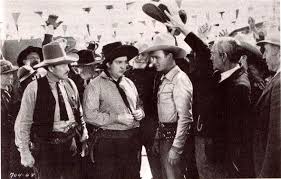
King of the Cowboys Roy Rogers made his starring motion picture debut in Republic Studio’s engaging western musical Under Western Stars. Released in 1938, the charming, affable Rogers portrayed the most colorful Congressman ever to walk up the steps of the nation’s capital. Rogers’ character, a fearless, two-gun cowboy and ranger from the western town of Sageville, is elected to office to try to win legislation favorable to dust bowl residents.
Rogers represents a group of ranchers whose land has dried up when a water company controlling the only dam decides to keep the coveted liquid from the hard working cattlemen. Spurred on by his secretary and publicity manager, Frog Millhouse, played by Smiley Burnette, Rogers campaigns for office. The portly Burnette provides much of the film’s comic relief and goes to extremes to get his friend elected. His tactics include pasting stickers on the backs of unsuspecting citizens he engages in conversation and helping to organize a square dance to highlight Rogers’ skill and dedication to solving the constituent’s crisis. Using his knowledge of land and livestock and his talent for singing and yodeling, Rogers wins a seat in Congress.
The sweep of this picture, which moves rapidly from physical action on the western plains to diplomatic action in Washington and back again, is distinctively thrilling. The surging climax in the dust-stricken cattle country makes for one of the most refreshing films of its kind. The politicians Rogers appeals to about the drought are not convinced the situation is as serious as they are led to believe and decide to inspect the scene for themselves. The investigation committee is eventually trapped in a real dust storm. The shots of the storm and the devastation left in its wake are spectacular.
Roy Rogers came to Hollywood from Duck Run, Ohio. He made a name for himself as a member of the successful singing group the Sons of the Pioneers. Reigning box office cowboy Gene Autry’s difficulties with Herbert Yates, head of Republic Studios, paved the way for Rogers to ride into the leading role in Under Western Stars. Yates felt he alone was responsible for creating Autry’s success in films and wanted a portion of the revenue he made from the image he helped create. Yates demanded a percentage of any commercial, product endorsement, merchandising, and personal appearance Autry made. Autry did not believe Yates was entitled to the money he earned outside of the movies made for Republic Studios. He refused to include Yates in the profits and threatened to leave the studio if Yates did not reconsider. Autry was also demanding a raise in pay.
Yates decided it was time to begin grooming another talent to take Autry’s place should the need arise. Rogers was a contract player with the studio making $75 a week. Billed as Leonard Slye he appeared in a handful of films with Gene Autry singing along with the Sons of the Pioneers. Rogers even had a part as a bad guy in one of Autry’s films. When Autry caught up with Rogers in the picture, instead of taking him to jail he demanded the wily character yodel his way out of his troubles.
Yates had been looking for a musical actor to go boot-to-boot with Autry and Rogers was to be the heir apparent. His sweet, pure voice and wholesome image made him a natural for the hero in Under the Western Stars. Whether regaling the audience with a song about fighting the law entitled Send Our Mail to the County Jail or delivering a stump speech via a tune called Listen to Rhythm of the Range, Rogers makes the most of his leading role.
The Maple City Four, the well-known quartet who made the number Git Along Little Dogies popular, added their talents with Rogers harmonizing on the film’s most important song entitled Dust. Written by Johnny Marvin, a recording artist from Oklahoma, Dust was nominated for an Academy Award for Best Original Song. It was the first song from a B-western to be Oscar nominated.
According to the February 24, 1938, edition of the Hollywood Reporter, Dust was purchased by Republic Studios from the composers, Gene Autry and Johnny Marvin, for use in Under Western Stars. A subsequent news item in Hollywood Reporter on April 13, 1938, just prior to the film’s release, noted that Autry was suing the studio for $25,000 for unauthorized use and dramatization of the lyrics with Dust. According to contemporary sources, the suit over Dust was settled out of court and Johnny Marvin is listed as sole writer of the song.
Audiences made Under Western Stars a box office success and critics called its star “the new Playboy of the Western World.”
Director Joseph Kane, Republic’s top director of westerns delivered a film with a slight new slanting to make it different from all other B-westerns before it. In addition to the political intrigue in Under Western Stars there is a fair amount of gunfights, fast horses, and unforgettable stunts. What makes Kane’s film unique is that the fight is not over horse thieves, but the rights of man. Critics at the Brooklyn Daily Eagle newspaper sited Kane’s “sensitive directing eye with giving the horse opera a social consciousness.”
Actors Carol Hughes, Guy Usher, Tex Cooper, Kenneth Harlan, Curley Dresden, Bill Wolfe, Jack Ingram, Jack Kirk, Fred Burns, and Tom Chatterton round out the exciting cast of players and no happy ending would be possible at all if not for Roy’s magnificent Palomino horse Trigger. Brothers and veteran western writers Dorrell and Stuart McGowan penned the screenplay for Under Western Stars along with actress and screenwriter Betty Burbridge.
The film was shot in the Alabama Hills of Lone Pine, California. The scenic location has been used for the backdrop in hundreds of motion pictures and television programs. The high desert surroundings are integral to the story line of Under Western Stars and could be billed as a supporting role in the film.
Roy Rogers’ first starring vehicle solidified his place as a rising star in B westerns. Film writer and critic Louella Parsons likened Rogers to “Gary Cooper in personal appeal.” According to her report with the International News Service on November 29, 1938, she called Rogers an “upstanding young American who made the picture Under Western Stars a delight.”
This Day…
Susan Shelby Magoffin: Bride of the Santa Fe Trail
Win a copy of the new book
Soldier, Sister, Spy, Scout: Women Soldiers and Patriots on the Western Frontier
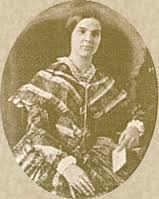
Susan Shelby Magoffin gazed around the small, white-plastered room in Santa Fe and wondered if she might die there. No one seemed sure where the Mexican army was, or how soon a battle might commence. But there was no doubt about the danger to herself and her husband now that her brother-in-law had been taken by the Mexicans as a spy. As she had since the start of her honeymoon journey, Susan recorded the day’s events in her journal:
December 1846, Tuesday 1st: News comes in very ugly today. An Englishman from Chihuahua direct, says that the three traders, Dr. Conely, Mr. McMannus, and brother James, who went on ahead to the Chihuahua have been taken prisoners, the two former lodged in the calaboza [jail] while Brother James is on trial for his life.
The messenger who brought the ominous news had gone, but the impact of the latest information from Chihuahua still reverberated like an alarm bell. The fate of everyone associated with James Magoffin was hanging in the balance. What if her own dear husband, Samuel, left her behind to ride to her brother’s aide? They had been married less than a year, and despite their strange honeymoon, she could not bear to be parted from the man she called “mi alma,” my soul.
She would insist on going, too, she thought. After traveling thousands of miles across wild and dangerous terrain and through the lands of unfriendly Native Americans on her prairie honeymoon, she had proved her courage to herself and her husband. She had survived the hazardous two thousand mile journey despite raging storms, wild beasts, hostile tribes, outlaws, and the awful waterless desert they had traversed a few week before.
Enter now to win a copy of
Soldier, Sister, Spy, Scout: Women Soldiers and Patriots on the Western Frontier
To learn more about Susan Shelby Magoffin and other women patriots of the Old West read Soldier, Sister, Spy, Scout: Women Soldiers and Patriots on the Western Frontier.
Sarah Winnemucca – Paiute Princess
Enter to win a copy of the new book
Soldier, Sister, Scout, Spy:
Women Soldiers and Patriots of the Western Frontier.
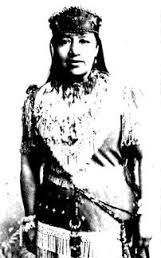
Sarah Winnemucca brooded over the abandoned houses along the dusty track. She and her small party had departed the John Day Valley in the eastern Oregon Territory three days before. They were on the way to Silver City, Idaho, where Sarah would drop off her passengers before heading for Elko, Nevada. There she intended to take a train to Washington, DC, and attempt to tell President Rutherford B. Hayes that her people were starving, the Indian agents were crooked, and none of the promises to the Paiute had been kept. On June 8, three days after the war was reported in the Enterprise, Sarah was unknowingly headed straight for the heart of the battle. “We saw houses standing all along the road without anybody living in them,” Sarah later wrote in her book Life Among the Piutes [sic].
On June 12, they met Paiute Joe on the road and learned the dreadful news. “He said the Bannock Indians were just killing everything that came in their way, and he told us to get to a place called Stone House. That was the first I heard that the Bannocks were on the warpath.” She also learned that there was no one the Bannocks would love to kill more than Chief Winnemucca’s daughter.
When the Bannock War broke out, Sarah was thirty-four years old, daughter of the highly respected Paiute chief Winnemucca and granddaughter of old Chief Truckee, who first met Captain John Fremont and his explorers and guided them over the Sierra Mountains. Truckee had for years considered white people the long-lost brothers of Indians and always counseled peace despite increasing violence by whites against his people and the outright theft of Paiute lands in the Nevada Territory.
Now it appeared the Paiutes were caught in a vise between their northern neighbors in Idaho and Oregon, the Bannock Indians, and the increasing number of settlers pushing them out of their tribal lands in Nevada. Also known as the Snake Indians, the Bannocks were superb horsemen, tall and lean. They dressed in fringed buckskin decorated with quills, scalps, and red, yellow, and black paint and wore a single eagle feather or a headdress made of trimmed horse tail or porcupine skin. Their enemies considered them the most savage and bloodthirsty of all the Indians west of the Mississippi, but they had been relatively peaceful until driven to rebellion.
To learn more about Sarah Winnemucca and other such patriots read
Soldier, Sister, Scout, Spy:
Women Patriots and Soldiers on the Western Frontier.
Autry Museum Event
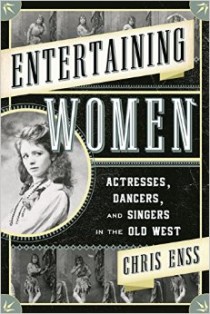
You’re cordially invited to attend the Cowboy Lunch Series at the Autry Museum in Los Angeles on May 18, 2016 for a special tribute to actor/director John Wayne.
The Cowboy Lunch Series brings together western filmmakers and stars with Autry Museum members and other fans of the genre. Order lunch at Autry’s Crossroads Café and join actors, producers, stunt coordinators, makeup artists, writers, and other surprise guests. Hollywood producer, Rob Word hosts “A Word on Westerns” a group discussion based on the particular theme or film of the month.
The theme for the May Cowboy Lunch Series is a Salute to Wayne. John Wayne’s son actor Patrick Wayne will be in attendance to discuss his father’s work. New York Times Bestselling author Chris Enss will also be on hand to talk about her book Entertaining Women: Actresses, Singers, and Dancers of the Old West. She’ll share stories about women entertainers on the wild frontier and how they inspired some of the actresses who starred opposite John Wayne.
The event is free to the public. Cost of lunch is not included.
For more information visit http://theautry.org or call 323.667.2000.
This Day…
Francita Alavez – Angel of Goliad
Enter to win a copy of the new book
Soldier, Sister, Scout, Spy:
Women Soldiers and Patriots of the Western Frontier.
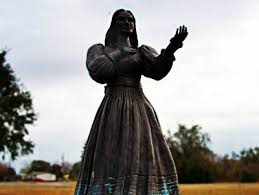
A slim shadow darted toward the old church at the ruined fortress of Goliad. The smell of smoke stained the night air as the figure picked a careful path through the rubble inside the fortress walls. Moonlight starkly displayed the damage caused by the retreating forces of Colonel James Fannin’s command. Hundreds of Fannin’s men now lay on the hard ground, prisoners of General Jose de Urrea, one of Supreme Commandant General Antonio Lopez de Santa Anna’s best commanders.
Pausing in a dark corner, Francita Alavez gazed toward the southwest gate and the dull gleam of a cannon positioned to fire on anyone who might attempt a rescue of the Americans. She shivered in the warm night as the knowledge of their fate bowed her shoulders. She knew what the captives did not. They believed they would be returned to the United States as prisoners of war. Francita had seen the order sent by Santa Anna to execute all of them.
As she had at Copano Bay almost the moment she arrived in Texas, Francita vowed to save as many as she could. On the eve of Palm Sunday, March 27, 1836, she slipped into the church and began the task.
“She had heard many tales of the bad, bold, immoral Texans, but like all good souls loath to think ill of others, scarcely believed they could be as bad as painted,” recounted the Pioneer Press in 1920. The article went on to outline what was then known about the woman who came to be called the “Angel of Goliad.” Little more is known today about the young woman who worked against a dictator’s orders at the risk of her own life.
According to a written recollection of schoolteacher Elena Zamora O’Shea, who learned about Francita years later through a family connection, Francita—or Panchita, as she was sometimes called—had been orphaned when young. A well-to-do family near San Luis Potosoi in Mexico raised the girl. O’Shea said that Francita was a sort of “better-class servant, of good blood and from a fine family.”
O’Shea went on to describe Francita as a “pretty, attractive, loving girl chafing at her position in this family and longing to be free and to have a fling at life.” Succumbing to the charms of the dashing Captain Telesforo Alavez, whom she knew to be married, Francita, “throwing all restraint aside went off with him to Texas in the campaign.”
Francita’s first encounter with the cruelties of war came at Copano. Mexican troops had just captured about seventy-five to eighty men after they had disembarked at the port. The Americans had come with William P. Miller from Nashville, Tennessee, to aid in the fight for liberty in Texas, then a part of Mexico. They were captured without arms and taken back to Copano.
To learn more about Francita Alavez and other such patriots read
Soldier, Sister, Scout, Spy:
Women Patriots and Soldiers on the Western Frontier.