
1949: Axis Sally stood trial in the United States — an American charged with broadcasting Nazi propaganda.
The Irish Prima Donna
Time to enter to win a copy of the book
Entertaining Women:
Actresses, Dancers, and Singers in the Old West
Long before actors were vying for an Oscar nomination and world wide fame thespians were trying to carve out a modest living entertaining prospectors and settlers of the Old West. Today the curtain goes up on a woman entertainer who captured the hearts of the western pioneers.
Ladies and gentlemen, Catherine Hayes, the Irish Prima Donna
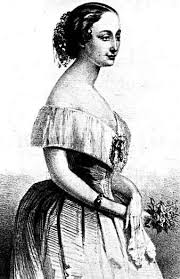
A demure ten-year-old girl sat in front of a clear blue river, half hidden under a canopy of willow trees in a lush garden, singing. Her silvery-toned voice resonated across the water and filled the afternoon sky with a melancholy sound. Couples canoeing on the river paddled toward the song, halted their boats, and waited in the shadows of the trees, listening. No one said a word. Not even a whisper gave away their position to the unknowing girl. Indeed she didn’t realize anyone was paying attention until she finished her tune and rapturous applause commenced. Thus was the romantic beginning of Kate Hayes’s singing career.
When Catherine (Kate) Hayes was born in July 1823 in Ireland, her mother, Mary, compared the child’s features to those of a cherub. Her talent for singing like an angel was soon revealed.
Kate’s father, Arthur, abandoned her and her sister when they were small children, leaving the family destitute; consequently, Kate and her sister were forced to go to work as soon as they were old enough. From the age of eight, Kate worked a variety of jobs, from caring for infants to scrubbing inn floors. At nineteen she found employment as an assistant to a charwoman. She sang as she cleaned the homes she worked in, and passersby who overheard her were astonished at her remarkable voice.
Bishop Edmond Knox of Limerick heard Kate singing as he was passing by one of the homes she was cleaning, and he proclaimed that she had the most beautiful voice he had ever heard. He was the first to recognize her potential and consequently took her on as his protégé. Bishop Knox consulted with friends and, along his wife Agnus, helped raise the necessary funds to send Kate to Dublin with letters of introduction to the accomplished vocalist and voice teacher Professor Antonio Sapio.
Professor Sapio agreed to train the young girl, as her voice possessed a clearness and mellowness he had rarely heard before. One month after her arrival in Dublin, Kate made her first formal public appearance at a concert hosted by her instructor. The discriminating audience was impressed by her talent, and the reviews in the newspaper the following day reflected the crowd’s pleasure. Intuitively, Sapio knew his protégé required more specialized training than he could provide and encouraged Catherine to continue her studies in France.
Bearing a letter of introduction from celebrated pianist George Osborne, Kate arrived in Paris in October 1844. Manuel Garcia, a renowned voice instructor who also taught other singers such as Jenny Lind, Maria Malibran, and Henriette Sontag, became her vocal teacher.
Garcia taught Kate everything he could, then sent her to Italy to study for a career in opera. She concentrated on language arts and drama. In Milan, she met many influential theater patrons who arranged for her to audition for Giuseppe Provini, manager of the Italian Opera in Marseilles, France. Provini was so taken by her talent that he scheduled her operatic debut on May 10, 1845, as Elvira in Bellini’s opera I Puritani. She was discovered by an American stage producer shortly after her debut in Italy. The producer quickly whisked her off to the United States.
To learn more about how Catherine Hayes’ singing career began and about the other talented performers of the Old West read
Entertaining Women: Actresses, Dancers, and Singers in the Old West.
This Day…
The Polish Phenomenon
Enter to win a copy of the book
Entertaining Women:
Actresses, Dancers, and Singers in the Old West
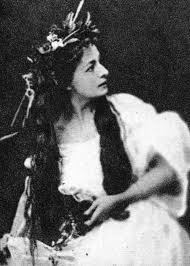
Long before actors were vying for an Oscar nomination and world wide fame thespians were trying to carve out a modest living entertaining prospectors and settlers of the Old West. Today the curtain goes up on a woman entertainer who captured the hearts of the western pioneers.
Ladies and gentlemen, the Polish Phenomenon
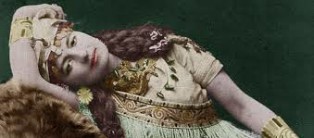
A cold wind blew down the canyon, carrying pellets of frozen snow and grit from the mines in the hills surrounding Virginia City, Nevada. The wind swirled through the narrow streets, bringing damp, cold air and the smell of wood smoke into National Guard Hall. A restless audience debated the prospects of entertainment this stormy evening. Could a Polish woman really deliver the goods tonight?
Miners with callused hands mingled with clean-fingered merchants and discussed the probabilities of a rousing performance. Gamblers watched the stage for signs that the mysterious Madam Modjeska would soon appear and wagered she would be unintelligible in the French play Adrienne Lecouvreur. Helena Modjeska barely spoke English, they said with knowing looks. Her English teacher had been German, they chuckled, so the odds were good that the great tragedy would become a farce.
Backstage, Helena Modjeska paced the boards, running her lines and tamping down nerves. She was more than six thousand miles from Cracow, waiting in the wings to perform a play in front of an audience of Comstock miners about a Parisian courtesan who had died nearly fifty years before. This brawling town of Virginia City was shocking, with its gambling dens and brothels doing brisk business alongside shops, hotels, and, just one street away, churches. How could she possibly convey the pathos and strength of the character through two language barriers in a town described as an outpost of hell?
That she did so, and with startling success, was chronicled in the Nevada press. Barely two weeks after Helena’s thirty-seventh birthday, the Territorial Enterprise of October 23, 1877, presented her with a gift of unstinting praise: The acting of Madame Modjeska last night at National Guard Hall was not like anything ever seen before in Virginia City. It was the perfect realization of something which we fancy is dreamed of by us all, but which we have waited and waited for through the years until deep down in our hearts we have concluded it was something too rare for any earthly one to give realization to—that it was but a longing of the divine within us which only in some other state less sordid, dull and cold that this could find full expression. But last night the dream was made real, and more than once did the audience rub their eyes and look up with that questioning gaze which men put on when startled suddenly from a broken sleep.
To learn more about how Helena Modjeska’s acting career began and about the other talented performers of the Old West read
Entertaining Women: Actresses, Dancers, and Singers in the Old West.
Ma Barker
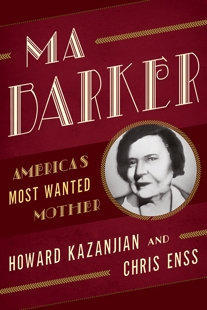
In a time when notorious Depression Era criminals were terrorizing the country, the Barker-Karpis Gang stole more money than mobsters John Dillinger, Vern Miller, and Bonnie and Clyde combined. Five of the most wanted thieves, murderers, and kidnappers by the Federal Bureau of Investigation in the 1930s were from the same family. Authorities believe the woman behind the band of violent hoodlums that ravaged the Midwest was their mother, Kate “Ma” Barker.
Ma Barker is unique in criminal history. Although she was involved in numerous illegal activities for more than twenty years she was never arrested, fingerprinted, or photographed perpetrating a crime. There was never any physical evidence linking her directly to a specific crime. Yet Ma controlled two dozen gang members which jumped to her behest. FBI Director J. Edgar Hoover called her a “domineering, clever woman who coldly and methodically planned the abduction of two of the nation’s most wealthy men.”
Ma’s misdeeds were well plotted, schemed, and equipped. “The most important part of a job is done weeks ahead,” she is rumored to have told her boys. She is remembered early on as a woman who took her four sons, Herman, Lloyd, Arthur, and Fred to church every Sunday and to every revival meeting that came along. She was also known as a woman who never admitted her sons were capable of wrong doing. She ruled the family roost, defending her brood against irate neighbors whose windows had been shattered by the boys, and later against the police when the boys began their lives of crime in earnest. At a young age they were involved in everything from petty theft to murder.
This Day…
The Talented Divorcee
Enter to win a copy of the book
Entertaining Women:
Actresses, Dancers, and Singers in the Old West
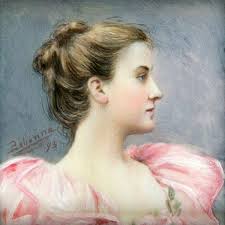
Long before actors were vying for an Oscar nomination and world wide fame thespians were trying to carve out a modest living entertaining prospectors and settlers of the Old West. Today the curtain goes up on a woman entertainer who captured the hearts of the western pioneers.
Ladies and gentlemen, Catherin Norton Sinclair, the Talented Divorcee.
Shakespearean actor Edwin Forrest rifled through the desk drawer in the sitting room of the New York home he shared with this wife, socialite turned actress and theatre manager Catherine Norton Sinclair. The contents of the drawer belonged to Catherine, but Edwin wasn’t interested in maintaining her privacy. In his frantic search, he uncovered a worn and rumpled letter written to his bride from fellow thespian, George Jamieson. “And now, sweetest, our brief dream is over; and such a dream!” the correspondence began. “Have we not known real bliss? Have we not realized what poets have to set up as an ideal state, giving full license to their imagination, scarcely believing in its reality? Have we not experienced the truth that ecstasy is not fiction? And oh, what an additional delight to think, no, to know, that I have made some happy hours with you… With these considerations, dearest, our separation, though painful will not be unendurable; I am happy, and with you to remember and the blissful anticipation of seeing you again, shall remain so…” Jamieson’s declaration of his feelings for Catherine ended with a promise to do “my utmost to be worthy of your love.”
Edwin reread the letter with poised dignity and on its completion sank into the nearest chair, cursing the day he had met the woman he had married. After a few moments, he arose and frantically paced about the room. He denounced Catherine for her infidelity and fell to the floor weeping uncontrollably. According to Edwin’s biographer William Rounseville Alger, Edwin was “struck to the heart with surprise, grief, and rage.” Catherine’s take on Edwin’s reaction and the circumstances surrounding her husband reading the letter are vastly different from Alger’s account. Almost from the moment the pair met, Edwin was jealous of everyone Catherine knew in her social standing and did not shy away from making a scene.
Catherine was born near London in 1818 to Scottish parents who had four children in all. Her father, John Sinclair, was a well-known vocalist who had toured America in 1831 and 1833. Historical records note that Catherine was endowed with natural beauty, and, whatever the quality and quantity of her formal and social education, she had in her teens acquired a sparkle and vivacity that attracted men. She was popular and well-liked and attended formal soirees, theatre openings, and art exhibits with a myriad of friends from all walks of life.
To learn more about how Catherine Norton Sinclair’s acting career began and about the other talented performers of the Old West read
Entertaining Women: Actresses, Dancers, and Singers in the Old West.
This Day…
The Actress in Trousers
Enter to win a copy of the book
Entertaining Women:
Actresses, Dancers, and Singers in the Old West
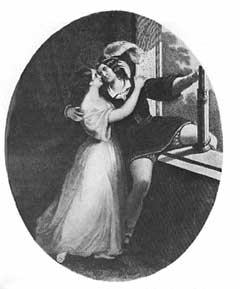
Long before actors were vying for an Oscar nomination and world wide fame thespians were trying to carve out a modest living entertaining prospectors and settlers of the Old West. Today the curtain goes up on a woman entertainer who captured the hearts of the western pioneers.
Ladies and gentlemen, the incomparable Charlotte Cushman.
It was a cold evening in the early spring of 1859 when the well-known actress Charlotte Cushman debuted in Shakespeare’s Hamlet at the Metropolitan Theatre in San Francisco. The city’s most wealthy and influential people arrived by carriage. Throngs of curious bystanders eager to see the aristocrat hovered around the walkway leading into the building. The fine, brick edifice rivaled the most notable on the East Coast.
Inside, the grand hall was fitted with the most ornate fixtures and could seat comfortably upwards to a thousand people. From the private boxes to the gallery, every part of the immense building was crowded to excess. Charlotte Cushman was recognized by theatre goers as the “greatest living tragic actress,” and everyone who was anyone wanted to see her perform. Several women had won fame with their impersonations of male characters in various dramas, but critics and fans alike regarded Charlotte as the best of them all.
In 1845, a theatrical reviewer in London had written about one of Charlotte’s performances in glowing terms. “Miss Cushman’s Hamlet must henceforth be ranked among her best performances. Every scene was warm and animated, and at once conveyed the impression of the character. There was no forced or elaborate attempt at feeling or expression. You were addressed by the whole mind; passion spoke in every feature, and the illusion was forcible and perfect.”
The audience that flocked to see the exceptionally talented Charlotte in California was not only treated to a “forcible and perfect” interpretation of Hamlet, but that evening they were also treated to a display of the actress’ temper.
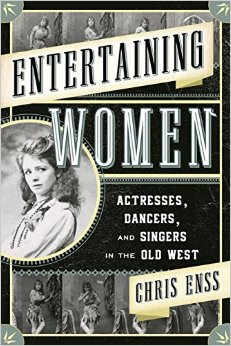
To learn just what caused Charlotte’s temper to explode, how her acting career began, and about the other talented performers of the Old West read
Entertaining Women: Actresses, Dancers, and Singers in the Old West.
This Day…
1915 – Fannie Farmer, American cookbook author and educator during the height of the domestic science movement (b. 1857)