Eureka! The Discovery of Gold in California – Part Two

Many elementary schools across the country are now studying the California Gold Rush. This short, continuing story is intended to aid teachers in their efforts to share with their classes the significance of this historical events. Teacher who use the story in this week’s lessons can register to win a copy of the book Frontier Teachers.
GoldRushPartII

James Marshall stood up and saw his laborers sitting around their fire drinking coffee and eating flapjacks. Beyond them the Indian workers moved quietly, preparing their breakfast of dried deer meat. Marshall walked slowly to the fire where his sober Mormon workers ate silently, and opened his hand.

“I found it in the tail race.”

The men stopped chewing and one exclaimed, “Fool’s gold,” and laughed. Another spit carefully into a bush several yards away. “Tain’t nothing by iron pyrite,” he said. “Fool’s gold, that’s all.”

The first man took a closer look, reached for another flapjack, and said, “That’s right. That stuff fools lots of people.” They all grinned knowingly at each other.

James Marshall scowled and clenched his fist over the little pebble. They thought him a fool. He turned on his heel, and strode up the slope to a small log cabin where smoke was lazily rising from an adobe chimney. As he approached he saw Elizabeth Wimmer, wife of his foreman, standing with a long stick in hand over a big, black soap kettle. Elizabeth Wimmer was one of the few American women in this land so lately taken from Mexico. She had refused to be left at Sutter’s Fort when Peter, her husband, went to take charge of the Indian laborers building the sawmill.

As Marshall came up to her he growled, “Look here, Mrs. Wimmer! This looks like gold. The men say it’s iron pyrite.” He unclenched his fist.

Mrs. Wimmer leaned forward curiously. Then, before he could stop her, she picked up the little piece and dropped it into the bubbling soap kettle. “We’ll soon find out, Mr. Marshall. If it isn’t gold the lye in this kettle will eat it up quick.”

James Marshall said nothing, but turned and went back to the breakfast he had not yet eaten.

That night as he went to the cabin where he lived with the Wimmers he felt confident again. The mill would work well with the tail race deepened. He was thinking of the lumber they would soon be sawing and of the money they could get for it in the sleepy village of San Francisco. As he sat and smoked his pipe he was startled by Mrs. Wimmer. Through the door she marched, and up to the scrubbed pine table.

“There!” she cried triumphantly. “It’s gold, all right, Mr. Marshall!”

She flung on the table the heavy little stone. In the light of the candle it glowed and gleamed. Marshall picked it up, then put it on the floor, grasped a rock lying by the hearth, and hammered it. It didn’t break. Gold!

Next morning at dawn he went back to the tail race. From cracks between the boulders he picked up more of the tiny gold pieces. Carefully he stowed them away in a small buckskin bag and went back to his job of getting the mill going. Later in the day he announced to Peter Wimmer:

“Supplies are getting low. I’m going to the Fort for grub. Wimmer, you take over while I’m gone.”

Peter Wimmer glanced at his wife, but said nothing.

 Register now to win a copy of the book Frontier Teachers.


Eureka! The Discovery of Gold in California

Many elementary schools across the country are now studying the California Gold Rush. This short, continuing story is intended to aid teachers in their efforts to share with their classes the significance of this historical events. Teacher who use the story in this week’s lessons can register to win a copy of the book Frontier Teachers.
CaliforniaGoldRush


And now…Part one of Eureka! The Discovery of Gold in California.

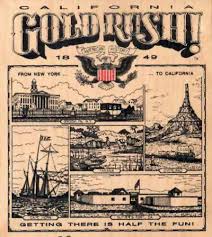
The early morning sun gleamed like a bright golden coin above the California foothills. It was January 24, 1848. In all the green wilderness world there was no sign of life except a wisp of smoke from a breakfast fire, and the figure of a man walking beside a ditch that led from a nearly finished sawmill to a river. Suddenly he stopped and stared intently down. James Marshall was a surly man, without friends, and he was a long way from his old home in New Jersey. The other men at Sutter’s Fort thought him a little peculiar, and stupid. But he was the only millwright in all the California country, and he knew that he was a good mechanic.

He looked up at the mill he was building for John Sutter, the German-Swiss owner of this big landed estate, and he felt satisfied. The mill was coming along well, the dam was finished, and the tail race, or ditch, to let water back into the American River, was dug out. Each night Marshall opened the gate to allow the water to wash as much gravel and sand down the tail race as possible. Then in the early morning he went there to see how it looked. It would not be long before his mill, the first in the new territory, would be sawing lumber to ship down the Sacramento River to the village of San Francisco.

James Marshall glanced down again. Something had caught his eye. What was it? He leaned forward. Something glittered a little in the gravel against a stone.

“What’s that?” he muttered to himself. He sat on one heel, and picked up the little glittering lump that felt strangely heavy. “Gold! Could it be gold?”

The small piece looked more like brass. It was no larger than a tiny dried pea. He rubbed it. It still looked golden.


The Passionate Player

Last chance to enter to win a copy of the book

Entertaining Women: Actresses, Dancers, and Singers in the Old West.

LeslieCarter1

“My life has run in strange places. My years have been full of color. I have known the heights of success, but likewise I have known the depths of despair.”

Leslie Carter, Liberty magazine, 1927

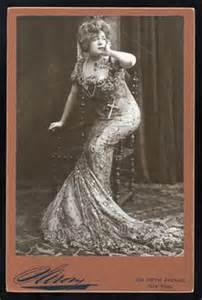
Catherine Louise Dudley Carter sat at her desk and clutched a pen in her hand. Nothing was left of her life but the raw will to do the only quasi respectable thing open to a woman in her circumstances. She had lost the wealthy position and standing in society that she had taken for granted for so long. She’d been kicked out of her palatial home. She had failed in her divorce case and in obtaining the money to maintain her lifestyle; her nine-year-old son had been ripped from her arms, and her once good name had been scandalously linked to actor Kyrle Bellew and New York Senator James F. Pierce.

The scandal didn’t bother her too much—small-minded persons, including her husband, just did not understand. “There is great romance, there is great love, there is great passion—all things difficult to guide—and some men and women reserve the right to have these things, regardless of that sharp dividing line which makes it legal,” she later wrote, dramatically justifying her choices.

Unfortunately, she’d fallen to the wrong side of that sharp legal and moral dividing line and now knew the cost. Her husband, wealthy industrialist Leslie Carter, had won everything in what the New York Times, in June 1889, called the “most indecent and revolting divorce trial ever heard in the Chicago courts.” Louise Carter considered herself virtually penniless, her reputation shredded to ribbons by the press, while her husband gloated over winning his countersuit charging her with adultery.

She shuddered at the memory of the witnesses against her, a veritable parade of chambermaids, housekeepers, hotel guests, and other traitors her husband had somehow coerced into telling the most awful tales about her. He had taken everything from her. She decided to take the one thing he’d given her that could most embarrass him: his name.

The plan she conceived to become an actress did not stop short of stardom. Her name—no, his name—would be blazoned in lights for all to see. She would, forevermore, be known as Mrs. Leslie Carter. That, she thought, would make her husband’s impassive face show some expression. “Nothing ever happened to Leslie Carter; consequently, nothing ever happened to his face,” she recalled. The day would come she vowed, when the name she hated would be on marquee lights and his humiliation would be as great as hers was now.

Dreaming of revenge would not make it happen. Images of poverty and squalor rose in her mind. Somehow she must triumph over this ugly trick of fate that her husband and a jury had played. The theater offered the only way out, with the added attraction of mortifying her ex-husband. Shrugging away the fact that her first attempt at becoming an actress had been unsuccessful, she concocted a new plan to succeed.

Dipping her pen into a small bottle of ink, she wrote to a man who had promised to help. The plea Louise Carter sent to wealthy meatpacker Nathaniel K. Fairbank resulted in an offer to assist her to become an actress, and his influence secured an appointment with New York theatrical manager E. G. Gilmore, who agreed to handle her career.

To learn more about Leslie Carter and about the other talented performers of the

Old West read Entertaining Women: Actresses, Dancers, and Singers in the Old West.


The Divine Sarah

Only four more days left to enter to win a copy of the book

Entertaining Women: Actresses, Dancers, and Singers in the Old West.

SarahBernhardt2

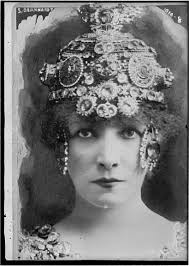
The pliant figure leaned over the ship’s rail, expressive eyes intent on the blue-green waters of the harbor. A mass of wavy light-brown hair with tints of gold lifted and curled with every breeze, its arrangement a matter of complete indifference to the angler. Suddenly the slender form froze, breath held, and then, with a quick yank and a breaking smile, lifted the rod and hauled a wriggling fish aboard the Cabrillo. Exclaiming in French, dark eyes sparkling with pleasure, Sarah Bernhardt ordered her catch, small as it was, to be prepared for dinner.

It was May 19, 1906, and the farewell production of Camille was scheduled for a few hours later at the ocean auditorium built on the water at Venice, California. Sarah stayed, and fished, at the hotel built like a ship, and she performed in the adjacent theater on the wharf at the seaside resort, Venice of America. Having caught a fish, Sarah wended her way to her quarters. Piled high in her dressing room were the results of a recent shopping trip to the Oriental bazaar nearby: silk and crepe matinee coats of pink and pale blue and mauve, all embroidered with butterflies and bamboo designs.

The tiny window in the dressing room provided a sparkling view of the ocean, and the streaming sunshine picked out details of the furnishings: a repoussé silver powder box, containers of pigment, eyebrow pencils, silver rouge pots, and scattered jewelry twinkling in the light. The tragedienne who attracted huge audiences wherever she went swooped up a small tan and white fox terrier, wriggling with joy at her return, and snuggled it close for a moment as she related the happy details of her fishing venture to a visiting reporter. Then she put down the small dog and closed her mind to the fun waiting outside the porthole.

Within moments Sarah became Marguerite Gautier, filled with the sadness and torment of the beautiful French courtesan in Camille, the play by Alexandre Dumas that became her signature role, performed all over the world more than three thousand times. Sarah’s ability to sink fully into the character of the play made the tragic death scene so convincing that it became a trademark for “the Divine Sarah.”

No one played tragedy with such believable intensity as Sarah Bernhardt, and no one brought as much passion and enthusiasm to the pursuit of pleasure. From fishing on the Southern California coast to bear hunting in the woods outside Seattle, on every western tour the French actress indulged in some kind of adventure. Sarah Bernhardt threw herself into life with the same characteristic energy she put into her stage appearances. Yet she often slept in a coffin, preparing for that final sleep.

To learn more about Sarah Bernhardt and about the other talented performers of the

Old West read Entertaining Women: Actresses, Dancers, and Singers in the Old West.


The Self-Made Star

This is the last week to enter to win a copy of the book

Entertaining Women: Actresses, Dancers, and Singers in the Old West.

MaryAndersonActress

“I intend to play westward, and to appear in the town in which I was born—Sacramento.”

Mary Anderson’s comments to a reporter at the San Francisco Call, 1886

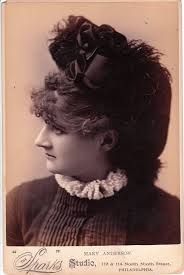
The angry hawk clenched its talons on the heavy leather gauntlet, stabbing the delicate wrist beneath. Wings bated, the half-wild bird glared fiercely into the large gray eyes of his captor. Mary Anderson stared back with steely determination. This unruly bird would be tamed, she resolved, and would become a living prop for her performance of the Countess in Sheridan Knowles’s comedy, Love. A stuffed bird would not provide the realism she intended, and what Mary Anderson intended usually came to be. Mary wrote in her memoirs:

There is a fine hawking scene in one of the acts, which would have been spoiled by a stuffed falcon, however beautifully hooded and gyved he might have been; for to speak such words as: “How nature fashion’d him for his bold trade, /Gave him his stars of eyes to range abroad, /His wings of glorious spread to mow the air, /And breast of might to use them’ to an inanimate bird, would have been absurd.

Always absolutely serious about her profession, Mary procured a half-wild bird and set to work on bending its spirit to her will. The training, she explained, started with taking the hawk from a cage and feeding it raw meat “hoping thus to gain his affections.” She wore heavy gloves and goggles to protect her eyes. The hawk was not easily convinced of her motives, and “painful scratches and tears were the only result.”

She was advised to keep the bird from sleeping until its spirit broke, but she refused to take that course. Persevering with the original plan, Mary continued to feed and handle the hawk until it eventually learned to sit on her shoulder while she recited her lines, then fly to her wrist as she continued; then, at the signal from her hand, the bird would flap away as she concluded with a line about a glorious, dauntless bird. The dauntless hawk and Mary Anderson were birds of a feather.

Born July 28, 1859, at a hotel in Sacramento, California, Mary’s earliest years were unsettled. Her mother, Antonia Leugers, had eloped with Charles Henry Anderson, a young Englishman intent on finding his fortune in America. It was a love match not approved by Antonia’s parents. The young couple arrived in Sacramento in time for Mary’s birth but too late to scoop up a fortune from the nearest stream. The easy pickings of the 1849 Gold Rush were gone.

To learn more about Mary Anderson and about the other talented performers of the

Old West read Entertaining Women: Actresses, Dancers, and Singers in the Old West.


This Day…

1881 – Helen Hunt Jackson publishes A Century of Dishonor, an account of the atrocities committed against Indian tribes in the West and indictment of the nation’s reservations policy.  Jackson sends copies of the book to every member of Congress and to most federal officials.