Massacre at Sand Creek

Enter now for a chance to win a copy of Mochi’s War: The Tragedy of Sand Creek

Sand_Creek_massacre

At daybreak on November 29, 1864, the sound of the drumming of hooves on the sand flats interrupted the hushed routine of the Indian women and children. Some of the women believed it was only buffalo running hard in the near distance, but it was Col. John Chivington and his men and they had come to attack and kill the Cheyenne in the camp.

Mochi was among the numerous Indians frantic to escape the slaughter. She watched her mother get shot in the head and heard the cries of her father and husband as they fought for their lives. Mesmerized by the carnage erupting around her, she paused briefly to consider what was happening. In that moment of reflection one of Chivington’s soldiers rode toward her. She stared at him as he quickly approached, her face mirrored shock and dismay. She heard a slug sing viciously past her head. The soldier jumped off his ride and attacked her. Mochi fought back hard and eventually broke free from the soldier’s grip. Before the man could start after her again she grabbed a gun lying on the ground near her, fired, and killed him.

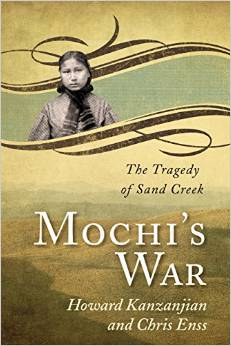
To learn more about Mochi read Mochi’s War: The Tragedy of Sand Creek.

A portion of the book’s proceeds will go to the

Sand Creek Massacre National Historic Site.


Standing at Sand Creek

Enter now for a chance to win a copy of Mochi’s War: The Tragedy of Sand Creek


KansasPrairie

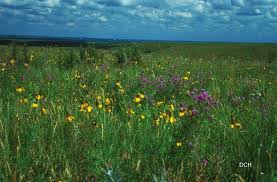
Sunflowers were in full bloom at the site of the Sand Creek Massacre last June when I was there. I stood alone at the top of a bluff looking down on the dry creek bed Cheyenne women, children, elderly, and the infirmed raced along as they tried to flee from Col. John Chivington and his troops hell-bent on massacring them more than 150 years ago. I convinced myself I heard the voices of the survivors in the wind through the tall grass. For a moment I occupied the same ground Mochi had and I’ll never forget the emotion that washed over me.

The following are remembrances past down from one generation of Cheyenne to another about the events at Sand Creek in 1864.

“They never really forgot what happened. They would cry whenever they told about Sand Creek… When everyone started running the young ones would get lost. Those that hid watched the soldiers from their hiding place. During that time when it was almost over, soldiers came out and cut open the bellies of women who were going to have a child. When they cut the child out they cut his throat.” Emma Red Hat and William Red Hat, Jr.

“The battle scattered people… At Sand Creek, you can go there at any time of the day or night and if you close your mind to everything else you can feel the children, when they’re congregating and laughing and having fun. The old ladies mostly congregating and laughing and having fun. The old ladies mostly congregate in the shade. The young warriors congregate in the rocks.” Robert Toahty

To learn more about Mochi read Mochi’s War: The Tragedy of Sand Creek.

A portion of the book’s proceeds will go to the

Sand Creek Massacre National Historic Site.


The Tragedy of Sand Creek

Enter now for a chance to win a copy of Mochi’s War: The Tragedy of Sand Creek


Sand_Creek_massacre (1)


Colorado Territory in 1864 wasn’t merely the wild west, it was a land in limbo while the Civil War raged in the east and politics swirled around its potential admission to the union. The territorial governor, John Evans, had ambitions on the national stage should statehood occur–and he was joined in those ambitions by a local pastor and erstwhile Colonel in the Colorado militia, John Chivington. The decision was made to take a hard line stance against any Native Americans who refused to settle on reservations–and in the fall of 1864, Chivington set his sights on a small band of Cheyenne under the chief Black Eagle, camped and preparing for the winter at Sand Creek.

When the order to fire on the camp came on November 28, one officer refused, other soldiers in Chivington’s force, however, immediately attacked the village, disregarding the American flag, and a white flag of surrender that was run up shortly after the soldiers commenced firing.

In the ensuing “battle” fifteen members of the assembled militias were killed and more than 50 wounded Between 150 and 200 of Black Kettle’s Cheyenne were estimated killed, nearly all elderly men, women and children.

As with many incidents in American history, the victors wrote the first version of history–turning the massacre into a heroic feat by the troops. Soon thereafter, however, Congress began an investigation into Chivington’s actions and he was roundly condemned. His name still rings with infamy in Colorado and American history. Mochi’s War explores this story and its repercussions into the last part of the nineteenth Century from the perspective of a Cheyenne woman whose determination swept her into some of the most dramatic and heartbreaking moments in the conflicts that grew through the West in the aftermath of Sand Creek.

To learn more about Mochi read Mochi’s War: The Tragedy of Sand Creek.

A portion of the book’s proceeds will go to the Sand Creek Massacre National Historic Site.



This Day…

2003 – Twelve years ago my brother was sentenced to 20 years in prison for a crime he didn’t do.  The mother-daughter team who put him there are still on the loose.  Rick won’t live to see the new year.

The Cheyenne Woman Warrior

Enter now for a chance to win a copy of Mochi’s War: The Tragedy of Sand Creek

EntertoWinMedicineWater&Mochi#1

This book captivates a ruthless woman warrior who was born out of the pits of the Sand Creek Massacre. The word ‘warrior’ sends a tingle of fear down the spine and conjures up an imaginary fierce, merciless fighter seemingly invulnerable to fear or intimidation.

There are many reasons that a Native Indian woman would fight and become one of the women warriors. Most nineteenth century women warriors who fought in battles and conflicts did not pursue the life of a warrior on a permanent basis.

Most women fought because there was an urgent need for them to do so, which the reader will find out quickly that was the case for the young 24 year-old Cheyenne warrior.

The authors of this book writes of the malice in the young woman’s heart and the revenge that sat heavily on the edge of her tomahawk. The woman warrior fought to the death using bloodthirsty tactics to achieve victory. Not the usual image that we would associate with women, but there were many Native American warriors.

When asked to name some famous Indian women, most people have difficulty in recalling anyone other than Pocahontas or Sacagawea, the reader will have no difficulty with remembering Mochi, the Cheyenne Warrior after engaging themselves in this title, Mochi’s War.

Rebecka Lyman

Cheyenne and Arapaho Tribal Tribune

To learn more about Mochi read Mochi’s War: The Tragedy of Sand Creek.

A portion of the book’s proceeds will go to the

Sand Creek Massacre National Historic Site.


Mochi’s War

EntertoWin

Enter now for a chance to win a copy of Mochi’s War: The Tragedy of Sand Creek

MochisWar

Praise for Mochi’s War:

“The authors have again collaborated to write Western history in an accurate yet accessible manner for mainstream readers…this biographical account provides a counterpoint to the many works that have mythologized such women as Pocahontas and Sacajawea.” – Library Journal ***starred review***

After the Sand Creek Massacre of 1864, one woman survived physically unharmed, but emotionally devastated by the destruction of her tribe and determined to avenge her dead relatives. Her story has rarely been told, and Mochi’s War is the first book to tell it in full.

On November 28, 1864, Colonel John Chivington and his militia attacked a Cheyenne Indian village in southeastern Colorado. Between 150 and 200 Cheyenne Indians were estimated killed, nearly all elderly men, women, and children. The events at Sand Creek motivated Mochi to embark a decade long reign of terror. With each raid she remembered the horror of the massacre, and it goaded her on to terrible violence against those encroaching on Indian soil. The war between the Indians and the government lasted ten years after the Sand Creek Massacre occurred. Mochi’s war ended with her arrest and imprisonment in 1874 – the only woman ever to be incarcerated by the United States as a prisoner of War.

Mochi’s War: The Tragedy of Sand Creek explores the story and its repercussions into the last part of the nineteenth century from the perspective of a Cheyenne woman whose determination swept her into some of the most dramatic and heartbreaking moments in the conflicts that grew through the west in the aftermath of Sand Creek.

To learn more about Mochi read Mochi’s War: The Tragedy of Sand Creek.

Purchase a copy for a local school.

A portion of the book’s proceeds will go to the

Sand Creek Massacre National Historic Site.