
The Finest of Us All

Enter Now! It’s a double giveaway. Enter now to win two books! Tales Behind the Tombstones: The Deaths and Burials of the Old West’s Most Nefarious Outlaws, Notorious Women, and Celebrated Lawmen and the new book More Tales Behind the Tombstones: More Deaths and Burials of the Old West’s Most Nefarious Outlaws, Notorious Women, and Celebrated Lawmen.

The Most Intrepid Posse.  Bill Tilghman is on the top row, first from right.

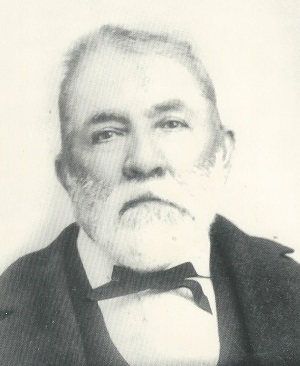
Legendary lawman and sportswriter Bat Masterson once referred to his well-known colleague Bill Tilghman as “the finest among us all.” Marshall Tilghman and Sheriff Bat Masterson were two members of the “most intrepid posse” of the Old West, a group of policemen who in 1878, tracked down the killer of a popular songstress named Dora Hand.

William Matthew Tilghman, Jr.’s drive to legitimately right a wrong began at an early. He was born on the 4th of July 1854 in Fort Dodge, Iowa. His father was a soldier turned farmer and his mother was a homemaker. Bill spent his early childhood in the heart of the Sioux Indian territory in Minnesota. Grazed by and arrow when he was a baby, he was raised to respect Native American and protect his family from tribes that felt they had been unfairly treated by the government. Bill was one of six children. He mother insisted he had been “born to a life of danger.”

In 1859 his family moved to a homestead near Atkinson, Kansas. While Bill’s father and oldest brother were fighting in the Civil War, he worked the farm and hunted game. One of the most significant events occurred when he was twelve years old while returning home from a blackberry hunt. His hero Bill Hickok rode up beside him and asked if he had seen a man ride through with a team of mules and a wagon.

To learn more about Bill Tilghman and others like him who left their mark on the American West read Tales Behind the Tombstones: The Deaths and Burials of the Old West’s Most Nefarious Outlaws, Notorious Women, and Celebrated Lawmen and More Tales Behind the Tombstones: More Deaths and Burials of the Old West’s Most Nefarious Outlaws, Notorious Women, and Celebrated Lawmen.



This Day…

1895-Zip Wyatt was caught sleeping in a cornfield near Skeleton Creek, Oklahoma by a posse who gut shot him and shattered his pelvis before he was disarmed and taken into custody.

Law West of the Pecos

It’s a double Giveaway! Enter now to win two books!

Tales Behind the Tombstones: The Deaths and Burials of the Old West’s Most Nefarious Outlaws, Notorious Women, and Celebrated Lawmen and the new book More Tales Behind the Tombstones: More Deaths and Burials of the Old West’s Most Nefarious Outlaws, Notorious Women, and Celebrated Lawmen.
enter-to-winJudge_Roy_Bean_1

With the passing of Judge Roy Bean, who referred to himself as the “Law West of the Pecos,” the rowdy frontier lost one of its most unique and picturesque characters. It was Judge Bean that was said to have held an inquest on the body of an unknown man found in his precinct, and, finding on the corpse a pistol and $40 in cash, proclaimed the dead man guilty of carrying a concealed weapon and fined him $40, which was forthwith collected from the pocket of the offender.

There were no customers from Judge Roy Bean’s opera house and saloon by his side when he died on March 16, 1903; no friends from the Langtry, Texas, community where he had resided; no lawbreakers to be tried and sentenced. Judge Bean’s son, Sam, was the only one with him when he passed.

The stout, seventy-eight year old man with a gray beard spent his last hours on earth in a near comatose state unaware of where he was or whom he was. He died of heart and lung complications exasperated by alcohol.

To learn more about Judge Roy Bean and others like him who left their mark on the American West read Tales Behind the Tombstones: The Deaths and Burials of the Old West’s Most Nefarious Outlaws, Notorious Women, and Celebrated Lawmen and More Tales Behind the Tombstones: More Deaths and Burials of the Old West’s Most Nefarious Outlaws, Notorious Women, and Celebrated Lawmen.


The Way Home

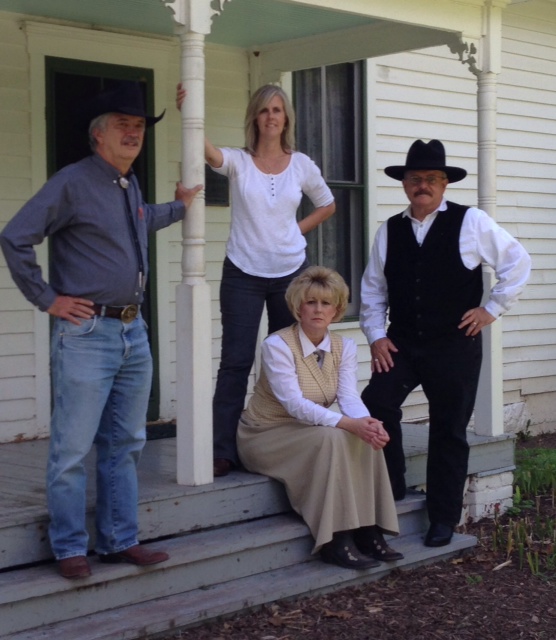
The Most Intrepid Author's Posse at the James Farm in Missouri

The Most Intrepid Author’s Posse at the James Farm in Missouri

The Most Intrepid Author’s Posse completed their ride through the Midwest Saturday night. We began our trek in Kansas City, Missouri and ended the venture three days later in Dodge City, Kansas. The highlight of the journey was when we were all named honorary marshals of Ford County, Kansas. The swearing in ceremony was moving and I am deeply honored to have received such a gift. The posse was given badges to wear and will receive another along with a certificate to have framed to remember the event.

Some of the posse members arrived home yesterday without a hitch and others spent hours at the airport waiting for a plane to get us there. Flying in this country has turned into an amazing arduous process, especially boarding the plane, which has now become this tedious Bataan death march with American Tourister overnight bags. I get stuck behind this one guy, who takes forever to get situated. He’s clogging the aisle like a human piece of cholesterol jammed into the passenger artery. You just want to get that soft drink cart and flush him out the back door. He’s folding that sport jacket like he’s in the color guard at Arlington National Cemetery.

An exactly when did the flight attendants in this country get to be so cranky? I know it’s a tough job. There’s got to be a thousand different ways to tie that neckerchief but why be annoyed with me? You know the worst thing about it is they don’t even come clean with you and tell you how much they hate you. They treat you with that highly contrived air of mock civility, that tight, pursed-lip grin where they nod agreement with everything you say. You know right behind that face plate they barely tolerate your very existence.

What about when you leave the plane and they’ve got them propped by the front door in that complete android catatonic stupor where they look like the Yul Brynner robot from Westworld when he blew a head pipe and iced Marcus Welby’s assistant. “Bye. Bye. Bye. Bye.”

You know who I feel sorry for in the whole air-travel scenario? It’s that poor schumck who has to drive the jet way. You know that little accordion tentacle that weaves it’s way out to meet the plane? Everybody else is Waldo Pepperin’ around in their leather bomber jackets, the right stuff coursing through their veins as they push the outside of the envelope. Your job is driving the building.

In spite of the setbacks, the posse will ride again next year. Wednesday I’ll return with a new book giveaway contest. Until then, Bye. Bye-Bye. Bye. Bye.


Sacagawea

Enter now! Giveaway! Enter now to win a copy of the new book More Tales Behind the Tombstones: More Deaths and Burials of the Old West’s Most Nefarious Outlaws, Notorious Women, and Celebrated Lawmen.
Sacagawea

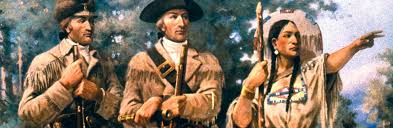
Sacagawea was the young Shoshone Indian woman who served as Lewis and Clark’s translator on their 1803 expedition to explore the uncharted western regions of America. She made the entire journey to the Pacific, and the return trip, with a newborn baby on her back; many believe that without her aid, the journey, commissioned by President Thomas Jefferson, would have ended in failure.

Some accounts say she died in 1812 at age twenty-five of putrid fever, while others believe she died in 1884 on an Indian Reservation in Wyoming. The child she carried in a papoose was Jean-Baptiste Charbonneau, nicknamed Pompy, meaning first-born, who eventually attended St. Louis Academy with tuition paid by Clark.

Pompy later met Prince Wilhelm of Germany while on a natural history expedition and traveled back to Europe with him, where Pompy learned to speak four different languages. But by the time he was twenty-four Pompy was back in North America living as a mountain man.

When the Gold Rush of 1849 started, he got caught up in the fever and died from too much time wading through cold rivers panning for gold. His cause of death was bronchitis at age sixty-one, and his portrait is the only one of a child on any U. S. coin.

To learn more about Sacagawea and others like her who left their mark on the American West read More Tales Behind the Tombstones: More Deaths and Burials of the Old West’s Most Nefarious Outlaws, Notorious Women, and Celebrated Lawmen.

I’ll traveling through the Midwest from July 23rd to August 2nd on a book tour to promote More Tales Behind the Tombstones. Check the events section of this website to find out dates and times of the lectures and signings.


Young in Utah

Giveaway! Enter now to win a copy of the new book More Tales Behind the Tombstones: More Deaths and Burials of the Old West’s Most Nefarious Outlaws, Notorious Women, and Celebrated Lawmen.

BrighamYoung

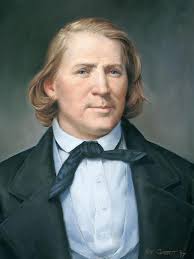
Brigham Young became an explorer and hero to many when he embarked on the best-organized westward migration in U.S. history in 1847. Motivated by a vision to find a safe haven for his religious ideas, he brought the Mormon Church to Utah and, in so doing, helped shaped the American West.

When he came upon the Great Salt Lake Valley, he said, “It is enough, this is the right place.” For thirty years he supervised Mormon settlements in Utah, Nevada, Idaho, Wyoming, Arizona, and California. Before Young died at the age of seventy-six in 1877 of acute appendicitis, he had more than fifty wives.

To learn more about Brigham Young and others like him who left their mark on the American West read More Tales Behind the Tombstones: More Deaths and Burials of the Old West’s Most Nefarious Outlaws, Notorious Women, and Celebrated Lawmen.