
1873 – Horace French’s horse was killed in the Sutton-Taylor feud near Clinton, Texas. John Meador was wounded in the leg, but the Taylors once again missed Bill Sutton.
Surviving the Sierras
Enter to win a copy of
With Great Hope: Women of the California Gold Rush
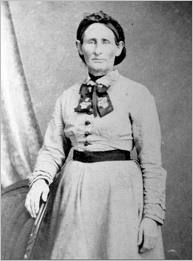
Pioneer Nancy Kelsey
“We followed the Indian, and he led us along shelves of rock high in the Sierras, which overhang vast precipices. We all went on foot, leading our animals. Once, I remember, when I was struggling along trying to keep my horse from going over, I looked back and saw Missus Ben Kelsey a little way behind me, with her child in her arms, barefooted, I think, and leading a horse…a sight I shall never forget.” Nicholas Dawson Bidwell-Bartleson Party, 1841
Nancy Kelsey stood on the porch of her rustic home in Jackson County, Missouri, watching her husband load their belongings onto a covered wagon. Soon, the young couple and their one-year-old daughter would be on the way to California. She hated leaving her family behind and she knew the trip west would be difficult, but she believed she could “better endure the hardships of the journey than the anxieties for an absent husband.”
Nancy was born in Barren County, Kentucky, in 1823. She married Benjamin L. Kelsey when she was fifteen. She had fallen in love with his restless, adventurous spirit, and from the day the two exchanged vows she could not imagine her life without him. At the age of seventeen, Nancy agreed to follow Benjamin to a strange new land rumored to be a place where a “poor man could prosper.”
To learn about the Nancy Kelsey’s harrowing trip to the Gold Country read
With Great Hope: Women of the California Gold Rush
The Doctor Will See You Now
Enter to win a copy of
With Great Hope: Women of the California Gold Rush
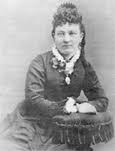
Dr. Nellie Pooler Chapman
My chair is a barrel cut in this wise, with a stick with headrest attached. The lower half of the barrel stuffed firmly with pine needles and covered with a strong potato sack over which I had an elegant cover of striped calico.” J. Foster Flagg Forty-Niner, Dentist.
A groan issued from the adjoining room. Drying her hands on a linen towel, the dentist drew in a deep breath and prepared herself for her patient. Smoothing the apron that covered her diminutive form, Nellie Pooler Chapman walked briskly toward the tray of tools and the lanky miner who waited, hand to jaw in a futile attempt to ease the pain.
With her husband Allen gone to the silver mines in Nevada, Nellie was fully prepared to handle the family dental practice. After all, she’d started learning dentistry immediately after her marriage at the age of fourteen.
Nellie Elizabeth Pooler was born in Norridgewock, Maine, on May 9, 1847. She was married to Dr. Allen Chapman, a bearded dentist of thirty-five, on March 24, 1861. The wedding took place in the home of John and Abigail Williams. This home was called “The Red Castle” because it was made of brick and decorated with white, icicle type wooden trim. Today it is a bed and breakfast inn and is still called the Red Castle.
To learn more about Nellie Pooler Chapman and dental practices
in the mid-1800s, read
With Great Hope: Women of the California Gold Rush.
Death & the Donner Party
Enter to win a copy of
With Great Hope: Women of the California Gold Rush
“I wish I could cry but I cannot. If I could forget the tragedy perhaps I would know how to cry again.”
Mary Graves – Heroine of the Donner Party
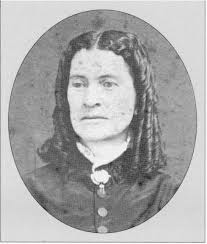
Mary Graves, Heroine of the Donner Party
If Mary Graves had stayed in Marshall County, Illinois, she might have married the boy next door, taught students to read in a one-room schoolhouse, and lived out her days watching her children and grandchildren grow up on the family farm. Her life, however, took a different course when her family joined the Donner Party in 1846 and headed west.
Mary was eighteen when her father, Franklin made the decision to move his family to California. The wagon train the Graves joined was organized by George and Jacob Donner and James Reed and their families. The initial group set out from Springfield, Illinois, in April and was joined by additional members when it reached Independence, Missouri. Franklin and Elizabeth Graves and their nine children joined the Donner Party in August at Fort Bridger, Wyoming, with their belongings piled in three large wagons.
Mary was excited about the journey. She had no doubt heard stories of this golden land of opportunity and couldn’t wait to see its riches for herself. She knew her family might experience difficulties getting there but that had not put a damper on her gleeful spirit. She didn’t care that the trail was treacherous, and she wasn’t afraid of the Indians that guarded the way. She placed all her faith in God and her father to get her and her family to their new home safely.
To find out about the nightmare Mary and her family endured read
With Great Hope: Women of the California Gold Rush.
This Day…
Rebel With A Cause
Enter to win a copy of
With Great Hope: Women of the California Gold Rush
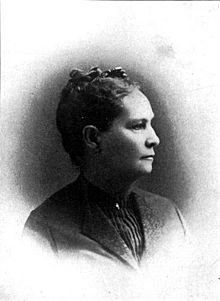
Ellen Clark Sargent
“No married woman can convert herself into a feminist knight of the rueful visage and ride about the country attempting to redress imaginary wrongs, without leaving her own household in a neglected condition that must be an eloquent witness against her.” New York Times, 1868
The memory of her arrival in Nevada City, California stayed with Ellen Clark Sargent all her life. Long after she had left the Gold Country, she recalled.
‘It was the evening of October 23, 1852 that I arrived in Nevada [City], accompanied by my husband. We had traveled by stage since the morning from Sacramento. Our road for the last eight or ten miles was through a forest of trees, mostly pines. The glory of the full moon was shining upon the beautiful hills and trees and everything seemed so quiet and restful that it made a deep impression on me, sentimental if not poetical, never to be forgotten.’
In the newly formed state of California, shaped by men and women who had endured unbelievable hardships to cross the plains, Ellen saw an opportunity to gain something she passionately wanted – the right to vote.
Despite defeat after defeat, she never gave up.
To learn more about how Ellen Sargent helped bring about the Nineteenth Amendment read
With Great Hope: Women of the California Gold Rush.
Diva of the Diggins
Enter to win a copy of
With Great Hope: Women of the California Gold Rush.
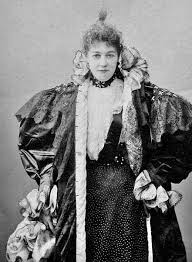
Diva Emma Wixom
Doc Wixom lifted his three-year-old daughter and stood her carefully in the middle of a table. Wrapped in an American flag, golden brown ringlets framing her sweet face, Emma Wixom smiled at her audience. The church on the banks of Deer Creek was crowded with miners and merchants, teamsters and saloonkeepers. They were there to benefit a local charity, and the sight of a child symbolized the hopes of the future.
Unafraid of the eager faces crowded around the table, little Emma Wixom knew what was expected of her. She was happy to sing on this lovely morning. She did it all the time, unaccompanied, singing for the pure love of the sound.
That summer day in 1862, in the thriving California Gold Rush town named Nevada, she gave a performance to remember. Inside the Baptist church on the banks of Deer Creek, Emma took a deep breath and released a pure soprano voice that held the audience spellbound. By the time the last note sounded, there was not a dry eye in the house. Brawny, wet-cheeked miners showered her with nuggets of pure gold.
Emma Wixom, the daughter of a country doctor, began a long and illustrious career that day in the church. She would go on to sing opera in Europe and America. She would draw standing-room-only crowds to her performances, but her biggest fans remained the reckless, rugged gold miners who first took a little child into their hearts.
To learn more about Emma Wixom read
With Great Hope: Women of the California Gold Rush.
Lynching Juanita
Enter to win a copy of With Great Hope:
Women of the California Gold Rush.
“Old West justice is quick and violent. A couple of nights ago one poor soul was caught sneaking into another man’s tent to steal some gold dust. A jury was called on the spot and after a hasty trial, the unhappy victim was adjudged to receive a hundred lashes, have his head shaved, and his ears cut off, and be drummed out of the mines; a sentence which was carried out on the spot.” Robert Buckner, Forty-niner, 1850
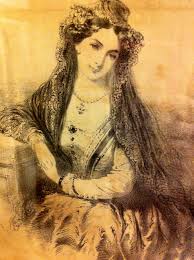
Juanita slowly walked to the gallows, took the noose in her hands, and adjusted it around her neck. She pulled her long, black hair out from beneath the rope so it could flow freely. A blanket of silence fell over the crowd watching the hanging in Downieville, California, that sunny July afternoon in 1851.
Less than twenty-four hours before, the people in this California Gold Rush town had been celebrating the country’s independence. The streets were still lined with bunting and flags. A platform still stood in the center of the town where prominent speakers had given patriotic lectures. There had been bands and parades. Drunken miners had brawled in the streets and bartenders had rolled giant whiskey barrels into tent saloons for everyone to have a drink. It had been a momentous occasion – the first Fourth of July celebration since California had become a state.
To learn why Juanita was hanged read
With Great Hope: Women of the California Gold Rush.
Looking for Lola
Enter to win a copy of With Great Hope: Women of the California Gold Rush
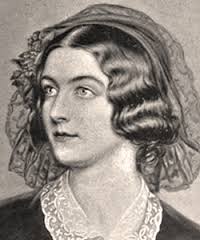
Lola Montez, Queen of the Spider Dance
Lola Montez, beautiful, intelligent and spirited, arrived in California in 1853 preceded by a delicious aroma of European scandal. Irish-born in 1818, she had danced her way to success on the Continent and had dazzled lovers, two husbands and the King of Bavaria, who had taken her as mistress and titled her Countess of Landsfeldt.
In San Francisco her spider dance was a theatrical sensation until caricatured by a rival. Ridiculed, Lola and her latest husband, journalist Patrick Purdy Hull, sailed for Sacramento. There she quarreled with the theatre manager, challenged him to a duel, was laughed at, and in burning indignation swept on to Marysville where the tour fizzled out. Lola and Pat boarded a stage for Grass Valley, decided it was a painfully needed refuge. They bought this home and Lola busied herself in domesticity, even tending the garden.
The town’s best families shunned them , so their elegant hospitality and brilliant salons were lavished on a few daring citizens and a parade of out-of-town leading lights who found their way to the house on Mill Street. Lola may or may not have horse-whipped a local editor for disparaging her in print, as one story goes. She did, however, show yet another facet by helping the town’s needy, carrying food and medicine to injured miners, keeping watch all night at the bed of a sick child, and endearing herself to many by her acts of charity.
Lola evicted Patrick Hull after a quarrel over the shooting of her pet bear. Afraid of boredom, she left Grass Valley in the summer of 1855 for a professional dance tour of Australia. She retuned just long enough to sell her home, the only one she ever had owned and to bid farewell to the town that had promised so much tranquility. Beset by dwindling health and fortune, Lola died in New York in 1861.
To learn more about Lola Montez and the other ladies who made their mark on the Gold Country read
With Great Hope: Women of the California Gold Rush
This Day…
The first two volumes of Theodore Roosevelt’s The Winning of the West are published. Roosevelt’s action-packed drama traces the spread of the United States across the continent, from the day Daniel Boone first pierced the Cumberland Gap in 1765 to the day Davy Crockett died at the Alamo in 1836. He will complete two additional volumes in 1896.