Congratulations to James Darnell, Melissa Mitchell, and Sheryl Kirksey.
All are winners of a copy of the book
The Cowboy and the Senorita: A Biography of Roy Rogers and Dale Evans.

1881 – Yuba County Stage from Camptonville robbed at Bridgeport where a covered wooden bridge spanned the South Fort of the Yuba River, north of Smartsville. Wells Fargo reported express box and mail pouches taken, but losses to the express company and to mail customers were unknown. Black Bart strikes again.
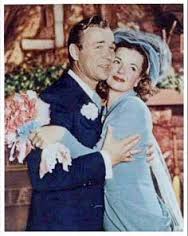
In the fall of 1947 Roy proposed to Dale as he sat on Trigger. The pair was performing at a rode in Chicago, and moments before their big entrance Roy suggested they get married. The date set for the wedding was New Year’s Eve. Gossip columnists predicted that Trigger would be the best man and that Dale would wear a red-sequined, cowgirl gown. The prediction proved to be false.
Roy and Dale’s wedding was a simple affair held at a ranch in Oklahoma, which happened to be the location for the filming of their seventeenth movie, Home in Oklahoma. The couple’s agent, Art Rush, served as best man and his wife, Mary Jo, was the matron of honor.
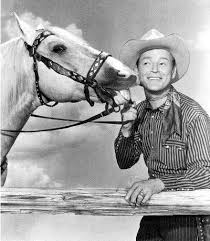
On July 12, 1943, Roy Rogers and his trusty palomino, Trigger, appeared on the cover of Life magazine. The overwhelming success of Roy’s movies had made him the biggest box-office draw in the country.
On average, Roy made eight pictures a year, and in between productions he traveled around the country promoting his work. He sometimes made six appearance a day at various theatres where his movies were playing. Audiences would fill the seats of the movie houses, Roy and the Sons of the Pioneers would sing a few songs, and then his film would run.
Trigger accompanied Roy on all his promotional trips. Roy had acquired Trigger in 1938 when the horse was a yearling and, with the aid of a professional trainer, he brought the animal into prominence.
Along with information about his home life, the origin of the singing cowboy’s name was revealed in the Life article. Studio executives had given Leonard Slye, also known as Dick Weston (a name Leonard picked himself and used as his professional name for a short time), the handle of Rogers in 1937, after the famous humorist Will Rogers, and Roy, which means “king.” The two stage names fit together perfectly.
To learn more about Roy Rogers, Dale Evans, and Trigger enter to win now and Happy Trails.
“I will hurt you for this. I don’t know how yet, but give me time. A day will come when you think yourself safe and happy, and suddenly your joy will turn to ashes in your mouth, and you’ll know the debt is paid.”
― George R.R. Martin, A Clash of Kings

There’s almost nothing more important to a cowboy than his horse. He depends on his reliable steed to help him with his job and to be his friend and all-around partner through thick and thin. Throughout the 1930s, 40s’, and 50s, Roy Rogers was the quintessential cowboy, but a big part of this heroic appeal was his palomino, Trigger. Billed as “the smartest horse in movies,” Trigger was Roy’s riding partner in eighty films and one hundred television shows.
Roy purchased Trigger in 1938 from Hudkins Stables in Los Angeles for $2,500. He knew Trigger was a special horse the moment he saw him trotting through a field. With the help of expert horse trainer Glenn Randall, Roy worked with Trigger to teach him a myriad of tricks, including counting, writing, and bowing to an audience.
Trigger’s fame grew with every new Roy Rogers movies. The horse was a star with four stand-ins. He made $750 a week and received 200 fan letters a month. In 1940 Roy insured the valuable animal for $100,000.
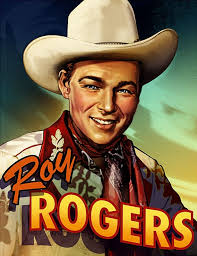
Roy Rogers was born Leonard Franklin Slye on November 5, 1911, in Cincinnati, Ohio. His parents owned a farm near the small town of Duck Run, and it was there that he developed his love fore music. By the age of ten he was playing the guitar and calling square dances.
In 1929 Leonard left the Midwest and headed for Hollywood. In between occasional singing engagements with the various bands, he helped form (including the Sons of the Pioneers), he worked as a truck driver and a fruit picker.
His big break came in 1937, when he snuck onto the lot of Republic Pictures and landed a contract paying seventy-five-dollars a week. Republic Studios’ president Herbert Yates was looking for a musical actor to go boot-to-boot with singing-cowboy sensation Gene Autry. Renamed Roy Rogers, Leonard had the integrity, the talent, and the look the studio was hoping to find.
Three short years after singing with Republic, Roy Rogers would be the number-one-box-office draw in the country and be crowned the King of the Cowboys.

Dale Evans described her upbringing in Uvalde, Texas as “idyllic.” As the only daughter of Walter and Betty Sue Smith, she was showered with attention and her musical talents were encouraged with piano and dance lessons.
While still in high school, she married Thomas Fox and had a son, Thomas Jr. The marriage, however, was short-lived. After securing a divorce, she attended a business school in Memphis and worked as a secretary before making her singing debut at a local radio station. In 1931 she changed her name to Dale Evans.
By the mid 1930s, Dale was a highly sought-after big-band singer performing with orchestras throughout the Midwest. Her stage persona and singing voice earned her a screen test for the 1942 movie Holiday Inn. She didn’t get the part, but she ended up singing with the nationally broadcast radio program the Chase and Sanborn Hour and soon after signed a contract with Republic Studios. She hoped her work in motion pictures would lead to a run on Broadway doing musicals.