Success and Sadness

The tragedienne who attracted huge audiences…

Sarah Bernhardt 1844-1923

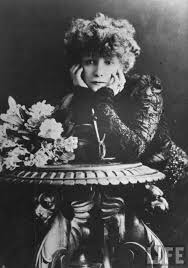
No one played tragedy with such believable intensity as Sarah Bernhardt, and no one brought as much passion and enthusiasm to the pursuit of pleasure.  From fishing on the southern California coast to bear hunting in the woods outside Seattle, on every western tour the French actress indulged in some kind of adventure.  Sarah Bernhardt threw herself into life with the same characteristic energy she put into her stage appearance.  Yet she often slept in a coffin, preparing for that final sleep.

She was born in Paris, France, on October 23, 1844.  Named Henriette-Rosine Bernard, she was a thin, sickly child, alternately deeply depressed or shouting for joy.  At the age of eight, seeing her aunt’s carriage stopped in the street near the house where her mother had left her for months, and being forbidden to leave by her caretakers, she forced open a second-floor window and jumped out in front of the carriage.  Although the fall resulted in a dislocated shoulder and shattered kneecaps, her aunt was compelled to pay attention to the child’s hysterical pleadings to be taken away.

Sarah’s mother and her aunt sent her to school, and later, she was trained in dramatic arts and began her career at the Comedic Francaise.  Eventually Sarah performed throughout Europe and in 1880 toured the United States.  She was a huge success in major cities like Salt Lake, Denver and San Francisco.  Audiences flocked to see Sarah perform.  She was known across the West as “The Divine Sarah.”

Sarah Bernhardt died on March 26, 1923.  She was buried in a rosewood coffin her mother purchased for her at her insistence when she was but fifteen years old.

To learn more about “The Divine Sarah” and other entertainers on the frontier read Gilded Girls: Women Entertainers of the Old West.

Available everywhere books are sold.

This Day…

1881-Helen Hunt Jackson publishes A Century of Dishonor, an account of the atrocities committed against Indian tribes in the West and an indictment of the nation’s reservation policy.  Jackson sends copies of the book to ever member of Congress and to most federal officials.

The Restless Soul of Jeanne Eagels

An illuminating glimpse at the colorful and often scandalous…

Actress Jeanne Eagels

Actress Jeanne Eagels

In 1929 Jeanne Eagels was nominated for a best actress Oscar for The Letter after she died earlier that year at age thirty-nine from alcohol and heroin complications.  Eagels had started as a Ziegfield Follies girl, but her talent and beauty soon moved her from the chorus line to center stage.  Tabloids of the time followed her progress and her secret marriage to a Yale football star, and they especially liked her temper, her no-shows, and her quitting plays whenever she felt like it.  At one point she was banned from appearing on stage by Actors Equity, which had forced her to move to Hollywood to make the “talkie” The Letter, one of the first films that showed the true dramatic possibilities of audio in cinema.  In the fall of 1929 she checked into a private drying-out hospital in New York City a week before the stock market crashed; unfortunately she left via the morgue.

For more information about legendary frontier actresses read Gilded Girls: Women Entertainers of the Old West.

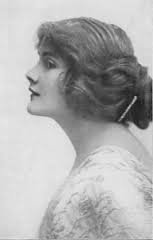
The Actress Langtry

The Royal Aquarium in Westminster, England, was a hub of activity on April 6, 1876.  Many members of London’s wealthy aristocratic society were on hand for the gala opening of the magnificent structure built entirely underwater.

Dignitaries, barristers, popular sculptors, artists, and photographers were there to witness the occasion and to be inspired by the colorful coral reefs, graceful marine life, and crystal-blue waters.  Their attention, however, was drawn away from the oceanic scenery when a tall, curvaceous young woman with Titian red hair entered the room.  She was adorned in a simple black gown.  Her azure eyes scanned the faces staring back at her, and she smiled ever so slightly.  Within moments of her arrival, visitors descended upon the woman to admire her beauty.

Eminent portrait painters and photographers approached the unassuming woman and asked her to sit for them.  Poets sought introductions and then recited blank verse about her arresting features.  By the end of the evening, Lillie Langtry was the toast of Great Britain-a Professional Beauty to be reckoned with.

Emile “Lillie” Charlotte LeBrenton was born to William Corbet and Emilie Martin LeBreton in October of 1853 on the Isle of Jersey, a few miles off the coast of Saint-Malo, France.  She was the only daughter in a family of six children.

Beauty alone was responsible for Lillie Langtry’s initial renown.  Her photographs were printed in England and American newspapers, and by the time she was twenty-seven years old she was as famous in those countries as she was in her own.

The writer Oscar Wilde, whom Lillie had met at society parties, convinced her that the theatre was her calling and helped her get her start in the business.  Lillie took the stage for the first time on December 15, 1881 in the play She Stoops to Conquer at the Theatre Royal.  She was an instant hit.

Theatre managers throughout Europe clamored for a chance to star the famous beauty in one of their shows.  After touring London and Scotland, performing for full houses nightly, she traveled to America.  She appeared in a variety of productions in theatres from New York to San Francisco.

The Jersey Lily (a nickname she acquired because of where she was born) was romantically linked to the Prince of Wales, gambler Diamond Jim Brady, and actor Maurice Barrymore.  Everywhere she went men found her shockingly attractive.  Among her famous admirers was Judge Roy Bean of Texas.  Bean fell in love with Lillie after seeing her photograph posted on a playbill.  Soon the walls of Judge Bean’s saloon courthouse in Vinegaroon, Texas were covered with her pictures and press clippings.  He renamed that town Langtry and Lillie visited the town named in her honor in 1904.  Judge Bean had died not long before.  She toured his Jersey Lily Saloon and drank a toast in his honor.  Langtry residents gave her Bean’s pet bear, which had been chained for years to the foot of his bed, and the animal ran off as soon as it was released.  Lillie was then presented with the Judge’s revolver, the same one he’d used to keep order in his court.

Everywhere Lillie performed across the West she packed venues and received excellent reviews.  At times her theatrical performances were upstaged by her beautiful costumes and dazzling jewelry.  Thousands of women bought seats in the hope that they would attend a performance in which Lillie wore her fabulous gems.

World-famous Lillie Langtry retired from the theatre in 1919 and made her home in Monaco.  She died on February 12, 1929 from influenza.  She was seventy-six years old.  News of her death spread quickly through the United States.  The front pages of newspapers across America recalled her contributions to the theatre, and some editorials declared her passing as “an era that has come to an end.”

The World Famous Lily Langtree

The World Famous Lily Langtree

For more information about legendary frontier actresses read Gilded Girls: Women Entertainers of the Old West.

Gilded Girls

And the best Gold Rush actress is…

In 1847 the western territory of the United States was s sleepy wilderness populated mostly by Indians and Mexicans.  But when word reached the eastern states that there were rich deposits of gold in the mountains of the frontier, the region changed virtually overnight.  Two hundred thousand restless souls, mostly men, but including some women and children, traveled to the untamed western lands, primarily to California, during the first three years of the Gold Rush.  They came from all over the world, leaving homes and families for the dream of finding riches.

Soon the West was dotted with mining boomtowns and bustling new cities.  Fortunes were made and lost daily.  Lawlessness was commonplace.  At first gold seekers were content with the crude entertainment provided by ragtag bands and their own amateur fiddle-playing neighbors.  They flocked to bear-wrestling and prizefighting exhibitions.  In this impetuous atmosphere gambling dens, saloons, brothels, and dance halls thrived, but after a while, the miners and the merchants began to long for more polished amusements.  Theatres, backstreet halls, tents, palladiums, auditoriums, and jewel-box-sized playhouses went up quickly and stayed busy, their thin walls resounding with operas, arias, verses from Shakespeare, and minstrel tunes.

The western pioneers’ passion for diversion lured brave actors, dancers, singers, and daredevils west.  Entertainers endured the same primitive conditions as other newcomers.  They lived in tents and deserted ships and canvas houses or paid enormous rents for the few available wooded cabins.  But nineteenth-century thespians were often prepared for such a lifestyle.  Acting was largely an itinerant profession at the time, and most players earned their living traveling from town to town and even from country to country, performing different plays or musical numbers from a large repertoire every night of the week.  Bored miners were willing to pay high sums to see these entertainers, especially to the females.

Many of the most popular women entertainers of the mid-and-late-1800s performed in the boomtowns that dotted the West, drawn by the same desire for riches and bringing a variety of talents and programs.  They were mostly well received and sometimes literally showered with gold, but their personal lives were often marked by tragedy and unhappiness.  Throughout this month I’ll be presenting the stories of a few of these gifted thespians who brought glitz, glamour, and genius to western America.  The footlights have been illuminated, and the curtain is about to go up, revealing the tales of women entertainers who captured the hearts of the western pioneers.

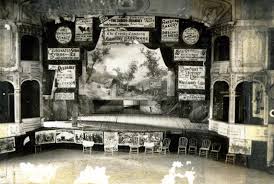
Piper's Opera House in Virginia City, Nevada.

Piper’s Opera House in Virginia City, Nevada.

You can read more about these celebrated women in the book Gilded Girls: Women Entertainers of the Old West.
Love Lessons from the Old West

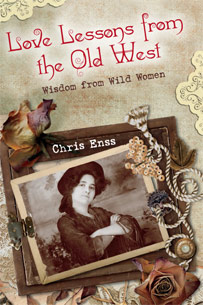
Love Lessons from the Old West Book CoverLove Lessons Learned by Women of the Old West provides insight into possible motives for why frontier men and women fell in love. Some of the chapters in this new title, due to be released in February 2014, will bring a smile to your heart and other chapters will break it into pieces. As one California prospector noted in his diary in 1855, “I’d endure just about anything to settle down with a good woman. She don’t have to love me, least not at first. I only want a chance to show her I could be the finest blanket companion in the country.”
This Day…

1871-Surrounded by a posse in an outhouse in Wichita, Kansas suspected horse thief J.E. Ledford came out with guns blazing and sadly wounded Marshal Jack Bridges.  Bridges survived buy Ledford was killed.

A Companion to Travel Life’s Path

Last chance to enter to win a library of books about mail-order brides and romance on the frontier.

The following is an advert placed in The New Plan newspaper in 1881:  I am a widow of 59 years looking for a companion to travel down life’s path with me and make life worth living for; have blue eyes, brown hair, weight 210, height 5 feet; am Irish descent, a good housekeeper and have small income; I can make the right man happy with a good home.  Interested in reading more classic advertisements for mail-order spouse?  Read Hearts West: True Stories of Mail Order Brides on the Frontier and Object: Matrimony: The Risky Business of Mail-Order Matchmaking on the Frontier. 

262A5195

Drawing will be held on Friday, March 14.  Good luck!