The Doctor Will See You Now

Enter to win a copy of

With Great Hope: Women of the California Gold Rush

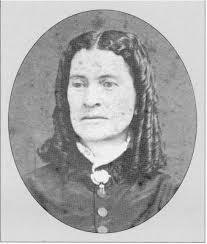
Dr. Nellie Pooler Chapman

Dr. Nellie Pooler Chapman

My chair is a barrel cut in this wise, with a stick with headrest attached. The lower half of the barrel stuffed firmly with pine needles and covered with a strong potato sack over which I had an elegant cover of striped calico.” J. Foster Flagg Forty-Niner, Dentist.

A groan issued from the adjoining room. Drying her hands on a linen towel, the dentist drew in a deep breath and prepared herself for her patient. Smoothing the apron that covered her diminutive form, Nellie Pooler Chapman walked briskly toward the tray of tools and the lanky miner who waited, hand to jaw in a futile attempt to ease the pain.

With her husband Allen gone to the silver mines in Nevada, Nellie was fully prepared to handle the family dental practice. After all, she’d started learning dentistry immediately after her marriage at the age of fourteen.

Nellie Elizabeth Pooler was born in Norridgewock, Maine, on May 9, 1847. She was married to Dr. Allen Chapman, a bearded dentist of thirty-five, on March 24, 1861. The wedding took place in the home of John and Abigail Williams. This home was called “The Red Castle” because it was made of brick and decorated with white, icicle type wooden trim. Today it is a bed and breakfast inn and is still called the Red Castle.

To learn more about Nellie Pooler Chapman and dental practices

in the mid-1800s, read

With Great Hope: Women of the California Gold Rush.


Death & the Donner Party

Enter to win a copy of

With Great Hope: Women of the California Gold Rush

“I wish I could cry but I cannot. If I could forget the tragedy perhaps I would know how to cry again.”

Mary Graves – Heroine of the Donner Party

Mary Graves, Heroine of the Donner Party

Mary Graves, Heroine of the Donner Party

If Mary Graves had stayed in Marshall County, Illinois, she might have married the boy next door, taught students to read in a one-room schoolhouse, and lived out her days watching her children and grandchildren grow up on the family farm. Her life, however, took a different course when her family joined the Donner Party in 1846 and headed west.

Mary was eighteen when her father, Franklin made the decision to move his family to California. The wagon train the Graves joined was organized by George and Jacob Donner and James Reed and their families. The initial group set out from Springfield, Illinois, in April and was joined by additional members when it reached Independence, Missouri. Franklin and Elizabeth Graves and their nine children joined the Donner Party in August at Fort Bridger, Wyoming, with their belongings piled in three large wagons.

Mary was excited about the journey. She had no doubt heard stories of this golden land of opportunity and couldn’t wait to see its riches for herself. She knew her family might experience difficulties getting there but that had not put a damper on her gleeful spirit. She didn’t care that the trail was treacherous, and she wasn’t afraid of the Indians that guarded the way. She placed all her faith in God and her father to get her and her family to their new home safely.

To find out about the nightmare Mary and her family endured read

With Great Hope: Women of the California Gold Rush.


This Day…

In celebration of the nation’s centennial, a special Transcontinental Express arrives in San Francisco from New York in a record-breaking 83 hours and 39 minutes.  It will be 50 more years before such service is instituted on a daily basis.

Rebel With A Cause

Enter to win a copy of

With Great Hope:  Women of the California Gold Rush


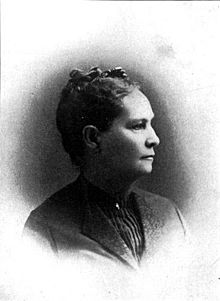
Ellen Clark Sargent

Ellen Clark Sargent

“No married woman can convert herself into a feminist knight of the rueful visage and ride about the country attempting to redress imaginary wrongs, without leaving her own household in a neglected condition that must be an eloquent witness against her.”  New York Times, 1868

The memory of her arrival in Nevada City, California stayed with Ellen Clark Sargent all her life.  Long after she had left the Gold Country, she recalled.

‘It was the evening of October 23, 1852 that I arrived in Nevada [City], accompanied by my husband.  We had traveled by stage since the morning from Sacramento.  Our road for the last eight or ten miles was through a forest of trees, mostly pines.  The glory of the full moon was shining upon the beautiful hills and trees and everything seemed so quiet and restful that it made a deep impression on me, sentimental if not poetical, never to be forgotten.’

In the newly formed state of California, shaped by men and women who had endured unbelievable hardships to cross the plains, Ellen saw an opportunity to gain something she passionately wanted – the right to vote.

Despite defeat after defeat, she never gave up.

        To learn more about how Ellen Sargent helped bring about the Nineteenth Amendment read

With Great Hope: Women of the California Gold Rush.

Diva of the Diggins

Enter to win a copy of

With Great Hope: Women of the California Gold Rush.

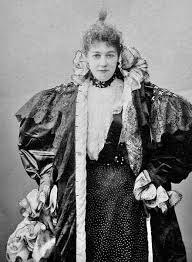
Diva Emma Wixom

Diva Emma Wixom

Doc Wixom lifted his three-year-old daughter and stood her carefully in the middle of a table. Wrapped in an American flag, golden brown ringlets framing her sweet face, Emma Wixom smiled at her audience. The church on the banks of Deer Creek was crowded with miners and merchants, teamsters and saloonkeepers. They were there to benefit a local charity, and the sight of a child symbolized the hopes of the future.

Unafraid of the eager faces crowded around the table, little Emma Wixom knew what was expected of her. She was happy to sing on this lovely morning. She did it all the time, unaccompanied, singing for the pure love of the sound.

That summer day in 1862, in the thriving California Gold Rush town named Nevada, she gave a performance to remember. Inside the Baptist church on the banks of Deer Creek, Emma took a deep breath and released a pure soprano voice that held the audience spellbound. By the time the last note sounded, there was not a dry eye in the house. Brawny, wet-cheeked miners showered her with nuggets of pure gold.

Emma Wixom, the daughter of a country doctor, began a long and illustrious career that day in the church. She would go on to sing opera in Europe and America. She would draw standing-room-only crowds to her performances, but her biggest fans remained the reckless, rugged gold miners who first took a little child into their hearts.

To learn more about Emma Wixom read

With Great Hope: Women of the California Gold Rush.

Lynching Juanita

Enter to win a copy of With Great Hope:

Women of the California Gold Rush.

Juanita

“Old West justice is quick and violent. A couple of nights ago one poor soul was caught sneaking into another man’s tent to steal some gold dust. A jury was called on the spot and after a hasty trial, the unhappy victim was adjudged to receive a hundred lashes, have his head shaved, and his ears cut off, and be drummed out of the mines; a sentence which was carried out on the spot.”  Robert Buckner, Forty-niner, 1850

 Juanita slowly walked to the gallows, took the noose in her hands, and adjusted it around her neck. She pulled her long, black hair out from beneath the rope so it could flow freely. A blanket of silence fell over the crowd watching the hanging in Downieville, California, that sunny July afternoon in 1851.

Less than twenty-four hours before, the people in this California Gold Rush town had been celebrating the country’s independence. The streets were still lined with bunting and flags. A platform still stood in the center of the town where prominent speakers had given patriotic lectures. There had been bands and parades. Drunken miners had brawled in the streets and bartenders had rolled giant whiskey barrels into tent saloons for everyone to have a drink. It had been a momentous occasion – the first Fourth of July celebration since California had become a state.

To learn why Juanita was hanged read

With Great Hope: Women of the California Gold Rush.


Looking for Lola

Enter to win a copy of With Great Hope:  Women of the California Gold Rush

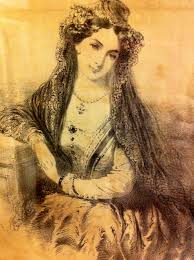
Lola Montez, Queen of the Spider Dance

Lola Montez, Queen of the Spider Dance


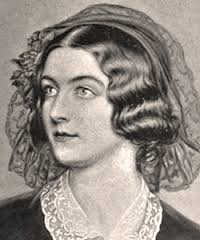
Lola Montez, beautiful, intelligent and spirited, arrived in California in 1853 preceded by a delicious aroma of European scandal. Irish-born in 1818, she had danced her way to success on the Continent and had dazzled lovers, two husbands and the King of Bavaria, who had taken her as mistress and titled her Countess of Landsfeldt.

In San Francisco her spider dance was a theatrical sensation until caricatured by a rival. Ridiculed, Lola and her latest husband, journalist Patrick Purdy Hull, sailed for Sacramento. There she quarreled with the theatre manager, challenged him to a duel, was laughed at, and in burning indignation swept on to Marysville where the tour fizzled out. Lola and Pat boarded a stage for Grass Valley, decided it was a painfully needed refuge. They bought this home and Lola busied herself in domesticity, even tending the garden.

The town’s best families shunned them , so their elegant hospitality and brilliant salons were lavished on a few daring citizens and a parade of out-of-town leading lights who found their way to the house on Mill Street. Lola may or may not have horse-whipped a local editor for disparaging her in print, as one story goes. She did, however, show yet another facet by helping the town’s needy, carrying food and medicine to injured miners, keeping watch all night at the bed of a sick child, and endearing herself to many by her acts of charity.

Lola evicted Patrick Hull after a quarrel over the shooting of her pet bear. Afraid of boredom, she left Grass Valley in the summer of 1855 for a professional dance tour of Australia. She retuned just long enough to sell her home, the only one she ever had owned and to bid farewell to the town that had promised so much tranquility. Beset by dwindling health and fortune, Lola died in New York in 1861.

To learn more about Lola Montez and the other ladies who made their mark on the Gold Country read

With Great Hope:  Women of the California Gold Rush


This Day…

The first two volumes of Theodore Roosevelt’s The Winning of the West are published.  Roosevelt’s action-packed drama traces the spread of the United States across the continent, from the day Daniel Boone first pierced the Cumberland Gap in 1765 to the day Davy Crockett died at the Alamo in 1836.  He will complete two additional volumes in 1896.

With Great Hope: Women of the California Gold Rush

Eliza Withington

Photo Artist

There before her was a panoramic view of the snow-caped Sierra peaks – jagged and folded, thrusting upward from steep, forested hills – taller than what they called mountains in the East. The California sky was a blue vault overhead. The sun, she noted, was at the perfect angle to highlight the features of the rugged landscape for her camera.

Eliza Withington pulled away the skirt-tent wrapped around her bulky camera and tripod, reversed the lenses she’d turned into the camera box, reset the screw, and anchored the contraption in the rocky soil of the Amador County foothills, slipped it into place and exposed the plate.

The camera, covered with one of her heavy, black dress skirts, then became her darkroom. Eliza slipped beneath the dark skirt with water, lamp, and developer, developed the negative, then washed and replaced the glass in the plateholder for a more convenient time to fix and varnish the picture.

Packing up her precious equipment, she scrambled back down the steep, rocky trail to the dusty road, using her cane-headed parasol for a walking stick. There she waited for a fruit wagon to return and carry her back to Ione City and the appointment for portraits at her studio.

Eliza Withington described how she photographed the Sierras in an article for the Philadelphia Photographer in 1876. “How a Woman Makes Landscape Photographs” detailed her methods of working in the field. The article provided a complete description of her equipment, how she packed it to survive torturous overland journeys to scenic locations, and how she improvised, using her skirts, shawls, and parasol to process the five-by-eight-inch glass plates in the field.

Eliza loved her work – in particular the time she spent on the road, camping out in the rugged foothills of Amador County. Born in New York around 1825, Eliza W. Kirby married George Withington in 1845. They had two daughters, Sarah Augusta in 1847 and Eleanor in 1848. George set out for the gold fields in 1849. Eliza, Sarah, and Eleanor followed him to Ione City in 1852. During the overland trip from St. Joseph, Missouri to Dry Creek, California, Eliza and her daughters were the traveling companions of Dr. Fred Bailey and his wife, Mary Stuart Bailey. Traveling overland for six months was difficult, and according to Mrs. Bailey’s journal, Eliza’s daughter Sarah, then about five years old, had a miserable time of it. Mary wrote that Eliza suffered on her daughter’s account and was ill herself with dysentery.

By August, one of a span of horses Eliza was bringing to her husband had been stolen, along with two horses belonging to the Baileys. Although disappointed at the loss, Eliza and the Baileys had to continued on, and on October 5, they finally met up with George. The Withington family moved to a farm and by mid-October, they were busy sending hay and barley to market in Volcano, a nearby town.

In July 1857, five years after she arrived in the Gold Country, Eliza opened an ambrotype gallery. The opening was advertised in the small Gold Country newspaper, the Amador Ledger. According to the paper, the gallery was located on Main Street, at the “first door west of the bridge” in Ione City, a mining town in the foothills of the Sierra, southeast of Sacramento. In the tradition of the day, the advertisement touted all the advantages of the shop, including the skylight, and the business hours, which were Tuesday, Wednesday, Thursday, and Saturday. The advertisement closed with a reminder of the fleeting passage of time and the need to “secure the Shadows, ere they fade away.”

Established as a portrait photographer, Eliza Withington was not content with artful poses of families, individuals, and children. Expanding her subject matter, she also recorded the busy mining camp workings and scenic vistas for the stereopticon viewers that were popular at the time. In order to shoot these stereopticon photographs, two photographs were taken with a special camera equipped with lateral twin lenses. When the two pictures were mounted side by side and viewed through the stereopticon, they provided a realistic, seemingly endless, three-dimensional image.

Eliza Withington soon became one of the most well-known female photographers working in the Gold Country at a time when the physical effort required to produce photographs was daunting, to say the least. She often used the process called daguerreotype, invented in 1839 by Louis Jacque Daguerre. In this process, used by most commercial photographers in the mid-nineteenth century, the photograph was created with a light-sensitive, silver-coated plate developed by mercury vapor. Equipment was cumbersome and the processing labor-intensive, but many individual and family portraits as well as buildings and natural wonders were captured using this method.

The infant craft of photography sustained many frontier females and provided them with both financial security and independence. Despite the difficulties of this method, which included cumbersome equipment and labor-intensive processing with dangerous chemicals, women ventured into this burgeoning industry. Many began as assistant to their photographer husbands, while others started out mounting photographs.

Another woman photographer who established a permanent presence in the Gold Country was Julia Swift Randolph, whose Nevada City gallery operated for thirty-six years. Unlike Eliza Withington, Julia Swift Randolph spent her time producing portraits exclusively.

Other female photographers traveled extensively taking photographs. The San Francisco Examiner featured the unusual lifestyle of Mary Winslow in a story published in March 1895.

“She travels in a buggy, alone, and thinks nothing whatever of driving her own horse over any road where someone else’s horse has been driven. She is twenty-five years old, shrewd, self-reliant and not afraid of anything. Her only arms are a revolver and a man’s hat, and she goes wherever she pleases. She makes views and outdoor portraits, and they are good ones too.

“When the weather grows warm in the spring, she dons a short, plain traveling suit, hitches up her horse and bids farewell to home and friends, to return only when she happens to feel like it. She has been three times to San Jose over three different routes, stopping everywhere on the way. She has been once to Marysville, once to Yosemite, once to Los Angeles, and has done all the country bordering the San Francisco Bay.

“Sometimes she stays four or five weeks in a lively town, where business is good, and at other times she drives, day after day, through mountainous country places where the coyotes stand at the side of the road and look at her in astonishment. When night finds her a long way from any place where she can get a bed and board, she puts on a man’s hat and a black alpaca ulster as a sort of disguise for her sex, sees that her revolver is in good working order and feels perfectly at home.”

The work and methods of Eliza Withington and other early female photographers are still acclaimed today. The copies of their photographs that exist today provide glimpses of the past and the people who secured a future with their bare hands and the sheer determination to succeed.

 

Cody’s Captivating Costume

Last Chance to Enter to Win a Copy of

How the West Was Worn: Bustles and Buckskins on the Wild Frontier

Buffalo Bill Cody

Buffalo Bill Cody

“Buffalo Bill is a magnificent specimen of a man, and has a nasty grace of movement that is quite captivating. And a look that is unique and fitting to his work.”   The Chicago Review, 1872

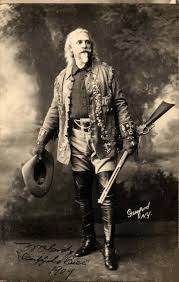
William Frederick Cody was a frontiersman and noted marksman of the American West. Not only did he bring Wild West shows into prominence, he was a bit of a fashion plate, as well. His knee-length fringed shirts, ornamental leather coats, engraved and embroidered thigh-high boots, and broad-brimmed hat made him one of the most recognizable figures in the United States and Europe. His curly, shoulder-length hair, thin moustache, and small goatee accentuated the look. Costume historians credit Buffalo Bill with “bringing a bit of sophistication to the unruly plains.”

To learn more about legendary trendsetters of the Old West read

How the West Was Worn: Bustles and Buckskins on the Wild Frontier