

This Day…
Lincoln County Outlaw
Enter to win a copy of the Bedside Book of Bad Girls:
Outlaw Women of the Midwest.
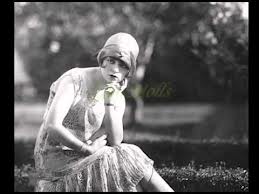
Anyone who knew Anne Cook thought she was cruel, unfeeling and motivated by money. The brothel she operated in North Platte, Nebraska, inthe late 1920s was a profitable enterprise, but she wanted to amass a fortune and one house of ill repute would not be enough. No legitimate business alone could make her rich either. Anne hoped to fulfill her dream with a combination of both. According to those who knew the Cook family well, Anne’s teenage daughter brought in a substantial amount of income working for her at the brothel. Clients requested the thirteen year old on a regular basis.
By the time Clara was in her 30s she had fully adopted her mother’s quest for wealth and was equally ambitious. In addition to entertaining callers, Clara had become a bookkeeper for Anne’s various illegal enterprises. Among Anne’s nefarious business ventures was bootlegging, gambling, and extortion. Clara used what she knew about her mother’s criminal behavior to extort money from Anne and grow her own bank account. The pair often fought over the misappropriation of funds. Clara misjudged how far Anne would go to maintain the property, money, and power she had acquired.
On May 29, 1934, Clara challenged her mother for the last time. Family members at the sprawling farm where they lived in Lincoln County, Nebraska, told authorities that the pair had been arguing most of the day. No one was certain of the nature of the quarrel only that Anne had settled the heated discussion by killing her daughter.
For more information about Anne Cook read the Bedside Book of Bad Girls: Outlaw Women of the Old West.
This Day…
Women of Easy Virtue
Enter to win a copy of The Bedside Book of Bad Girls:
Women Outlaws of the Midwest
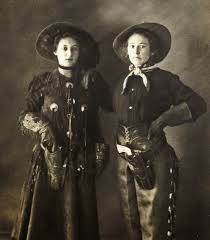
Among the notorious bad guys who robbed, swindled, and murdered Midwesterners from 1824 to 1936 were a number of bad girls who could be just as dishonest and violent. On September 23, 1895, a woman with a handkerchief over her face and a revolver in her hand stepped into the Mountaineers Club in Independence, Missouri and robbed the faro game of $525 and made her escape. She leveled her gun at the men and told them to keep still, and then helped herself to the winnings. The men in the room were too dazed to give the alarm until the woman had escaped. On that same date at 10:30 in the evening an attempt was by a woman to blow up a west bound Union Pacific train by placing a stick of dynamite in the tracks at a junction half a mile east of the city. Nearly the whole train passed over the dynamite before it exploded. The last coach, filled with passengers, was badly shattered, but no one was injured. Authorities claim the crimes were committed by “women of easy virtue.”
To learn more about these female criminals read
The Bedside Book of Bad Girls: Women Outlaws of the Midwest
This Day…
Public Enemy No. 1
Enter to win a copy of The Bedside Book of Bad Girls:
Women Outlaws of the Midwest

She began with a hymn book in her hand; she died clutching a gun. That was “Ma” Barker, mother of four outlaw sons whom J. Edgar Hoover, chief of the Federal Bureau of Investigation, Department of Justice described as the real “public enemy No. 1.”
Kate Barker – “Ma” as she was known to her criminal associates was the “brains” of the Barker-Karpis gang – kidnappers, bank robbers, and murderers. And she died as most criminals wanted by the federal government do. Ma Barker began her public career in Kansas City, Missouri. In either an attitude or assumed or real piety she was the leader of a small band of religious zealots who used to hold meetings in the street near city hall. Whenever one of her followers was arrested for picking pockets, vagrancy, or street walking or casual misdemeanor, she would go before the police judge, shed tears and claim that she alone was left in the world to befriend the poor defendant. In most cases the defendant went back to more and bigger crimes and “Ma” Barker’s friendliness and a slight ability as a defense witness soon became a racket.
“Ma” and her boys were responsible for kidnapping two of the country’s wealthiest men and holding them ransom. The Barker-Karpis gang murdered police officers and federal agents and any outlaw who double-crossed them. Ma Barker’s life ended at a home she was renting in Florida on January 16, 1935. To learn more about the life and violent death of Ma Barker and her sons read The Bedside Book of Bad Girls: Women Outlaws of the Midwest.
The winner of a free copy of the book will be announced on April 30.
Good luck!
This Day…
The Gambling Outlaw
Enter to win a copy of The Bedside Book of Bad Girls:
Outlaw Women of the Midwest

Death, dealing from “a cold deck,” flipped the ace of spades for ‘ Poker Alice” Tubbs on February 27, 1930, it was her admission card to the big game that is eternity. She was one of the last of a bizarre coterie of hard living, straight-shooting men and women who added the color—sometimes it was blood-red—to the old West. “Deadwood Dick,” “Wild Bill” Hickok end “Calamity Jane” were others. Poker Alice wore a gun, smoked cigars and could swear like a trooper. During a life as adventurous as any man’s, she gambled for high stakes without a single betraying quiver of the-hand as she dealt; without the twitch of a face muscle. Old age and complications, following an operation for gall stones, were given by doctors as the cause of her death. Poker Alice was English born but American bred, and always the gambler. She started as a faro dealer. A woman at the box was a novelty that drew the black beards of the wild West, with their bags of gold, to the gambling table. So successful was she, that soon she was known, not just, as a woman gambler, but as a winning gambler, man or woman. Colorado, Nevada, Montana, the Dakotas—wherever there was pay dirt and hombres with guts enough to lay it against the turn of a card—Poker Alice was. She took $6,000 in one night’s play in Silver City, N. M. It seems rather strange, in retrospect, that Poker Alice, self-reliant, courageous and able to take care of herself anywhere—should have had time for love, yet she was three times married. Her first husband was a mining engineer, P. Duffield. Then came W. G. Tubbs, a gambler who, despite a wide reputation of his own, never could equal Poker Alice at the card table. Her third husband was George Huckert, but when he died Poker Alice resumed the name of he- second husband. She was in the rush of the ‘free lands’ of Oklahoma, and later skipped from place to place as the federal government warred on the gamblers. One by one commanding figures of the old, the lawless West, dropped away—many by bullets. Poker Alice grew old. Times changed. Railroads brought civilization to the raw, elemental West. Eventually there came prohibition. Poker Alice retired to a little cabin in the Black Hills. She was convicted for violating the prohibition law but never served the sentence. Governor W. J. Bulow pardoned her, saying: “I can’t send a white-haired old woman to jail on a liquor charge.” The days of big games, hard liquor and strong language are gone now. Only the wild glory of the Black Hills remains. Civilization could not take them away; and there today she lies dead—Poker Alice was seventy-seven when she died.