
“I’ll never have a close relationship with anyone other than my boys. After all, they know what my heart sounds like on the inside.” With that being said, Arizona Barker, Ma Barker to the world, set out to raise four sons to be criminals. It’s believed by many that the Ma Barker image was originated by J. Edgar Hoover’s FBI in an effort to justify the killing of an old lady. She has been portrayed as the mastermind of the Barker-Karpis gang, while surviving gang members absolutely denied the allegations. However, evidence indicates that she was much more involved in criminal activity than some think, whether she was the “mastermind” or not is debatable. To say the least, she was a willing accomplice, if nothing else. Arizona Donnie Clark was born near Springfield, Missouri, the exact year is not known, though most agree that she was born on October 8, 1873. In 1892, she married George Barker and in time gave birth to four of the meanest examples of humanity ever to exist! The boys were named Herman, Lloyd, Arthur and Fred. After the birth of Fred, George Barker left the family, though it may have been at the insistence of his wife. At some point, she began using the name Kate Barker. On several occasions Kate faced the authorities on behalf of her sons, trying to keep them from serving jail time. She was usually successful. It all came to an end for Ma in early 1925. Posing as J.E. Blackburn and wife, Ma and her son Freddie rented a house on the northern banks of Lake Weir, near the town of Ocklawaha, Florida. The neighbors thought they were an odd couple with him being so young and her being so much older. They didn’t associate with the neighbors and frequently large cars were seen entering and leaving the place. Unknown to the Barkers, the FBI had the map they had taken from Doc’s apartment and had been checking their mail through the postal service to positively identify them. Disguised as county road workers, the FBI kept surveillance on the house. Upon seeing the Blackburns, the FBI positively identified the Barkers. The FBI was under the impression that several members of the gang were in the house. Just before daybreak on January 16, 1935, the FBI arrived outside the two-story house. There were agents from Jacksonville, reinforced by agents who had been flown in from Chicago and Cincinnati. A call for their surrender was met with no response. After a few moments, Agent Earl Connelly of Cincinnati yelled, “Unless you come on out, we’re going to start shooting!” Ma replied, “Go ahead.” What followed was the longest gun battle the FBI was ever involved in; it lasted four hours and there are reports that a minimum of 1500 rounds of ammunition were poured into the house. The FBI requested that the bodies of Ma and Freddie be held in a morgue for an extended time, thinking that other gang members would show up to pay their respects – and be captured. Eight months later, they were removed from the morgue, transported to Welch, Oklahoma and buried alongside Herman, in the Williams Timberhill Cemetery. Ma Barker is the latest book I’m researching. It’s going to be quite a ride. 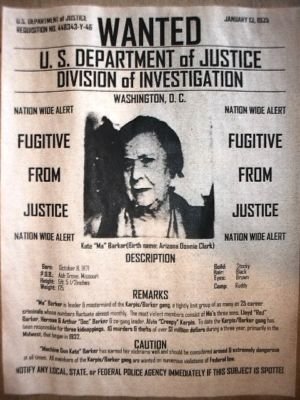
This Day…
1897-Big Nose George Currie, the Sundance Kid, and Harvey Logan were wanted in the robbery of a bank in Belle Fourche, South Dakota. After a brief gunfight with six-shooter Bill Smith and a bounty hunter they were taken into custody near Lavina, MT. All three outlaws escaped from the jail in Deadwood on Halloween.
Only At the Point of Dying
Perhaps it’s because I like my agony in widescreen that I so appreciate any Sergio Leone movie. Or perhaps it’s the reoccurring theme of the bad guy getting his due that’s so appealing. If imitation is the sincerest form of flattery, then Leone was the most esteemed film director of the sixties. The popularity of his debut Western, A Fistful of Dollars (1964), turned Clint Eastwood into a worldwide star and founded the ‘spaghetti western’ style. U.S. publicists called Eastwood’s hero ‘The Man With No Name’, which became his name. Fistful’s success ensured two sequels: For a Few Dollars More (1965) and The Good, the Bad and the Ugly (1966). These films became very popular, resulting in dozens of imitative European westerns. As Leone noted, ‘They call me the father of the Italian western. If so, how many sons-of-_____ have I spawned?’ Conservative estimates exceed 500. Once Upon a Time in the West is not only my favorite Leone film, but my favorite film period. Key Largo runs a close second. Claire Trevor’s performance is spectacular. Once Upon a Time in the West is the quintessential ‘bad guy gets his due’ flick. Charles Bronson plays the protagonist and proves as Pete Townsend once said, “All the best cowboys have Chinese eyes.” Henry Fonda, with his shocking blue eyes, is the villain. Bronson pursues Fonda through the entire film. Fonda has committed a crime against Bronson and his brother and he can’t live a full life until he makes sure Fonda pays for what he’s done. The shootout between Bronson and Fonda is like every other shootout in a Leone film. It’s grand and the pacing makes you feel every anxious moment. The bad guy goes down. When he looks into the face of the person he’s wronged he knows exactly what he’s done. He’s not necessarily sorry for his actions, but he is fully and completely aware of what he’s done. That’s what makes Once Upon A Time in the West great. For me it fulfills the overwhelming desire to see justice served here and now. Fonda’s character doesn’t die to serve as a model for what will happen to all bad guys if they don’t do right. Fonda’s character dies because of what he did to Bronson’s character’s brother. It doesn’t matter if anyone else knows why he was killed. It only matters that the bad guy knows. Real life bad guys get away with murder. They go on with their lives without a care in the world, without a moments thought to the lives they’ve ruined by their actions. It must be wonderful to look into the face of the bad guy as she goes down for her crime and know that she is completely aware of what got her to the ‘point of dying.’ Think I’ll watch Once Upon a Time one more time. 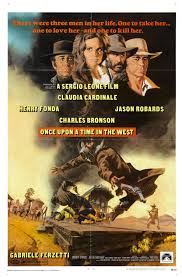
Twain was Here
There is no doubt Virginia City is the best known of the early Nevada mining towns. This is where it all began. It’s difficult to properly and adequately describe all that happened in the city that gave birth to the fabulous history of Nevada’s gold and silver mining processes. To say there is much to see, appreciate and understand from a visit to Virginia City is an understatement. If one has sufficient interest in what the town has to offer, be prepared to spend some time there. It will be time well spent for Virginia City is neither dead nor abandoned.
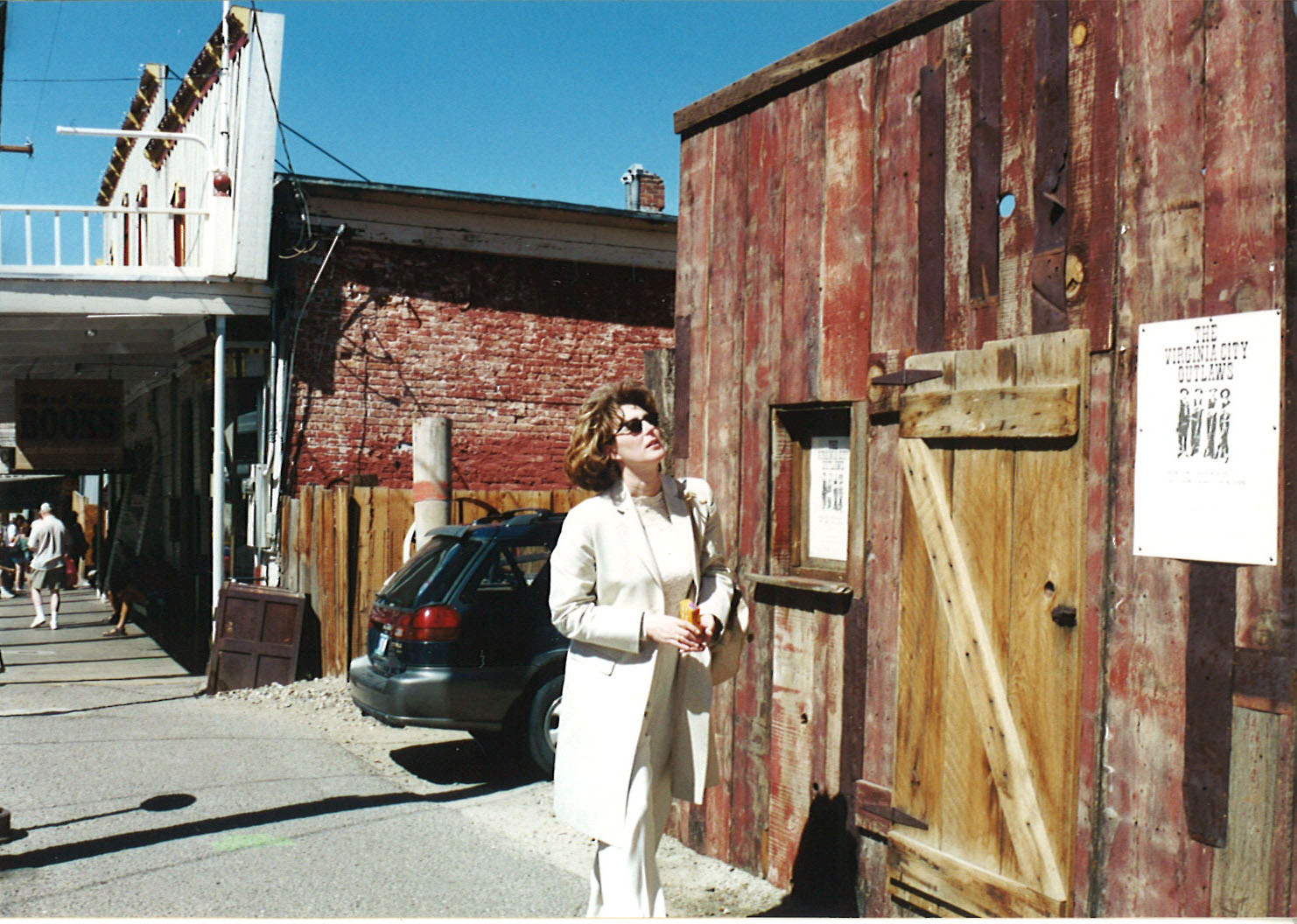
Doing Research in Virginia City, Nevada
This Day…
Looking Like Lillian Russell
Condensed milk was invented by Gail Borden in 1853. After one bad invention followed by another, he finally hit on the idea of food concentrates as an economical way to safeguard the food supply. He once said he conceived the notion by observing his wife adding sugar to her milk to keep her full-figured voluptuousness, a sign of beauty and wealth at the time. Lillian Russell had the full-figure look women tried to emulate. Before, milk was shipped in unsanitary oak barrels, and its spoiled quickly. Although he didn’t invent the tin can, his marketing skills in effect launched the canned food industry. Canning food diminished the possibility of food-storage spoilage, subsequent short supplies from the whims of natural elements, and contamination by vermin. He died in Borden, Texas, of gastrointestinal flu (possibly from drinking from a dented container) in 1874 and had his body packed in a tin can of a railroad car to be buried in Woodland Cemetery in New York.
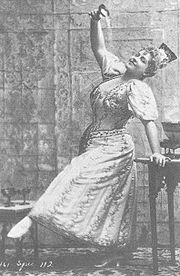
Lillian Russell added sugar to everything she ate or drank.
This Day…
The Rebel
Actor Martin Sheen said of James Dean, “There were only two people in the fifties: Elvis Presley, who changed music, and James Dean, who changed our lives.” It’s an amazing assessment, considering that Dean died midway through the decade. In fact, he was in Hollywood less than two years and made only three movies, two of which – Rebel Without a Cause and Giant – had yet to be released when he died. The car crash that killed him rated only four short paragraphs on an inside page of The New York Times. But the West Coast newspapers knew better. Their front-page banner headlines above a picture of his crumpled Porsche was more attention that Dean had ever gotten when he was alive. But it was merely a hint of the legend that would follow, unfettered by the bounds of living human subject. “You Haven’t Heard the Half About James Dean, by Natalie Wood” and “Here is the Real Story of My Life – by James Dean As I Might Have Told It to Joe Archer” were two of the early postmortems in the movie magazines. The 24-year-old achieved immortality a few days after he completed filming Giant, a sweeping epic that, rising state that he was, matched him with Elizabeth Taylor and Rock Hudson. Dean had taken an interest in race-car driving, but Warner Brothers had forbidden him to race during the filming. On a Friday, the day after a party celebrating completion of the movie, Dean and one of the film’s stunt men headed for a weekend racing event. Dean was driving his new gray Porsche that he had bought for $7,000 a few days before. The car was capable of doing 150 miles per hour, and Dean named it “The Little Bastard. About 3:30 that afternoon Dean got a speeding ticket outside of Bakersfield, California. A little over two hours later, as he was driving west on a rural two-lane highway. Dean saw an east bound car slowing at an intersection, apparently to turn left across the highway. “That guy’s got to stop,” Dean told his companion. “He’ll see us.” But Dean’s gray Porsche blended into the late afternoon twilight. The impact tore open the hood and trunk on the little sports car and crushed the driver’s side of the car. Dean died almost immediately; his passenger was thrown from the convertible and seriously injured. The driver of the other car, a 23-year-old college student, received minor injuries. In one of those classic ironies, Dean had filmed a commercial for safe driving while on the set of Giant. “People say that racing is dangerous, but I’ll take my chances on the track any day than on the highway.” Dean, slouched in a chair and toying with a small lariat, had mumbled in his style. “Take it easy drivin’, uh, the life you might save might be mine, you know?” 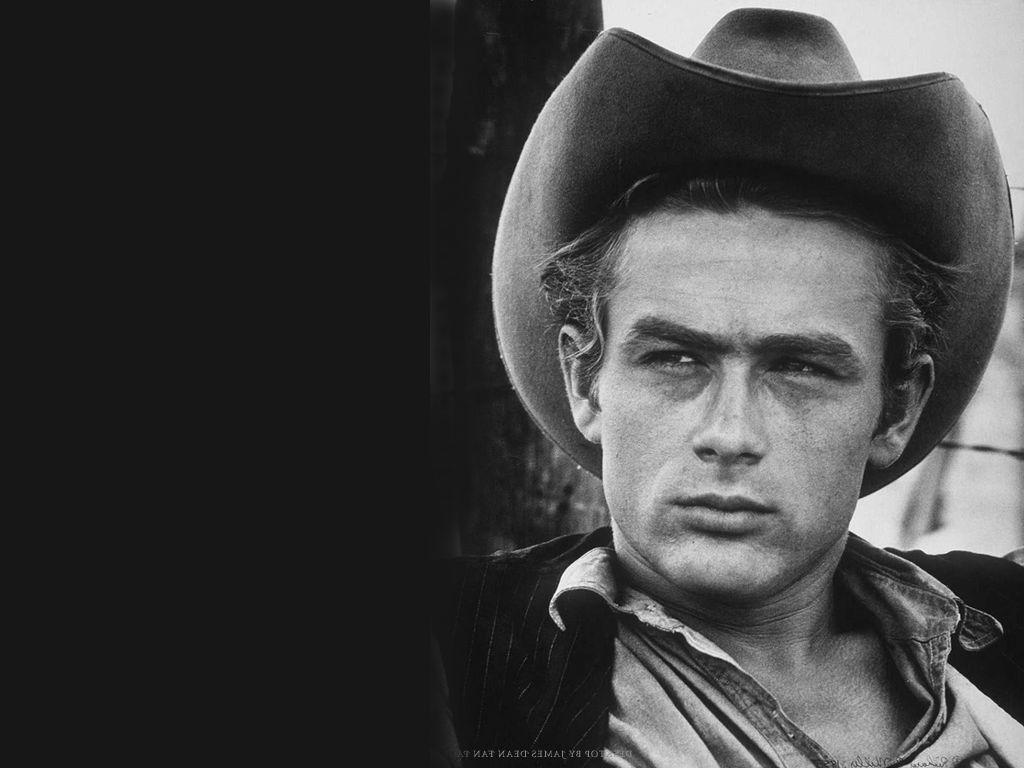
This Day…
This Day…
1633-Massachusetts Bay Colony settler John Oldham leads a group inland to the Connecticut Valley; they spend the winter at Wethersfield, Connecticut. Meanwhile, William Holmes of Plymouth Colony has been commissioned to erect a trading post on the river, above the Dutch post at Hartford. The movement west underway.