1900-After his supper the well known cow thief, Matt Rash, stepped out on the porch of his ranch house in Cold Springs Mountain, Colorado. Stock detective Tom Horn was hiding nearby and shot Rash three times with a rifle. Rash went back inside and died on his bed while trying to write a note in his own blood.
Grandma Mason
Bridget “Biddy” Mason, born a slave in 1818, claimed her freedom and found opportunity on the American frontier. In 1891, she died a rich and free woman who had stared adversity in the face-and had come out swinging. When Biddy was young, she was the property of Robert and Rebecca Smith, plantation owners in Georgia or Mississippi. In 1847, the Smiths became Mormon converts and left for Salt Lake City, Utah, with slaves in tow. Four years later, the Smiths brought their slaves with them to southern California. Among them were Biddy and her three daughters, Ellen, Ann, and Harriet. (Biddy may have been married, or Smith may have fathered the children. No one knows for sure.) Biddy and her children traveled with a wagon train, but they didn’t ride. Instead, they walked mile after mile, herding their owner’s sheep. Biddy arrived in Los Angeles and learned that California had recently joined the Union as a free state. That meant slavery was prohibited, yet Biddy and her family remained enslaved for five more years. When officials at last began enforcing the California law, Smith hastily made secret plans to move Biddy, her sister, Hannah, and their eleven children to Texas, which permitted slavery. Biddy wasn’t about to let that happen, though. On the sly, she visited a free black man who owned a successful livery stable. Charles Owens was a leader among a dozen free blacks living in Los Angeles, then a small town of 1,600. The fee blacks had bought or been given their freedom and settled in California after it was admitted to the Union as a free state in 1850. Although slavery was illegal in California, blacks were far from equal. Most held low-wage jobs, including being laundresses and maids. Blacks (and Native Americans) could not testify against whites in criminal or civil court. They could, however, file lawsuits and be present in court, which was a good thing for Biddy. Biddy had some pull with Owens, whose son was in love with Biddy’s teenage daughter Ellen. To save his son’s girlfriend and her family, Charles got busy thwarting Smith’s flight. Charles Owens contacted his friend – the sheriff! “Smith’s been keeping slaves for five years, and he’s sneaking them out through the Santa Monica Mountains tonight,” Owens told the sheriff. It’s time to act. That night deputies swooped down on Smith’s wagons and rescued Biddy, Hannah and their eleven children. The case to determine what should happen to Biddy and her family went to court in 1856. In court, Biddy’s owner claimed that he was merely a transient passing through California with his slaves, which the law allowed. Biddy could easily have refuted that, but could not testify against Smith in court. Thankfully, the judge was sympathetic. He called Biddy into his chamber and left her speak on her own behalf. “I’ve been kept in slavery against my will in California, and slavery is not allowed here,” Biddy said firmly. “I want to be free.” The judge listened, nodded then returned to his bench in the courtroom. There he banged his gavel and proclaimed, “Biddy Mason, you and your family are free from the shackles of slavery, in the great state of California. Biddy then rented a house and began working as a midwife and nurse. She settled in Los Angeles, where Dr. John Strother Griffin hired her, and she was soon in high demand among his pregnant patients. Biddy also worked as a nurse for prisoners in the county jail and patients in the county hospital. During a smallpox epidemic, she risked her own life nursing the sick. With her earnings, Biddy bought two lots just outside of town on Spring Street, then two more. The lots became prime downtown real estate that was worth a fortune. Making a good living wasn’t Biddy’s main goal in life, however. Her house on Spring Street became a shelter for stranded ex-slaves and travelers in need. Long lines of poor people of all races found a helping hand at “Grandma Mason’s” home. After local flooding wiped out area homes, she opened grocery store accounts for the victims, then paid the bills. There was no end to Biddy’s generosity, for her philosophy was “If you hold your hand closed, nothing good can come in. But the open hand is blessed, for it gives in abundance, even as it receives.” Biddy died in 1891 at the age of 73. Today, at Biddy Mason Park near the site of her Spring Street home, a mural honors Biddy’s legacy as a powerful black woman who never gave up and never stopped giving.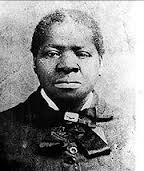
This Day…
1854-The federal government opens a land office in the Kansas Territory to distribute propoerty. Pro-slavery forces are already taking claims and fighting each other without regard for law. Manwhile in Michigan, anti-slavery men are meeting to join the Republican Party. Whigs, Free-soliers, and anti-slavery Democrats hold meetings demanding repeal of the Kansas-Nebraska Act and the Fugitive Slave Law.
The Killer Among Them
James Jenkins was a professional criminal having a long history of highway robberies and murders. It was reported that he had killed eight white men and ten Indians throughout Missouri, Texas, Iowa, and California. While living in Napa, California, Jenkins became acquainted with Patrick O’Brien, in order to establish a sexual liaison with O’Brien’s wife. Mrs. O’Brien, a lusty, attractive woman with a strong will, goaded Jenkins into murdering her husband, or so he later said, although Jenkins’ willingness to murder needed no encouragement. Jenkins got drunk, marched in O’Brien’s home, and shot him, but he was caught almost immediately and quickly confessed. Mrs. O’Brien denied having anything to do with the murder and was released. Jenkins was convicted and sentenced to death. Before he was hanged, Jenkins lamented his sloppy habits and the fact that he had gotten drunk, believing that if he had been meticulous in his killing of O’Brien, he never would have been caught. His last words on the scaffold were: “That whiskey that I drank the morning before I shot O’Brien was what caused me to do it when I did, and in so careless a matter.” To learn more about Jenkins and other bad guys in the Gold Country read Outlaws Tales of California. For more information visit www.chrisenss.com.
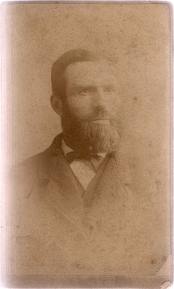
Outlaw James Jenkins
This Day…
The Human Wildcat
The notoriety that earned Juan Soto a place in the history of the U.S. West came at the end of his life. Soto was of mixed Indian and Mexican heritage and became notorious in California as a thief and murderer. Soto and two other men robbed a store in Sunol, California, on January 10, 1871, killing a clerk and shooting a number of rounds into the living quarters of the store owners, apparently for no purpose at all. Soto and his men were then tracked by Sheriff Harry Morse and a deputy. The lawmen followed the outlaws into the Sausalito Valley about fifty miles outside the town of Gilroy. Morse and the deputy found Soto and a dozen of his followers inside a makeshift hideout. Soto drew his gun on the sheriff when the lawman told him he was under arrest. After a short and uneventful skirmish, Morse broke free and pursued Soto outside. Arriving outside ahead of the lawman, Soto had attempted to mount a horse. But the animal spooked and ran away leaving the hapless gunfighter behind with nowhere to hide. Soto ran for some 150 yards before Morse was able to draw a bead on the outlaw. Even at this significant distance the sheriff’s aim was true, as he nailed the bandit with a single shot. As Soto, now wounded, ran back toward the sheriff, Morse fired a second shot. This time, the bullet found its mark, striking the “Human Wildcat” in the head. Soto died almost instantly. Read more about Soto and other California bandits in the book Outlaw Tales of California. Go to www.chrisenss.com for more information.
This Day…
1902-Harry Tracy and his brother-in-law, Dave Merrill were escaped convicts and bank robbers. While they were hiding out in Lewis County, Washington they got into a fuss and decided to have a duel. They agreed to step off ten paces then turn and fire, but Tracy turned and fired early and shot his brother-in-law in the back.
Writing the West
E.B. White, the author of Charlotte‘s Web once said “It is not often that someone comes along who is a true friend and a good writer.” I have the good fortune to report that many of the people I spent time with at the Western Writers of America convention this past week in Las Vegas are not only good writers, but true friends. It was a thrill to share the same space with author Nancy Plain, Will Bagley and Lucia St. Clair Robson. The Western Writers of America convention was held in Las Vegas this year. Prior to leaving the hotel for the airport I heard two men outside the event center say the following: “Dude! I’m telling you my bad streak is over. Let’s get back in there and get our money back.” I’m sure that had a happy ending. Attending a WWA event inspires one to want to be a better writer. That’s the attitude I have today as I prepare to continue working on the projects I’ve been assigned. My hope is that at the next WWA convention I can be satisfied with the writing I’ve done and not feel compelled to tell people, “I just wrote a book, but don’t go out and buy it yet, because I don’t think it’s finished yet.”
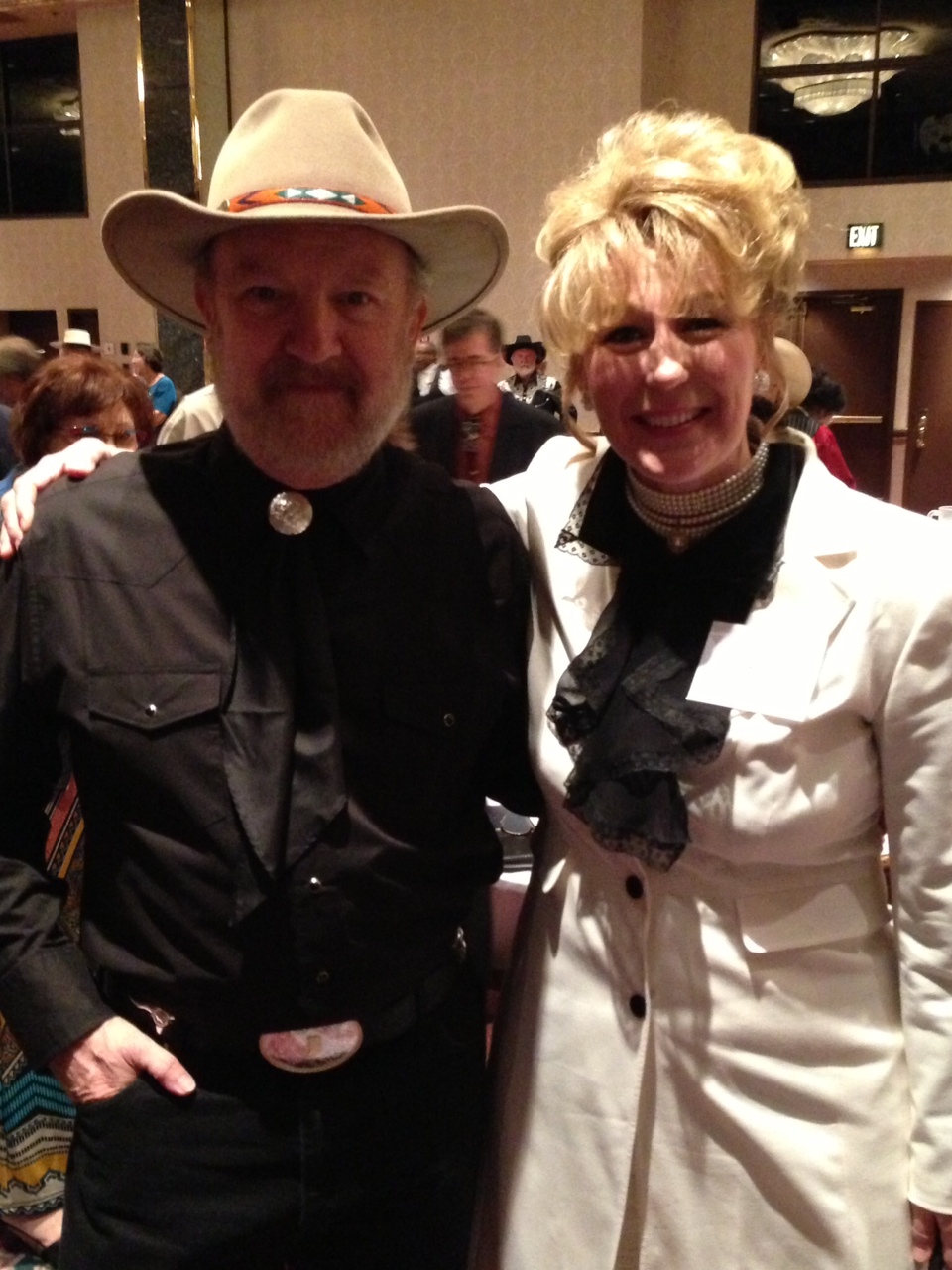
With Jim Beaver, one of the stars of Justified, at the WWA convention.
This Day…
A Happy Ride
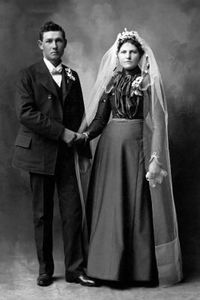
An excerpt from a newspaper in Northern California describes a controversial event that took place at a gentlemen’s club meeting in Nevada County. A group of prominent men, convinced that being single was better than being married, met on a regular basis to discuss the benefits of remaining unattached. The organization’s commitment to that belief was challenged when one member dared to follow through with plans to marry his mail-order bride. “One of the many devious ways in which the course of true love can be made to run was illustrated in Grass Valley recently – showing how by a chance buggy ride, a man saved $2000 and gained a wife. A certain young bachelor of Grass Valley paid his “distresses” to one of the beautiful young ladies so numerous in this grassy vale, and matters were rapidly progressing towards a matrimonial entanglement, when for some reason best known to himself the wooing swain “flew the track.” The deserted mail-order maiden was a girl of spirit, and she immediately commenced suit for breach of promise to marry. The trial commenced January 11, 1881, and the contest waxed hot for three days, resulting in a verdict for the fair plaintiff, with $2000 damages. Consternation was carried into the camp of the bachelors by their threatening results. A meeting of the Bachelor’s Club of Grass Valley was instantly called to discuss the situation and deliberate upon precautionary measures, to protect others of the fraternity from the fate that had overtaken their brother. Among other things, it was proposed that all members who were in dangerous habit of calling upon marriageable ladies should supply themselves with a receipt book, and have a release signed at the termination of each visit, stating that no matrimonial engagement had been entered into, and that all was square to date. In an earnest speech and with a voice trembling with emotion, the president besought the members to specially avoid osculation, as in law a kiss was regarded as seal to an implied contract making it binding upon the parties. The club adjourned without taking final action, and the members departed to their homes with a deep-rooted apprehension lurking in their bosoms, and resolved to spend their money on billiards and fast horses and let the girls severally alone. And now comes the romantic termination. About three months later a heavily loaded stage was on its way from Nevada City to Grass Valley, when it was met by a gentleman in a buggy, who offered to relieve the stage of one of the passengers, provided the person was willing to return to Nevada City while he was transacting a little business. The innocent driver gazed down into the stage and asked a lady if she desired to accept the gentlemen’s offer. She did desire and did accept, and alighted from the stage which immediately drove away. Then it was that the old-time lovers and recent litigants found that they were destined to take a ride. What was said during that ride we know not, but when they arrived in Nevada City, they went before Judge Reardon, the same who had presided at the trial, and were quickly made one. Indignant at this defection of a member whom they had considered their staunchest adherent, the Bachelor’s Club called another meeting and expelled him with imposing ceremonies.”
The Daily Transcript – May 10, 1881