1886-Fractious Joe Stinson was a mean drunk. After a long night of hard drinking he got into an argument with his pal, Reddy McCann and shot him in the face, blowing off the base of his nose. Reddy recovered. Stinson operated a saloon in Santa Fe, NM. He died of alcohol debilitation in 1902.
A Happy Ride
An excerpt from a newspaper in Northern California describes a controversial event that took place at a gentlemen’s club meeting in Nevada County. A group of prominent men, convinced that being single was better than being married, met on a regular basis to discuss the benefits of remaining unattached. The organization’s commitment to that belief was challenged when one member dared to follow through with plans to marry his mail-order bride. “One of the many devious ways in which the course of true love can be made to run was illustrated in Grass Valley recently – showing how by a chance buggy ride, a man saved $2000 and gained a wife. A certain young bachelor of Grass Valley paid his “distresses” to one of the beautiful young ladies so numerous in this grassy vale, and matters were rapidly progressing towards a matrimonial entanglement, when for some reason best known to himself the wooing swain “flew the track.” The deserted mail-order maiden was a girl of spirit, and she immediately commenced suit for breach of promise to marry. The trial commenced January 11, 1881, and the contest waxed hot for three days, resulting in a verdict for the fair plaintiff, with $2000 damages. Consternation was carried into the camp of the bachelors by their threatening results. A meeting of the Bachelor’s Club of Grass Valley was instantly called to discuss the situation and deliberate upon precautionary measures, to protect others of the fraternity from the fate that had overtaken their brother. Among other things, it was proposed that all members who were in dangerous habit of calling upon marriageable ladies should supply themselves with a receipt book, and have a release signed at the termination of each visit, stating that no matrimonial engagement had been entered into, and that all was square to date. In an earnest speech and with a voice trembling with emotion, the president besought the members to specially avoid osculation, as in law a kiss was regarded as seal to an implied contract making it binding upon the parties. The club adjourned without taking final action, and the members departed to their homes with a deep-rooted apprehension lurking in their bosoms, and resolved to spend their money on billiards and fast horses and let the girls severally alone. And now comes the romantic termination. About three months later a heavily loaded stage was on its way from Nevada City to Grass Valley, when it was met by a gentleman in a buggy, who offered to relieve the stage of one of the passengers, provided the person was willing to return to Nevada City while he was transacting a little business. The innocent driver gazed down into the stage and asked a lady if she desired to accept the gentlemen’s offer. She did desire and did accept, and alighted from the stage which immediately drove away. Then it was that the old-time lovers and recent litigants found that they were destined to take a ride. What was said during that ride we know not, but when they arrived in Nevada City, they went before Judge Reardon, the same who had presided at the trial, and were quickly made one. Indignant at this defection of a member whom they had considered their staunchest adherent, the Bachelor’s Club called another meeting and expelled him with imposing ceremonies.”
The Daily Transcript – May 10, 1881
Mrs. Borden
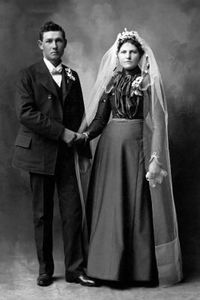
Condensed milk was invented by Gail Borden in 1853. After one bad invention followed by another, he finally hit on the idea of food concentrates as an economical way to safeguard the food supply. He once said he conceived the notion by observing his wife adding sugar to her milk to keep her full-figured voluptuousness, a sign of beauty and wealth at the time. (It would solve a lot of problems for me if we could just return to that time as my full-figured look is considered neither a sign of beauty or wealth, simply a sign that I adore cherry pie). Before, milk was shipped in unsanitary oak barrels, and it spoiled quickly. Although he didn’t invent the tin can, his marketing skills in effect launched the canned food industry. Canning food diminished the possibility of food-storage spoilage, subsequent short supplies from the whims of natural elements, contamination by vermin. He died in Borden, Texas of gastrointestinal flu (possibly from drinking from a dented container) in 1874 and had his body packed in a tin can of a railroad car to be buried in Woodlawn Cemetery in New York. 
This Day…
Sitting Bull
In an earlier time Sitting Bull might have been a great and prosperous Indian chief. But in the second half of the 19th century he was the last ruler of a dying breed. His victory over General Custer at Little Big Horn in 1876 was but a glitch in the United States drive to corral the Sioux Indians onto reservations. A medicine man and never actually a chief, Sitting Bull led a dwindling number of Sioux away from federal troops for five more years, until finally in 1881, he and fewer then 200 remaining followers surrendered. They were held in custody for almost two years before they were placed on the Standing Rock Reservation in South Dakota, near where Sitting Bull was born. Sitting Bull, a tall, solid Indian with long, black, braided hair, was put on parade in several cities and in 1885 he toured with Buffalo Bill’s Wild West Show along the East Coast. But when he was on the reservation Sitting Bull stubbornly continued to stir up unrest. Even after federal authorities prohibited the ceremony, Sitting Bull encouraged Indians to perform the new Ghost Dance, which the Indians had come to believe would lead to a rebellion and would bring a savior to defeat the White Man. At dawn on December 15, 1890, about forty members of an Indian police force commissioned by federal authorities descended on Sitting Bull’s cabin to arrest him. They pulled the 59-year-old naked man from his bed and ordered him to get dressed and go with them. Sitting Bull gathered his things, but he took a long time to do it, which allowed time for restless crowd of Indians to gather outside. By the time Sitting Bull was roughly pushed out of his cabin into the freezing weather, the crowd was angry. Sitting Bull stood waiting for his horse to be brought up. But then suddenly he yelled in the Sioux language-which the Indian officers, too, understood – “I am not going. Do with me what you like. I am going. Come on! Come on! Take action! Let’s go!” Another leader of unrest on the reservation, Catch the Bear, pulled out a gun and fired at the top Indian officer. Lieutenant Bullhead was hit in the leg and as he fell he fired at Sitting Bull, shooting him in his left side. Another officer also shot the Indian leader, killing his instantly. The gun battle escalated, and when it was over fourteen men were dead, all Sioux, including six Indian police officer. Hundreds of others fled the reservation. Most were soon caught and sent to Wounded Knee, where, on December 29, an anonymous gunshot touched off the massacre of 300 Sioux.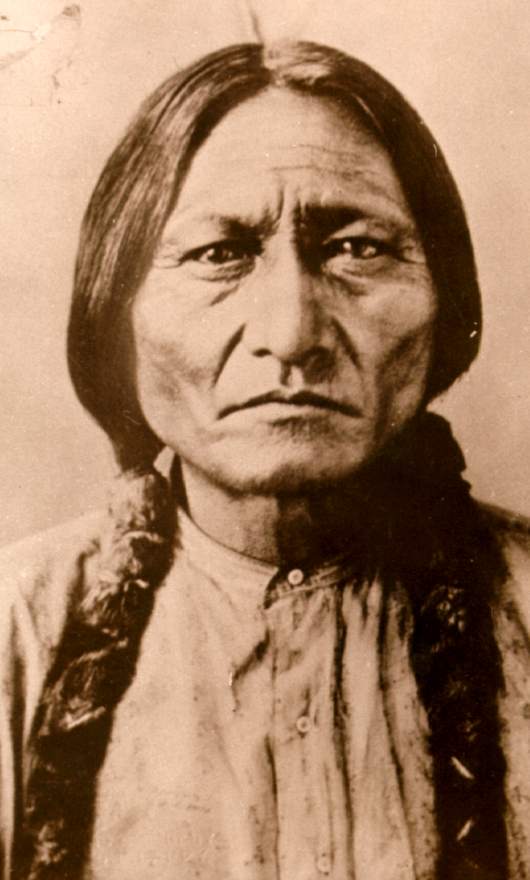
Women of the Old West

This Day…
The Trials of Elizabeth Blackwell
America’s first woman doctor was admitted to New York’s Geneva College in 1847 as a joke, and was expected to flunk out within months. Nevertheless, Blackwell prevailed and triumphed over taunts and bias while at medical school to earn her degree two years later. While in her last year of medical training, she was cleaning the infected eye of an infant when she accidentally splattered a drop of water into her own eye. Six months later she had the eye taken out and had it replaced with a glass eye. Afterward, American hospitals refused to hire her. She then borrowed a few thousand dollars to open a clinic in New York City, which she called the New York Infirmary for Indigent Women and Children. She charged patients only four dollars a week, if they had it, for full treatment that might cost at least two hundred dollars a day at the going rate. During the Civil War she set up an organization to train nurses, Women’s Central Association of Relief, which later became the United States Sanitary Commission. In 1910 at age eighty-nine she died after a fall from which she never fully recovered. 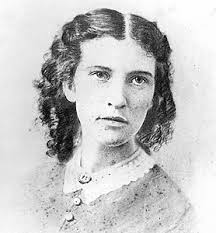
This Day…
1918-Terrell County Sheriff D.L. Anderson was shot and killed at the train depot in Sanderson, Texas by a drunken cowboy name of Ed Valentine. Within an hour of that shooting Valentine was lynched by citizens. In his youth Sheriff Anderson was known as Billy Wilson and was a participant in the Lincoln County War. He was arrested by Pat Garrett along with Billy the Kid at Stinking Springs. Garrett later helped get him pardoned.
Riding With An Outlaw
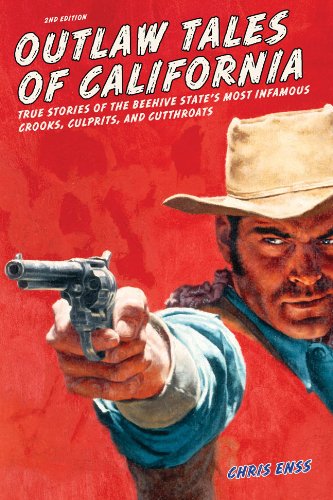
James Gilbert Jenkins was a professional criminal having a long history of highway robberies and murders. It was reported that he had killed eight white men and ten Indians throughout Missouri, Texas, Iowa, and California. While living in Napa City, California, Jenkins became acquainted with Patrick O’Brien in order to establish a sexual liaison with O’Brien’s wife. Mrs. O’Brien, a lusty, attractive woman with a strong will, goaded Jenkins into murdering her husband, or so he later said, although Jenkins’ willingness to murder needed no encouragement. Jenkins got drunk, marched into O’Brien’s home, and shot him, but he was caught almost immediately and quickly confessed. Mrs. O’Brien denied having anything to do with the murder and was released. Jenkins was convicted and sentenced to death. Before he was hanged, Jenkins lamented his sloppy habits and the fact that he had gotten drunk, believing that if he had been meticulous in his killing of O’Brien, he never would have been caught. His last words on the scaffold were: “That whisky that I drank the morning before I shot O’Brien was what caused me to do it when I did, and in so careless a manner.” To learn more about James Gilbert Jenkins and other bad guys of the Old West pick up a copy of Outlaw Tales of California. For more information visit www.chrisenss.com.