1862-In Colorado Territory an encounter between Southern cavalrymen and Union forces near Denver City results in the capture of 50 Confederates.

In many a mining camp and cattle range, vigilantes did more to drive out desperadoes than did elected officials. The committees of vigilance were formed because there was no other effective action against crime. The vigilance committees of the West differed from the lynchers of the South in that, instead of circumventing the law, they enforced it. They had a large hand in making the frontier communities from anarchy and bridged the gap between lawlessness and the formal administration of justice that came later. Frontiersmen who found a horse thief or two dangling from the limb of a tree did not automatically conclude that justice had been violated. Action by the vigilance committee not only was swifter and surer than that of some of the feeble courts but often was fairer. Proceedings of these committees were informal-more so in some instances than in others. But the committees were organized only after conditions had become desperate, and the men they punished were usually those whose guilt was clear beyond doubt. If this were the Old West I know exactly who I’d like to invite to a necktie party
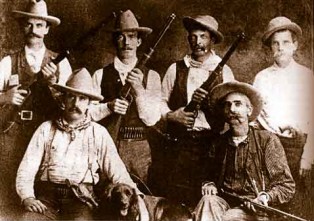
The Rosebud Vigilantes were one of the most notorious vigilante groups of the Old West.
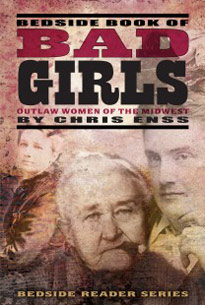
Award-winning author Chris Enss goes behind the lipstick and petticoats to reveal the real women who outran the law and upended gender stereotypes across America’s Heartland in her latest book Bedside Book of Bad Girls: Outlaw Women of the Midwest.
Readers will meet Flora Mundis, expert horse thief and jail breaker; murderess Elizabeth Reed, the first and only woman hanged in Illinois; Belle Black and Jennie Freeman, who shot their way through hold ups and alongside the men of the Wyatt-Black Gang; and Anne Cook, bootlegger and madam, who killed her own daughter in cold blood.
Illustrated with historical photographs, Bedside Book of Bad Girls: Outlaw Women of the Midwest uncovers the true lives long veiled by the glamour of dime novels and sensational tabloid accounts. Cozy up (if you dare) with these women, both sensuous and sinister, as they rampage across the Midwest.
This bit of information about the California Gold Rush is for all the students studying this historical event and email me to find out about its significance. From all parts of the United States, from Latin America, and from China, they all flocked to California. Those who made the 18,000-mile sea voyage around South America were called Argonauts. The steamer Californian brought the first 265 into San Francisco Bay on January 28, 1849. Others took a ship to Panama, braved their way across isthmus jungles packed with snakes and mosquitoes, and boarded another boat for San Francisco. Whoever made it to California had “seen the elephant.” Everybody who was hunting for gold, and that was most able-bodied men and a few women, were called 49ers. Instant riches lying everywhere was the definitive image of the gold rush. A “new Eldorado” was waiting a continent away. Just walking by a stream, a person could net $24 worth of gold in a few minutes. The average miner might sock away $1,000 a day. One man found $9,000 in gold after lunch one afternoon. A rainy season greeted the 30,000 gold seekers who came overland in the spring in 1849. An outbreak of cholera claimed 5,000 of the prospectors who worked the fields that year. The town of Marysville recorded 17 murders in one week. One out of every five who came to hunt for gold was dead within six months of his or her arrival. Still, they came in droves. Five hundred shiploads arrived in 1849, filled with dreamers chasing visions of golden nuggets.
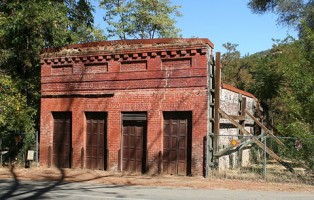
A building in Coloma, California, the site where gold was discovered.
By 1852, California’s annual gold production reached a high of $81 million. By 1853, the total take was $67 million, and although no one wanted to admit it, the hottest story in the Old West had already peaked. In 1854, a 195-pound mass of gold, the largest known to have been discovered in California, was found at Carson Hill in Calaveras County. In 1859, the famous 54-pound Willard nugget was found at Magalia in Butte County. But for the most part, the rich surface placers were largely exhausted by 1855, and river mining accounted for much of the state’s output until the early 1860s. From the first strike of 1848 through 1855, the total amount of gold taken from the mother lode was right around $350 million. As for the first person involved in the discovery, he did not live happily ever after. After his monumental discovery, Marshall claimed a major chunk of Coloma Valley, but the area was quickly overrun by at least 4,000 would-be gold miners. Marshall found work as a prospector, but he was often hounded by gold rush groupies, men who believed if they stayed close to him he might find some more gold. He continued to be an inactive partner at Sutter’s sawmill until legal difficulties closed it in 1850. In 1857, Marshall returned to Coloma and bought 15 acres of land for $15. He planted a vineyard, dug a cellar, and began bottling California wine. He won a few prizes for his port at county fairs, but taxes and competition found him on the prospecting trail again in the late 1860s. He hit the lecture circuit, but ended up broke in Kansas City. The California legislature took pity on him and passed a $200 a month pension for the discovery of gold in 1872, and then cut it in half the following year. Marshall died forgotten in 1885 and was buried on a hill in Coloma overlooking the gold discovery site. Five years later, a statue was commissioned and placed on his gravesite.
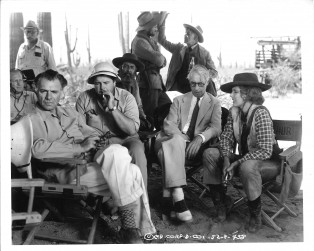 The Gilded Age was embodied in the private railroad car-a baroque equipage of millionaires that today may be found in museums. But there is little trace of the carriages in which the masses were transported, only the memories of those who rode them. To Robert Louis Stevenson, the emigrant train on which he traveled West in 1879 resembled a series of long wooden boxes-a “Noah’s Ark on wheels.” Wooden benches were their only furniture, “far too short for anyone but a child,” and the atmosphere was stagnant with the smells of food and tobacco. Families and single men and women shared these rolling slums, cooking, washing perfunctorily, and at night sleeping on wooden boards stretched across benches. The rate for these “beds,” which included three straw- (and bug-) filled cushions, was $2.50. Except for rare acts of kindness, the poor emigrants met nothing but rudeness from train functionaries, who even refused to answer their anxious inquiries. “Civility is the main comfort you miss,” Stevenson remarked. “Equality, though very largely conceived in America, does not extend so low down as the emigrant.” I prefer the image of the emigrant as portrayed by William Holden in the movie Arizona. The movie centers around Phoebe Titus a tough, swaggering pioneer woman played by Jean Arthur, but her ways become decidedly more feminine when she falls for California bound Peter Muncie played by William Holden. But Peter won’t be distracted from his journey and Phoebe is left alone and plenty busy with villains Jefferson Carteret and Lazarus Ward plotting at every turn to destroy her freighting company. You just know William Holden will be changing his plans to stay and help Jean out of a jam. The bug Holden describes in the film is decidedly different from the ones emigrants had to sleep with on the way West. One of my favorite lines from the movie are as follows-Holden to Arthur: “I figure it sounds crazy to most people… going to California just to see it. But there’s a gallivanted bug in my blood and that’s the way I am.”