
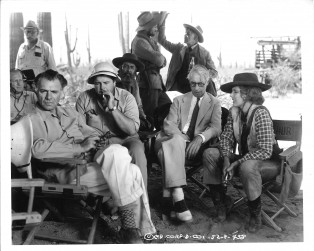
 The Gilded Age was embodied in the private railroad car-a baroque equipage of millionaires that today may be found in museums. But there is little trace of the carriages in which the masses were transported, only the memories of those who rode them. To Robert Louis Stevenson, the emigrant train on which he traveled West in 1879 resembled a series of long wooden boxes-a “Noah’s Ark on wheels.” Wooden benches were their only furniture, “far too short for anyone but a child,” and the atmosphere was stagnant with the smells of food and tobacco. Families and single men and women shared these rolling slums, cooking, washing perfunctorily, and at night sleeping on wooden boards stretched across benches. The rate for these “beds,” which included three straw- (and bug-) filled cushions, was $2.50. Except for rare acts of kindness, the poor emigrants met nothing but rudeness from train functionaries, who even refused to answer their anxious inquiries. “Civility is the main comfort you miss,” Stevenson remarked. “Equality, though very largely conceived in America, does not extend so low down as the emigrant.” I prefer the image of the emigrant as portrayed by William Holden in the movie Arizona. The movie centers around Phoebe Titus a tough, swaggering pioneer woman played by Jean Arthur, but her ways become decidedly more feminine when she falls for California bound Peter Muncie played by William Holden. But Peter won’t be distracted from his journey and Phoebe is left alone and plenty busy with villains Jefferson Carteret and Lazarus Ward plotting at every turn to destroy her freighting company. You just know William Holden will be changing his plans to stay and help Jean out of a jam. The bug Holden describes in the film is decidedly different from the ones emigrants had to sleep with on the way West. One of my favorite lines from the movie are as follows-Holden to Arthur: “I figure it sounds crazy to most people… going to California just to see it. But there’s a gallivanted bug in my blood and that’s the way I am.”
This Day…
Eureka, the American Gold Rush
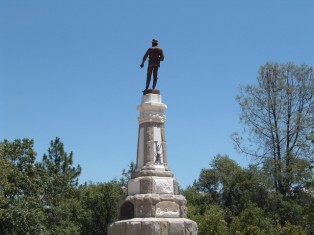
James Marshall's resting place. He's pointing to the area he found gold.
This Day…
The Gold Rush & Wells Fargo
Once upon a time in the West, there flourished, according to one frontier editor, “the nearest thing to a universal service company ever invented.” The biggest business in the Old West was so good at what it did that when people swore, they often did so “by God and Wells Fargo.” Seasoned East Coast express men Henry Wells and William G. Fargo began American Express with John Butterfield in 1850. Two years later, they wanted a link with the California gold fields. On March 18, 1852, paper were drawn up organizing Wells, Fargo & Company with initial capital of $300,000 (The comma between the two names was eventually dropped.) Two company representatives opened the first office on San Francisco’s Montgomery Street that July. From the red brick building, a network of routes connected the company with exotic markets such as Hangtown, Yankee Jim, and Poker Flat. The company kept letters flowing between the gold seekers and the folks back home, and it shipped gold back east safely and cheaply. You could even ship people by Wells Fargo. To accomplish these Herculean tasks, Wells Fargo applied cutting-edge 1850s technology. Some shipments, such as the fire engine ordered by the city of Sacramento from a Baltimore manufacturer, were shipped around Cape Horn. But what made Wells Fargo great was its massive fleet of Concord stagecoaches, hand-crafted in New Hampshire, that crisscrossed the Old West with such regularity that their roads often had to be watered to keep down the dust. Cargo was protected by armed guards riding shotgun.
This Day…
Walking Wounded

My Little Brother and I
This Day…
Frontier Visitors
Of all the people who traveled West to see the wild frontier playwright Oscar Wilde was one of the most unique. “To the world I seem, by intention on my part, a dilettante and dandy merely-it is not wise to show one’s heart to the world-and as seriousness of manner is the disguise of the fool, folly in its exquisite modes of triviality and indifference and lack of care is the robe of the wise man. In so vulgar an age as this we all need masks.” So wrote Oscar Wilde in 1894, the year before his crowning achievement, The Importance of Being Earnest, opened in London. And for most of his life the Irish born playwright’s cheerful, witty façade held up quite well. It has held up even better since he died, which probably is why Wilde still regularly shows up on lists of favorite historical dinner guests. But in his last years Wilde was welcome at no tables in England. Though married and the father or two children, Wilde was for years involved with a younger man, Lord Alfred Douglas, called “Bosie,” and he engaged in many anonymous scenes with male prostitutes and pickups. His double life proceeded without incident until soon after Earnest opened, when he received a calling card from Bosie’s eccentric father, the Marquess of Queensbury. It read “To Oscar Wilde, posing as somdominte [sic].” The maintain his mask Wilde felt he had to charge the Maquess with libel. And when the trial began in April 1895, Wilde charmed the jury with punchy testimony. But the Marquess had hired private detectives, and when that evidence began to be presented Wilde abruptly dropped his suit. Later the same day he and Bosie were arrested for immorality. Wilde’s new play continued its successful run, but his name was removed from the program. At his own trial Wilde again maintained his witty upper lip. The first jury could not reach a verdict. But the second jury convicted him, and Wilde was sentenced to two years’ hard labor. He spent the time in solitary confinement, where he was poorly fed and slept on a wooden plank bed. He was put to work sewing mailbags. When he was released in May 1897, Wilde was bankrupt, his manuscripts had either been auctioned or stolen. Friends paid his way to France, where he finally settled in Paris. He wrote a little about prison life, including his famous Ballad of Reading Gaol, and continued to whisk his way through dinner engagements. But he confessed, “I don’t think I shall ever really write again. Something is killed in me.” He picked up boys more frequently than before and began drinking large amounts of absinthe, though doctors had told him it would kill him. Wilde laughed off the warnings, as he did his constant worry about money, quipping, “I am dying beyond my means.” In October 1900, Wilde developed a painful ear infection from an injury he had suffered in prison when he fainted one morning in chapel and perforated an eardrum. Doctors performed surgery, but the infection spread and caused him to develop encephalitis, swelling of the brain. He was taken back to his hotel room, the last in a series of cheaper and cheaper rooms that he could barely afford. The legend is that his last words were “It’s the wallpaper or me-one of us has to go.” But Wilde did not depart with a clever remark. He grew delirious through the month of November. On the thirtieth two close friends near his bed could hear only a painful grinding sound from his throat. A nurse regularly had to dab blood that was drooling from his mount. Slowly his breathing and his pulse weakened until he died at about 2 p.m. that afternoon.