1847 – Frederick Douglass publishes first issue of his newspaper “North Star”
All the World Loves a Straight Lady
Enter now to win a copy of
Straight Lady: The Life and Times of Margaret Dumont, “The Fifth Marx Brothers”

Straight Lady: The Life and Times of Margaret Dumont, “The Fifth Marx Brother” focuses on Dumont and her role in the production of the comedy teams’ most successful films.
Here’s what critics say about Straight Lady.
“Great stars of Hollywood often have multiple books written about them, but the marvelous character actors who support them are mostly ignored. An exception is “Straight Lady: The Life and Times of Margaret Dumont” by Chris Enss and Howard Kazanjian, a prodigiously researched biography of the actress who played the stalwart victim of the Marx Brothers’ comedy of assault.” Wall Street Journal Review
“Informed and informative, Straight Lady: The Life and Times of Margaret Dumont, “The Fifth Marx Brother” is must for the personal reading lists of motion picture enthusiasts, cinematic film historians, and the legions of Marx Brothers’ fans. Midwest Book Review
“While comedy fans will enjoy the reprised storylines and biographical vignettes, this multileveled work also offers media scholars a deeper look into Marx Brothers films in which Dumont was epochal and reflective of the era’s gender standards and mannerisms.” Library Journal
“Margaret Dumont had a complete life; Enss and Kazanjian’s research fill in all the voids. “The Straight Lady” digs deep and produces a revealing chapter in the amazing early success of the movie business. For those readers who enjoy a fascinating story, this book will fit the bill. For those who love Hollywood history, it is a must read.” Arizona Daily Star

Straight Lady 2
I'm looking forward to hearing from you! Please fill out this form and I will get in touch with you if you are the winner.
Join my email news list to enter the giveaway.
"*" indicates required fields
Enter now to win a copy of
Straight Lady: The Life and Times of Margaret Dumont, “The Fifth Marx Brother”
This Day…
Remembering Sand Creek
Enter now to win a copy of
Mochi’s War: The Tragedy of Sand Creek
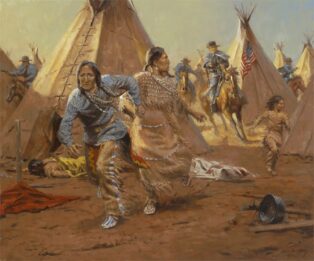
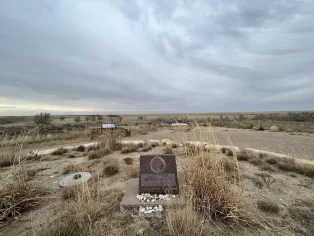
“I said a prayer for the spirits that are still at Sand Creek because of the genocide that was forced upon them. The treaty they made with the Cheyenne and other tribes in 1851 included Denver, Wyoming and other areas. But, when gold was discovered they needed to move the Indians out of the way, so in 1861 they moved the Cheyenne and Arapahos to the Sand Creek area. When the massacre occurred on November 29, 1864, the Cheyenne were on the reservation the U.S. government had given them, and the government condoned all this action resulting in the killing of these innocent people.” Laird Cometsevah
This week marks the 160th anniversary of the Sand Creek massacre.
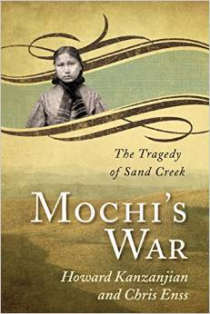
Read about this event in the book Mochi’s War: The Tragedy of Sand Creek
Mochi's War: Tragedy of Sand Creek
I'm looking forward to hearing from you! Please fill out this form and I will get in touch with you if you are the winner.
Join my email news list to enter the giveaway.
"*" indicates required fields
Ten percent of all sales of the book go to the Sand Creek National Monument site
This Day…
1876 – Indian Wars: In retaliation for the American defeat at the Battle of the Little Bighorn, United States Army troops sack Chief Dull Knife’s sleeping Cheyenne village at the headwaters of the Powder River.
A Cheyenne Woman’s Account of The Tragedy of Sand Creek
Enter now to win a copy of
Mochi’s War: The Tragedy of Sand Creek
“When the people were running there was hardly any place to hide, but there were ravines and there was one old lady who was getting children. She was getting children but she had medicine so they couldn’t see her and she would go back and forth getting children. There were more women holding the children down. Where it happened had to have shelter and some ravines. Land changes over the years through men tilling, farmers, and the wind, rain—it changes subtly. Those ravines might be buried now. To find anything you’d probably have to dig. But at the time there were hiding places, ravines. They were camped close to water for cooking and things.” Lettie June Shakespeare
This week marks the 160th anniversary of the Sand Creek massacre.
Read about this event in the book
Mochi’s War: The Tragedy of Sand Creek.
Mochi’s War is available everywhere.
Ten percent of all sales of the book go to the Sand Creek National Monument site.
This Day…
1890 – Edison lab records the 1st surviving motion picture, “Monkeyshines No. 1”, shot by William am Kennedy Dickson and William Heise [date disputed between June 1889 and November 21–27, 1890]
Mochi and Medicine Water
Enter now to win a copy of
Mochi’s War: The Tragedy of Sand Creek
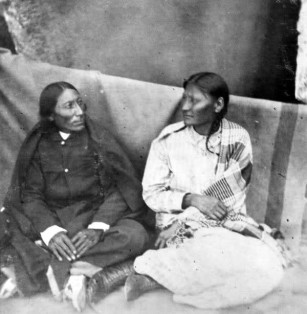
Dog Soldiers participated in a second raid on Julesburg on February 2, 1865. According to George Bent’s account of the attack, a small band of Indians first tried to lure the soldiers out of their stockade. The plan was to get the troops in the open, overtake them, and ride into the unguarded stage station. The soldiers did not fall for the Indians’ ploy. The warriors regrouped and descended on the stockade together. George Bent noted in his memoirs that the Dog Soldiers rode past eighteen graves of men killed in the first attack on Julesburg. Six hundred Indians fought their way to the warehouse at the stage station and broke into the store on site. Mochi was one of the Cheyenne who helped gather the food and other provisions together and herded the horses away from the war-torn stockade. When there was nothing left to plunder, the Indians set fire to the buildings.
Mochi and the other Indians left Julesburg and headed across the Great Divide between the South Platte and North Platte Rivers. Telegraph poles lining the path they followed were destroyed. They were either burned or chopped down, and the wires were cut and carried away or tangled up and tossed into the brush. Regiments of cavalry troops from Mud Springs, Nebraska, and Camp Mitchell, Wyoming rallied and pursued the Indians, but the warriors would not allow themselves to be easily driven from the valley. Because of the Sand Creek Massacre, raid upon raid was enacted on soldiers and settlers from February to October 1865. Many warriors and white men lost their lives. Like other Dog Soldiers, Mochi would have taken part in the killing and the ritual mutilation of her enemies.
Somewhere in the midst of the fighting and retreating and fighting again, Mochi met a warrior named Mihuh-heuimup or Medicine Water. He had lost his wife at Sand Creek and was raising his young daughter Tahnea alone. Medicine Water and Mochi shared a strong desire to eliminate the white man from their homeland and to preserve the traditions and lifestyles of the Cheyenne people. If not for the Treaty of the Little Arkansas, Mochi and Medicine Water might not have considered marriage. They would have continued their attacks on United States troops and buffalo hunters until one or the other were killed, but a remission in the weekly fighting gave them the chance to rest and consider life beyond the battle.
Mochi's War: Tragedy of Sand Creek
I'm looking forward to hearing from you! Please fill out this form and I will get in touch with you if you are the winner.
Join my email news list to enter the giveaway.
"*" indicates required fields
To learn more about the driven Dog Soldier Mochi read
Mochi’s War: The Tragedy of Sand Creek
This Day…
1863 – Abraham Lincoln begins first draft of his Gettysburg Address
Sand Creek National Monument Site
Ten percent of all sales from the book
Mochi’s War: The Tragedy of Sand Creek
go to the Sand Creek National Monument site.
Mochi’s War is available on Amazon.com, Barnes & Noble.com,
and everywhere books are sold.