
1893 – Elisha Gray patented a machine called the telautograph. It automatically signed autographs to documents.
A Wife Wanted
Enter now to win a copy of
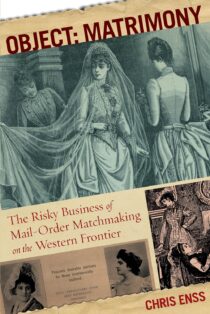
Object Matrimony:
The Risky Business of Mail-Order Matchmaking on the Western Frontier

“I am a man of wealth and position,” said the widower Shyon Brane to the marriage broker, “and I seek a suitable mate. She must be handsome, clean, economical, industrious, and virtuous, a good cook, she must be a thrifty buyer, a capable housekeeper, and not easily stressed. She must know something of music and arts, dance well and be able to discourse intelligently on history and philosophy withal, she must be cheerful and of affectionate disposition.”
“Oh,” said the marriage broker, “you’ve come too late. One thousand years ago there was such a paragon but the gods took her to keep house for them. There is no wife for you, but the employment agency can supply you with a dozen domestics who, in a measure, may meet your demands.”
To learn more about the serious business of finding a husband or wife by mail in the wide-open days of the Old West read Object Matrimony: The Risky Business of Mail-Order Matchmaking on the Western Frontier.
Object Matrimony 4
I'm looking forward to hearing from you! Please fill out this form and I will get in touch with you if you are the winner.
Join my email news list to enter the giveaway.
"*" indicates required fields
Enter now to win a copy of the book along with a $100 gift certificate from
David’s Bridals.
This Day…
1859 – One of the oldest known copies of the Bible, “The Codex Sinaiticus” (Sinai Bible), is seen in Egypt by Constantin von Tischendorf, who takes the manuscript home
You’ve Got Mail
Enter now to win a copy of
Object Matrimony:
The Risky Business of Mail-Order Matchmaking on the Western Frontier
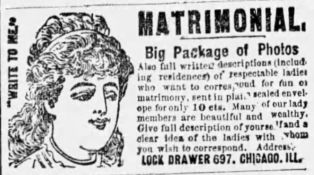
People in the American West have been using the mail-order system to find a spouse since Russell, Majors, and Waddell created the Pony Express. Ads were placed in the newspaper Matrimonial News and interested parties would send a letter to the ad they found most appealing. Women were very discerning about the men who wrote them. Many saw it more as a business venture. Some women wanted zero from a man, others wanted lots of zeros from a man.
In the mid-1860s, women believed they had to be married by a certain age or they’d never find stability. I wished someone had told them that looking to men for stability is liking going to Dr. Hannibal Lecter for psychoanalysis.
What women were looking for in a man hasn’t changed much from the 19th century. They wanted fair treatment, respect, patience, sensitivity, passion, and a genuine effort at understanding. Or if that’s too much, a gigantic diamond the size of a wagon wheel. Oh, yeah, and the knowledge that if don’t tell her how to merge she won’t tell you to ask for directions.
I’m thrilled I no longer have to think about this aspect of life. I’ve been married for thirty-six years and wouldn’t start over again for anything. I believe the selection of eligible men isn’t great. And if you look like Ruth Buzzi it’s even worse. I was thinking about this the other day when I was at the post office. Standing in front of me was some guy in his mid-seventies. He was wearing a powder-blue polyester shirt more pilled than a nightstand at Graceland, and was dusted with so much dandruff, I was tempted to place Christmas Village figurines on his shoulders. He was also wearing a cap with the phrase ASK ME ABOUT MY PROSTATE on it, and off-white slacks with a white belt, and there was a large pee spot near his left knee. This guy is in the pool of candidates I’d have to select from if I were single at sixty-three.
I wonder if the woman who placed the following ad in 1869 had the same thoughts.
“American; widow by death; age 38; weight, 135; height, 5 feet 6 inches; brown eyes; brown hair; Methodist religion; occupation, housewife; income $700 per year; business education and musician. Have means of $10,000. I am considered very good looking and neat. Will marry if suited.”
To learn more about the serious business of finding a husband or wife by mail in the wide-open days of the Old West read Object Matrimony: The Risky Business of Mail-Order Matchmaking on the Western Frontier.
Object Matrimony 4
I'm looking forward to hearing from you! Please fill out this form and I will get in touch with you if you are the winner.
Join my email news list to enter the giveaway.
"*" indicates required fields
Enter now to win a copy of the book along with a $100 gift certificate from David’s Bridals
This Day…
1861 – The “Organized Incorporated Territory of Nevada” is created, lasting until October 31st, 1864
A Sweetheart of a Giveaway
Enter now to win a copy of
Object Matrimony:
The Risky Business of Mail-Order Matchmaking on the Western Frontier
When gold was discovered in the far West during the nineteenth century, a billowing mass of humanity swept toward the setting sun with the swiftness of a tidal wave. Prospectors, businessmen, and explorers came seeking a better way of life and with the hope of amassing a fortune. No matter what riches were to be had or the endless territories yet to be conquered, unattached settlers who made the journey longed for a companion to share the new land.
The need for marriageable women in the West immediately following the Gold Rush was great. At the close of the Civil War, the lack of men in the East was just as pronounced. Capitalizing on that need on both sides of the country were mail-order bride publications.
The lonely-hearts ads placed in mail-order publications and tales of various love affairs found in the book Object Matrimony: The Risky Business of Mail-Order Matchmaking on the Western Frontier reveal how those desperate souls looked for that special someone.
More than 170 years after the first mail-order bride, the same method of choosing a life partner is still being used by some. Object Matrimony contains stories of the origin of the practice and the romantic unions that came about as a result, as well as the disappointments and desertions.
Object Matrimony: The Risky Business of Mail-Order Matchmaking on the Western Frontier by New York Times bestselling author Chris Enss is now available in bookstores everywhere, on amazon.com, barnesandnoble.com, and at nbnbooks.com.
Enter now to win a copy of the book along with a $100 gift certificate from
David’s Bridals
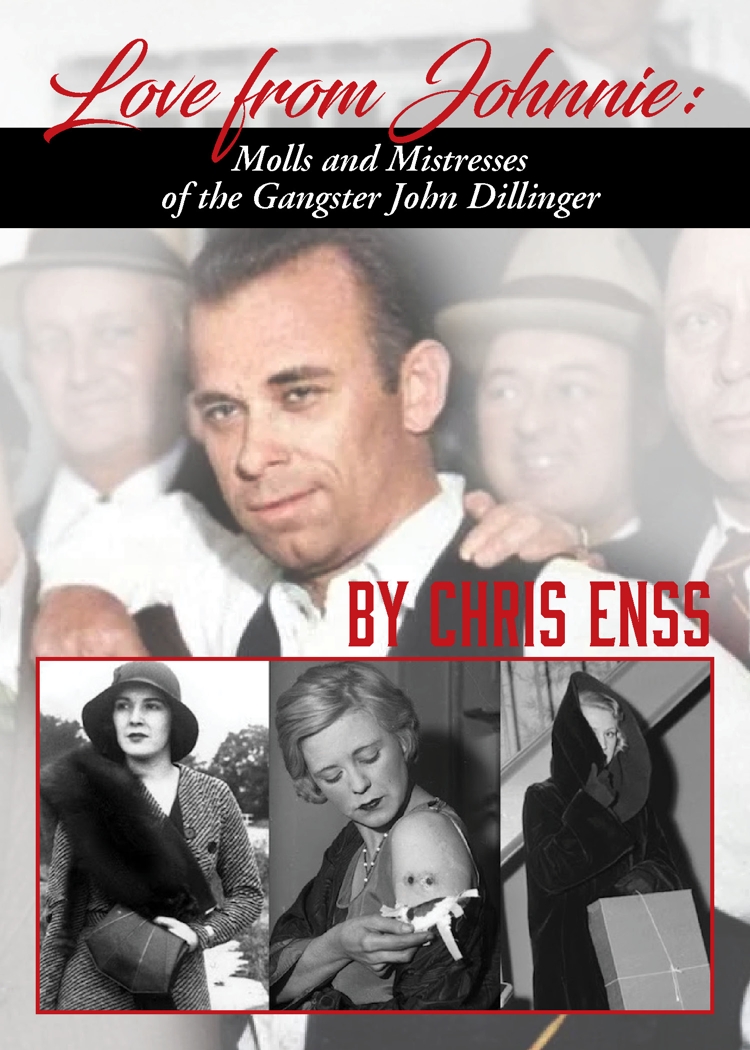
Love from Johnnie
This Day…
1879 – Custer Battlefield National Monument established in Montana
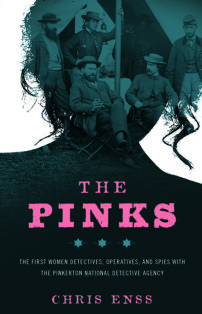
A Word from the President of the Pinkerton National Detective Agency
Enter now to win a copy of
The Pinks:
The First Women Detectives, Operatives, and Spies with the
Pinkerton National Detective Agency
“When Allan Pinkerton founded the Pinkerton Detective Agency in 1850, he not only became the world’s first “private eye,” he also established an organization that would set the global standard for investigative and security excellence for generations to come.
But the agency had only just begun the process of setting that standard when Kate Warne walked into Allan Pinkerton’s office six years later and asked for a job. Her request was well timed. Pinkerton was keenly focused on new opportunities and was consciously looking to make bold choices that reinforced his vision of Pinkerton as an innovator and a disruptor.
Warne’s confidence and persuasive skills were impressive, and Pinkerton’s flexibility and willingness to “defy convention” perhaps equally so. It is to his credit, and to the enduring credit of the Pinkerton Detective Agency, that it took Pinkerton less than twenty-four hours to inform Warne that he would hire her—a decision that made her the nation’s first female detective. It was a remarkable turn of events at a time when only 15 percent of women held jobs outside of the home, and contemporary ideas about what constituted “women’s work” severely limited employment opportunities for women.
Kate Warne, and the accomplished women who played such an important role in building the Pinkerton Detective Agency into an iconic global security and law enforcement institution, made it abundantly clear that the prevailing definition of “women’s work” was not just inadequate, but wholly obsolete.
Kate’s story, and the stories of all these remarkable female operatives—presented so beautifully and in such rich detail here in this fascinating and important book—are not just a moving reminder of the achievements of a handful of bold pioneers, they are also a remarkable testament to the exemplary tradition of innovation that has distinguished the Pinkerton name over the course of more than a century and a half of dedicated service.
As you read The Pinks and enjoy these fascinating profiles of gifted Pinkerton operatives, you will readily see how their work and their character exemplified the agency’s values of Integrity, Vigilance, and Excellence. Ultimately, those attributes are at the heart of these tales, and at the heart of the larger Pinkerton story. It’s a history that spans three centuries, with compelling new chapters still being written each and every day.”
Jack Zahran, President of the Pinkerton National Detective Agency
The Pinks 5
I'm looking forward to hearing from you! Please fill out this form and I will get in touch with you if you are the winner.
Join my email news list to enter the giveaway.
"*" indicates required fields
To learn more about Kate Warne read The Pinks
MidWest Book Review of Meet the Kelly
The January 2025 issue of the review magazine
“Library Bookwatch” features a review of “Meet the Kellys”.
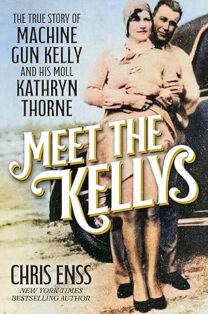
Synopsis: How did a small-time, hip-pocket bootlegger become one of the most notorious gangsters in the country? For George “Machine Gun” Kelly, the answer was simple: a woman.
Her name was Kathryn Thorne, a charming, strong-minded beauty who had family connections in the crime world — and big ambitions for the tall, handsome bootlegger. By the time she met Kelly, she was already an experienced criminal herself, divorced twice, and ready to marry a man who could give her the posh life she always dreamed of. With that in mind, she bought Kelly his first machine gun. And the rest is Prohibition era history…
George Kelly wasn’t a natural-born gangster and never carried a weapon bigger than a revolver. But Kathryn changed all that. Like a mobbed-up Lady Macbeth, she pushed her husband to commit greater crimes, introducing him to her friends in the underworld and convincing him to join in a series of bank robberies. Soon, the Kellys were living large, with a house in Texas, expensive jewelry, the works. But it wasn’t enough, and eventually the couple hatched a daring plot to kidnap oil tycoon Charles Urschel. Their plan worked. They collected the ransom — in doing so captured the attention of the nation, the world… and the FBI.
A shocking story of ambition and greed, crime and punishment, with the publication of “Meet the Kellys: The True Story of Machine Gun Kelly and His Moll Kathryn Thorne” by Chris Enss offers a fascinating portrait of a reluctant gangster named after a machine gun and a scheming moll as driven as Bonnie Parker and Ma Barker.
Critique: A meticulously documented history and biography that reads like an action/adventure novel from start to finish, “Meet the Kellys: The True Story of Machine Gun Kelly and His Moll Kathryn Thorne” will be of particular appeal to readers with an interest in the outlaws that made headlines during the ‘Roaring Twenties’ era of the Great Depression, Prohibition Bootlegging, Notorious Bank Robbers and Kidnappers. An inherently fascinating and riveting read from start to finish, “Meet the Kellys” by Chris Enss is especially and unreservedly recommended for community and college/university library True Crime and 20th Century American History/Biography collections. It should be noted for personal reading lists that this hardcover edition of “Meet the Kellys” from Citadel Press is also readily available in a digital book format (Kindle, $14.54).